
Asia
Southeast Asia on a Shoestring: Where to Go, When to Go, and Why You Should Leave Tomorrow
Explore affordable Southeast Asia travel with destination guides for Sri Lanka, Bali, Lombok, and the Philippines. Find seasonal tips and budget itineraries for young tra

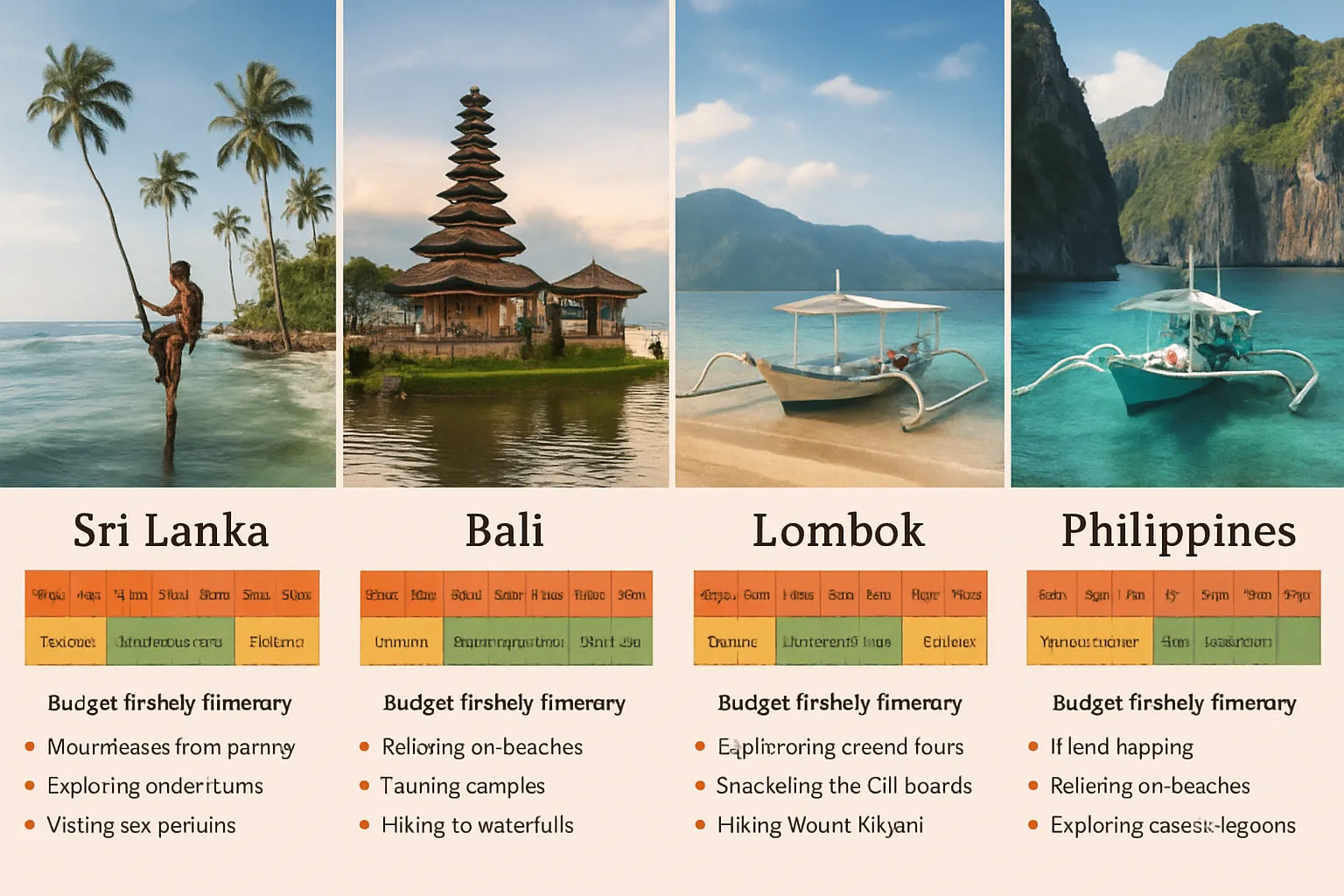
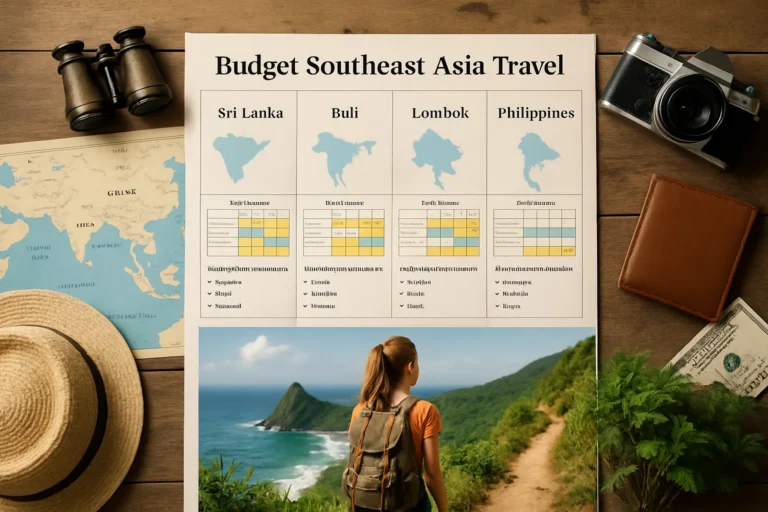
If there’s one corner of the world that consistently delivers extraordinary experiences without draining your bank account, it’s Southeast Asia. Budget Southeast Asia travel has been drawing adventurous young people since the late 1960s and early 1970s, and for good reason — the region offers an almost overwhelming range of landscapes, cultures, cuisines, and coastlines, all at a fraction of what you’d spend on a weekend in New York. Whether you’re torn between the rice terraces of Bali and the white-sand quiet of Lombok, wondering which Philippine island to hit first, or trying to figure out when exactly to land in Sri Lanka, this guide is here to help you make smart, confident choices.
Why Southeast Asia Still Wins for Young Travelers on a Budget
There’s a reason the classic backpacker trail through Thailand, Vietnam, Laos, and Cambodia has been worn smooth by millions of travelers over the decades. These countries are not only genuinely affordable — they’re also remarkably easy to move between, with a dense network of overnight buses, budget airlines, and border crossings that make spontaneous route changes feel natural rather than stressful.
The full list of destinations in the region reads like a dream itinerary in itself: Thailand, Vietnam, Laos, Cambodia, Malaysia, Singapore, Indonesia, the Philippines, and Myanmar all sit within a relatively compact part of the world, connected by affordable transport and a shared culture of hospitality. You can wake up in a Hanoi guesthouse, eat pho for breakfast, and be watching the sunset from a Cambodian riverbank two days later — all without spending a fortune.
What makes this region genuinely special for budget travelers isn’t just the low prices. It’s the value. Street food that rivals any restaurant. Guesthouses with character. Local transport that takes you where the guidebooks don’t. The experience-to-cost ratio here is simply hard to beat anywhere else on Earth.
The Classic Route vs. Going Your Own Way
The so-called Banana Pancake Route — the well-trodden circuit connecting Bangkok, Chiang Mai, Luang Prabang, Hanoi, Hoi An, and Siem Reap — exists for a reason. It’s efficient, social, and genuinely rewarding. Paddy Doyle, who has traveled this route multiple times and documented budget tips and travel hacks along the way, is one of many experienced travelers who’ll tell you: the classic trail delivers, especially if it’s your first time in the region.
But Southeast Asia is vast enough that you don’t have to follow anyone else’s footsteps. The Banana Pancake Route can feel crowded at peak times, and some of the region’s most memorable experiences happen when you veer off it. The question isn’t really “should I follow the trail?” — it’s “where does my curiosity pull me beyond it?”
That’s where destinations like Sri Lanka, Bali, Lombok, and the Philippines come in. They sit either at the edges of the classic circuit or entirely outside it, which means fewer crowds in many areas, more authentic local encounters, and the quiet satisfaction of going somewhere that takes a little more intention to reach.
Sri Lanka: Timing Your Visit and Building Your Route
Sri Lanka sits just off the southern tip of India, and while it’s technically South Asian rather than Southeast Asian, it shares the same spirit of affordable, immersive travel that defines the broader region. It’s compact enough to explore in two to three weeks but rich enough to fill months.
→ Read also: Southeast Asia on a Shoestring: Budget Travel Guide to Border Crossings & Regional Itineraries
The island has two distinct monsoon seasons that affect different coasts at different times of year, which means there’s almost always somewhere dry and beautiful to be. Generally speaking, the west and south coasts — home to Galle, Mirissa, and the surf beaches — are best visited between November and April, while the east coast, including Trincomalee and Arugam Bay, comes into its best form between May and September. October sits in a transitional period for much of the island, so if you’re planning an October visit, it’s worth focusing your time on the cultural heartland — Kandy, Sigiriya, and the hill country around Ella — which tends to be less dramatically affected by coastal weather patterns.
A classic backpacking loop through Sri Lanka might move from Colombo through the cultural triangle (Anuradhapura, Polonnaruwa, Sigiriya), down to the hill country via Kandy and Ella, and then out to the southern coast before looping back. Trains are slow but spectacular, particularly the famous ride through the tea plantations between Kandy and Ella — one of those journeys that becomes a highlight in itself. Budget guesthouses and family-run homestays are plentiful and often genuinely lovely, giving you a more personal experience than a hostel dorm ever could.
Bali vs. Lombok: How to Actually Choose
This is one of the most common dilemmas in Southeast Asian travel, and the honest answer is: they offer genuinely different things, and the right choice depends entirely on what you’re looking for.
Bali is developed, diverse, and endlessly stimulating. It has world-class surf, a rich Hindu spiritual culture, vibrant art scenes in Ubud, incredible food, and a well-established backpacker infrastructure. It also has traffic, tourist crowds in certain areas, and a commercialised edge in places like Kuta and Seminyak. None of that makes it less worth visiting — it just means you need to be intentional about where you spend your time. Get away from the southern resort strip and you’ll find rice terraces, quiet temples, and villages where daily life moves at its own unhurried pace.
Lombok, just a short ferry ride east of Bali, is quieter, less developed, and — for now — less visited. The Gili Islands sit just off its northwest coast and offer some of the most accessible snorkeling and diving in Indonesia. Mount Rinjani, an active volcano and one of Indonesia’s highest peaks, draws trekkers who want a serious physical challenge with extraordinary views as the reward. If Bali sometimes feels like it’s performing for tourists, Lombok feels more like it’s simply being itself.
Here’s a simple framework: choose Bali if you want variety, convenience, and a buzzing social scene alongside your cultural experiences. Choose Lombok if you want more space, more nature, and a slower pace. Or — and this is the option many travelers end up taking — spend a week in each and let them complement each other.
The Philippines: Island-Hopping on a Tight Budget
With over seven thousand islands, the Philippines can feel overwhelming to plan. But that abundance is actually one of its greatest gifts for budget travelers. You can spend a month moving between dramatically different landscapes — limestone cliffs, chocolate hills, rice terraces, volcanic lakes, and some of the clearest water in the world — without ever feeling like you’re repeating yourself.
A practical month-long route might look something like this: arrive in Manila and spend a day or two exploring Intramuros and the local food scene before heading north to the Cordillera highlands and the ancient rice terraces around Banaue and Batad. From there, loop back south and catch a flight or ferry to Palawan — specifically El Nido and Coron, which offer island-hopping tours through some of the most jaw-dropping seascapes in Asia. Round out the trip with time in the Visayas, whether that means the white beaches of Boracay, the sardine run in Moalboal, or the whale sharks of Oslob.
The Philippines rewards travelers who are comfortable with a degree of spontaneity. Ferries run on their own schedules, weather can shift plans, and some of the best experiences happen when you follow a local’s recommendation rather than a reviewed itinerary. Budget accommodation is widely available, and local food — particularly at carinderias, the casual canteen-style eateries you’ll find everywhere — is both delicious and remarkably affordable.
→ Read also: Sri Lanka & Lombok: Budget Backpacking Showdown for First-Time Southeast Asia Travelers
Reading the Weather: A Practical Seasonal Overview
One of the most important — and most underestimated — aspects of planning budget Southeast Asia travel is understanding the region’s weather patterns. Getting this wrong can mean arriving in the middle of monsoon season, which doesn’t necessarily ruin a trip but does significantly change it.
The region broadly divides into two seasonal patterns: the wet season (roughly May to October for much of mainland Southeast Asia) and the dry season (November to April). But this is a generalisation — different countries and even different coasts within the same country can have opposite weather at the same time, as Sri Lanka demonstrates.
- November to February is generally the most reliable time across the region. Thailand, Vietnam’s central and southern regions, Cambodia, and Laos are at their driest and most comfortable. This is peak season, which means more travelers and slightly higher prices, but the weather is genuinely excellent.
- March to May brings heat across much of the mainland before the rains arrive. Bali and Lombok are still dry and beautiful. The Philippines’ Visayas region is at its best.
- June to September is wet season for much of mainland Southeast Asia, but this is actually a fantastic time to visit Indonesia — Bali and Lombok are in their dry season. Vietnam’s north, around Hanoi and Sapa, can be lush and green with fewer crowds.
- October is a transitional month. Parts of Vietnam (particularly the central coast) can experience heavy rain and occasional typhoons. Sri Lanka’s west coast is winding down its dry season. The Philippines can be affected by typhoons, so checking forecasts closely matters.
The practical takeaway: there’s no single “best time” to visit Southeast Asia as a whole, because the region is too large and varied. Instead, build your itinerary around the seasonal sweet spots of whichever destinations you’re prioritising.
Budget Travel Philosophy: Spending Smarter, Not Less
There’s an important distinction between being a budget traveler and being a cheap traveler. Budget Southeast Asia travel at its best isn’t about cutting every corner — it’s about spending intentionally, so your money goes toward experiences that actually matter to you rather than things that don’t.
Some practical principles that experienced travelers in the region tend to swear by:
- Eat where locals eat. Street food and local market stalls are almost always cheaper than tourist-facing restaurants, and they’re frequently better. A bowl of noodles from a street cart in Hanoi or a plate of nasi goreng from a warung in Bali will cost a fraction of a café meal and taste twice as good.
- Move slowly. The more you move, the more you spend on transport. Spending four or five days in one place rather than rushing between three destinations in a week is both cheaper and more rewarding. You start to see the rhythms of a place rather than just its highlights.
- Travel overnight when possible. Overnight buses and trains between destinations save you a night’s accommodation while covering the distance. It’s not always comfortable, but it’s one of the most effective budget hacks in the region.
- Book accommodation locally. In many Southeast Asian destinations, you’ll find better deals by walking into guesthouses and negotiating directly, especially outside peak season, than by booking everything in advance through international platforms.
- Use budget airlines strategically. The region has a strong network of low-cost carriers that can make long-distance hops — say, from Bangkok to Manila, or Kuala Lumpur to Lombok — genuinely affordable if you book with some lead time and travel light.
- Learn a few words of the local language. This isn’t just polite — it genuinely changes how locals interact with you, and it often translates into better prices, better recommendations, and more authentic experiences.
Marek Bron, founder of Indie Traveller, who first arrived in Thailand in 2012 and has been writing about Southeast Asia travel ever since, represents a generation of travelers who found the region transformative not because it was cheap, but because it was generous — in culture, in food, in human connection. That’s the spirit worth travelling with.
Choosing Your First Destination
If you’ve never been to Southeast Asia before and you’re trying to decide where to start, the honest advice is: don’t overthink it. Thailand remains one of the most welcoming entry points for first-time visitors — it has excellent infrastructure, a well-developed backpacker scene, extraordinary food, and enough variety (beaches, mountains, cities, temples) to keep you engaged for weeks. From there, every other destination in the region becomes easier to reach and easier to understand.
But if you’re already comfortable with independent travel and you want something that feels a little less beaten-down, consider starting in the Philippines or Sri Lanka. Both offer the full spectrum of Southeast Asian travel experiences — culture, nature, food, beaches, adventure — with a slightly more independent feel. You’ll work a little harder for some of the best moments, and that usually makes them more memorable.
The real secret of budget Southeast Asia travel isn’t finding the cheapest destination or the most efficient route. It’s giving yourself enough time to slow down, get curious, and let the place surprise you. The travelers who come back with the best stories aren’t the ones who saw the most — they’re the ones who stayed long enough to actually feel somewhere. That’s the kind of journey worth planning for.
This article was produced with AI assistance and reviewed editorially.


Southeast Asia on a Shoestring: How to Cross Borders, Save Money, and Actually Live Like a Local

15 Essential Apps Every Backpacker Needs Before Leaving Home


