
Asia
Hiking Kamikochi: Your Guide to Japan’s Most Stunning Alpine Adventure
Explore Kamikochi hiking in Japan’s Northern Alps with this honest 2-day trek guide. Learn what first-timers need to know about trails, logistics, and mountain culture.

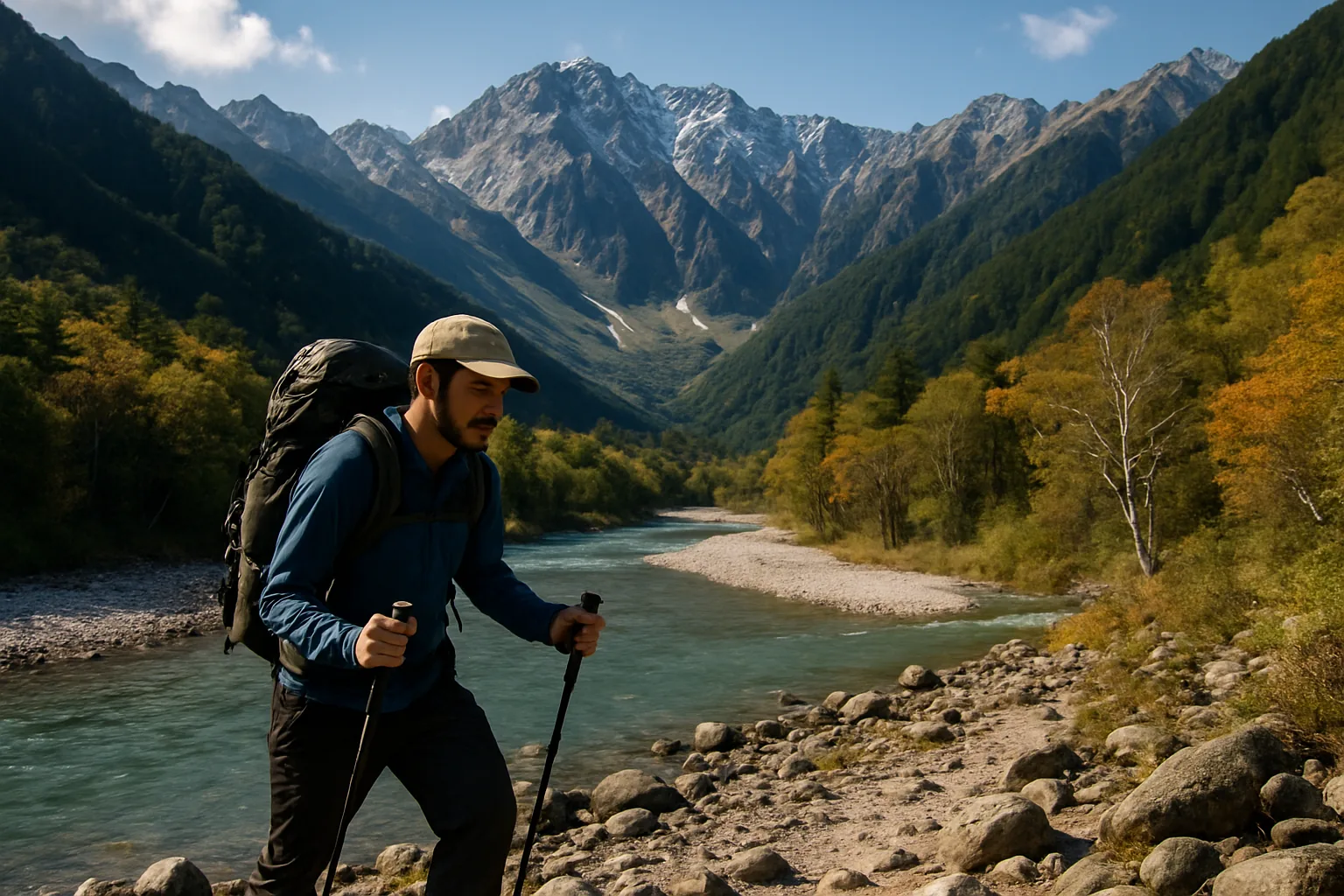
There’s a moment on the trail in the Japanese Alps when everything goes quiet — just the sound of wind moving through pine trees and the distant rush of a glacial river below — and you realise you’re somewhere genuinely extraordinary. Kamikochi hiking delivers that feeling over and over again, whether you’re a seasoned trekker or someone who’s never strapped on a proper pair of boots before. Nestled inside Chubu Sangaku National Park in Nagano Prefecture, this plateau sits roughly 1,500 metres above sea level and stretches for about 15 kilometres along the Azusa River, framed on every side by peaks that seem too dramatic to be real. If you’ve been looking for a reason to make Japan your next adventure, this is it.
What Makes Kamikochi Different from Every Other Hike
Japan has no shortage of beautiful landscapes, but Kamikochi occupies a category of its own. It sits at the heart of the Northern Japanese Alps, a range that contains roughly half of Japan’s summits over 3,000 metres tall. The mountains surrounding the plateau — including Nishihotakadake at 2,909 m, Maehotakadake at 3,090 m, and the towering Okuhotakadake at 3,190 m — create a dramatic amphitheatre that you can admire from the valley floor or climb into if you’re ready for a challenge.
Then there’s Yakedake, the volcanically active peak at 2,455 m that adds a slightly wild, unpredictable energy to the whole landscape. You can see its steam from certain points on the trail, a reminder that the earth here is very much alive. It’s the kind of detail that makes Kamikochi feel more than just scenic — it feels alive in a way that’s hard to explain until you’re standing there yourself.
One thing that sets Kamikochi apart practically: private cars are completely banned. The only way in is by bus or taxi. That single rule has protected the area from the kind of overcrowding that ruins so many natural destinations. The air is cleaner, the trails are quieter in the early mornings, and the whole place has a sense of being genuinely preserved rather than just managed. It’s a decision that shapes the entire experience — and one that young travellers who care about sustainable tourism will genuinely appreciate.
Planning Your Two-Day Kamikochi Hiking Adventure
Two days is a sweet spot for first-timers. It gives you enough time to explore the valley floor, push into the lower mountain trails, absorb the atmosphere, and still feel like you’ve earned the views. Here’s how to think about structuring those two days.
Day One: Arrive, Orient, and Walk the Valley
Get the earliest bus you can. Kamikochi is popular, and the morning light on the river and mountains is genuinely worth waking up for. Most buses arrive at Kamikochi Bus Terminal, which puts you right at the start of the plateau. From there, the trail along the Azusa River heading toward Kappa Bridge — the iconic wooden suspension bridge — is an easy, flat walk that takes less than an hour at a relaxed pace.
Don’t rush it. Stop and look at the mountains. Watch the water. Get your bearings. On your first day, the goal is to feel the place rather than conquer it. After Kappa Bridge, continue northeast toward Myojin Pond, a calm, mirror-like body of water surrounded by forest that feels almost otherworldly when the mist is low. The round trip from the bus terminal to Myojin and back is roughly 10 kilometres — manageable, beautiful, and a perfect introduction to the terrain.
Stay overnight in one of the mountain lodges (yamagoya) or guesthouses in the area. Booking ahead is essential, especially during peak season. Many lodges include dinner and breakfast, which matters a lot when you’re tired and far from a convenience store.
Day Two: Push Higher and Earn the Views
This is where Kamikochi hiking shifts from a pleasant walk to a genuine mountain experience. If you’re reasonably fit and have solid footwear, consider heading toward Dakesawa or pushing up toward the lower slopes of the Hotaka range. The terrain gets steeper, the air gets thinner, and the views — of the valley below, the river glinting in the morning light, the peaks all around you — become something you’ll be describing to people for years.
For those who want to push further, the famous Kamikochi-Yari-Hotaka Circuit is a three-day hike that takes you to Mt. Yarigatake (the fifth tallest mountain in Japan) and Mt. Okuhotakadake (the third tallest). The circuit involves a climb of 1,675 metres to the peak of Yarigatake — that’s not casual territory, but it’s absolutely achievable for a fit, well-prepared hiker. If you’re on a two-day schedule, you won’t complete the full circuit, but even reaching the mid-mountain huts gives you a taste of that high-alpine world.
→ Read also: Hiking Japan's Hidden Peaks: Kamikochi in the Japanese Alps (What to Know Before You Go)
On day two, start early, turn back before you’re exhausted, and give yourself time to catch your bus out without stress. Missing the last bus in a national park is not a fun situation.
When to Go: Seasons, Crowds, and Conditions
Kamikochi is open from April 17 until November 15, closing completely during winter. Each season within that window offers a completely different experience, and choosing the right one for your travel style matters.
Late April to May brings the opening of the season, fresh snow on the peaks, and a sense of the valley waking up. It’s cold — sometimes genuinely cold — but the crowds are lighter and the scenery has a raw, dramatic quality that summer softens. This is a strong choice if you’re comfortable layering up and want a more solitary experience.
June and July bring warmer temperatures and lush greenery, but also the rainy season (tsuyu). Rain in the mountains isn’t necessarily a dealbreaker — mist on the peaks can be stunning — but you’ll need proper waterproofs and a flexible mindset.
Late July through August is peak season. The trails are busier, mountain huts fill up fast, and you’ll want to book accommodation weeks in advance. The upside: reliable weather windows, long daylight hours, and the full energy of Japan’s mountain hiking culture in action.
September and October are arguably the most spectacular months. The autumn colours (koyo) transform the valley into something that looks like a painting — red maples, golden larches, the dark green of pines, all reflected in the Azusa River. Temperatures are cooler and more comfortable for hiking. This is when Kamikochi is at its most visually arresting, and many experienced hikers consider it the best time to visit.
Early November offers the quietest experience of all, just before the closure. Expect cold nights, possibly snow at higher elevations, and a landscape that feels almost entirely yours.
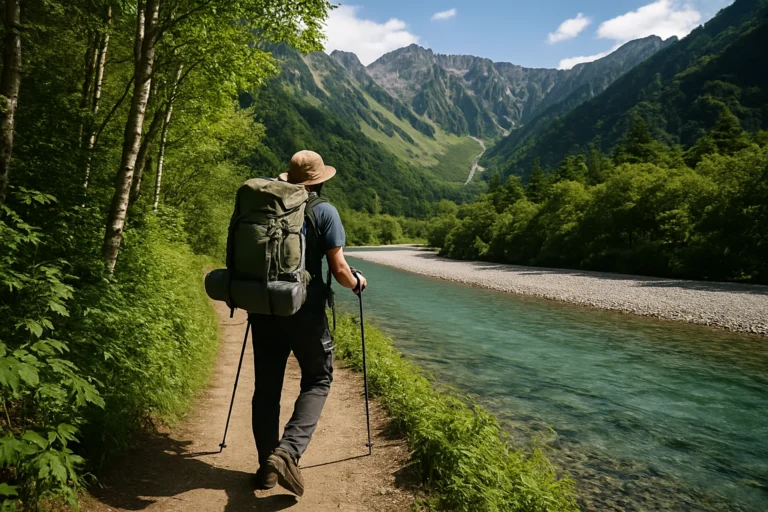
What First-Time Hikers Need to Know Before They Go
Kamikochi is accessible, but it’s not a theme park. The mountains are real, the weather changes fast, and a little preparation goes a long way. Here’s what experienced hikers consistently wish they’d known before their first visit.
Gear That Actually Matters
You don’t need to spend a fortune on gear, but you do need the basics. A waterproof jacket is non-negotiable — mountain weather can shift from clear to wet in under an hour. A mid-layer fleece keeps you warm when you stop moving. Gloves are worth packing even in summer if you’re going above the valley floor. Sturdy, broken-in hiking boots with ankle support make a real difference on uneven terrain. Bring more water than you think you need, plus snacks that give you actual energy — nuts, dried fruit, onigiri from a convenience store before you get on the bus.
A small first-aid kit, a headlamp, and a basic trail map (downloaded offline before you lose signal) round out the essentials. Japan’s trail signage is generally excellent, but having a backup never hurts.
→ Read also: Epic Hiking Trails for Young Adventurers: Valbona-Theth, Kumano Kodo & More
Mountain Culture and Trail Etiquette
Hiking in Japan comes with its own culture, and respecting it makes the experience richer for everyone. On the trail, it’s standard to greet other hikers with a cheerful “Konnichiwa” — a small gesture that creates a genuine sense of community on the mountain. Uphill hikers typically have right of way on narrow paths. Leave no trace is taken seriously here; pack out everything you pack in.
Mountain huts (yamagoya) have their own etiquette too. Remove your boots before entering. Keep noise down in the evenings. Meals are often communal and served at set times — don’t be late. The hut keepers work incredibly hard in remote conditions, and a respectful, grateful attitude goes a long way.
Japan’s approach to mountain safety is notably structured. Many trails have registration systems where you log your planned route before setting out. Take these seriously — they exist for good reason, and completing one is both responsible and culturally expected.
Logistics That Catch People Off Guard
Because private cars are banned, you need to plan your transport carefully. Buses run from Matsumoto and Takayama, and schedules vary by season. Check timetables before you go and note the last bus time on the day you’re leaving — missing it means a very expensive taxi or a night you didn’t plan for.
Cash is still important in many parts of Japan’s mountain regions. Some huts and smaller facilities don’t accept cards. Bring enough yen to cover accommodation, meals, and emergencies. Mobile signal is limited or nonexistent on many trails, so download maps, translation tools, and bus schedules while you still have Wi-Fi.
Altitude is also worth thinking about if you’re planning to go high. At 1,500 metres, the valley floor is fine for most people. But if you’re climbing toward the 3,000-metre peaks, take your time, stay hydrated, and pay attention to how your body feels. Rushing altitude is how good trips become difficult ones.
The Japanese Alps Beyond Kamikochi
Kamikochi is the most famous entry point into the Japanese Alps, but it’s part of a much larger mountain world. The Japanese Alps consist of three separate ranges — Northern, Central, and Southern — connected by valleys and onsen towns that are worth exploring in their own right. After a few days of hiking, soaking in a hot spring in a mountain town is one of those experiences that feels almost too good to be true.
The town of Matsumoto, your likely gateway to Kamikochi, deserves at least a day of its own. It has a beautifully preserved castle, a relaxed café culture, and a distinctly local atmosphere that feels different from Tokyo or Kyoto. Arriving a day early gives you time to rest, sort your gear, and get into the right headspace for the mountains.
If you want to extend your alpine adventure, the Nakasendo trail — a historic route connecting Edo-era post towns through mountain valleys — offers a different kind of journey: slower, more cultural, and deeply connected to Japanese history. It’s the kind of experience that broadens a trip from a hike into something more like a real exploration of a place and its people.
For a deeper look at trail conditions, access information, and the latest updates on the national park, the official Kamikochi website is the most reliable resource you’ll find.
Kamikochi hiking isn’t just a tick on a Japan itinerary. It’s an invitation into a world of mountains, rivers, ancient forest, and a culture that takes the outdoors seriously in the best possible way. You’ll come back with tired legs, a full memory card, and the quiet certainty that you found something real — the kind of place that stays with you long after the trail ends.
This article was produced with AI assistance and reviewed editorially.


Hiking Kamikochi: Your Guide to Japan’s Most Stunning Alpine Adventure

First Time in Japan: What Actually Happens When You Get There


