
Asia
First Time in Japan: What Actually Happens When You Get There
Discover what it truly feels like arriving in Japan for the first time—sensory overload, culture shock, and practical tips for a two-week Golden Route journey.

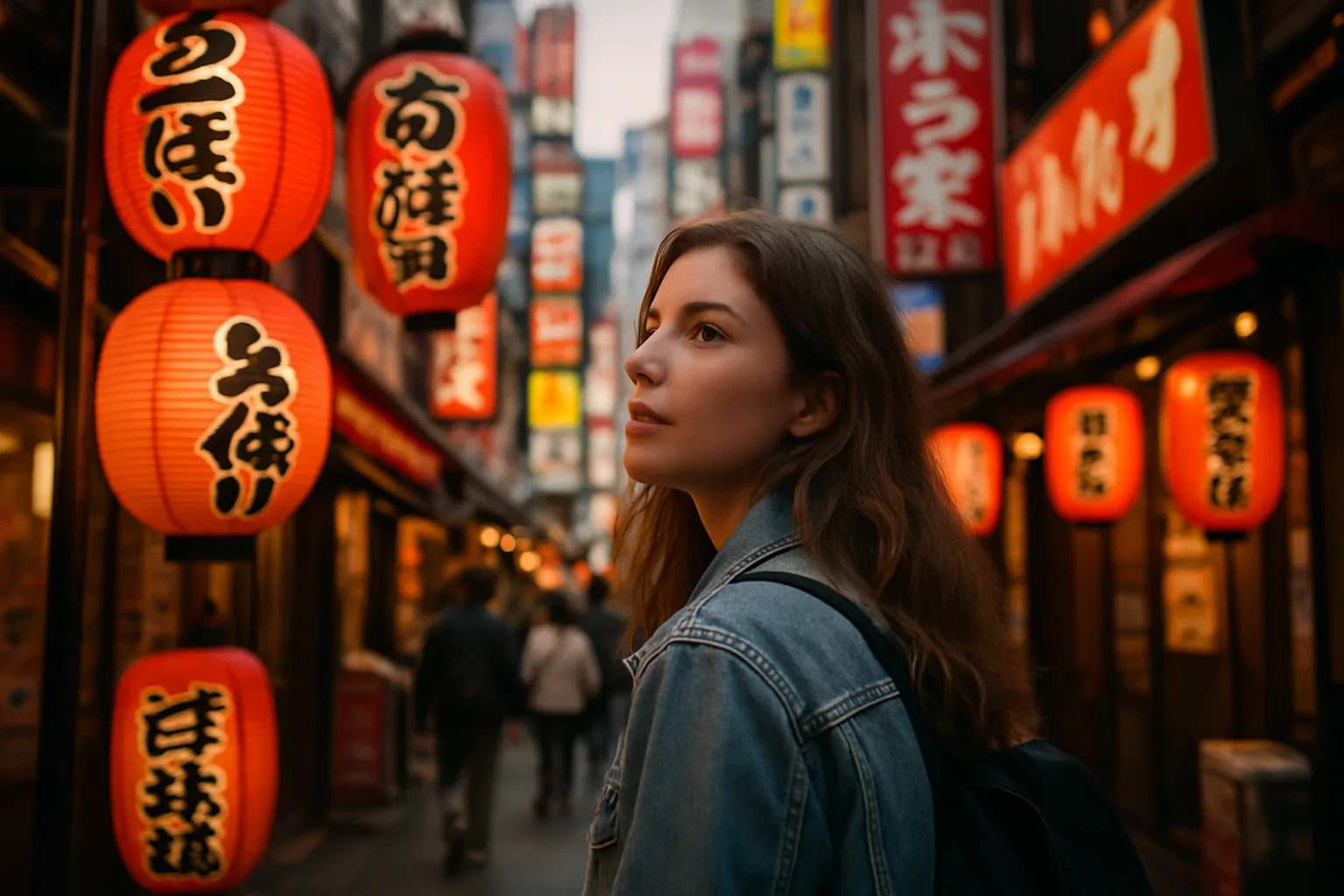
Stepping off the plane in Japan for the first time in Japan is one of those experiences that genuinely defies expectation — not because the country is perfect, but because it’s so completely, overwhelmingly itself. The vending machines selling hot coffee at 2 a.m., the silence on the metro despite hundreds of people packed into one carriage, the way a convenience store meal somehow tastes better than most restaurant food back home. Nothing quite prepares you for it, and that’s exactly the point.
Why Japan Hits Differently Than Anywhere Else You’ve Been
Most destinations ease you in. Japan doesn’t. From the moment you arrive, it presents you with a world that is simultaneously ultra-modern and deeply traditional — and it holds both without apology. Japan is a nation that embraces innovation and progress while still maintaining centuries-old customs, and you feel that tension everywhere. In the same afternoon, you can walk through a centuries-old shrine and then step into a building where robots serve your food.
That contrast is part of what makes Japan so compelling for young travelers. It’s not just a new place — it’s a new logic. The rules are different. The rhythms are different. Even the silence means something different. And if you go in expecting a checklist of landmarks, you’ll miss the whole thing.
The sensory experience starts before you even leave the airport. Signs are clear, transport is precise, and everything works with an efficiency that feels almost theatrical. But then you exit into the city and the scale of it hits you. Tokyo is vast in a way that photos never quite communicate. The skyline doesn’t end. The crowds don’t thin. And somewhere in the middle of all that stimulation, you realize you’re grinning.
The Golden Route: A Two-Week Framework That Actually Works
For most first-timers, a two-week itinerary is the sweet spot — long enough to breathe, short enough to stay focused. The classic path covers Tokyo, Hakone, Kyoto, Nara, and Osaka, often called the Golden Route, and it earns that name for a reason. Each stop offers something genuinely distinct, and together they give you a real cross-section of what Japan is about.
Start in Tokyo. Give it at least four or five days, because it rewards slow exploration more than any highlight reel suggests. Then head to Hakone for a change of pace — mountain air, hot springs, and views of Mount Fuji on a clear day. From there, Kyoto pulls you into a different Japan entirely: quieter, more considered, layered with history. Three nights in Kyoto is widely recommended as a solid amount of time to explore its temples, shrines, and bamboo groves without rushing. Then Nara — a half-day or full day is enough to wander among the deer and visit Tōdai-ji — before finishing in Osaka, where the food scene and the energy make for a genuinely memorable send-off.
This route works because it has natural momentum. Each destination builds on the last, and the transitions between them are easy thanks to Japan’s rail network. You’re never stuck — you’re always moving forward, and that feeling of forward motion is a big part of what makes a Japan trip feel so alive.
Tokyo: Sensory Overload as a Feature, Not a Bug
Let’s be honest about what Tokyo actually feels like. It’s a lot. The scale, the noise, the light — especially at night — can tip into genuine overwhelm, particularly in your first day or two. Shibuya Crossing is one of the most talked-about spots in the city, and when you stand at the edge of it and watch hundreds of people flow in every direction at once, surrounded by dazzling lights and enormous screens and the hum of a city that never really stops, you understand why. It’s fascinating and slightly disorienting in equal measure.
That disorientation is worth leaning into rather than fighting. Don’t try to process everything at once. Instead, pick a neighborhood and go deep. Tokyo is really a collection of distinct villages stitched together — Shimokitazawa has a relaxed, creative energy; Yanaka feels like a preserved slice of old Tokyo; Harajuku is a visual spectacle that you have to see to believe. Each one has its own rhythm, and discovering that rhythm is more rewarding than ticking off a list of famous spots.
→ Read also: Japan for First-Timers: A 2-Week Itinerary + 31 Essential Travel Tips for 2026
Eat often and eat everywhere. Convenience store onigiri at 7-Eleven is not a compromise — it’s a genuine experience. Ramen at a tiny counter with eight seats, where you order from a ticket machine and eat in focused silence, is one of the most satisfying meals you’ll have. The food culture in Japan rewards curiosity, and the barrier to entry is low. Point at something, try it, and go from there.
Cultural Differences Worth Knowing Before You Land
Japan has a set of social norms that are genuinely different from most Western countries, and understanding them before you arrive makes everything smoother — not just for you, but for the people around you.
- Quiet on public transport. Talking loudly on trains, playing music without headphones, or taking phone calls is considered disruptive. Watch what the locals do and follow their lead.
- Shoes off indoors. Many traditional restaurants, ryokan (Japanese inns), and some temples require you to remove your shoes. Wear socks you’re not embarrassed by.
- No eating while walking. Street food is generally meant to be eaten standing still near where you bought it, not while you stroll.
- Cash still matters. While digital payments are becoming more common, many smaller restaurants, temples, and local shops are still cash-only. Carry yen.
- Rubbish bins are rare. You’ll find almost no public bins on the street. Carry a small bag for your rubbish and dispose of it at your accommodation or a convenience store.
- Tipping is not a thing. In fact, it can be considered rude. Excellent service is simply the standard — you don’t need to add anything extra.
None of these are difficult to adapt to. They just require a little awareness. And once you’re in the rhythm of it, following these norms starts to feel natural — even satisfying. There’s something genuinely calming about a public space where everyone is quietly considerate of everyone else.
Practical Tips That Go Beyond the Obvious
There’s no shortage of Japan travel advice out there — including a well-known YouTube resource from the Happy to Wander channel covering more than fifty must-knows for first-time visitors. But beyond the standard checklist, here are the things that actually make a difference on the ground.
Get a IC card (like Suica or Pasmo) on day one. These rechargeable transport cards work on almost every train, subway, and bus across Japan, and many convenience stores accept them too. Loading one up at the airport saves you from fumbling with tickets every time you move.

Use Google Maps, but trust the signs too. Japan’s signage is genuinely excellent, and following signs at train stations — especially in Tokyo, where the metro is labyrinthine — will often get you where you’re going faster than staring at your phone. Use both.
Book popular activities well in advance. Certain experiences — tea ceremonies, specific restaurants, popular viewpoints — book out weeks or even months ahead. If there’s something you know you want to do, sort it before you land. Don’t assume you can wing it.
Arrive at busy spots early. Fushimi Inari in Kyoto, the Arashiyama bamboo grove, popular ramen shops — all of these are dramatically better before the crowds arrive. Early morning visits to major sites are often the most memorable part of a Japan trip, and the light is better anyway.
Download a translation app before you go. Google Translate’s camera function, which lets you point your phone at Japanese text and see a translation in real time, is genuinely useful for menus, signs, and anything else you can’t quite parse. It’s not perfect, but it gets you most of the way there.
→ Read also: Budget Stays in Japan: Capsule Hotels, Airbnbs & Guesthouses Across Tokyo, Kyoto & Mt. Fuji
Stay in a ryokan for at least one or two nights. The experience of sleeping on a futon, wearing a yukata, and eating a traditional multi-course breakfast is worth the slightly higher cost. It’s one of those things that moves from “tourist activity” to “actual memory” very quickly.
Managing the Overwhelm: How to Actually Enjoy the Chaos
Here’s something nobody puts in the itinerary: you will probably feel overwhelmed at some point, and that’s completely fine. Japan is a lot of information arriving at once — visual, auditory, social, cultural. Your brain is working hard, even when you’re just walking down a street.
The best antidote is intentional slowness. Build in time to do nothing. Sit in a park. Drink a canned coffee from a vending machine and watch the city move around you. Visit a temple early in the morning when it’s quiet. Find a small neighborhood café and stay for an hour. Japan rewards the traveler who slows down enough to notice the details — the precision of a shop display, the way a chef moves, the sound of a temple bell drifting through an early morning mist.
Also: let yourself get lost. Not recklessly, but deliberately. Pick a direction and walk. The neighborhoods between the famous spots are often where the most interesting things happen — a tiny shrine tucked between apartment buildings, a street market you didn’t know existed, a bakery with a queue of locals that tells you everything you need to know about what’s inside.
Off the Golden Route: What to Consider If You Have More Time
The Golden Route is excellent, but Japan has a lot more to offer if you can extend your trip or return for a second visit. Japan’s official tourism guide highlights off-the-beaten-track destinations that give a very different picture of the country — slower, less visited, and often more deeply connected to traditional ways of life.
Kanazawa, on the Sea of Japan coast, has a beautifully preserved geisha district and one of Japan’s most celebrated gardens. Hiroshima and Miyajima offer a profound and moving experience that’s worth the detour from Osaka. The Kumano Kodo pilgrimage trails in the Kii Peninsula are a world away from city life — ancient forest paths, remote onsen villages, and a quiet that feels almost sacred.
Even within the Golden Route cities, there are neighborhoods and experiences that most first-timers overlook. Kyoto’s northern districts, away from the main tourist corridors, feel genuinely local. Osaka’s covered shopping arcades — the shotengai — are full of life in a way that the famous Dotonbori strip isn’t. The more you look for the edges of a place, the more interesting it becomes.
What to Pack (and What to Leave Behind)
Japan is a country where practicality is valued, so pack with function in mind. A few things that matter more than you’d expect:
- Comfortable walking shoes. You will walk more than you think. A good pair of shoes is non-negotiable.
- A small day bag or backpack. Something light that fits your essentials — water bottle, snacks, camera, portable charger — without weighing you down.
- Layers. Japanese weather varies significantly depending on the season and region. The ability to add or remove layers keeps you comfortable across different environments.
- A portable Wi-Fi device or SIM card. Renting a pocket Wi-Fi at the airport is easy and gives you reliable connectivity everywhere — which matters when you’re navigating an unfamiliar city.
- A small notebook. This sounds old-fashioned, but Japan is a place that generates thoughts and observations worth writing down. And sometimes, a pen and paper is just more useful than a phone.
Leave behind anything you’re not certain you’ll use. Japan is a shopping destination in its own right, and you’ll almost certainly come home with more than you arrived with — whether that’s ceramics, stationery, snacks, or something you didn’t know you needed until you found it in a basement department store in Tokyo.
Going to Japan for the first time is one of those experiences you’ll find yourself describing to people for years — not just the places you went, but the feeling of being somewhere so entirely different and so entirely itself. The chaos of Shibuya at night, the stillness of a Kyoto temple at dawn, the warmth of a bowl of ramen after a long day of walking. None of it fits neatly into a single story, and that’s what makes it worth telling.
This article was produced with AI assistance and reviewed editorially.


Hiking Kamikochi: Your Guide to Japan’s Most Stunning Alpine Adventure

First Time in Japan: What Actually Happens When You Get There


