
Turkey
Escaping Crowds: Capri, Bodrum & Turkey’s Aegean Coast for Solo & Group Travelers
Discover practical strategies for avoiding crowds in Mediterranean travel. Explore Capri, Bodrum, and Turkey’s Aegean coast with timing tips, local neighborhoods, and sea

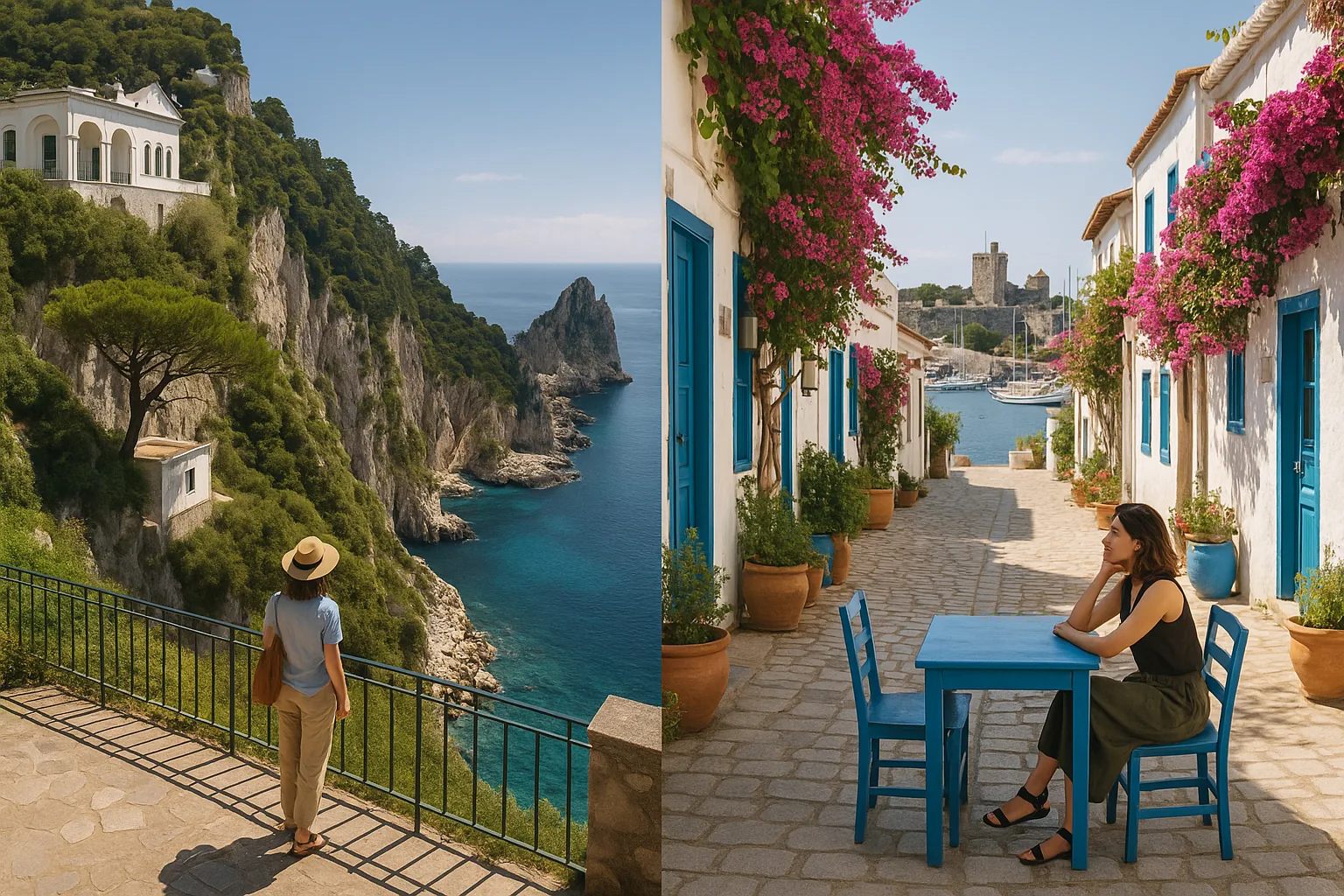
The Mediterranean is one of those places that gets under your skin the moment you arrive — the salt air, the light bouncing off whitewashed walls, the sound of water lapping against ancient stone. But if you’ve ever tried avoiding crowds in Mediterranean travel during the peak summer rush, you already know the flip side: ferries packed shoulder to shoulder, queues that stretch around ancient ruins, and beaches so busy you can barely hear the sea. The good news? With the right timing, a few smart choices, and a willingness to move differently than the masses, these iconic destinations can still deliver exactly the kind of experience you came for.
Why the Mediterranean Gets So Crowded — and Why That Doesn’t Have to Be Your Problem
The Mediterranean’s appeal is obvious. Warm water, deep history, incredible food, and the kind of scenery that makes you stop mid-sentence. But that same appeal draws enormous volumes of visitors, especially during the core summer months when school holidays and long weekends collide. Popular spots like Capri and Bodrum shift dramatically between shoulder season and peak season — the same harbor that feels magical in early June can feel overwhelming by mid-August.
The key insight that most travelers miss is this: the crowd problem is almost always a timing and planning problem, not a destination problem. The places themselves haven’t changed. What’s changed is when and how people visit them. Once you understand the patterns, you can move around them — and suddenly the Mediterranean opens up in a completely different way.
This guide covers three of the most rewarding areas to visit right now: Capri, Bodrum and the Turkish Aegean peninsula, and the broader Turkish Aegean coast. Each one rewards the traveler who’s willing to look a little further, arrive a little earlier, or stay a little longer.
Capri: The Island Everyone Visits and Almost Nobody Explores Properly
Capri has a reputation problem. Ask most people and they’ll tell you it’s overrun, overpriced, and overrated. Ask someone who’s stayed there for two or three nights — not just passed through on a day trip — and you’ll get a very different answer.
The island’s crowd issue is almost entirely a day-tripper phenomenon. Ferries from Naples and Sorrento deliver thousands of visitors every morning during summer, and those visitors funnel through the same narrow streets, stop at the same viewpoints, and queue for the same funicular. By mid-morning, the most photographed spots are genuinely difficult to enjoy. But the crowds follow a predictable rhythm: they arrive, they peak around midday, and they leave.
The single most effective strategy for experiencing Capri as it’s meant to be experienced is staying overnight on the island. When the last ferry of the day pulls away, the atmosphere transforms. Streets that were gridlocked with selfie sticks become quiet. Restaurants that were impossible to get into suddenly have tables. The island exhales. Travelers who commit to at least two nights consistently describe a completely different experience from those who visit on a day trip — and that’s not a coincidence.
Moving Smarter Around the Island
If you are doing a day visit, the timing of your arrival matters enormously. Taking an early morning ferry — the first or second departure of the day — puts you on the island before the main rush. Use that window to take the mountain lift up before the queues form, explore the quieter upper paths, and get to the viewpoints while the light is still soft and the terraces are still empty.
Midday, when the heat peaks and the crowds are thickest in the main piazza and shopping streets, is the perfect time to escape by boat. Small boat tours and rentals let you explore the coastline, discover coves that are inaccessible on foot, and swim in water so clear it almost doesn’t look real. This isn’t just a crowd-avoidance tactic — it’s genuinely one of the best ways to experience the island’s dramatic geology up close.
👉 Read also: Beyond Capri: How to Experience Greek Islands & Italian Coastlines Without the Crowds (2026)
The upper part of the island tends to attract fewer visitors than the main town, and the further you walk from the central areas, the more the island starts to feel like it belongs to you. Local beaches away from the most photographed spots offer calmer swimming and a more relaxed atmosphere — you’ll share the water with Italian families rather than tour groups, which is exactly the kind of experience worth seeking out.
Bodrum: Beyond the Beachfront Buzz
Bodrum sits on a peninsula jutting into the Aegean, and it’s been drawing visitors — including famously high-profile ones — for decades. The main harbor area is lively, beautiful, and absolutely worth seeing. It’s also, during the height of summer, genuinely hectic. Knowing where to go beyond the central strip makes all the difference.
The peninsula is dotted with smaller villages and bays, each with its own character. Some lean quieter and more local, with family-run guesthouses, fish restaurants where the menu is whatever came off the boat that morning, and beaches that don’t require a reservation. Exploring these areas — by local minibus, rented scooter, or the small boats that connect coastal spots — is one of the most rewarding ways to spend time on the peninsula.
One of the most effective crowd-avoidance strategies in Bodrum is the private boat tour. The peninsula’s coastline is riddled with hidden bays and inlets that are completely inaccessible by road. Chartering a small boat — either privately or as part of a small group — gives you access to these spots while the main beaches are at their busiest. You’ll anchor in calm turquoise water, swim off the back of the boat, and eat lunch somewhere that doesn’t appear on any tourist map. It’s a different pace entirely.
Where to Stay and How to Eat Like a Local
Accommodation choices shape your entire experience in Bodrum. The large beach clubs and resort hotels are concentrated in certain areas, and staying in or near them puts you right in the middle of the action — which is great if that’s what you want, and less ideal if you’re after something quieter. Smaller, independently run guesthouses in the peninsula’s villages offer a completely different atmosphere: personal service, home-cooked breakfasts, and hosts who actually know the area and can point you toward the spots that don’t show up in the mainstream guides.
For food, the rule is simple: follow the locals. The restaurants closest to the main tourist areas are often the most expensive and the least interesting. Walk a few streets back, look for places with handwritten menus and tables full of Turkish families, and you’ll eat better for less. Mezes, grilled fish, and fresh bread are the foundation of a good meal here — and the quality of the ingredients, especially the seafood, is genuinely exceptional when you’re eating at a place that sources locally.
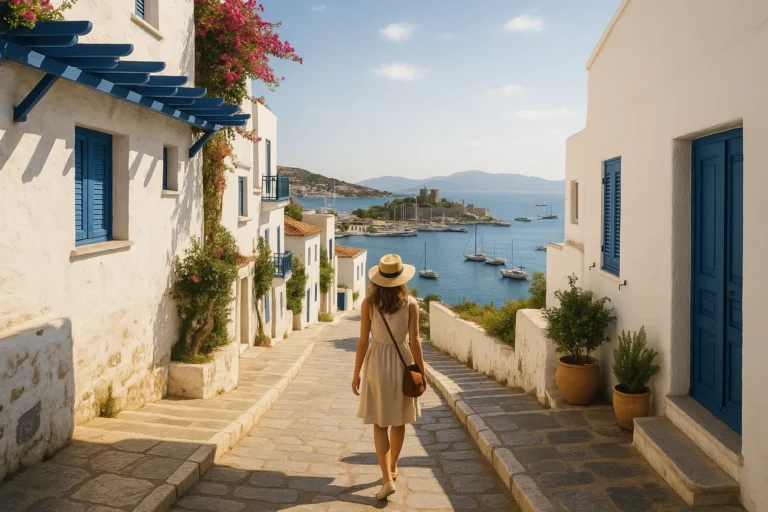
Getting around the peninsula by local dolmuş — the shared minibuses that run fixed routes — is cheap, easy, and gives you a much more authentic feel for the place than taking taxis everywhere. Routes connect the main town with the villages along the coast, and the journey itself is often enjoyable.
Turkey’s Aegean Coast: The Wider Picture
Bodrum is just one entry point into a coastline that stretches for hundreds of kilometres and contains some of the most historically and scenically significant landscapes in the Mediterranean. Avoiding crowds in Mediterranean travel becomes significantly easier when you’re willing to move along the Turkish Aegean coast rather than anchoring in a single spot.
The Turkish Aegean is home to ancient sites that genuinely rank among the most impressive in the world. Ephesus — known in Turkish as Efes — is one of the best-preserved ancient cities anywhere, with marble-paved streets, a library facade that appears on countless history books, and an atmosphere that rewards early arrival above almost anything else. Getting there when the gates open, before the tour buses arrive, is a completely different experience from visiting mid-morning. The same logic applies to Troy and the Temple of Apollo at Didyma — sites that carry enormous historical weight and are far more moving when you can stand in them quietly rather than navigating around crowds.
Izmir and Çeşme are two cities that anchor the northern part of the coast and offer very different experiences. Izmir is a large, vibrant city with a genuinely local feel — it’s not primarily a tourist destination, which means you experience everyday Turkish life rather than a curated version of it. The waterfront promenade, the markets, and the food scene are all excellent. Çeşme, further west on a peninsula of its own, is known for its clear water and wind conditions that make it popular with kitesurfers and windsurfers.
👉 Read also: Escape the Crowds: Capri, Milos & the Isles of Scilly Without the Tourist Masses
Moving Along the Coast
One of the smartest ways to experience the Turkish Aegean is to move slowly and keep going south. The further you get from the major airports and the most heavily marketed resorts, the more the coast opens up. Smaller towns along the way offer accommodation that’s genuinely affordable, restaurants where you’re the only non-local at the table, and a pace of life that feels restorative rather than exhausting.
Renting a car gives you freedom that public transport can’t quite match along this stretch of coastline. You can stop at unmarked viewpoints, pull over at a beach that looks good from the road, and time your visits to ruins for the early morning or late afternoon when the light is better and the crowds are thinner. That said, local buses and dolmuş services do connect most of the major towns, and for travelers who prefer not to drive, they’re a perfectly workable option.
For a practical overview of what the Aegean Coast of Turkey has to offer in terms of ancient sites and coastal scenery, Viator’s Aegean Coast destination guide is a useful starting point for understanding the geography and key attractions.
Seasonal Timing: When to Go and When to Wait
The single biggest lever you have when it comes to avoiding crowds in Mediterranean travel is when you choose to go. The peak summer period — roughly mid-July through August — is when all three of these destinations are at their busiest, their most expensive, and their most challenging to enjoy at a relaxed pace. The weather is also at its hottest, which adds another layer of difficulty to sightseeing.
The shoulder seasons — late spring and early autumn — offer a genuinely compelling alternative. Late May and June bring warm temperatures, long days, and visitor numbers that are noticeably lower than peak season. The sea is warm enough to swim in, the wildflowers are still visible in the hills, and you’ll find it significantly easier to get a table at a good restaurant, book a ferry at the time you want, or simply stand at a viewpoint without being jostled.
September and October are arguably even better for the Turkish coast in particular. The summer heat softens, the sea retains its warmth from months of sun, and the resorts transition back to a more local rhythm. Ancient sites become genuinely contemplative rather than chaotic. Accommodation prices drop. And the quality of light in the late afternoon turns everything golden in a way that mid-summer haze simply doesn’t allow.
For Capri specifically, late spring and early September hit a sweet spot: warm enough for swimming, light enough in terms of visitor numbers that the island’s character comes through. Midweek visits also make a meaningful difference — weekend day-trippers from the mainland amplify the crowds considerably, so if your schedule allows, arriving on a Tuesday or Wednesday and leaving on a Friday gives you the quieter version of the island.
Practical Moves for Solo and Group Travelers
Whether you’re traveling solo or with a group, a few practical habits make a significant difference to how you experience these destinations.
- Book accommodation early for peak season, but consider shoulder season as your default. The best small guesthouses and locally-run places fill up quickly, especially in Bodrum’s quieter villages. If you’re going in summer, plan ahead. If you can shift your dates to June or September, you’ll have more options and better prices.
- Start your days early. This is the single most consistent piece of advice from travelers who’ve found the quieter side of these destinations. Ancient sites, viewpoints, and local markets are all better before 9am than after 11am.
- Use local transport where possible. Beyond the cost savings, traveling by dolmuş or local ferry puts you in contact with the actual rhythm of a place in a way that private transfers don’t.
- Stay longer in fewer places. The temptation to cover as much ground as possible is understandable, but it almost always means spending more time in transit and less time actually experiencing a place. Two or three nights somewhere gives you the chance to discover the spots that aren’t in any guide.
- Eat where the locals eat. This is both a crowd-avoidance strategy and a quality-of-experience strategy. The best food is rarely found in the most visible locations.
- Be flexible with your itinerary. If a beach is crowded when you arrive, move on and come back later. If a town you pass through feels right, stay an extra night. The Mediterranean rewards spontaneity.
For solo travelers in particular, the Turkish coast is one of the more welcoming and navigable destinations in the wider Mediterranean region. The combination of affordable local transport, a culture of hospitality, and the sheer variety of experiences available — from ancient ruins to boat trips to vibrant city neighborhoods — makes it an excellent choice for independent travel at any experience level.
The Mediterranean isn’t going anywhere, and neither are its crowds — but the travelers who move with intention, who stay a little longer and dig a little deeper, consistently find that the magic is still there, waiting just around the corner from the tour group. You just have to know where to look.
This article was produced with AI assistance and reviewed editorially.


Teaching English Abroad in 2026: Top Countries, Visa Requirements & Real Salaries

Where to Stay in Latin America’s Top Destinations: Buenos Aires, Bogota & Beyond


