
Ecuador
Ecuador’s Mountain Capital: Quito as a Stopover & 10-Day Destination—What Solo Travelers Actually Experience
Discover why Quito deserves more than a layover. This honest guide covers neighborhoods, culture, and real solo travel experiences in Ecuador’s mountain capital.

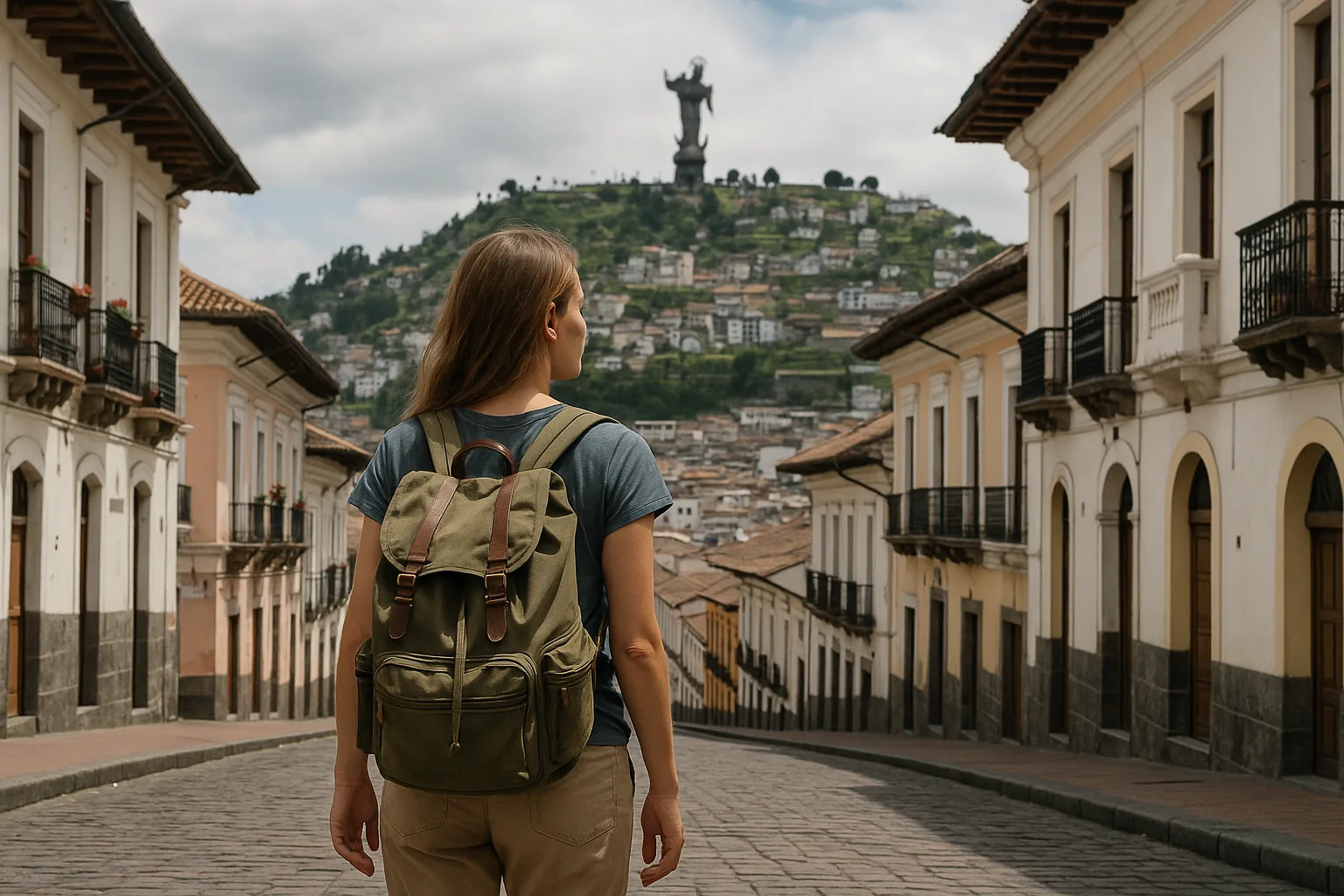
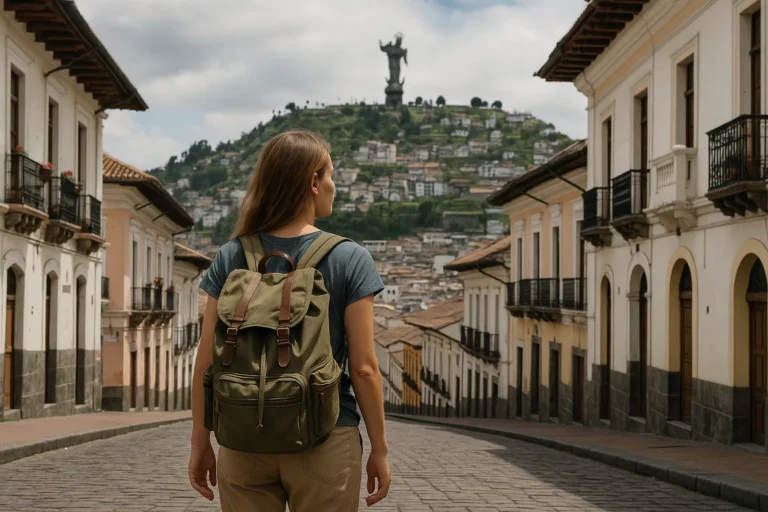
Quito has a way of getting under your skin. You arrive planning to spend a couple of nights before heading somewhere else — the Amazon, the cloud forests, maybe the Galápagos — and then something happens. The morning light hits the colonial rooftops just right, a stranger invites you to share a plate of llapingachos, and suddenly two days turns into two weeks. For anyone considering Quito solo travel, this city is far more than a transit point. It’s a destination that rewards patience, curiosity, and a willingness to wander without a rigid plan.
Why Quito Deserves More Than a Layover
Most travelers treat Quito as a gateway. You fly in, recover from the altitude, and race off to the next thing. That’s understandable — Ecuador packs an extraordinary amount of diversity into a small country, and the Galápagos aren’t going to wait forever. But writing Quito off as a stopover means missing one of South America’s most layered and genuinely fascinating cities.
Quito sits at roughly 2,850 metres above sea level, cradled in a narrow Andean valley and surrounded by volcanoes. That geography alone shapes everything about daily life here — the cool, crisp air, the dramatic cloud formations that roll in around midday, the way the city stretches long and thin because the mountains simply won’t allow it to sprawl. Arriving from a coastal city or a lower-altitude country, you’ll feel the altitude immediately. Give yourself at least a day to acclimatise before you do anything strenuous. Drink water, take it slow, and let the city come to you.
The reward for that patience? A place that feels genuinely alive. Quito is Ecuador’s capital city, which means it carries the full weight of the country’s political, cultural, and artistic energy. Street musicians compete with the sound of church bells. Market vendors arrange fruit into vivid pyramids of colour. And everywhere, there’s a sense that history and the present are having a very loud, very interesting conversation.
The Old Town and New Town: Two Cities, One Experience
Quito divides itself neatly into two distinct areas, and understanding that division makes navigating the city much easier. The Old Town — Centro Histórico — is a UNESCO World Heritage site and one of the best-preserved colonial city centres in Latin America. Walking through it feels like stepping into a living museum, except the museum is also full of people going about their actual lives. Churches with gilded interiors rise above cobblestone streets. Plazas fill with schoolchildren, vendors, and the occasional political rally. The architecture is staggering, and it’s almost entirely free to explore.
Spend a morning simply wandering without a map. Duck into courtyards, climb bell towers for rooftop views, and stop whenever something catches your eye. The Centro Histórico rewards the slow traveler who isn’t trying to tick off a checklist.
The New Town — particularly the Mariscal Sucre neighbourhood, often called La Mariscal — is where you’ll find the bulk of hostels, international restaurants, travel agencies, and the social scene that solo travelers tend to gravitate toward. It’s more commercial, more tourist-facing, but also genuinely useful as a base. The two areas are connected by public transport and are close enough that you can experience both without much effort. Many solo travelers choose to stay in La Mariscal for the convenience and social energy, then spend their days exploring the Old Town and beyond.
Getting Around and Feeling Comfortable as a Solo Traveler
One of the first questions any solo traveler asks about a new city is: can I actually move around here comfortably? Quito is a city that requires some common sense and awareness, as most cities of its size do. The general advice that applies to solo travel anywhere — stay alert in unfamiliar areas after dark, keep valuables out of sight, use reputable transport options — applies here too.
👉 Read also: Quito, Ecuador: The Mountain City Where Every Road Leads
Quito has a modern metro system that makes getting around the city considerably easier than it used to be. There are also electric trolleybuses and a network of city buses that locals use daily. For longer distances or late-night journeys, app-based ride services are widely used and generally considered a more reliable option than hailing a random taxi off the street. Your hostel or accommodation will always be your best source of up-to-date local advice — ask the staff which routes feel comfortable, which neighbourhoods to explore, and where to avoid after dark.
Solo travelers — including solo female travelers — do visit and enjoy Quito regularly. Quito and Cuenca are both well-established mountain hubs for solo travel across Ecuador, and the solo travel infrastructure (hostels, tours, social spaces) reflects that. Like any major city, the experience varies depending on where you are and what time of day it is. The Old Town is busier and more vibrant during daylight hours. La Mariscal comes alive in the evenings. Use your instincts, connect with other travelers, and don’t be afraid to ask locals for guidance — most people are genuinely happy to help.
The Weather, the Altitude, and the Rhythm of the Day
Quito has a quirky relationship with time and weather. Because it sits almost exactly on the equator, the city doesn’t experience seasons the way most places do. Instead, it has a dry season and a wet season, and even within those, the weather can be wildly unpredictable from one hour to the next.
Expect cloud cover and afternoon rain almost every day. This isn’t a reason to avoid Quito — it’s just something to plan around. Mornings tend to be clearer and brighter, which makes them the ideal time to explore outdoor spaces, climb viewpoints, and visit markets. By noon, clouds often gather over the valley. By mid-afternoon, a shower is likely. And then, just as quickly, it clears again. Locals carry a light jacket and an umbrella as a matter of course, and you should too.
The altitude affects more than just your breathing. It shapes the entire pace of the city. You’ll find yourself moving more slowly, needing more sleep, and feeling the effects of even mild exertion more than usual. This isn’t a weakness — it’s just your body adjusting to thinner air. Most travelers feel significantly better after two or three days. Until then, resist the urge to sprint up every staircase and climb every hill on day one.
Food, Markets, and Eating Like You Actually Live There
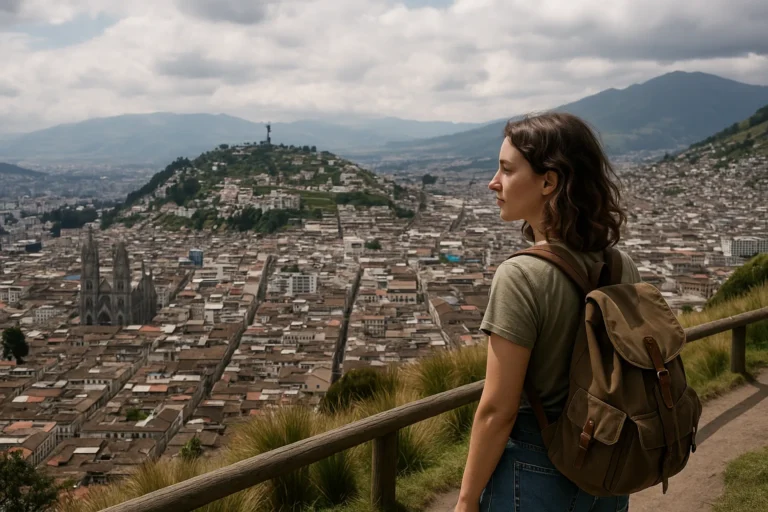
Quito’s food scene is one of its most underrated pleasures. You can eat extraordinarily well here without spending much money, especially if you’re willing to eat where the locals eat rather than where the tourist menus are laminated and translated into four languages.
The city’s markets are the best starting point. Look for a mercado with a busy lunch crowd — a full room of workers and families eating is always a good sign. You’ll typically find a set lunch (almuerzo) that includes soup, a main course, juice, and sometimes dessert, all for a very reasonable price. This is how a huge portion of the city eats every day, and it’s one of the most genuine ways to connect with daily Quito life.
Ecuadorian food is hearty and flavourful. Llapingachos — potato cakes pan-fried until golden and served with chorizo, fried egg, and aji sauce — are a staple you’ll find everywhere. Seco de pollo, a slow-cooked chicken stew, is another comfort dish worth seeking out. If you’re feeling adventurous, cuy (roasted guinea pig) is a traditional Andean dish that appears on menus across the region. Street food is also worth exploring, particularly the fresh fruit juices and empanadas sold at market stalls.
👉 Read also: Ecuador's Mountain Capital: Quito as a Base for Jungle, Amazon & Galápagos Adventures
In La Mariscal, you’ll find a wider range of international options — everything from Japanese food to pizza to craft beer bars. These aren’t bad options, especially when you want a familiar meal or a social evening. But make sure they don’t crowd out the local food experiences that make Quito memorable.
Using Quito as the Base for a 10-Day Ecuador Adventure
Here’s where Quito really earns its reputation as more than just a pretty city. A classic 10-day Ecuador itinerary typically uses Quito as the anchor, with excursions radiating outward into the Amazon rainforest, the cloud forests, the Andean highlands, and — if your budget allows — the Galápagos Islands. This structure works beautifully for solo travelers because it gives you a reliable home base while allowing for genuine exploration.
From Quito, you can reach the Amazon basin in a matter of hours. Cloud forest lodges in areas like the Mindo Valley are even closer — sometimes just a couple of hours by bus. The Avenue of the Volcanoes, a stretch of Andean landscape flanked by some of the world’s most dramatic peaks, runs south from Quito and offers hiking, cycling, and one of the most visually spectacular train journeys in South America.
Day trips from Quito are genuinely excellent. You can visit the Mitad del Mundo monument — the site marking the equatorial line — in the morning and be back in the city for lunch. The volcanic crater lake of Quilotoa, a few hours south, is one of those landscapes that stops you mid-sentence. And the colonial market town of Otavalo, north of Quito, hosts one of the most famous indigenous markets in South America every Saturday.
For solo travelers, this structure is ideal. You’re never far from your base, you can connect with other travelers at your hostel between excursions, and you have the freedom to adjust your plans based on weather, energy levels, or a conversation with someone who just came back from somewhere you hadn’t considered.
The Hostel Scene and Making Connections
Solo travel is only lonely if you let it be, and Quito makes it genuinely easy to meet people. The city has a well-developed hostel culture, particularly in La Mariscal, where common areas, organised social events, and shared kitchens create the kind of environment where friendships form quickly over a map and a cup of coffee.
Many hostels organise group day trips, city walking tours, and evening social events. These aren’t mandatory, but they’re worth taking advantage of, especially in your first few days when you’re still getting oriented. Walking tours of the Old Town are particularly valuable — a knowledgeable local guide can unlock layers of history and context that you’d simply miss wandering alone.
The solo travel community in Quito tends to be international and genuinely curious. You’ll meet people mid-way through long South American trips, others who’ve just arrived, and some who came for a week and are still there three months later. That last category tells you something important about the city.
What to Know Before You Arrive
- Altitude is real. Arrive a day or two before any strenuous activity. Hydrate, rest, and don’t underestimate 2,850 metres.
- Pack layers. Mornings can be cool, afternoons warm, and evenings cool again — all within the same day. A light waterproof jacket is essential.
- Ecuador uses the US dollar. This makes budgeting straightforward for many travelers and removes the need to exchange currency.
- Learn a little Spanish. Outside of tourist areas, English is not widely spoken. Even a basic vocabulary makes a significant difference in how you experience the city and how locals respond to you.
- Book Galápagos in advance. If the islands are part of your itinerary, don’t leave this to chance. Spaces on reputable tours fill up, and last-minute options are often significantly more expensive.
- Use your hostel as a resource. Staff know the current safety situation, the best local spots, and which tours are worth the money. They’ve answered these questions hundreds of times and are genuinely helpful.
- Morning is golden. The best light, the clearest skies, and the most authentic market activity all happen before noon. Set your alarm.
Quito doesn’t announce itself. It doesn’t have the beach-postcard glamour of some destinations or the global fame of others. What it has is depth — the kind that reveals itself gradually, through a conversation in a market, a view from a hillside church, or a meal that costs almost nothing and tastes extraordinary. For anyone open to Quito solo travel done properly — not rushed, not reduced to a checkbox — the city has a way of becoming the unexpected highlight of the whole trip. You’ll arrive thinking it’s just the beginning. You might leave wondering if it was actually the point. For more on planning your time in Ecuador, The Culture Trip’s solo traveler guide to Ecuador is a solid starting point before you go.
This article was produced with AI assistance and reviewed editorially.


Teaching English Abroad in 2026: Top Countries, Visa Requirements & Real Salaries

Where to Stay in Latin America’s Top Destinations: Buenos Aires, Bogota & Beyond


