
Asia
Central Asia 2026: Samarkand, Bukhara & Tashkent for First-Time Visitors
Explore Uzbekistan’s iconic Silk Road cities in this comprehensive travel guide. Discover Samarkand’s Registan, Bukhara’s bazaars, Tashkent’s metro, plus visa requirement

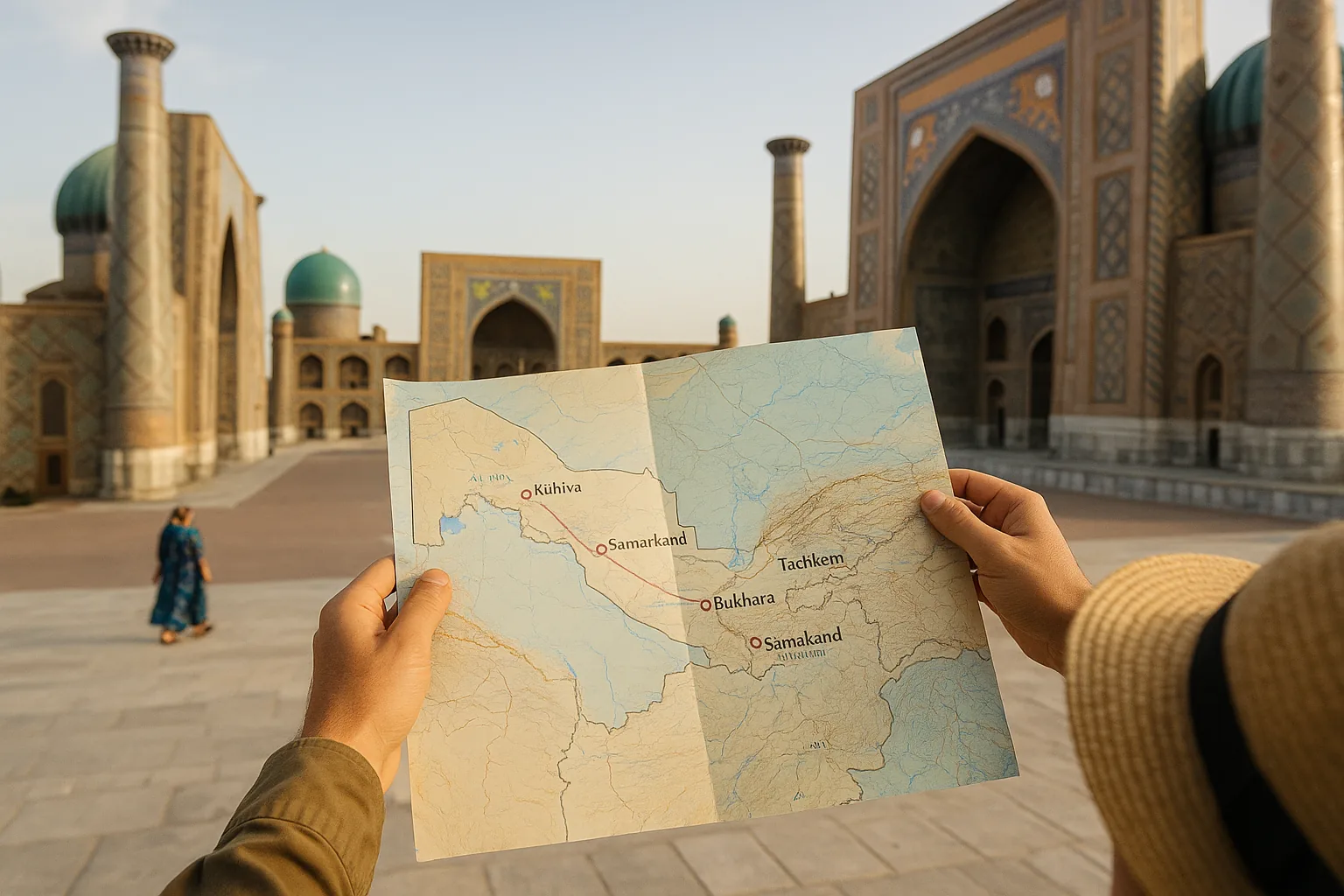
Uzbekistan has been quietly becoming one of the most talked-about destinations for young travelers, and in 2026, there’s never been a better moment to go. With new visa liberalizations, fresh direct flight routes from Europe and Asia, and a growing backpacker scene, this Uzbekistan travel guide is your starting point for one of the most rewarding journeys you can take right now. Think turquoise-tiled domes rising out of desert cities, ancient bazaars buzzing with spice merchants, and a culture so generous and layered it’ll stay with you long after you’ve unpacked your bags.
Why Uzbekistan Belongs on Your Radar Right Now
Not long ago, Uzbekistan was one of the most closed-off countries in the world. Strict visa policies, limited tourism infrastructure, and a reputation for being difficult to navigate kept most travelers away. That era is over. Uzbekistan has transformed into the most tourist-friendly country in Central Asia, and the shift has happened fast enough that it still feels like a discovery — not a tourist trap.
The country sits at the heart of the ancient Silk Road, the network of trade routes that once connected China to the Mediterranean. Merchants, scholars, conquerors, and artists all passed through here. The cities they built — and the ones that grew around their ruins — are still standing. Walking through them doesn’t feel like visiting a museum. It feels like stepping into a living, breathing chapter of world history.
In 2026, new direct flights from European and Asian hubs have made getting here significantly easier. You no longer need to cobble together three-stop itineraries or pay a premium for the privilege. Combine that with genuinely affordable prices once you’re on the ground, and Uzbekistan starts to look like one of the smartest travel decisions you can make this year.
The Golden Triangle: Tashkent, Samarkand, and Bukhara
Tashkent, Samarkand, and Bukhara form what travelers and tour operators alike call the Golden Triangle of Uzbekistan — three cities, three completely different personalities, all connected by a high-speed rail network that makes moving between them genuinely easy. You can cover all three in around ten days, or slow down and spend two weeks if you want to go deeper. Either way, the route makes sense geographically and experientially: each city builds on the last.
The high-speed trains are a highlight in themselves. Comfortable, punctual, and affordable, they cut through the flat Central Asian landscape at speeds that make the distances feel manageable. You’ll arrive in each city refreshed rather than exhausted — which matters when you’re about to spend your days exploring on foot in the heat.
Tashkent: Start Here, Stay Curious
Most itineraries begin in Tashkent, the capital, and it’s a smart place to find your footing. The city is a fascinating mix of Soviet-era architecture, modern urban development, and older neighborhoods where traditional Uzbek life carries on largely unchanged. It’s the kind of place that rewards wandering.
Spend your first morning getting lost in one of the older residential districts. Streets narrow, the pace slows, and you’ll start noticing the details — ornate wooden doors, tea houses where old men play chess, small bakeries turning out non, the round flatbread that accompanies almost every meal in Uzbekistan. This is where the city reveals itself, not in the grand boulevards but in the quieter corners.
The city’s metro system is frequently cited as one of the most visually striking in the world, with stations decorated in elaborate mosaics, chandeliers, and tilework that reflect different themes and eras of Uzbek culture and history. Even if you’re not going anywhere in particular, riding it is an experience worth having. Each station feels like its own small gallery.
Tashkent also has a strong food scene. The local plov — a rice dish cooked with lamb, carrots, and spices — is considered by many to be the finest in the country, and there are dedicated restaurants where it’s served from enormous cauldrons every morning until it runs out. Get there early. It always runs out.
👉 Read also: Silk Road Cities for Culture Seekers: Samarkand, Bukhara & Tashkent in Uzbekistan
Samarkand: The City That Rewrites Your Expectations
Nothing quite prepares you for Samarkand. You’ve probably seen images of the Registan complex — the trio of madrasas (Islamic schools) facing each other across a central square, their facades covered in geometric tilework in shades of turquoise, cobalt, and gold. In photographs it looks impressive. In person, it’s the kind of thing that makes you stop talking mid-sentence.
Samarkand is a major Silk Road city with historic landmarks decorated with some of the most elaborate mosaics you’ll find anywhere on earth. The craftsmanship is extraordinary by any standard — intricate patterns that repeat and evolve across massive surfaces, all created by hand centuries ago. The scale is hard to process at first. Give yourself time to sit with it.
The Bibi-Khanym Mosque, another of Samarkand’s iconic landmarks, tells a slightly different story. Once one of the largest mosques in the Islamic world, it fell into ruin over the centuries and has since been partially restored. What you see today is a mix of ancient original stonework and careful reconstruction — and that combination, the old and the restored living side by side, says something honest about how history actually works. It’s not pristine. It’s real.
Beyond the headline sites, Samarkand has a neighborhood feel that surprises many visitors. Wander away from the main squares and you’ll find craft workshops where artisans still produce hand-painted ceramics and silk textiles using traditional techniques. Stop in, watch them work, and if something catches your eye, buy it directly from the person who made it. That’s the kind of souvenir worth carrying home.
The evenings in Samarkand are particularly special. When the crowds thin out and the light turns golden, the domes and minarets seem to glow from within. If you can, time your visit to the Registan for late afternoon and stay until the sun goes down. You won’t regret it.
Bukhara: Where the Silk Road Feels Most Alive
If Samarkand is the city that dazzles you, Bukhara is the one that pulls you in slowly and doesn’t let go. It’s smaller, quieter, and in many ways more intimate — a former center of Silk Road trade where the historic old city has been so well preserved that walking through it genuinely feels like time travel.
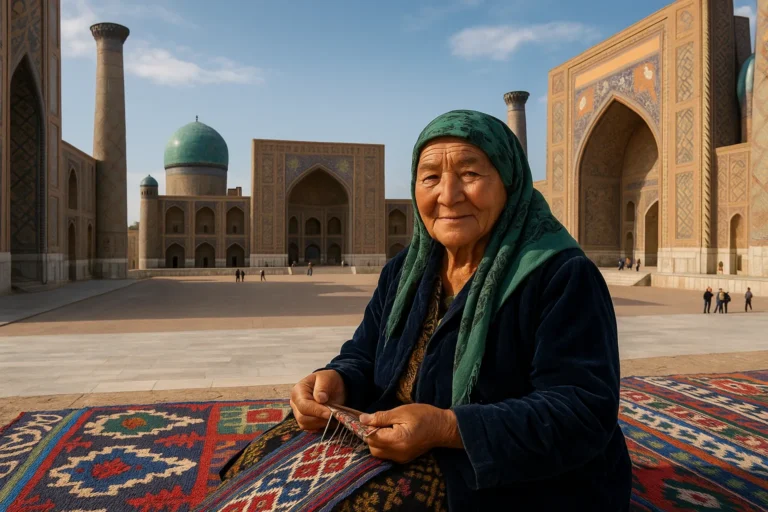
The old city bazaars are a sensory experience unlike anything else in the region. Covered trading domes — some dating back centuries — shelter stalls selling silk scarves, embroidered textiles, dried fruits, and spices. The smell alone is worth the trip: saffron, dried apricots, leather, and something sweet you can never quite identify. Vendors are friendly without being pushy, and the atmosphere is relaxed enough that you can browse without feeling like you need to buy.
The Ark Fortress, which dominates the city’s skyline, has served as a royal residence, a prison, and a military stronghold over its long history. Walking through its thick mud-brick walls, you get a sense of just how layered Bukhara’s past really is. This wasn’t just a trading post — it was a center of political power, religious scholarship, and cultural production for centuries.
Bukhara also has a distinct desert atmosphere that sets it apart from the other cities on this route. The surrounding landscape is flat and dry, the light is intense, and at night the stars are extraordinary. If you’ve been moving fast through Samarkand, Bukhara is the place to slow down. Sit by one of the old haouz (reflecting pools) in the evening, order tea, and let the city come to you.
The local guesthouses here are some of the best in Uzbekistan — often housed in traditional courtyard buildings with carved wooden columns and tiled fountains. Staying in one isn’t just comfortable; it’s part of the experience.
Visas, Getting Around, and Practical Logistics
One of the biggest changes shaping this Uzbekistan travel guide in 2026 is how straightforward the entry process has become. Uzbekistan has implemented significant visa liberalizations, meaning travelers from many countries can now visit without a visa or obtain one on arrival or through a simple online process. It’s worth checking the current requirements for your specific passport before you travel, as policies continue to evolve — but the direction has been consistently toward openness.
👉 Read also: Uzbekistan's Silk Road Cities: Samarkand, Bukhara, Tashkent & Khiva Travel Guide
The official Uzbekistan tourism portal is a reliable starting point for up-to-date visa information and entry requirements. Always verify directly with official sources before booking flights.
Getting between the three cities is genuinely easy thanks to the high-speed rail connections. Trains run regularly and tickets can be booked in advance online. The journey between each city takes a couple of hours or less, making it perfectly feasible to visit all three without any internal flights. Trains are also significantly cheaper than flying, which matters when you’re traveling on a budget.
Within each city, the best way to explore is almost always on foot. The historic centers are compact enough that you can cover the main landmarks and still have time to wander off-route. Taxis and ride-hailing apps are available for longer distances, and local drivers are generally happy to negotiate a fair price for day trips to sites outside the city.
When to Go and How to Budget
The best times to visit Uzbekistan are spring and autumn. Central Asia is a land of extremes — summers can be genuinely brutal, with temperatures that make midday sightseeing uncomfortable, and winters in some areas bring serious cold. The shoulder seasons offer the most pleasant conditions: warm enough to enjoy being outdoors, cool enough to walk comfortably through historic sites for hours at a time.
Spring brings greenery and flowers to a landscape that can look stark and dry in other seasons. Autumn offers golden light and harvest-season abundance in the markets. Both are excellent choices, and both tend to see higher visitor numbers than the extreme seasons — which is worth knowing if you’re hoping to experience the Registan without a crowd.
In terms of budget, Uzbekistan remains one of the more affordable destinations you can visit. Accommodation ranges from very cheap dormitory beds to mid-range guesthouses that offer excellent value for what you get. Food is inexpensive almost everywhere, and the local cuisine is hearty and satisfying — plov, lagman (a noodle soup), shashlik (grilled meat skewers), and freshly baked bread make up the core of most meals. Entrance fees to major sites are modest by international standards, and transport costs are low. A traveler on a tight budget can get by comfortably; someone willing to spend a little more can eat and sleep very well without breaking the bank.
Cultural Tips for First-Time Visitors
Uzbek hospitality is legendary, and it’s not an exaggeration. Locals are genuinely curious about foreign visitors and often eager to share food, conversation, or directions without expecting anything in return. Accepting small gestures of hospitality — tea offered at a shop, an invitation to try a snack — is a way of connecting that goes beyond tourism.
Dress modestly when visiting religious sites. This means covering your shoulders and knees as a minimum, and women may be asked to cover their hair inside mosques. Carrying a scarf for this purpose is practical and respectful. Outside of religious spaces, Uzbekistan’s cities are fairly relaxed about dress, especially in Tashkent.
Learning a few words of Uzbek or Russian — both are widely spoken — goes a long way. Rahmat (thank you) and salom (hello) will earn you smiles wherever you go. English is increasingly common among younger Uzbeks, particularly in the tourism industry, but don’t assume it everywhere.
Photography is generally welcomed, but always ask before photographing people, especially in markets and residential areas. Most people are happy to be photographed if you take a moment to connect first rather than pointing a camera without warning.
Uzbekistan in 2026 is at an interesting crossroads — modern enough to be comfortable, traditional enough to feel genuinely different from anywhere you’ve been before. That balance is rare, and it won’t last forever as tourism grows. This is the moment to go: when the infrastructure is there but the crowds haven’t arrived, when the experience still feels like something you discovered rather than something you booked off a list. Pack light, stay curious, and give yourself more time than you think you’ll need. Uzbekistan has a way of making you want to stay just one more day.
This article was produced with AI assistance and reviewed editorially.


Teaching English Abroad in 2026: Top Countries, Visa Requirements & Real Salaries

Where to Stay in Latin America’s Top Destinations: Buenos Aires, Bogota & Beyond


