
Ecuador
Quito, Ecuador: The Mountain City Where Every Road Leads
Discover the best things to do in Quito, from UNESCO colonial plazas and baroque churches to high-altitude volcano trekking and Amazon connections.

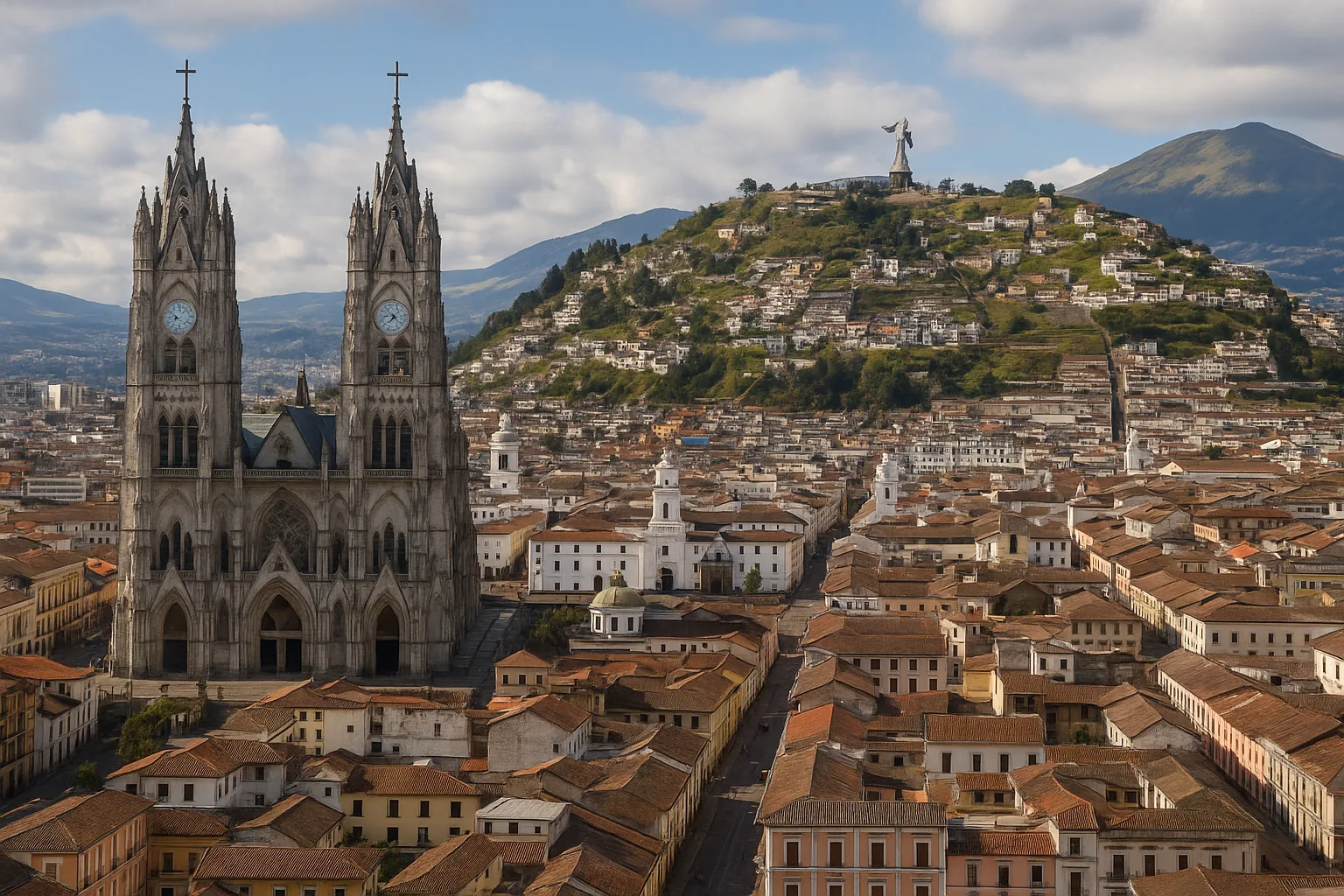
Quito has a habit of surprising people. Most travelers land here expecting a quick overnight before heading to the Galápagos or the Amazon — and then they stay. Ecuador’s capital sits high in the Andes, wrapped in volcanic peaks and layered with centuries of history, and once you start exploring, it’s genuinely hard to leave. If you’re trying to figure out the best things to do in Quito, the honest answer is: more than you’d think, and more than one day will cover.
A City That Rewrites First Impressions
From the air, Quito looks almost impossible — a long, narrow city squeezed into a valley between mountain ridges, with the white cone of Pichincha volcano watching over it from the west. It’s one of the highest capital cities in the world, and that altitude hits you the moment you step off the plane. Your first hour might feel a little breathless, literally and figuratively.
But give yourself a day to adjust, and the city opens up in a way that few South American capitals can match. Quito is a place of contrasts — colonial plazas and modern art galleries, street food vendors and rooftop bars, ancient churches and buzzing nightlife. It doesn’t fit neatly into any single category, and that’s exactly what makes it worth your time.
The city is divided roughly into the Old Town and the New Town, each with its own energy. Old Town is where history lives and breathes. New Town — particularly the La Mariscal neighborhood — is where travelers gather, hostels cluster, and the restaurant scene gets interesting. You’ll want to experience both.
The Historic Center: Walking Through Living History
Quito holds a distinction that no other city in the world can claim: it was named the very first UNESCO World Heritage Site, recognized for having one of the largest and best-preserved colonial cores in Latin America. That’s not a small thing. Walking through the historic center feels like stepping into a city that has been carefully kept alive rather than just preserved behind glass.
The streets are narrow and cobblestoned, lined with whitewashed buildings, ornate churches, and shaded arcades where vendors sell everything from fresh fruit to handwoven textiles. Plaza Grande — the main square — is a good place to start. Sit on one of the benches, watch the city move around you, and let the scale of the place sink in. The cathedral, the government palace, and the archbishop’s palace all frame the square, each one telling a different chapter of the city’s story.
From there, wander without a fixed plan. That’s genuinely the best approach here. You’ll stumble onto hidden courtyards, colorful staircases, and viewpoints that open up suddenly over the valley below. The Iglesia de la Compañía de Jesús is one of the most ornate baroque churches in all of the Americas — stepping inside is one of those moments where you forget what you were thinking about and just look.
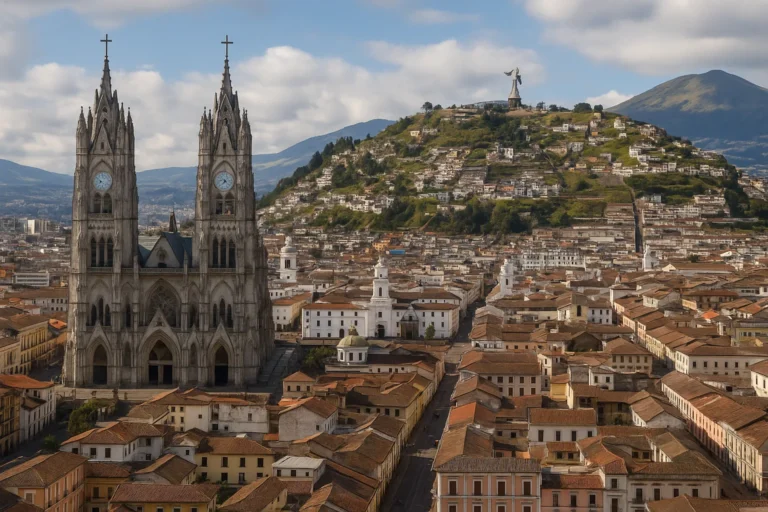
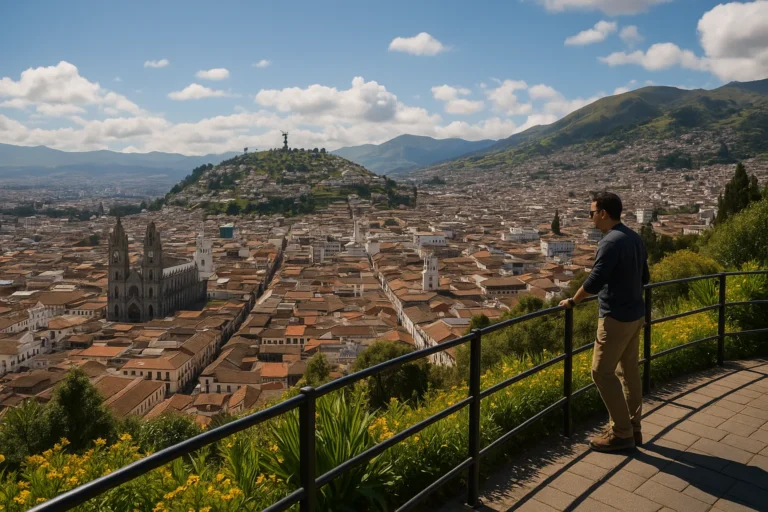
The El Panecillo hill, topped with a large winged statue of the Virgin of Quito, offers one of the best panoramic views of the city. You can walk up or take a short taxi ride. Either way, the view from the top — looking out over the colonial rooftops with the Andes stretching in every direction — is the kind of thing you’ll remember long after you’ve gone home.
Volcanoes, Altitude, and Outdoor Adventures
One of the most compelling things to do in Quito has nothing to do with the city itself — it’s what surrounds it. Quito sits at the foot of Pichincha, an active snow-capped volcano, and the wider Andean landscape is packed with opportunities for adventure.
👉 Read also: Ecuador's Mountain Capital: Quito as a Base for Jungle, Amazon & Galápagos Adventures
The TelefériQo — Quito’s aerial cable car — carries you up the slopes of Pichincha to an elevation that puts you well above the city’s already considerable height. From the top, you get a sweeping view of the city stretched out below, with other volcanic peaks visible in the distance on a clear day. It’s also the starting point for some serious mountain biking — the descent from Pichincha is considered a technical and thrilling ride for those who are comfortable on a bike at altitude.
Then there’s Cotopaxi. One of the world’s highest active volcanoes, Cotopaxi is close enough to Quito to visit as a day trip or a longer excursion. The mountain biking routes around Cotopaxi are legendary among adventure travelers — you can ride down volcanic slopes with the snow-capped summit looming above you, which is as dramatic as it sounds. Hiking and trekking options exist too, depending on your fitness level and how much time you have.
A practical note worth knowing: altitude acclimatization is real and worth taking seriously. Quito sits high enough that many travelers feel some effects — headaches, mild fatigue, shortness of breath — especially in the first day or two. The general wisdom is to take it easy on arrival, drink plenty of water, avoid alcohol initially, and give your body time to adjust before attempting any serious physical activity. Most people feel significantly better after 24 to 48 hours. Don’t let it put you off — it’s manageable — but don’t underestimate it either, especially if you’re planning to head straight to Cotopaxi.
Quito as a Gateway: Where Every Road Leads
The reason so many travelers end up in Quito — even if they don’t initially plan to spend much time there — is that it functions as one of South America’s most strategically placed travel hubs. From here, you can reach an extraordinary range of ecosystems and experiences within a relatively short journey.
The Amazon basin is accessible from Quito, making it a natural launchpad for jungle expeditions. The road east drops from the high Andes into cloud forest and then into the lowland rainforest, and the transition is one of the most dramatic landscape changes you can experience anywhere in the world. Many travelers use Quito as their base for organizing multi-day Amazon trips, whether that means staying in a jungle lodge, paddling on a river, or trekking through primary forest.
The Galápagos Islands — one of the most extraordinary wildlife destinations on the planet — are typically reached by flying from Quito or Guayaquil. If the Galápagos is on your list (and if it isn’t, reconsider), Quito is likely your entry point. Similarly, the overland route toward Peru passes through Ecuador, making Quito a natural first or last stop for travelers doing a longer South American journey.
This connectivity is part of what makes Quito more than just a destination in itself. It’s a city that rewards those who slow down and explore it, but it also makes sense as the anchor point for a much bigger adventure. You can spend a few days here, then head into the jungle, then fly to the Galápagos, then come back through Quito on your way south. The city accommodates that kind of flexible, spontaneous travel style naturally.
Eating, Staying, and Living Like a Local
The food scene in Quito is one of its underrated pleasures. Ecuadorian cuisine doesn’t always get the international attention it deserves, but eating your way through the city is genuinely one of the best things to do in Quito — and one of the most affordable.
Street food is where you start. Look for llapingachos — fried potato cakes often served with eggs and salsa — or empanadas fresh from a roadside stall. Caldo de gallina, a rich chicken broth, is a local staple and particularly welcome when the altitude has left you feeling a bit flat. Markets are a great place to eat well and cheaply, and the atmosphere in a busy local market — vendors calling out, steam rising from soup pots, the smell of fresh bread — is an experience in itself.
👉 Read also: Quito, Ecuador: From 24-Hour Stopover to 10-Day Base Camp (Travel Guide 2026)
The La Mariscal area has a concentration of restaurants, cafés, and bars that cater to travelers without losing local character entirely. You’ll find everything from simple set-lunch menus to more adventurous spots experimenting with Andean ingredients. Quito’s culinary scene has been growing steadily, and it’s worth spending an evening or two exploring it properly rather than defaulting to the obvious tourist options.
For accommodation, Quito offers a solid range of hostels and guesthouses, particularly in La Mariscal and around the historic center. Many hostels here have a strong community feel — the kind of place where you end up sharing travel plans over breakfast and spontaneously adjusting your itinerary based on what someone else has just discovered. If you’re traveling solo, that social energy can be one of the most valuable things about where you stay.
Getting Around and Getting Out
Navigating Quito itself is manageable once you understand its geography. The city runs roughly north to south along a long valley, and most of what travelers want to see is concentrated in the Old Town and the New Town — close enough to each other that getting between them is straightforward by taxi or the city’s bus system.
For day trips and excursions, organized tours are widely available and often the most practical option, especially for volcano visits where you’ll want a guide. That said, independent travel around Ecuador is very doable, and many travelers prefer to rent a bike, hire a local driver, or piece together their own itinerary using local transport.
If you’re planning to explore beyond Quito — to the Amazon, the coast, or the highlands — the city’s bus terminals connect to most major destinations in Ecuador. The country is compact enough that long-distance travel is rarely as daunting as it might seem on a map. You can be in a dramatically different landscape within a few hours of leaving the city.
For the full depth of what Quito offers as a historic and cultural destination, it’s worth reading up before you arrive — not to over-plan, but to understand what you’re walking into. The city rewards curiosity, and knowing a little of its history before you wander through the colonial center makes the experience richer.
When to Go and What to Expect
Quito sits close to the equator, which means its climate is driven more by altitude and rainfall patterns than by traditional seasons. The city enjoys a relatively mild temperature year-round — often described as eternal spring — though mornings can be cool and afternoons can shift quickly between sunshine and rain.
The drier months generally offer clearer skies and better visibility for volcano views, which matters if you’re planning outdoor adventures. But Quito is a year-round destination, and even during wetter periods the city is fully functional and rewarding to explore. Pack layers, bring a waterproof layer, and don’t let weather forecasts stress you out too much — the city’s indoor attractions, food scene, and cultural life are just as compelling on a rainy afternoon as on a bright one.
What you should genuinely expect is a city that doesn’t behave like a typical tourist destination. Quito has a real life happening all around you — local families in the plaza, students in the cafés, vendors in the markets — and that authenticity is part of what makes it memorable. It’s not performing for visitors. It’s just being itself, and that’s exactly why it stays with you.
Whether you arrive planning to stay for two days or two weeks, Quito has a way of expanding to fill the time you give it. The mountains are always there on the horizon, the colonial streets always have another corner to turn, and the sense that your next great adventure is just a short journey away never quite goes away. That’s the thing about Quito — it doesn’t just show you one version of South America. It shows you the door to all of them.
This article was produced with AI assistance and reviewed editorially.


Almaty & Tashkent: Central Asia’s Modern Cities Beyond the Silk Road Clichés

Stay Smart in Asia: Budget Accommodation in Osaka, Kyoto & Kuala Lumpur 2026


