
Roaming Around the World
Kuala Lumpur Neighborhoods: Where to Stay Based on Your Travel Style
Find your perfect neighborhood in Kuala Lumpur. Compare Chinatown’s street energy, Bukit Bintang’s modern nightlife, and Bangsar’s local cafes with budget and luxury opti

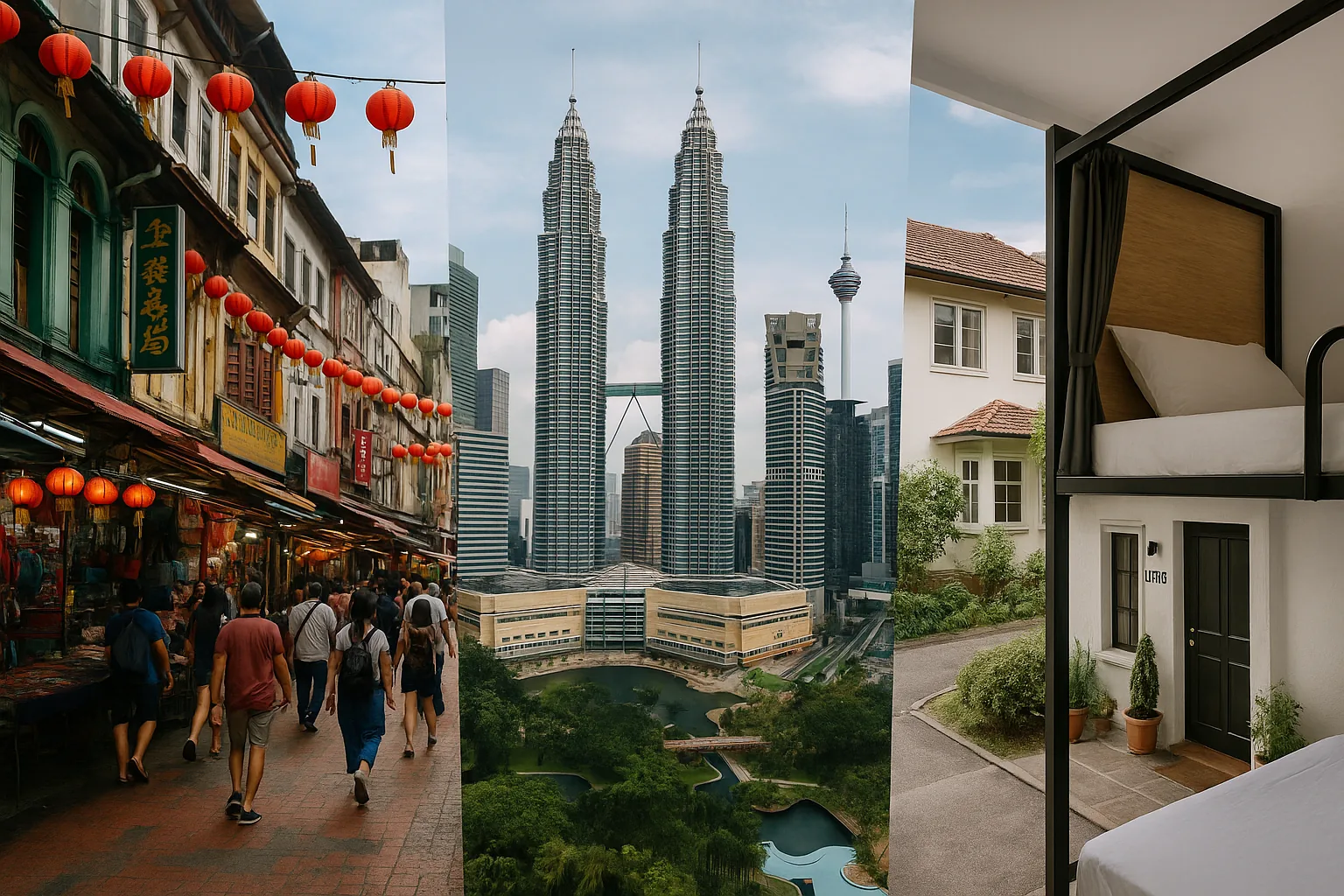
Kuala Lumpur is one of Southeast Asia’s most electric cities, and figuring out where to stay in Kuala Lumpur can genuinely shape your whole experience. With more than 12 million international visitors arriving every year, this city has perfected the art of welcoming travelers from every background — but not every neighborhood will match your vibe. Whether you want to wake up to the smell of street food drifting through your window, stumble home from a rooftop bar, or sip coffee in a quiet local café, KL has a corner that fits. The trick is knowing which one to choose before you book.
Why Your Neighborhood Choice Actually Matters in KL
Kuala Lumpur is a sprawling, layered city. It doesn’t have one centre — it has several, each with its own personality, pace, and crowd. Unlike some cities where you can base yourself anywhere and walk to everything, KL rewards travelers who think strategically about location.
The city’s public transport network — including its LRT, MRT, monorail, and commuter rail lines — is genuinely useful, and most major neighborhoods connect through KL Sentral, the city’s central transport hub. From there, you can reach the airport, the towers, the old town, and beyond. But even with good transport, staying in the wrong area can mean long commutes, missed spontaneous moments, and a feeling that you’re always arriving somewhere rather than actually being somewhere.
So before you search for a bed, ask yourself one honest question: what kind of traveler am I on this trip? That answer will do most of the work for you.
Chinatown: Old KL, Street Energy, and Budget Roots
If you want to feel the pulse of the city’s history, Chinatown — also known as Petaling Street — is where you start. This is old KL. The streets are narrow, the signage is multilingual, and the energy is chaotic in the best possible way. Temples sit next to coffee shops, market stalls spill onto the pavement, and the smell of food is constant and impossible to ignore.
Chinatown is the natural home of the backpacker scene in Kuala Lumpur. Hostels and budget guesthouses are easy to find here, and the neighborhood’s compact layout means you can explore a lot on foot. For travelers who want to connect with other people passing through, swap stories over cheap noodles, and feel like they’re genuinely inside the city rather than looking at it from a polished hotel lobby — this is your spot.
That said, Chinatown isn’t just for budget travelers. Park Hyatt Kuala Lumpur sits on the edge of the neighborhood, offering one of the city’s most luxurious stays while keeping you close to all that street-level energy. It’s a fascinating contrast — five-star comfort with a chaotic, beautiful city just outside the door.
For those looking for something in between, Four Points by Sheraton Kuala Lumpur, Chinatown offers a budget-friendly option without sacrificing comfort. It’s a solid base if you want reliability and easy access to the old town without spending a lot.
- Best for: Budget travelers, backpackers, history lovers, street food enthusiasts
- Vibe: Busy, sensory, authentic, unpredictable
- Watch out for: Noise levels, especially on weekends — light sleepers should bring earplugs
Bukit Bintang: The Heartbeat of Modern KL
If Chinatown is KL’s past, Bukit Bintang is its present — loud, stylish, and always moving. This is Kuala Lumpur’s most vibrant neighborhood, and it’s widely considered the best choice for first-time visitors who want to be close to everything without having to plan too much.
👉 Read also: Singapore & Kuala Lumpur: How to Navigate Southeast Asia's Modern Metropolises
The area is built around shopping malls, wide boulevards, and a nightlife scene that genuinely delivers. Bukit Bintang has many hip restaurants and fun bars, ranging from casual street-side spots to rooftop venues with skyline views. During the day, you can lose yourself in the malls or explore the surrounding streets. After dark, the neighborhood shifts into a different gear entirely.
Accommodation options here span the full range. WOLO Kuala Lumpur is a modern, design-forward stay that suits travelers who want something stylish without the luxury price tag. The Westin Kuala Lumpur offers a more established option that balances genuine comfort with a central location — ideal if you’re splitting the cost with a travel companion and want a proper base.
Bukit Bintang also connects easily to the rest of the city via the monorail, making it practical as well as lively. You’re never far from a train station, which matters more than you’d think when you’re trying to squeeze three neighborhoods into one day.
- Best for: First-time visitors, nightlife seekers, shoppers, social travelers
- Vibe: High-energy, modern, cosmopolitan, always-on
- Watch out for: It can feel overwhelming if you’re looking for something quieter — this neighborhood doesn’t really have a slow mode
KLCC: Towers, Skylines, and Where to Stay in Kuala Lumpur for Comfort
The Kuala Lumpur City Centre district — better known as KLCC — is the postcard version of the city. The Petronas Twin Towers dominate the skyline here, and the area around them is polished, walkable, and genuinely impressive. If you’re someone who wants to look out your window and see one of the world’s most iconic skylines, this is where you book.
KLCC is recommended as the best district for first-time visitors who want a more curated, comfortable experience. The streets are cleaner, the infrastructure is newer, and the general pace is slightly more manageable than the chaos of Chinatown or the relentless energy of Bukit Bintang.
On the luxury end, The Ritz-Carlton Kuala Lumpur delivers a rooftop terrace experience that’s hard to beat — the kind of place where you end a long day of exploring with a drink and a view that makes the whole city feel small. For travelers who want something more budget-conscious but still stylish, Element Kuala Lumpur is a smart pick in the KLCC area, offering a modern feel without the eye-watering price tag. And if you want to be right in the middle of the shopping and dining action, Pullman Kuala Lumpur City Centre sits directly across from Pavilion Mall — one of the city’s most popular retail destinations.
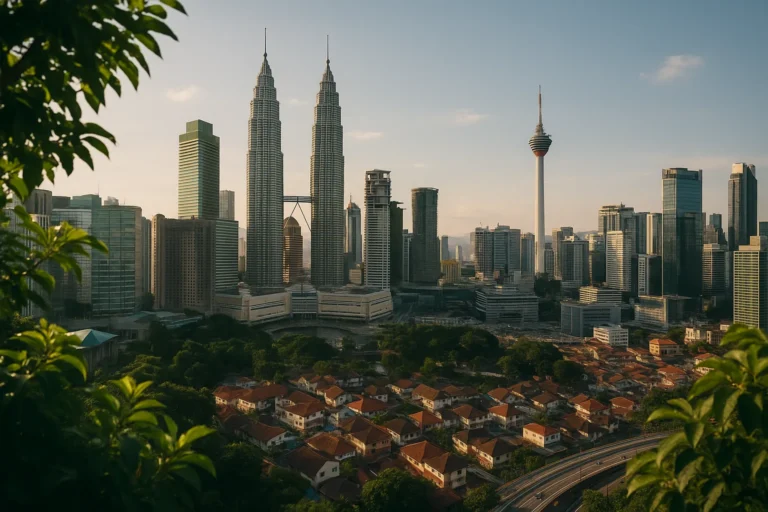
KLCC is also well-connected by the LRT, so getting around from here is straightforward. It’s a neighborhood that rewards travelers who want a reliable, impressive base and don’t mind paying a little more for the privilege.
- Best for: First-time visitors, comfort-focused travelers, those who want iconic views
- Vibe: Polished, modern, international, aspirational
- Watch out for: It can feel a little sanitized compared to the rest of KL — venture out to find the city’s real texture
Bangsar: The Neighborhood for Travelers Who Like to Wander Slowly
Not every traveler wants to be in the middle of the action. Some of the best trips happen when you slow down, sit in a neighborhood café, and actually watch the city live its daily life. If that sounds like you, Bangsar is worth serious consideration.
Bangsar is primarily a residential area — chilled, relaxed, and genuinely local in character. It doesn’t have the tourist density of Bukit Bintang or the historic grit of Chinatown. What it does have is a creative, community-driven atmosphere that attracts artists, young professionals, and travelers who are tired of feeling like they’re inside a travel brochure.
The streets here are lined with independent cafés, bookshops, and small restaurants where the clientele is mostly local. You’ll find yourself lingering longer than planned — over a good coffee, a conversation with someone at the next table, or just the pleasant surprise of a neighborhood that doesn’t feel like it’s performing for anyone.
👉 Read also: Southeast Asia on a Budget: Hidden Neighborhoods in Kuala Lumpur, Chiang Mai, Ipoh & Ho Chi Minh City
Accommodation in Bangsar tends toward boutique guesthouses and serviced apartments rather than large international hotel chains. It’s not the most budget-friendly area in KL, but it’s not extravagant either. Think of it as the neighborhood for travelers who value quality of experience over convenience of location.
Getting into the city centre from Bangsar is easy enough via the LRT, with the journey to KLCC or Bukit Bintang taking well under half an hour. It’s far enough to feel like a different world, close enough that you’re never cut off.
- Best for: Repeat visitors to KL, slow travelers, creative types, those who prefer local over tourist-heavy
- Vibe: Relaxed, residential, artsy, unhurried
- Watch out for: Fewer budget accommodation options; less to do if you want constant stimulation
Getting Around: How KL’s Transport Network Connects It All
One of the genuinely underrated things about Kuala Lumpur is how manageable its public transport network is once you understand the basics. The city runs several rail lines — the LRT, MRT, monorail, and KTM commuter rail — that cover most of the areas travelers care about. KL Sentral is the central hub that ties everything together, connecting you to the airport, the main neighborhoods, and intercity trains.
A stored-value travel card (similar to an Oyster card or an Octopus card) makes moving between neighborhoods seamless and cheap. You can top it up at any station and tap in and out without thinking too much about it. Most major hotels and hostels are within walking distance of at least one rail station, so choosing your neighborhood based on transport access is a smart move.
Ride-hailing apps are also widely used in KL and tend to be affordable. For late-night journeys or trips to areas that aren’t well-served by rail, they’re a reliable backup. Taxis are available but less consistent — the apps give you more transparency on pricing and route.
The main thing to know: don’t underestimate KL’s size. The city is large, traffic can be heavy, and walking between neighborhoods isn’t really an option the way it might be in a more compact city. Plan your days with transport in mind, and you’ll move through KL with ease.
Matching Your Travel Style to the Right Area
The honest truth about where to stay in Kuala Lumpur is that there’s no single right answer — only the right answer for you, right now, on this particular trip. First-timers who want to absorb as much as possible will do well in Bukit Bintang or KLCC, where the city’s biggest experiences are within easy reach. Travelers chasing authenticity and a lower daily spend will feel at home in Chinatown, where the city’s older layers are still very much alive. Those who want to experience KL the way residents actually live it should head to Bangsar and settle in for a few days of genuine local life.
If you’re spending a week or more in the city, consider splitting your stay between two neighborhoods. A few nights in Chinatown to get your bearings and absorb the energy, followed by a few nights in Bangsar to decompress and explore at a slower pace — that combination can give you a remarkably complete picture of what KL actually is, beyond the towers and the tourist trails.
For practical planning and an overview of the city’s layout, Hello Kuala Lumpur’s hotel guide is a useful starting point when comparing accommodation options across neighborhoods.
Whatever you choose, Kuala Lumpur will reward you. It’s a city that gives back in proportion to the curiosity you bring — the more you wander, ask questions, and step away from the obvious path, the more it reveals. Pick your neighborhood, book your bed, and let the city do the rest.
This article was produced with AI assistance and reviewed editorially.


Almaty & Tashkent: Central Asia’s Modern Cities Beyond the Silk Road Clichés

Stay Smart in Asia: Budget Accommodation in Osaka, Kyoto & Kuala Lumpur 2026


