
Greece
Hidden Gems in Greece: Milos Island & Lesser-Known Alternatives to Santorini
Discover stunning Greek islands beyond Santorini. Explore Milos’s volcanic caves and beaches, plus Paros, Naxos and Antiparos for authentic experiences without crowds.

If your Greek island vision involves caldera views and Instagram-famous sunsets, you’re not alone — but you might be missing out on some of the most stunning coastlines, dramatic landscapes, and genuinely local experiences the Mediterranean has to offer. Greece is home to over 200 inhabited islands scattered across the Aegean and Ionian Seas, and the truth is that most travelers only ever scratch the surface. If you’re searching for a Greek island alternative to Santorini — somewhere that trades tourist queues for real adventure — you’ve come to exactly the right place.
Why Santorini Isn’t the Whole Story
Santorini is genuinely beautiful. Nobody’s arguing that. But beautiful and overcrowded are not mutually exclusive, and for a lot of young travelers, the experience of fighting for space on a narrow path in Oia while a cruise ship empties its thousands of passengers doesn’t exactly feel like freedom. Prices at the famous caldera-view restaurants reflect the demand, and the authentic village atmosphere that draws people to the Greek islands in the first place can feel surprisingly hard to find when you’re surrounded by souvenir shops and selfie sticks.
The good news? Greece has been hiding some extraordinary alternatives in plain sight. These are islands where the water is just as blue, the sunsets are just as golden, and the food tastes even better because you’re eating it surrounded by locals rather than tour groups. Here’s where to go instead.
Milos: The Volcanic Island That Changes Everything
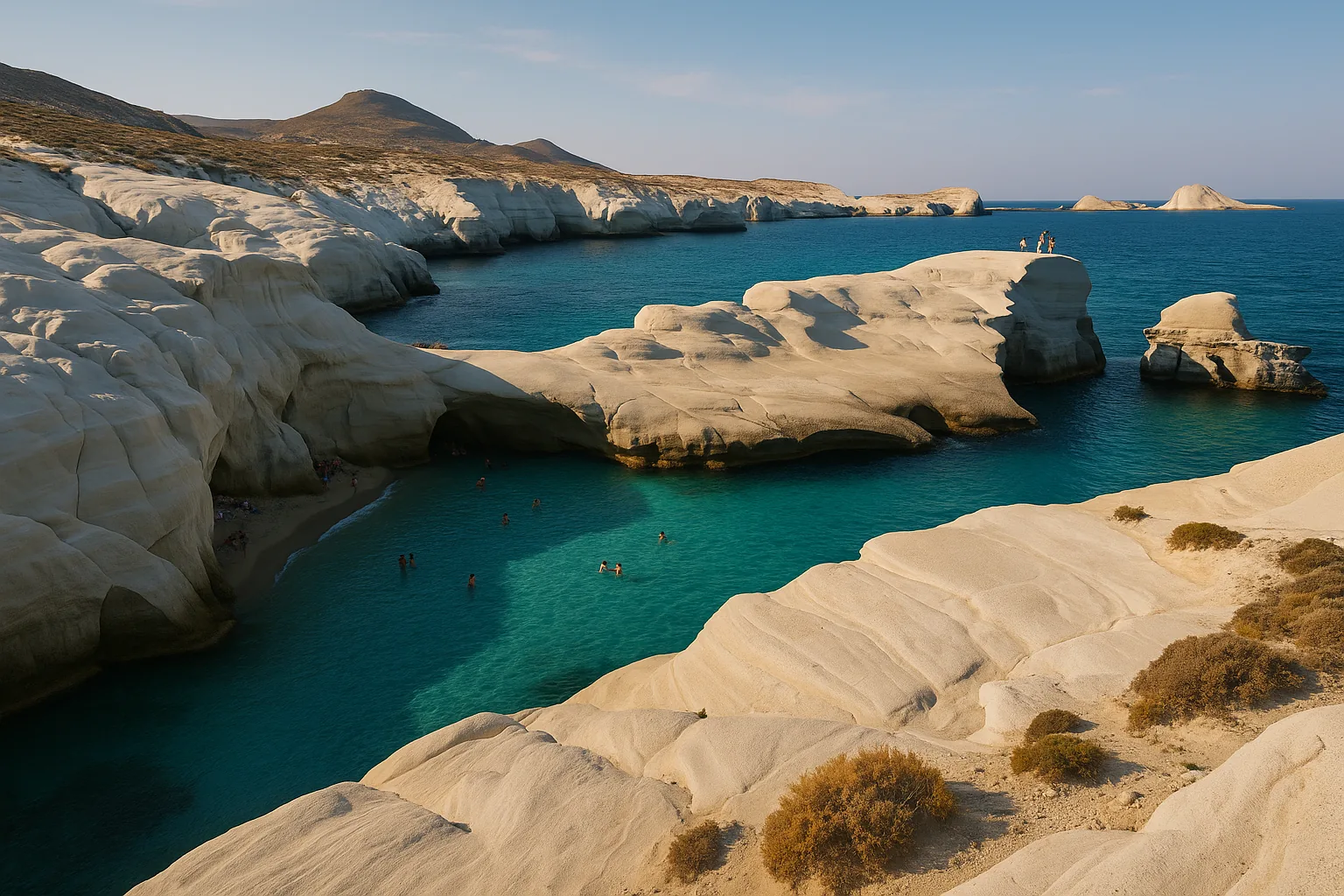
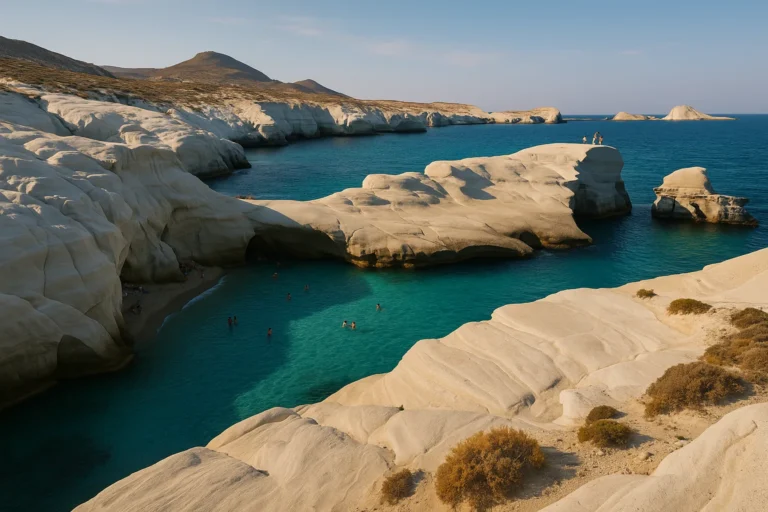
Milos is a volcanic island in the southwestern Cyclades, and it might just be the most visually dramatic island in all of Greece — which is saying something. The landscape here is unlike anything else in the archipelago. Centuries of volcanic activity have sculpted the coastline into a surreal collection of rock formations, sea caves, and beaches that shift between white, grey, rust, and deep amber depending on the mineral content of the stone.
What makes Milos genuinely special right now is that it still offers uncrowded beaches and relative authenticity compared to Santorini and Mykonos. That gap is narrowing as word spreads, so if you’ve been thinking about going, this season is the time to act on it.
Sarakiniko: The Lunar Beach
Sarakiniko is probably the most photographed spot on Milos, and when you see it for the first time, you’ll understand why. White volcanic rock worn smooth by wind and water creates a landscape that looks more like the surface of the moon than a Mediterranean beach. It’s otherworldly. Go early in the morning before the day-trippers arrive, and you might have whole sections of it to yourself. Bring a mask and snorkel — the water clarity here is exceptional.
Kleftiko: Sea Caves Worth Exploring
Kleftiko Beach is known for its extraordinary sea caves, and it’s one of those places you’ll be describing to friends for months after you leave. Accessible primarily by boat, the caves here are carved directly into white volcanic cliffs, and the light that filters through the water turns the whole area into shades of turquoise and jade. Local boat tours depart regularly from the main port of Adamas, and most trips include snorkeling stops at multiple coves along the southwestern coast. It’s a full day well spent.
Getting Around and Eating Well on Milos
Renting a quad bike or a small car is the most practical way to explore Milos independently. The island is compact enough to cover in a few days, but spread out enough that having your own wheels makes a real difference. Many of the best beaches require a short hike down a rocky path, so pack comfortable shoes alongside your swimwear.
👉 Read also: Milos, Greece: 14 Things to Do Beyond the Crowds—Beaches, Caves & Hidden Gems
For food, follow the golden rule of Greek island travel: eat where the locals eat. Look for small family-run tavernas away from the port area, where the menus are handwritten and the fish was caught that morning. Fresh grilled octopus, horta (wild greens dressed with olive oil and lemon), and local cheese are staples you’ll find across the Cyclades, but they taste particularly good when you’re eating them at a plastic table ten steps from the water with no tour group in sight.
The Best Greek Island Alternatives to Santorini Beyond Milos
Milos might be the headline act, but Greece’s underrated island scene runs deep. Depending on your travel style — whether you’re chasing culture, beaches, hiking trails, or a mix of all three — there’s an island out there that fits your trip better than the famous ones ever could.
Paros: The Social Sweet Spot
Paros sits at an interesting crossroads. It’s often grouped with Mykonos, Ios, and Paros as part of the beach and party circuit, but it’s genuinely more relaxed and more affordable than its famous neighbour. The old town of Parikia has a proper lived-in feel — whitewashed houses, a working fishing harbour, and a Byzantine church that’s been standing since the sixth century. Naoussa, the island’s second town, is charming without being self-consciously picturesque. It’s a great base if you want easy ferry connections to surrounding islands while still having a destination worth exploring in its own right.
Naxos: The Island That Has Everything
Naxos is gaining a well-deserved reputation as one of the most complete islands in the Cyclades, and it’s becoming increasingly popular as an alternative for travelers who’ve done their research. It’s the largest island in the Cyclades, which means more variety: long sandy beaches on the west coast, mountainous villages in the interior, ancient ruins, and a food culture built around local produce that the island actually grows itself. Naxian potatoes, citrus, and cheese are genuinely famous across Greece. The main town, Chora, is built around a Venetian castle and has a maze of alleys that reward slow, curious exploration.
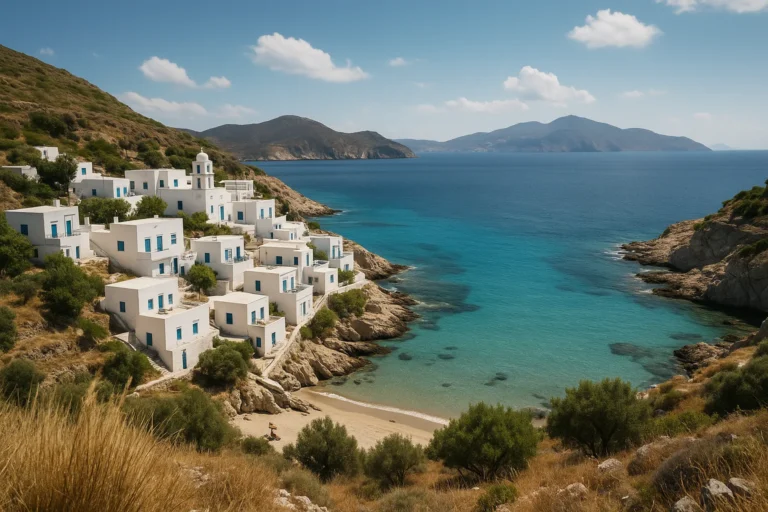
What really sets Naxos apart for budget-conscious travelers is that it has excellent direct ferry connections from Athens’ port of Piraeus, making it one of the more accessible islands without the premium pricing that Santorini commands for everything from accommodation to a simple coffee.
Antiparos: Small, Quiet, and Genuinely Unspoiled
Antiparos is a tiny island just a short boat ride from Paros, and it operates at a completely different pace. There’s one main village, a handful of beaches, and a famous stalactite cave that’s been drawing curious visitors for centuries. The atmosphere is relaxed in a way that feels genuine rather than manufactured. It’s the kind of place where you end up staying longer than planned because there’s nowhere you urgently need to be. If you’re traveling as a pair or a small group and want somewhere to decompress, Antiparos delivers.
Tinos: Culture, Pilgrimage, and Hidden Villages
Tinos is one of the true hidden gems of the Greek islands, and it tends to attract a very different kind of traveler — one who’s more interested in marble-carved dovecotes, Byzantine chapels, and artisan workshops than beach clubs. The island has a strong craft tradition, particularly in marble sculpting, and wandering through the hillside villages of the interior feels like stepping into a Greece that tourism hasn’t fully reached yet. It’s also home to one of the most important religious sites in the country, which gives it a cultural depth that purely tourist-oriented islands simply don’t have.
Folegandros: Dramatic Cliffs Without the Crowds
Folegandros is consistently described as one of the best hidden gems in the Greek islands, and it earns that description every time. Perched on dramatic cliffs above the Aegean, the main village of Chora is genuinely one of the most beautiful settlements in the Cyclades — and because the island has no airport and limited accommodation, it tends to attract travelers who are specifically seeking something quieter. The beaches require effort to reach, which is exactly why they’re worth it. If you want Santorini’s dramatic scenery without Santorini’s crowds, Folegandros is your answer.
👉 Read also: Greek Islands Beyond Santorini: Milos's Hidden Beaches and Caves, Plus Family-Friendly Options
Alonissos and Ithaca: For the Nature Seekers
Not everyone heads to Greece for white-washed villages and beach bars. Alonissos, in the Sporades, sits within a protected marine park and offers some of the best snorkeling and diving in the country, with clear water and a coastline that feels genuinely wild. Ithaca, in the Ionian Sea, carries the weight of myth — this is the island of Odysseus — but it also has a quiet, green beauty that sets it apart from the drier Cycladic islands. Both are excellent choices if you want to connect with nature rather than nightlife.
Planning Your Trip: Practical Things to Know
Ferry travel is the backbone of any Greek island adventure, and it’s more flexible than many first-time visitors expect. Most of the islands mentioned here are connected to Athens’ port of Piraeus, and many are linked to each other, making island-hopping a genuinely viable — and deeply satisfying — way to travel. High-speed ferries cut journey times significantly compared to conventional boats, though they cost more. Booking ferry tickets in advance during the summer months is strongly recommended, as popular routes fill up quickly.
The shoulder seasons — roughly late spring and early autumn — are when the Greek islands are at their most rewarding for independent travelers. The weather is warm, the water is swimmable, the accommodation is more affordable, and the restaurants are run by people who actually have time to talk to you. Peak summer brings heat, higher prices, and the kind of crowds that can take the edge off even the most beautiful destination. If your schedule has any flexibility, aim for May, June, or September.
In terms of budget, the alternatives to Santorini and Mykonos tend to offer noticeably better value across the board — from accommodation to meals to boat tours. You’re not sacrificing quality; you’re just not paying the premium that comes with a famous name. That difference adds up quickly over a week-long trip and can mean the difference between a rushed few days and a genuinely relaxed, unhurried experience.
One practical tip worth emphasizing: bring cash. Many smaller tavernas, boat operators, and market vendors on less-touristed islands still prefer it, and ATMs in small villages can run out on busy weekends. It’s a small thing, but it saves frustration.
How to Choose the Right Island for You
The honest answer is that the best Greek island alternative to Santorini depends entirely on what you’re actually looking for. If you want dramatic volcanic scenery and extraordinary beaches without the tour buses, Milos is your island. If you want a balance of social energy, good connections, and authentic village life, Paros or Naxos will serve you well. If you want to disappear somewhere genuinely quiet and beautiful, Folegandros or Antiparos are hard to beat. And if culture and history matter as much as coastline, Tinos or Ithaca will give you something to think about long after you’ve gone home.
You can explore ferry routes and schedules through Greek Ferries, which covers most major connections across the Aegean and Ionian islands and makes planning an island-hopping route much more straightforward.
The thing about Greece is that it rewards curiosity. The travelers who venture past the famous names almost always come back with better stories — not because the famous islands are bad, but because the lesser-known ones give you something rarer: the feeling that you actually discovered something. That feeling is worth chasing. It’s what travel, at its best, is supposed to feel like.
This article was produced with AI assistance and reviewed editorially.


Almaty & Tashkent: Central Asia’s Modern Cities Beyond the Silk Road Clichés

Stay Smart in Asia: Budget Accommodation in Osaka, Kyoto & Kuala Lumpur 2026


