
Asia
Singapore & Kuala Lumpur: How to Navigate Southeast Asia’s Modern Metropolises
Explore Singapore and Kuala Lumpur together with this practical travel guide covering neighborhoods, budget hostels, and how to experience both cities like a local.

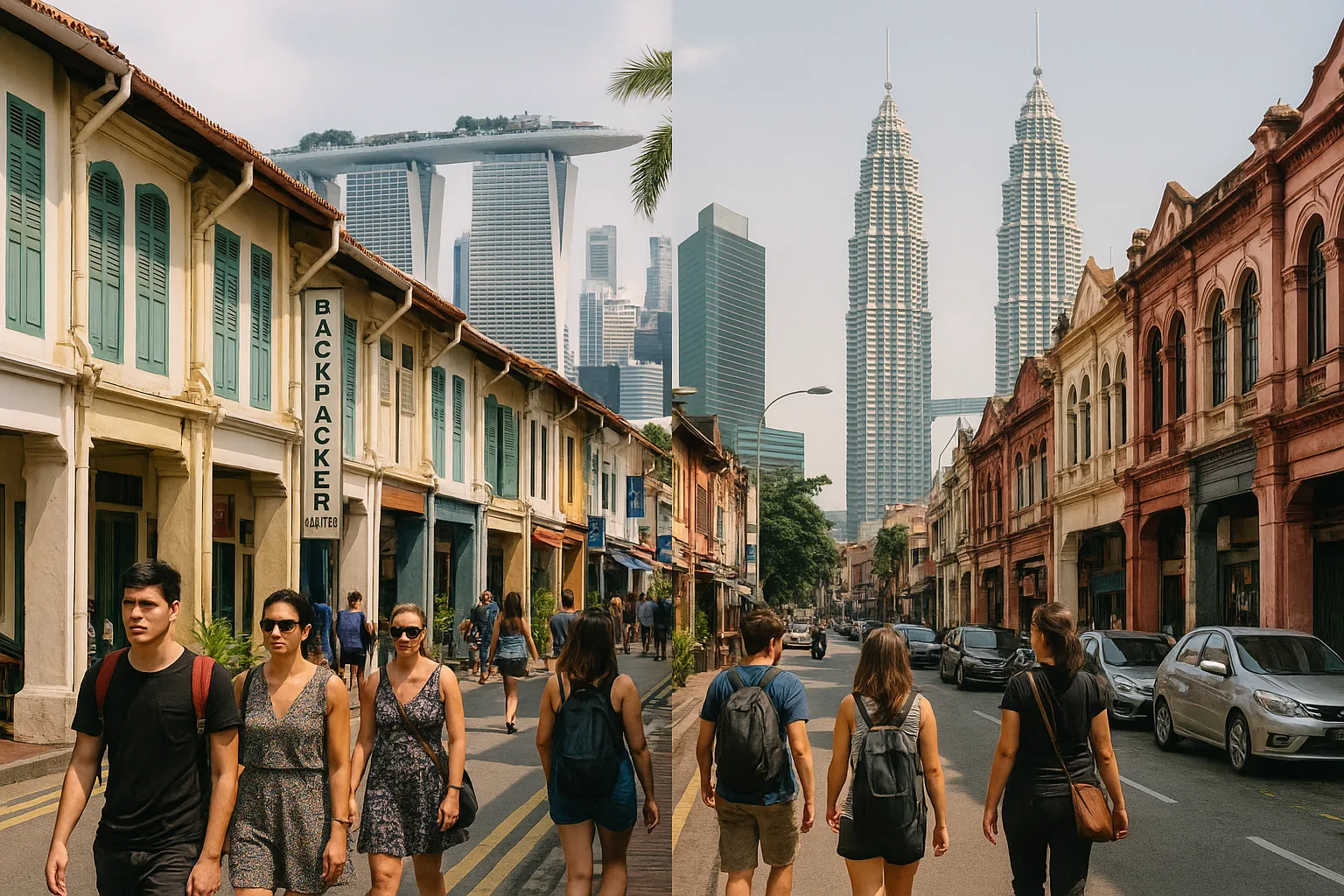
Few trips in Southeast Asia hit quite like combining Singapore and Kuala Lumpur into one journey. These two cities sit just a few hours apart, yet each one offers something completely different — one a polished, hyper-efficient city-state, the other a sprawling, chaotic, deeply human capital full of street food, colonial architecture, and neighborhoods that feel like entire worlds compressed into a few city blocks. Whether you’re backpacking through the region for the first time or you’ve already got a few Southeast Asian stamps in your passport, a solid Singapore Kuala Lumpur travel guide can be the difference between a forgettable trip and one you’ll be talking about for years. Here’s how to navigate both cities with curiosity, confidence, and a budget that still lets you eat well.
Why These Two Cities Belong on the Same Trip
Singapore and Kuala Lumpur are often treated as separate destinations, but pairing them together just makes sense. They’re geographically close, well-connected, and together they give you a full picture of what modern Southeast Asia actually looks like in the mid-2020s. You get Singapore’s precision and multicultural density on one end, and KL’s raw energy and affordability on the other.
The contrast itself becomes part of the experience. Singapore feels like the future — clean, fast, and meticulously organized. Kuala Lumpur feels alive in a messier, more spontaneous way, where a gleaming skyscraper can sit right next to a crumbling shophouse, and where the street food is genuinely some of the best you’ll find anywhere in the world. Traveling between them adds depth to your understanding of the region that neither city could give you alone.
Both cities are also genuinely accessible for independent travelers. Southeast Asia has a long reputation for being one of the most budget-friendly regions on the planet, and while Singapore is significantly more expensive than most of its neighbors, it’s still very manageable if you know where to focus your time and money. KL, on the other hand, remains one of the most affordable major cities in Asia — which means you can stretch your budget further and stay longer.
Getting to Know Singapore Before You Arrive
Singapore is small. Genuinely small. The entire country is roughly the size of a large city, which means you can cover a lot of ground in just a few days without ever feeling rushed. That’s good news if you’re working with a tight schedule, but it also means you should resist the urge to rush. The best version of Singapore reveals itself slowly — in the details of a hawker center at lunchtime, in the layered history of its neighborhoods, in the way the city manages to feel both deeply Asian and completely cosmopolitan at the same time.
When it comes to where to stay, the neighborhood you choose shapes everything. Chinatown is one of the most popular areas for younger travelers — it’s central, full of character, and home to some of the most atmospheric streets in the city. Little India and Kampong Glam (the Arab Quarter) are equally worth considering, both offering a completely different cultural texture and some of the most interesting food and architecture you’ll find in the city-state. These neighborhoods aren’t just tourist zones — they’re living, breathing communities with their own rhythms and stories.
Budget accommodation in Singapore tends to cluster in these same areas. Hostels here are generally well-run and social, which makes them a genuinely good choice even if you’re not a hardcore backpacker. Many offer rooftop spaces, communal kitchens, and organized events that make it easy to meet other travelers. Expect to pay more than you would in KL, but don’t let that put you off — the city is compact enough that you won’t be spending much on transport, and the hawker centers make eating cheaply not just possible but genuinely enjoyable.
Eating Your Way Through Singapore’s Hawker Culture
If there’s one thing you absolutely cannot skip in Singapore, it’s the hawker center experience. These open-air food courts are the heartbeat of the city — democratic, delicious, and completely unpretentious. You’ll find them in almost every neighborhood, and they’re where locals actually eat, not just where tourists are sent to tick a box.
👉 Read also: Southeast Asia on a Shoestring: Rookie Mistakes, Budget Hacks, and Real Costs
The variety is extraordinary. At a single hawker center, you might find char kway teow (stir-fried flat noodles), laksa (spicy coconut noodle soup), Hainanese chicken rice, roti prata, and freshly squeezed sugar cane juice — all under one roof, all at prices that feel almost impossibly low given the quality. Eating at hawker centers isn’t just a budget strategy; it’s genuinely one of the best culinary experiences the city has to offer.
Some of the most beloved hawker centers are in the central areas, making them easy to combine with sightseeing. Don’t overthink it — just wander in, look for the stalls with the longest queues (always a good sign), and order something you’ve never tried before. That’s the whole point.
Kuala Lumpur: Where to Go and How to Move Around
Arriving in Kuala Lumpur after Singapore can feel like switching from a carefully edited film to something rawer and more unscripted. The city is bigger, louder, and harder to pin down — and that’s exactly what makes it so compelling. KL doesn’t reveal itself all at once. It rewards the traveler who’s willing to walk a little further, eat where there are no menus in English, and get genuinely lost.
The city’s neighborhoods each have their own distinct personality. Bukit Bintang is the commercial and nightlife hub — good for orientation, shopping, and finding your feet, but not necessarily where you’ll find the most authentic experiences. Chow Kit is grittier and more local, with a famous wet market that’s worth visiting early in the morning. Brickfields (KL’s Little India) is one of the most vibrant and undervisited parts of the city, full of color, temple bells, and some of the best South Indian food outside of India itself.
For younger travelers on a budget, the area around Chinatown (Petaling Street) is a classic base. It’s central, well-connected to public transport, and home to a concentration of hostels and guesthouses that cater to backpackers and independent travelers. The neighborhood itself is lively at all hours — street food vendors, night markets, old temples, and colonial-era shophouses all competing for your attention within a few square blocks.
Getting around KL is straightforward once you understand the rail network. The city has several metro and rail lines that connect most major areas, and a single stored-value card works across all of them. Grab (the regional ride-hailing app) fills in the gaps for areas not well-served by rail. Walking is possible in some neighborhoods but challenging in others due to the heat and the city’s car-centric layout — plan accordingly.
The Landmarks You Shouldn’t Skip (and Why)
Both cities have iconic landmarks that are genuinely worth visiting — not because they’re on every travel blog, but because they actually deliver on the experience.
In KL, the Petronas Twin Towers are unmissable. Yes, they’re famous. Yes, you’ve seen them in a thousand photos. But standing underneath them in person is a different thing entirely — the scale is genuinely hard to process, and the surrounding KLCC park is a beautiful, shaded space where locals jog, families picnic, and the city’s pace slows down for a moment. The observation bridge between the towers is bookable in advance and worth the effort.
👉 Read also: Budget Backpacking Southeast Asia: Sri Lanka, Laos & Beyond
Batu Caves, located just outside the city center, is one of those places that stays with you. A series of limestone caves housing Hindu temples and shrines, reached via a long flight of brightly colored steps, it’s both a religious site and a natural wonder. Go early to avoid the midday heat and the thickest crowds — the atmosphere in the early morning, with light filtering through the cave openings and the sound of temple bells, is genuinely moving.
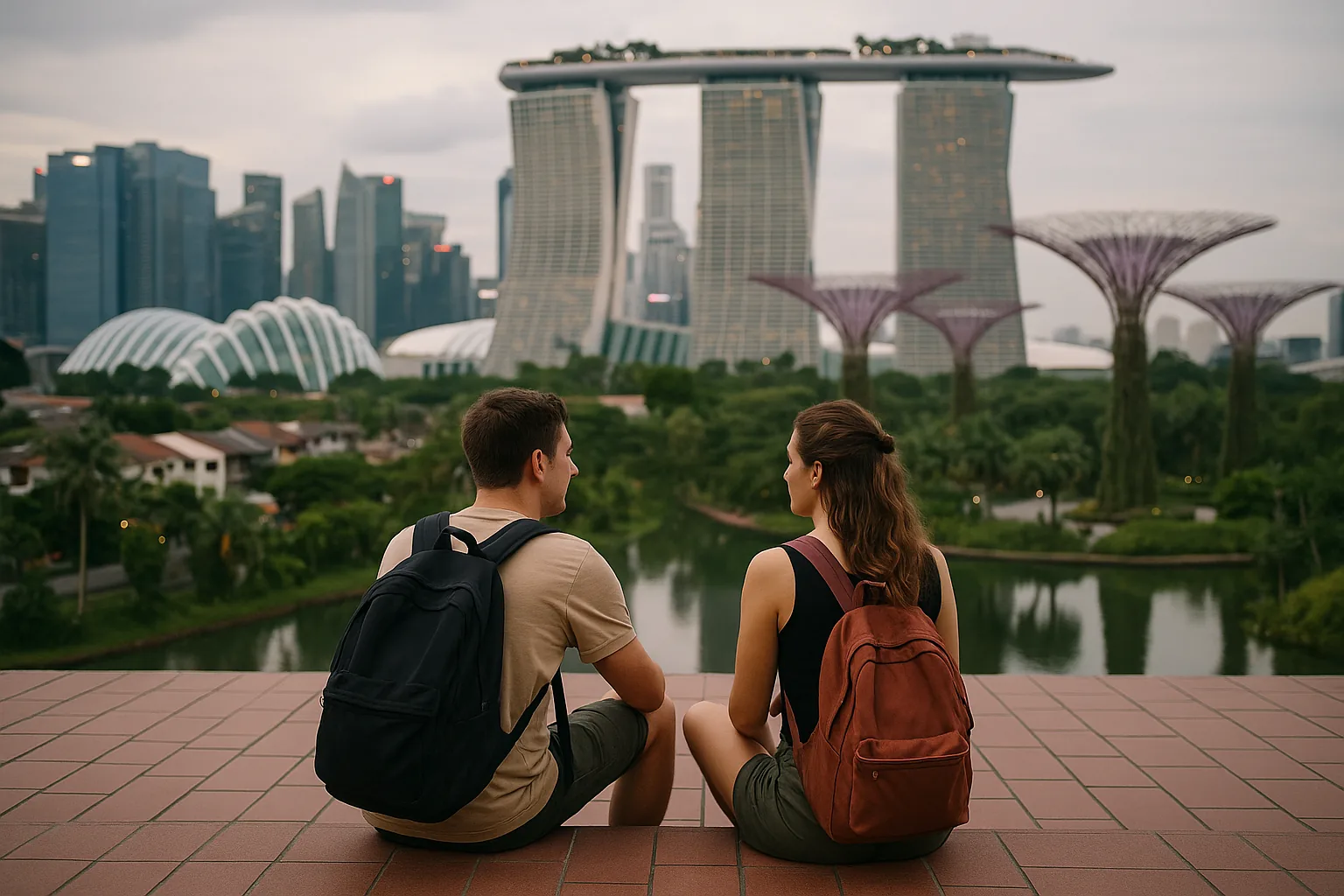
In Singapore, the cultural neighborhoods are landmarks in their own right. Walking through Chinatown or Little India at different times of day gives you completely different experiences of the same streets. The city’s colonial district, centered around the Padang and the river, tells the story of Singapore’s history in a way that’s easy to absorb on foot. And the waterfront area around Marina Bay, whatever you think of its famous skyline, is hard to resist at night — especially from a vantage point on the opposite bank.
How to Travel Between Singapore and KL
This is one of the most practical questions in any Singapore Kuala Lumpur travel guide, and the answer is simpler than you might think. The two cities are connected by several transport options, each with its own trade-offs.
- Bus: The most popular option for budget travelers. Several operators run comfortable, air-conditioned coaches between the two cities, with the journey taking roughly five to six hours depending on border crossing times. It’s affordable, social, and gives you a ground-level view of the Malay Peninsula.
- Train: A scenic and relaxed option, though journey times can be longer. The cross-border rail connection runs through the Malaysian countryside and is a genuinely pleasant way to travel if you’re not in a rush.
- Flight: The fastest option, with several budget carriers operating the route. Flight time is under an hour, but when you factor in airport transfers and check-in time, the total door-to-door journey often isn’t much faster than the bus — and it costs more.
Most travelers on a budget choose the bus. It’s the most social option, the easiest to book last-minute, and the border crossing process — while it can take time — is straightforward for most passport holders. Just make sure you have all your documents ready and your bags accessible for inspection.
Budget Tips That Actually Work
Both cities reward travelers who do a little homework. Here’s what makes a real difference:
- Eat where locals eat. In Singapore, that means hawker centers. In KL, it means the mamak stalls — open-air Indian-Muslim restaurants that serve everything from roti canai to teh tarik (pulled milk tea) at any hour of the day or night. These are social institutions, not just cheap food options.
- Use public transport. Both cities have reliable metro systems that make taxis and ride-hailing largely unnecessary for getting between neighborhoods. Buy a stored-value card on day one and you’ll save both money and mental energy.
- Stay in the right neighborhoods. Centrally located hostels in Chinatown or Little India in both cities put you within walking distance of major sights, which means fewer transport costs and more spontaneous discoveries.
- Visit free attractions. Both cities have significant free or low-cost cultural sites — temples, parks, markets, and public spaces that are as interesting as any paid attraction.
- Travel between cities by bus. As mentioned, this is the most budget-friendly option and gives you flexibility with timing.
For more detailed planning resources, the Indie Traveller’s Southeast Asia itineraries offer solid independent travel advice for the region.
What Kind of Traveler Thrives Here
Singapore and KL are genuinely good destinations for almost any kind of young traveler — but they’re especially rewarding for people who are curious about urban life, food culture, and the way history and modernity coexist in Southeast Asian cities. You don’t need to be an experienced backpacker to navigate either city confidently. Both are safe, well-connected, and full of English signage. First-timers will feel at ease; experienced travelers will find plenty of depth to explore.
What you do need is a willingness to step off the main tourist trail, even slightly. The most memorable moments in both cities tend to happen in the spaces between the landmarks — in a conversation with a hawker stall owner, in a temple courtyard you stumbled into by accident, in a neighborhood market that wasn’t in any guidebook. That’s where the real journey begins.
Two cities, one region, endless stories waiting to be discovered. Pack light, keep your plans loose, and let Singapore and KL surprise you — because they absolutely will.
This article was produced with AI assistance and reviewed editorially.


Nepal’s Mountain Gateway: Kathmandu Neighborhoods, Street Food & Where to Stay for Authentic Exploration

Luang Prabang, Laos: Why This Sacred City Is Perfect for Solo Travelers Seeking Solitude


