
LATAM
Latin America Uncovered: Granada, Quito & Lima—Colonial Cities & Mountain Vibes
Explore three stunning colonial cities in Latin America—Granada’s lakeside charm, Quito’s mountain energy, and Lima’s culinary scene. Where to stay and what makes each un

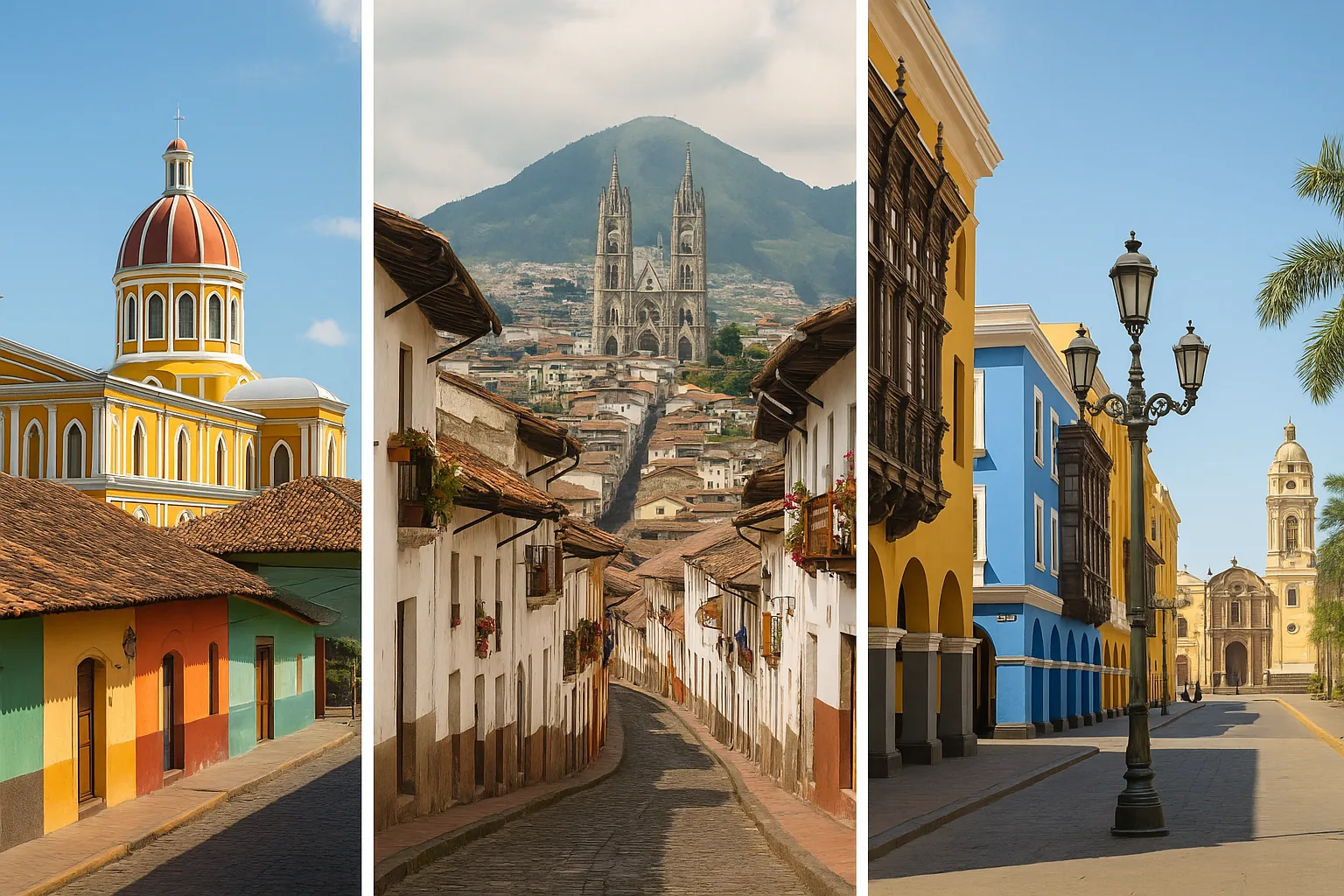
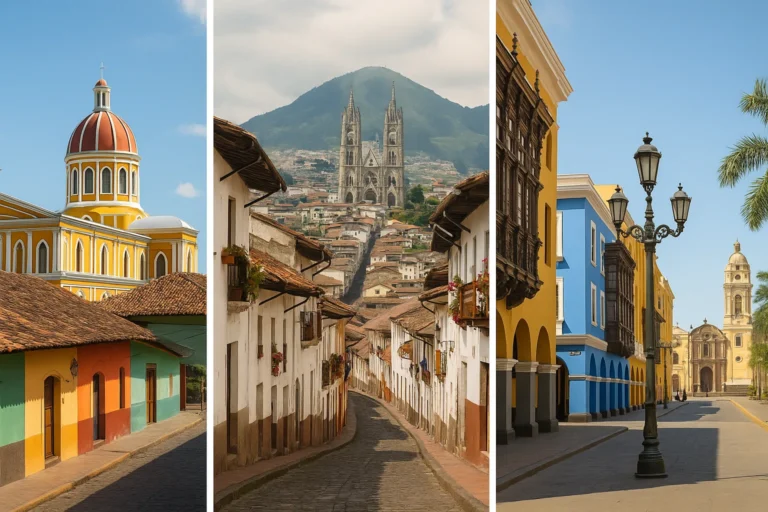
There’s something about colonial cities in Latin America that stops you mid-step. You’re walking down a cobblestone street, the afternoon light is hitting a painted facade just right, and you suddenly feel like the world slowed down without telling you. Granada, Quito, and Lima each offer that feeling — but in completely different ways. One is a sun-drenched lakeside town frozen in colonial charm. Another is a high-altitude capital where centuries-old cathedral bells echo through mountain air. The third is a coastal megalopolis that somehow manages to feel intimate once you find your neighborhood. Together, they make one of the most compelling routes you can piece together in Latin America.
Why Colonial Cities in Latin America Still Hit Different
Before diving into each city, it’s worth understanding what makes this part of the world so visually and culturally overwhelming in the best possible way. Colonial cities across Latin America are built around a particular aesthetic: Spanish-influenced facades painted in deep ochres, blues, and terracottas; plazas mayores anchored by grand cathedrals; Baroque archways framing views of volcanoes or ocean. It’s a European blueprint, but centuries of indigenous tradition, African influence, and local creativity have transformed it into something entirely its own.
These cities aren’t museum pieces. They’re alive. Markets spill out of colonial buildings. Street food vendors set up beside 400-year-old churches. Murals cover walls that once belonged to colonial institutions. The blend of indigenous tradition, colonial history, music, food, art, and modern life is what makes exploring them feel endlessly layered — there’s always something new underneath the surface you thought you’d already read.
If you’re planning a longer trip through Central and South America, connecting Granada, Quito, and Lima gives you a route that spans ecosystems, climates, and cultures while keeping that thread of colonial architecture and living history running through the whole journey.
Granada, Nicaragua: Where Colonial Charm Meets Lake Life
Granada is one of the oldest colonial towns in the Americas, and it wears that history with a kind of effortless confidence. The city sits on the edge of Lake Nicaragua, and the combination of that vast, volcanic lake backdrop with the brightly painted colonial streets creates an atmosphere unlike anywhere else in Central America.
Walk the main streets in the early morning before the heat sets in, and you’ll understand why travelers keep coming back. The architecture is textbook colonial Latin America — wide portales, ornate church facades, inner courtyards hidden behind heavy wooden doors — but it’s the color palette that makes Granada feel so distinctly itself. Yellows, greens, pinks, and blues line every block, and the whole city feels like it was designed to be photographed from every angle.
But Granada isn’t just about aesthetics. The local life here is genuinely engaging. The central park buzzes with activity at all hours — families, street vendors, musicians, and travelers all sharing the same space without any of it feeling staged. Grab a vigorón (a classic Nicaraguan dish of yuca, pork, and cabbage slaw) from a street stall near the park and eat it on a bench while watching the city move around you. That’s the Granada experience in a nutshell.
For getting around, Granada is compact and walkable. Most of the colonial center can be explored on foot in a day, but the city rewards slower travel. Rent a bike, take a horse-drawn carriage ride through the back streets, or hop on a boat to explore the isletas — the small volcanic islands just offshore on the lake. The surrounding area also offers day trips to nearby volcanoes, so if you’re the type who likes to mix culture with adventure, Granada delivers on both fronts.
👉 Read also: Latin America's Colorful Colonial Cities: Granada, Quito, and Trujillo for Adventurous Travelers
Where to Base Yourself in Granada
The colonial center is where you want to stay. Being within walking distance of the main plaza means you catch the city at its best — early morning light on the cathedral, evening guitar music drifting from guesthouses, the smell of gallo pinto from nearby kitchens. Hostels and small boutique guesthouses are common here, many of them set inside restored colonial buildings with central courtyards. It’s the kind of accommodation that becomes part of the experience rather than just a place to sleep.
Quito, Ecuador: A Mountain Capital That Takes Your Breath Away (Literally)
Quito sits at an elevation that will humble you immediately — somewhere around 2,800 meters above sea level, making it one of the highest capital cities in the world. Give yourself a day or two to acclimatize before you start charging up cobblestone hills. Once you do, the city opens up into one of the most rewarding urban experiences in South America.
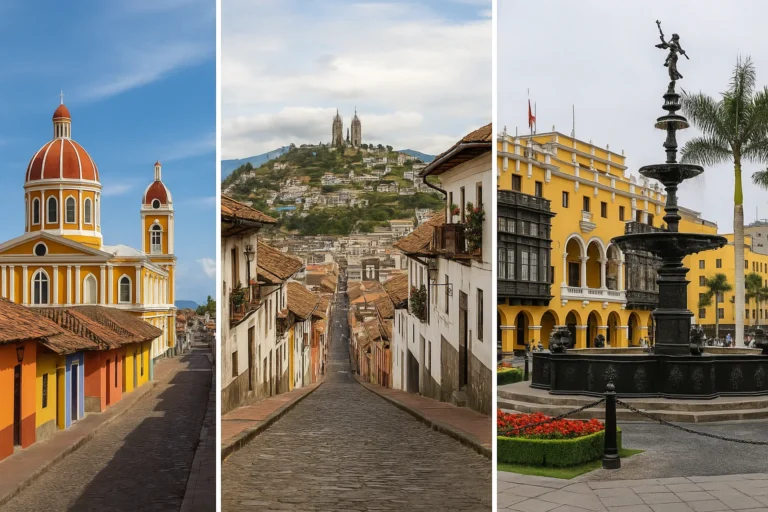
Quito’s historic center is a UNESCO World Heritage Site, and standing in the main plaza with the cathedral on one side and the Andes framing the skyline on the other is one of those moments that makes you feel genuinely small in the best possible way. The plazas here have that classic colonial Latin American DNA — centuries-old architecture, church bells that ring on the hour, and a constant hum of local life — but the mountain setting gives everything an extra layer of drama.
The city is divided into the historic Centro Histórico and the more modern Mariscal district, which is where you’ll find a lot of the hostels, international restaurants, and the kind of nightlife that keeps backpackers busy. But don’t spend all your time in Mariscal — the historic center is where Quito’s soul lives. Wander through the covered markets, climb up to El Panecillo for panoramic views of the city and surrounding volcanoes, and take your time exploring the ornate interiors of the colonial churches. The gilded altars and painted ceilings inside some of these buildings are genuinely jaw-dropping.
Quito also works well as a base for exploring the broader region. The Mitad del Mundo monument marking the equator is nearby, the cloud forests of Mindo are a short trip away, and the Galápagos Islands are accessible by flight from Quito’s airport. If you’re building a longer Ecuador itinerary, the capital is a natural starting or ending point.
Food and Culture in Quito
Ecuadorian food doesn’t always get the attention it deserves, but Quito’s food scene is worth exploring seriously. Locro de papa — a thick potato and cheese soup — is the kind of thing you’ll want after a cold, misty morning in the mountains. Ceviche de camarón shows up on menus across the city, and the central markets are the best place to eat cheaply and authentically. Find a market stall, point at what looks good, and sit down with the locals. It’s always the right call.
Lima, Peru: Culture, Coast, and the Best Food in South America
Lima tends to surprise people. It has a reputation for being grey and chaotic — and yes, the coastal fog (garúa) that blankets the city for much of the year can feel relentless at first. But spend more than a day here and Lima starts to reveal itself as one of the most culturally rich, culinarily extraordinary cities on the continent.
The city is enormous, so understanding its neighborhoods is key to enjoying it. Miraflores is the polished, tourist-friendly district perched on cliffs above the Pacific — great for orientation, easy to navigate, and full of good restaurants and accommodation. But it’s Barranco that tends to steal travelers’ hearts. This bohemian coastal neighborhood is full of colonial and early 20th-century architecture, street art, independent galleries, and some of the best bars and restaurants in the city. Walking its streets at golden hour, when the old mansions glow and the ocean breeze comes in off the cliffs, is one of Lima’s signature experiences.
👉 Read also: Latin America's Colonial Gems: Granada, Quito & Beyond for Culture-Hungry Travelers
Lima’s colonial center — the Centro Histórico — is a UNESCO-listed area that anchors the city’s historical identity. The Plaza Mayor, the cathedral, and the ornate Palacio de Gobierno all cluster together in a way that makes the colonial past feel immediate and tangible. It’s busier and grittier than Granada or Quito’s historic centers, but that energy is part of what makes it compelling. This is a living city, not a preserved one.
Lima’s Food Scene: A Reason to Travel on Its Own
If you’ve heard that Lima is one of the great food cities of the world, believe it. Peruvian cuisine draws on indigenous Andean ingredients, Japanese immigration, Chinese culinary traditions, and Spanish colonial influence to create something genuinely unlike anything else. Ceviche here is a revelation — fresh fish cured in lime juice with ají amarillo chili and served with choclo (Andean corn) and sweet potato. Lomo saltado, a stir-fry that somehow manages to be both Chinese and Peruvian, is comfort food at its finest.
You don’t need a reservation at a world-famous restaurant to eat well in Lima. The mercados and neighborhood cevicherías in Barranco and Miraflores serve food that’s just as memorable at a fraction of the price. Eat where the locals eat, follow the lunchtime crowds, and let your appetite guide you.
Connecting the Route: Building Your Latin America Trip
Linking Granada, Quito, and Lima into a single trip requires a bit of planning, but it’s entirely doable and makes for a genuinely varied journey. Granada to Quito involves crossing from Nicaragua into Costa Rica or Panama and then flying south into Ecuador — budget airlines and regional carriers make this more affordable than it used to be. From Quito to Lima, there are direct flights that take just a few hours, making the transition between the Ecuadorian Andes and the Peruvian coast straightforward.
A realistic timeframe for doing all three cities justice is around three to four weeks. Give Granada three to five days to absorb the colonial atmosphere and explore the lake. Quito deserves at least five to seven days, especially if you want to take any day trips into the surrounding region. Lima can easily fill a week — more if you plan to use it as a base for trips to Cusco, the Sacred Valley, or Machu Picchu.
The beauty of this route is its variety. You move from a small, walkable colonial town to a high-altitude Andean capital to a sprawling coastal city with one of the world’s great food cultures. Each place resets your expectations and teaches you something different about what colonial cities in Latin America can be. They share a visual language — the plazas, the churches, the painted facades — but each city has developed its own identity, shaped by geography, history, and the people who live there.
For anyone curious about the broader context of colonial heritage across the region, UNESCO’s World Heritage List is worth exploring — several Latin American cities have recognized historic centers, and understanding what’s been preserved (and why) adds a meaningful layer to any visit.
Whether you’re backpacking through Central America for the first time or adding a South American leg to a longer journey, this trio of cities offers something rare: the chance to experience Latin America’s colonial past not as a relic, but as a living, breathing, constantly evolving present. Pack light, stay curious, and leave room in your itinerary for the unexpected. The best moments in Granada, Quito, and Lima rarely appear in any guidebook — they happen when you slow down enough to let the city find you.
This article was produced with AI assistance and reviewed editorially.


Teaching English Abroad in 2026: Top Countries, Visa Requirements & Real Salaries

Where to Stay in Latin America’s Top Destinations: Buenos Aires, Bogota & Beyond


