
United Kingdom
London Beyond the Eye: Walking Routes, Hidden Neighborhoods & Real Local Spots
Discover authentic London walking routes through hidden neighborhoods, local markets, and riverside paths that locals actually use—skip the crowds and explore the real ci

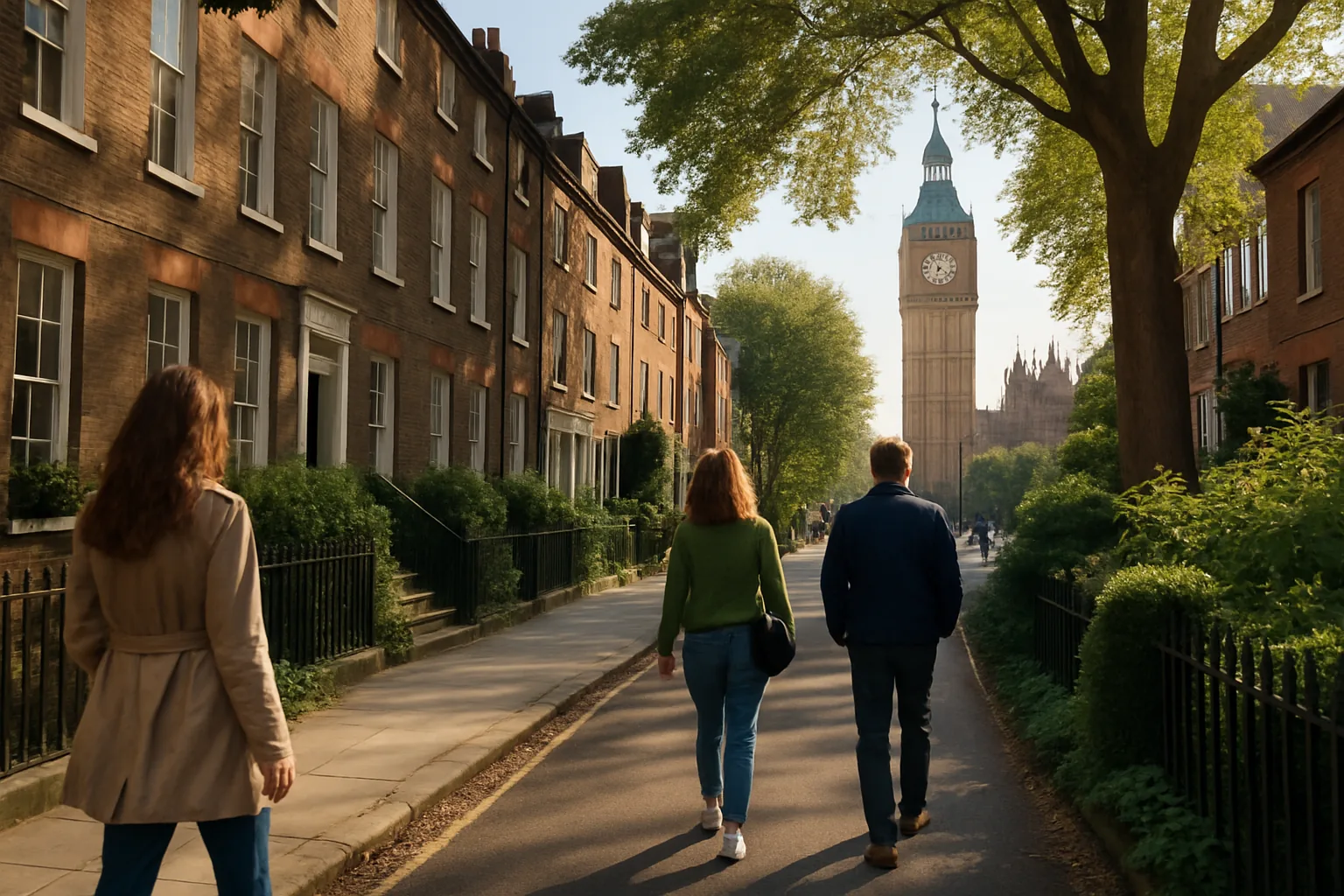
London has a way of pulling you in before you’ve even figured out where you’re going. You arrive, you see the Thames, you spot the Eye on the skyline, and suddenly you’re swept along with everyone else heading for the same bridges, the same selfie spots, the same overpriced coffee near the tourist clusters. But here’s the thing — the London that locals actually love is right there, just one or two streets away. The city’s best london walking routes don’t always start at a famous landmark. Sometimes they begin in a quiet canal-side neighbourhood, a covered market nobody told you about, or a street that doesn’t appear on any official tour map. This guide is for the travellers who want to stay longer, go deeper, and come back with stories that aren’t in everyone else’s camera roll.
Why Walking Is the Only Way to Really Know London
London is enormous. It sprawls in every direction, swallowing villages, reinventing neighbourhoods, and hiding entire worlds between postcodes. The Tube is brilliant for covering distance, but it skips everything in between. When you walk, you notice the Georgian terraces giving way to Victorian railway arches, the corner pubs that haven’t changed in decades, the community gardens tucked behind busy roads.
Walking also makes you accidentally lucky. You stumble into a street market you didn’t know existed. You follow the sound of music through an alleyway and end up at a free outdoor gig. You take a wrong turn and find a canal path that takes you somewhere genuinely beautiful. That’s the version of London worth chasing.
Resources like A Lady in London’s collection of self-guided walking tours — which features dozens of routes across the city — show just how much is out there to explore on foot. But you don’t need a pre-packaged itinerary. You need a direction, a comfortable pair of shoes, and a willingness to wander.
The River Walk That Goes Beyond Tower Bridge
Most visitors walk the South Bank between the Tate Modern and Borough Market, which is genuinely worth doing. But the magic happens when you keep going. Cross at London Bridge, head east along the north bank, and the crowds thin out almost immediately. You’ll pass Wapping, with its converted warehouses and riverside pubs that used to serve dockworkers. Further on, Limehouse opens up into a quiet basin where narrowboats sit moored in unlikely stillness.
If you head west from the Tate instead, you reach Vauxhall and then Battersea, where the old power station has been reimagined as a cultural and retail hub while the park behind it remains one of the most undervisited green spaces in the city. The riverside path here is calm, wide, and genuinely lovely in the early morning or at golden hour.
The lesson: always extend the route. London’s riverbank rewards the curious walker who doesn’t stop where the tour groups do.
North London’s Villages: Highgate, Stoke Newington, and Beyond
Central London gets all the attention, but north London is where a huge number of Londoners actually choose to live — and for good reason. These neighbourhoods feel like distinct villages that happen to be connected to the rest of the city by the Overground and the Tube.
Highgate sits on one of the city’s highest points and offers views across the whole of London on clear days. The village high street has independent cafés, a handful of excellent bookshops, and a genuinely atmospheric cemetery that’s become one of the more quietly fascinating places in the city. Walk down through Highgate Wood and you emerge into Muswell Hill, another neighbourhood that feels miles away from the tourist circuit.
→ Read also: London for Explorers: Walking Routes, Hidden Neighborhoods & Beyond the Eye
Stoke Newington — or Stokey, as locals call it — has a different energy entirely. It’s creative, relaxed, and full of good food. The high street runs through it like a river of independent restaurants, vintage shops, and community spaces. Clissold Park is the neighbourhood’s green heart, and on a Sunday it’s full of locals having picnics, playing football, and walking dogs. It feels exactly like the London that doesn’t make it onto postcards — which is precisely why it’s worth visiting.
East London Walking Routes: From Brick Lane to the Marshes
East London is probably the most-discussed part of the city’s transformation over the past couple of decades, and the walking routes here reflect that layered history. Start at Brick Lane — yes, it’s busy on Sundays, but it earns its reputation. The market spills out in every direction, and the side streets are full of murals, studios, and tiny shops selling everything from vintage cameras to handmade jewellery.
From there, walk north toward London Fields and then keep going into Hackney. The further you get from the postcard version of east London, the more interesting it becomes. Victoria Park is a landmark in its own right — grand, beautiful, and full of life on weekends. Cross it and you reach Hackney Wick, where the canal meets a cluster of artist studios and some of the most interesting street art in the city.
Push further east and you hit the Lee Valley Wetlands, a stretch of marshland and waterways that feels genuinely wild. The contrast between the urban density you’ve walked through and the sudden openness of the marshes is one of those London moments that stays with you. This is one of the most rewarding london walking routes for anyone who wants to feel the city’s full range in a single afternoon.
South London: Peckham, Dulwich, and the Secrets of SE
South London is underrated in a way that’s almost unfair. For years it was treated as the forgotten half of the city, but locals have known the truth for a long time. Peckham is one of the most vibrant, creative neighbourhoods in London right now — not in a manufactured, curated way, but in the sense that it’s genuinely alive with communities, culture, and energy.
Walk through Peckham Rye — the park, then the common — and you get a sense of how much green space south London quietly holds. From there, head toward Dulwich Village, which is almost absurdly picturesque: a proper village high street, an excellent picture gallery, and the kind of calm that makes you forget you’re inside one of the world’s busiest cities.
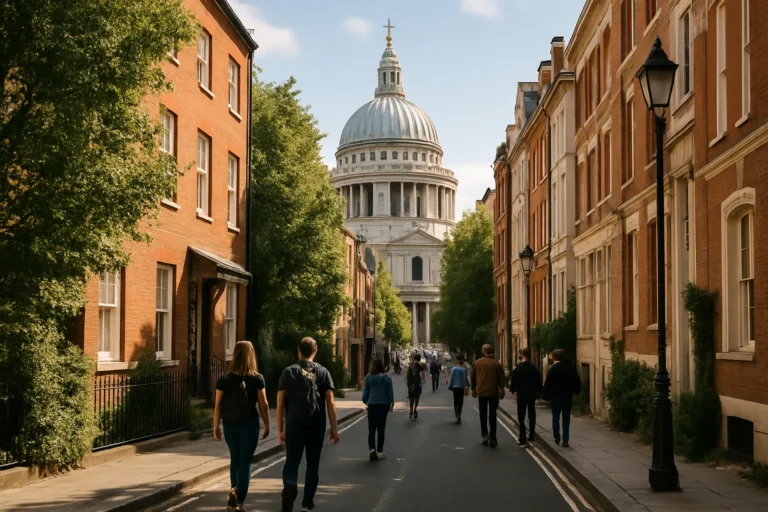
The walk between Peckham and Crystal Palace via Sydenham Hill Wood is one of those routes that feels like a secret even though it’s freely accessible. The ancient woodland in the middle of south London is one of the last remnants of the Great North Wood, and walking through it on a grey autumn morning is one of those genuinely unexpected London experiences.
Little Venice, Paddington, and the Canal Network
London’s canal network is one of its most underused assets as far as tourists are concerned, and locals are quietly grateful for that. Little Venice, near Paddington, is where the Grand Union Canal meets the Regent’s Canal, and the junction is genuinely beautiful — all houseboats, weeping willows, and waterside cafés.
From Little Venice, you can walk the towpath east all the way through Regent’s Park, past the zoo, and into Camden. This route keeps you completely off the main roads and gives you a completely different perspective on a part of London most visitors only see from the Tube. Sophie Nadeau’s video on hidden London spots, which covers areas including Paddington, Little Venice, and Holborn among others, captures exactly this kind of off-the-beaten-path energy that makes the canal walk so rewarding.
If you head west from Little Venice instead, you reach Kensal Green, another neighbourhood that rewards slow exploration. The cemetery there — one of the Magnificent Seven Victorian cemeteries — is extraordinary in its scale and atmosphere, and the surrounding streets have excellent independent cafés and a strong community feel.
→ Read also: London Beyond the Landmarks: 8 Walks That Show You the Real City
Bermondsey, Borough, and the City of London on Foot
The area around Borough Market is famous for good reason, but most people treat it as a destination rather than a starting point. Use it as the beginning of a longer walk and you’ll discover how much is packed into this corner of south-east London.
Bermondsey Street, running south from London Bridge, is one of the most pleasant streets in the city to walk along. It has galleries, independent restaurants, a good antiques market on Friday mornings, and the kind of atmosphere that feels genuinely local rather than designed for visitors. Keep walking south and you reach Maltby Street Market, which operates on weekends and is significantly less crowded than Borough while being equally good.
Cross back over the river and head into the City of London — the ancient square mile — and you’re walking through layers of history that go back two thousand years. On weekdays it’s full of office workers; on weekends it’s almost empty, which is actually the best time to explore it. The hidden churchyards, the Roman walls, the medieval alleyways between modern glass towers — it’s one of the most compelling london walking routes for anyone interested in history, and you can cover it at your own pace without a single tour guide in sight.
How to Navigate London Like Someone Who Actually Lives There
The biggest difference between a tourist and a local in London isn’t knowledge — it’s pace. Locals don’t rush from landmark to landmark. They move through the city with a kind of relaxed purpose, stopping when something catches their eye, taking the longer route because it goes through a park, choosing the café that isn’t on any app because they walked past it once and it looked good.
A few practical things that make a real difference:
- Use the Overground and Elizabeth line as well as the Tube. These lines connect neighbourhoods that the Tube misses entirely, and they run above ground through parts of the city that are genuinely interesting to watch from the window.
- Walk between Tube stops whenever the distance is under twenty minutes. The map makes everything look further apart than it is, and the journey between stations is often where the best discoveries happen.
- Go to markets on weekday mornings rather than weekend afternoons. Borough, Portobello, and Spitalfields are all dramatically calmer earlier in the week, and the experience is completely different.
- Eat where there’s no English translation on the menu board. London’s food scene is genuinely extraordinary, and the best meals are almost never in the places with the biggest signs.
- Pick one neighbourhood per day and actually spend time in it. London rewards depth over breadth. A single afternoon in Stoke Newington will tell you more about the city than a rushed morning ticking off five landmarks.
Resources from writers and creators who actually live in London — like Hannah Kroes, who has spent years exploring the city, or Jackie Rezk of Jou Jou Travels, who writes about non-touristy London from a local perspective — are genuinely useful for going beyond the standard itinerary. These are people who know the city the way you’d want to know it: not as a checklist, but as a place.
The Best Time of Day to Walk London’s Streets
Timing matters more in London than in almost any other city. The difference between 7am and 11am in a neighbourhood like Soho or Notting Hill is the difference between peaceful discovery and shoulder-to-shoulder crowds. Early mornings in London are genuinely magical — the light is different, the streets are quiet, and you get to see the city setting itself up for the day.
Golden hour in the evening is equally rewarding, especially along the river or in the parks. Primrose Hill at sunset, looking south over the whole of London, is one of those views that makes you understand why people fall in love with this city. It’s free, it’s accessible, and it’s the kind of moment that stays with you.
Autumn — which is right now — is actually one of the best seasons to walk London. The crowds are smaller than in summer, the light is extraordinary, the parks are full of colour, and the city has a particular energy in October and November that feels more honest than the tourist-season version. If you’ve been waiting for a reason to come, this is it.
London doesn’t reveal itself all at once. It’s a city that opens up gradually, neighbourhood by neighbourhood, street by street, conversation by conversation. The more you walk it, the more it gives back — and the best london walking routes are often the ones you design yourself, following your curiosity down a side street you’ve never heard of, toward a part of the city that wasn’t in any guide. That’s when London stops being a destination and starts feeling like somewhere you actually belong.
This article was produced with AI assistance and reviewed editorially.


Sri Lanka in October: Skip the Crowds, Embrace the Adventure

Vietnam Beyond the Guidebook: What You Actually Need to Know


