
United Kingdom
London Beyond the Landmarks: 8 Walks That Show You the Real City
Discover authentic London walking routes through Shoreditch, Camden, Brixton and Notting Hill. Street art, local cafés, markets and hidden neighbourhoods revealed.

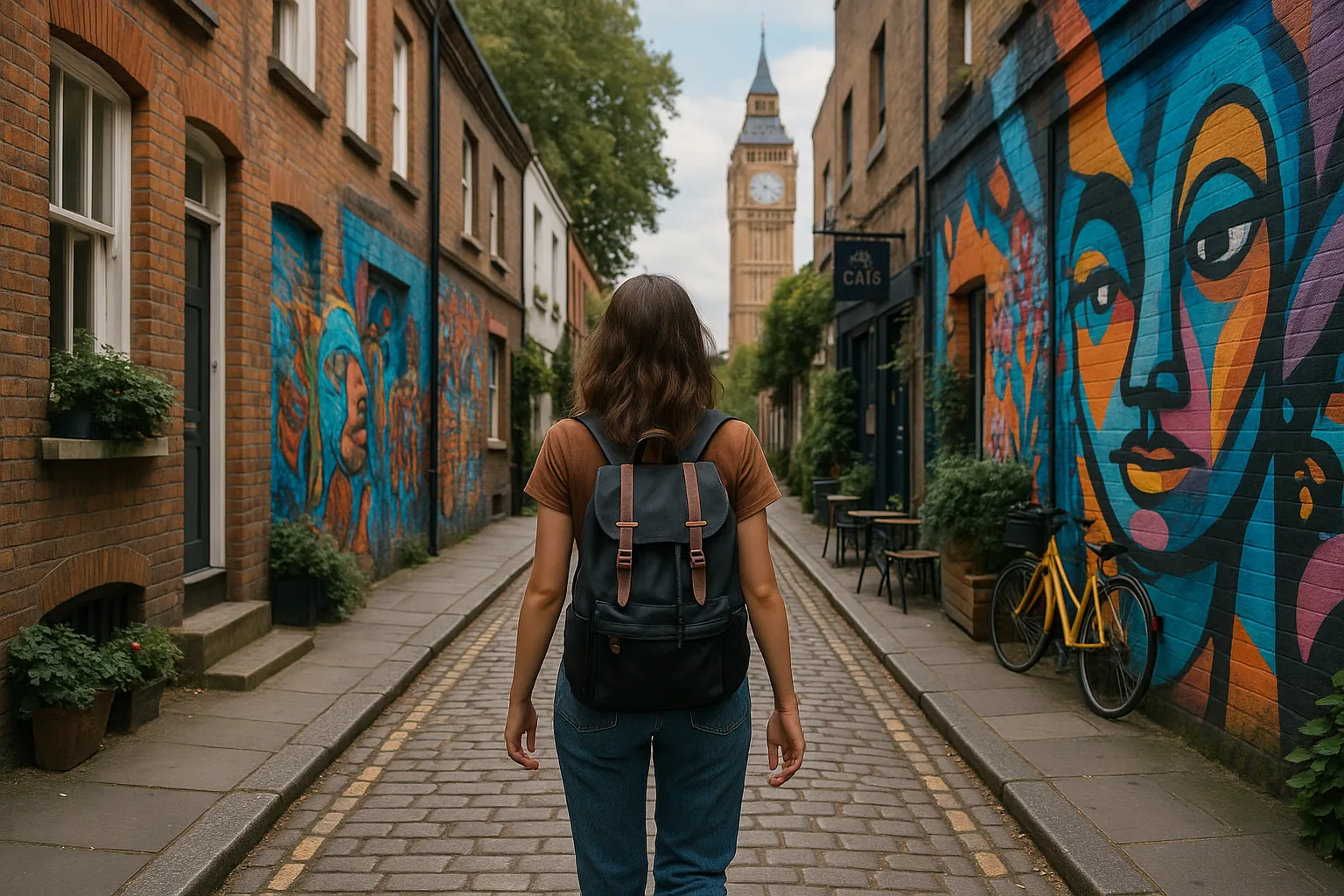
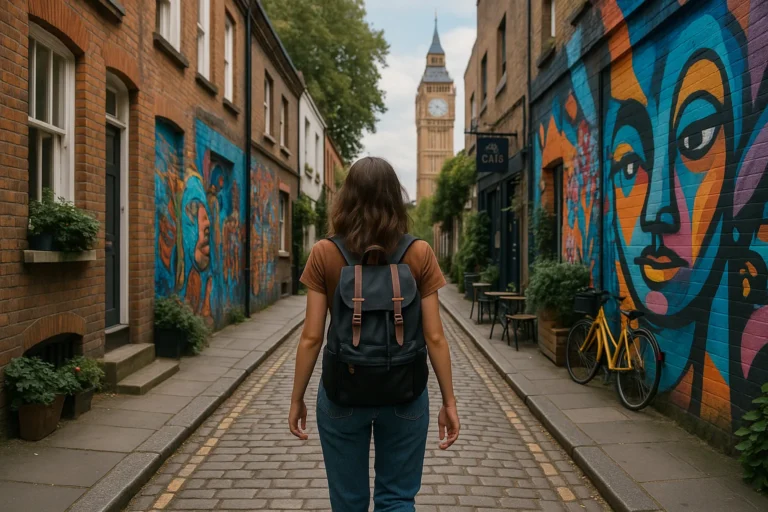
London is one of those cities that tricks you. You arrive, you tick off the Tower of London, you squint up at Big Ben, you shuffle across Millennium Bridge with a hundred other tourists — and then you go home thinking you’ve seen it. You haven’t. The real London is hiding in plain sight, stitched together by london walking routes that take you through backstreets, canal towpaths, independent market stalls, and neighbourhoods where people actually live, argue, fall in love, and eat the best food of their lives. Lace up a comfortable pair of shoes, grab an Oyster card, and get ready to discover a city that most visitors never get to see.
Why Walking Is the Only Way to Truly Know London
The Tube is fast and useful, but it’s also a tunnel. You jump in at one postcode and emerge somewhere completely different, with no sense of the city in between. Walking fills in those gaps. It’s how you stumble on a Victorian cemetery turned community garden, or a tiny café tucked behind a Georgian terrace that only locals know about. It’s how distances start to make sense — how you realise that Shoreditch and the City of London are barely a fifteen-minute walk apart, yet feel like entirely different worlds.
London rewards the curious. Every neighbourhood has its own personality, its own pace, its own soundtrack. The best london walking routes aren’t just about getting from A to B — they’re about everything that happens in between. And the good news? You don’t need to pay for an expensive tour bus to experience any of it.
Shoreditch and Brick Lane: Street Art, Coffee, and Creative Energy
Start this one at Old Street station and head south. Shoreditch is London’s creative heartbeat — a neighbourhood that’s been reinventing itself for decades without ever losing its edge. The streets here are an open-air gallery. Murals appear overnight, painted over and replaced by something new within weeks. Walk along Shoreditch High Street and peel off into the side streets — Rivington Street, Curtain Road, Great Eastern Street — and you’ll find walls covered in extraordinary work from artists both local and international.
From there, drift east into Brick Lane. This street is a living document of London’s immigrant history — Huguenot weavers, Jewish refugees, Bangladeshi communities — each layer still visible if you know where to look. The Sunday market is chaotic and brilliant. Vintage clothing, street food from every corner of the world, vinyl records, handmade jewellery. Budget a couple of hours and you still won’t see everything.
End the walk at Spitalfields Market, grab something to eat from one of the independent food stalls, and sit outside watching the city move around you. This route covers roughly three to four kilometres and works beautifully on a Sunday morning before the crowds peak. The light is soft, the streets smell like fresh bread and coffee, and the whole neighbourhood feels like it’s just waking up.
Camden to Primrose Hill: From Chaos to Calm
Camden is loud, colourful, and relentlessly itself. Start at Camden Town station and walk straight into the market — a labyrinth of stalls selling everything from handmade leather goods to steaming bowls of ramen. The architecture here is genuinely strange and wonderful: buildings shaped like giant Doc Martens boots, canal-side warehouses converted into food courts, bridges spray-painted in every colour imaginable.
Follow the Regent’s Canal towpath west from Camden Lock. This is one of the most underrated walks in the entire city. The canal cuts through the back of neighbourhoods you’d never otherwise see — garden walls draped in wisteria, narrowboats with potted herbs on the roof, the occasional heron standing completely still on the bank. It’s peaceful in a way that central London rarely manages to be.
After about twenty minutes of walking, climb up through Primrose Hill. The park at the top offers one of the genuinely great views of the London skyline — and unlike the view from the Shard, it’s completely free. Come in the late afternoon when the light turns golden and the city glows below you. The whole route is around five kilometres and takes about two hours at a relaxed pace, with Chalk Farm station nearby if you want to head on somewhere else afterwards.
👉 Read also: London for Explorers: Walking Routes, Hidden Neighborhoods & Beyond the Eye
Notting Hill and Portobello Road: Colour, Community, and Hidden Corners
Few London neighbourhoods carry as much mythology as Notting Hill. Yes, there was a film. Yes, the blue door exists. But the real Notting Hill is far more interesting than any of that. Start at Notting Hill Gate station and walk north along Pembridge Road before turning onto Portobello Road, one of London’s most vibrant and photogenic streets.
On a Saturday, the antiques market stretches for what feels like miles — silver jewellery, vintage maps, old cameras, ceramic plates, and furniture that looks like it came from a film set. Even if you’re not buying, it’s worth wandering slowly and talking to the stallholders, many of whom have been here for decades and have stories worth hearing.
Peel off Portobello into the quieter residential streets — Elgin Crescent, Blenheim Crescent, Talbot Road — and you’ll find rows of pastel-painted townhouses that look almost too pretty to be real. Independent bookshops, neighbourhood wine bars, and family-run delis line these streets. This is a neighbourhood that rewards slow, curious walking. Self-guided walking tours of Notting Hill, including free options through platforms like Guruwalk, are available if you’d like a local guide to help you find the hidden gems between the famous spots. The route is around three kilometres and works best on a Saturday morning.
Brixton: Music, Markets, and a Neighbourhood That Defines Itself
Brixton is one of the most culturally rich neighbourhoods in London, and it doesn’t apologise for being exactly what it is. Exit Brixton station and you’re immediately in the thick of it — market traders, music drifting out of record shops, the smell of jerk chicken and ripe mangoes from the covered markets inside Brixton Village and Market Row.
These two interconnected market arcades are extraordinary. Independent restaurants, vintage clothing rails, Caribbean grocery stalls, and tiny bars that only seat about twelve people. Walk through slowly. Eat something. Talk to someone. This is a neighbourhood that has a genuine sense of community, and it shows.

The street art in Brixton is also worth seeking out — murals celebrating local history and cultural figures appear on walls throughout the neighbourhood. Walk along Atlantic Road and Coldharbour Lane and keep your eyes up. The route around central Brixton is compact — you can cover the main areas in two to three kilometres — but you’ll want to linger. Come on a weekday afternoon to avoid the weekend rush, or arrive Saturday morning before midday when the market is fully alive but not yet overwhelming.
The City of London: A Square Mile of Secrets
Most visitors walk through the City of London — the ancient Square Mile at the heart of the capital — without realising what they’re standing in. This is the oldest part of London, built on Roman foundations, and it rewards the kind of slow, attentive walking that most tourists don’t give it. During the week it’s full of office workers in suits; on a Sunday, it’s almost entirely empty, which is when it becomes genuinely magical.
Start at Bank station and walk without a fixed plan. You’ll find medieval churches tucked between glass towers, Roman wall fragments hidden in car parks, narrow alleys that haven’t changed their layout since the seventeenth century. Leadenhall Market is a Victorian gem — a covered market with ornate ironwork and a ceiling painted in rich colours that feels like stepping into another era.
Follow the streets down to the Thames and walk east along the riverbank. The views here — of Tower Bridge, the Shard, the South Bank — are some of the finest in the city, and they’re completely free. The City of London is genuinely one of the most layered and fascinating london walking routes you can do, precisely because it looks like a financial district on the surface and reveals something far older and stranger underneath. Allow three to four hours if you want to explore properly.
👉 Read also: London Beyond the Landmarks: 8 Walks from Tourist Icons to Hidden Neighborhoods (2026)
South Bank to Borough Market: Food, Art, and the River
This is the walk that converts people. Start at Waterloo station and walk down to the riverbank. Head east along the South Bank — past the Southbank Centre, past the skateboarders who’ve claimed the undercroft beneath the concrete buildings, past the second-hand book stalls that appear under Waterloo Bridge every day regardless of the weather.
Continue past Tate Modern (worth stepping inside even briefly — the permanent collection is free) and cross the Millennium Bridge for a view of St Paul’s Cathedral that genuinely stops you in your tracks. Then cross back and keep walking east towards Borough Market, one of London’s oldest and most celebrated food markets. Come on a Thursday, Friday, or Saturday when it’s fully open. The quality of food here is extraordinary — artisan cheeses, fresh pasta, sourdough bread, olives, charcuterie, and hot food from every culinary tradition imaginable.
This route covers around four kilometres and works at almost any time of day, though early morning on a weekday gives you the South Bank almost to yourself, which is a rare and beautiful thing. London Bridge station sits right next to Borough Market when you’re ready to move on.
Hackney and the Lee Navigation: Green Spaces and Local Life
East London’s green corridors are some of the city’s best-kept secrets. Start at Hackney Central station and walk through London Fields — a large, relaxed park that on a warm afternoon is full of people reading, playing football, and queuing for the lido. The park has a real neighbourhood energy that you don’t find in the more manicured royal parks.
From London Fields, head east towards Victoria Park, one of the largest and most beautiful parks in east London. The walk between the two parks takes you through streets lined with independent cafés, vintage shops, and community gardens. This part of Hackney has developed rapidly over the past decade but still retains a genuine local character — it hasn’t been entirely smoothed out by gentrification.
For a longer version of this route, follow the Lee Navigation canal south from Victoria Park towards Hackney Wick, a neighbourhood of converted warehouses that has become one of London’s most interesting creative communities. Street art covers almost every surface here. Small studios and independent spaces operate out of industrial buildings. It feels like a city within a city. The full route from Hackney Central to Hackney Wick is around six kilometres — one of the longer london walking routes in this guide, but one of the most rewarding.
Making the Most of Walking London
A few practical things worth knowing before you head out. An Oyster card or contactless payment gets you on the Tube, buses, and the Overground, so you can always bail on a walk and jump on public transport without any hassle. Most of these routes connect to multiple stations, which means you’re never far from a way home.
Timing matters more than most people think. Weekday mornings are generally quieter in market areas. Sundays are ideal for the City of London. Saturdays work well for Portobello Road and Brixton Market, but arrive early. Late afternoon in autumn and winter gives you extraordinary low light for photography — London’s brick and stone buildings glow in a way that’s hard to describe and even harder to forget.
Wear comfortable shoes. Seriously. London’s streets are uneven, the distances add up faster than you expect, and there’s nothing worse than cutting a great walk short because your feet gave out. Pack a light waterproof layer regardless of the forecast. And leave room in your itinerary for the unexpected — the alley you didn’t plan to turn down, the market stall that makes you stop, the view you didn’t know existed. That’s where the real London lives, and it’s waiting for you every time you step off the tourist trail and start walking.
This article was produced with AI assistance and reviewed editorially.


Teaching English Abroad in 2026: Top Countries, Visa Requirements & Real Salaries

Where to Stay in Latin America’s Top Destinations: Buenos Aires, Bogota & Beyond


