
Asia
Lombok Beyond Bali: Island Itineraries, Gili Islands & Where to Stay Like a Local
Plan your Lombok itinerary with guides to Mataram, Senggigi, Kuta, and the Gili Islands. Find budget accommodation, ferry schedules, and where to stay like a local.

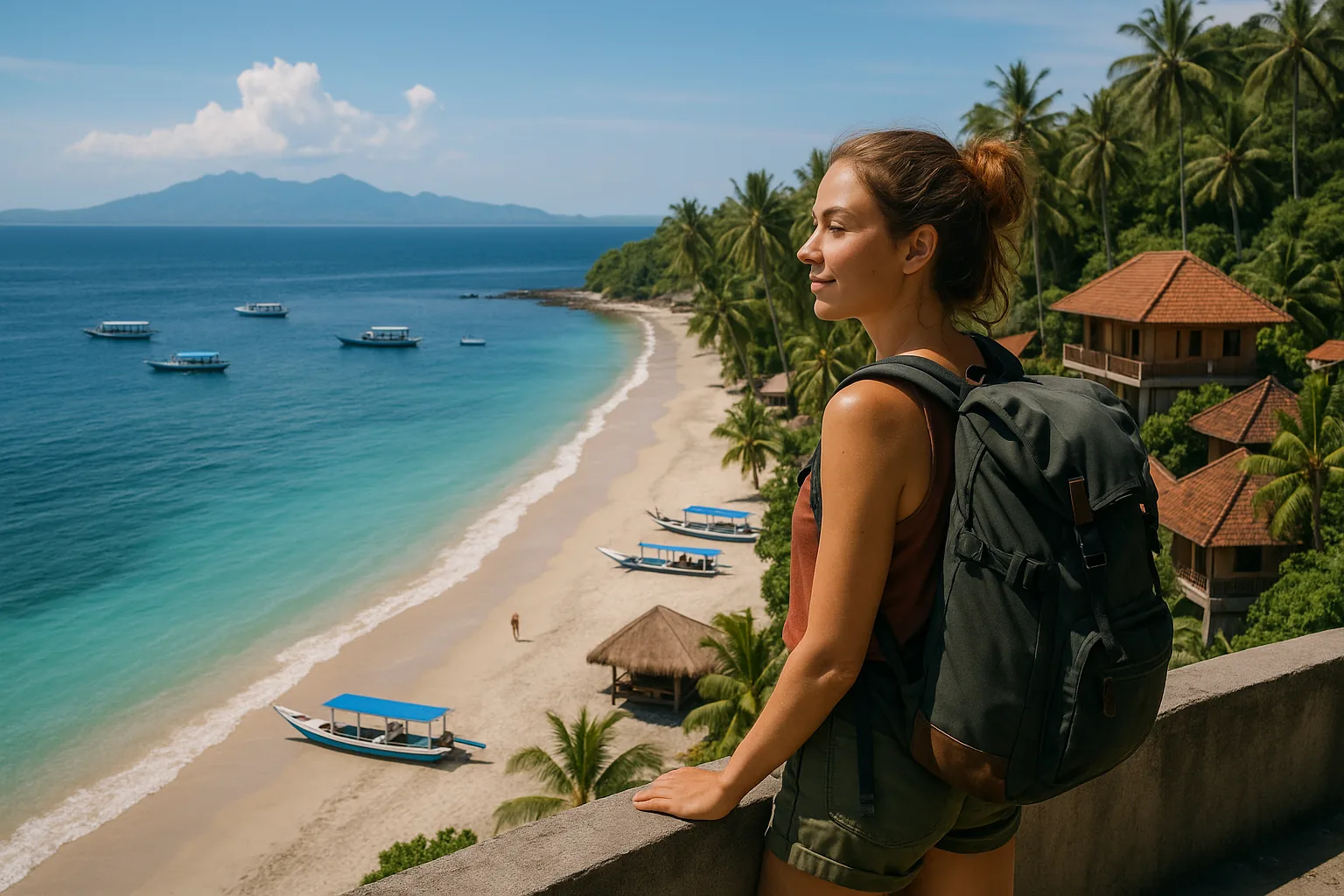
If you’ve been scrolling through Indonesia travel content and keep seeing the same Bali temples and rice terraces on repeat, it might be time to shift your gaze a little to the east. Lombok sits just across the Lombok Strait from Bali, and building a solid lombok itinerary could be one of the smartest travel decisions you make in the region. It’s part of the same archipelago — one of more than 17,000 islands that make up Indonesia — and it packs an extraordinary range of landscapes into a landmass roughly the size of Devon in the UK. Rainforests, volcanic peaks, turquoise beaches, and a population of around 4.7 million people with a culture that’s genuinely distinct from Bali’s. Less Instagram-saturated. More space to breathe. More room to actually feel like you’re discovering something.
Why Lombok Deserves Its Own Trip
Here’s the honest truth: Lombok isn’t just Bali’s quieter neighbor. It has its own identity, its own landscapes, and its own pace. The seas tend to run bluer, the beaches less crowded, and the overall atmosphere less shaped by mass tourism. That doesn’t mean it’s undiscovered — it’s not. But it means you can still find a stretch of sand that feels like it belongs to you, or wander through a local market without being steered toward a souvenir stall every few meters.
Indonesia holds ten UNESCO World Heritage Sites and spans thousands of islands, only around 6,000 of which are inhabited. Lombok sits within this extraordinary context but manages to feel like a place apart. The dominant culture is Sasak — the indigenous people of Lombok — and their traditions, architecture, and food add a layer of depth that rewards curious travelers who take time to look beyond the beach.
The Bali–Gili Islands–Lombok triangle is widely considered one of the most rewarding itineraries in all of Southeast Asia, thanks to the proximity of these destinations and strong maritime connections between them. You can move between islands by fast boat in a matter of hours, which makes it easy to mix beach days, cultural exploration, and outdoor adventure without burning through your whole trip on transit.
Choosing Your Base: Mataram, Senggigi, or Kuta
Lombok has three main areas that tend to anchor most itineraries, and each one offers a very different experience. Understanding the vibe of each helps you build a trip that actually fits how you want to travel.
Mataram: The Island’s Urban Heart
Mataram is Lombok’s capital and largest city. It’s not a typical tourist hub, and that’s exactly why it’s worth at least a day or two. You’ll find local markets, traditional warung (small family-run eateries), and a pace of life that feels genuinely Indonesian rather than curated for visitors. If you’re the kind of traveler who prefers to blend in rather than stand out, Mataram gives you that. It’s also a practical base for getting around the island, with transport connections running in multiple directions.
Senggigi: Easy, Breezy, and Social
Senggigi sits on the northwest coast and has long been Lombok’s most developed tourist strip. Think sunset bars, guesthouses at every budget level, and easy access to boat transfers heading toward the Gili Islands. It’s the kind of place where you can meet other travelers without much effort, grab a cold drink after a long day, and watch the sun drop behind Bali’s Mount Agung on the horizon. It’s not as raw as other parts of Lombok, but it’s comfortable, convenient, and genuinely pretty.
👉 Read also: Lombok vs. Bali 2026: Which Indonesian Island Actually Fits Your Travel Style
Kuta Lombok: The South Coast’s Wild Side
Don’t confuse this with Kuta in Bali — Kuta Lombok is a completely different beast. The south coast here is rugged, dramatic, and increasingly popular with surfers and adventurers who want access to some of the island’s most spectacular beaches. Mawun, Selong Belanak, and Tanjung Aan are all within easy reach, each with its own character. The town itself is small and laid-back, with a growing cluster of guesthouses and cafés that cater to budget travelers without losing their local feel. If you’re here for beaches and surf, this is your base.
How to Build Your Lombok Itinerary Week by Week
The beauty of planning a lombok itinerary is that it’s genuinely flexible. You can spend a week here and still feel like you’ve only scratched the surface, or you can move through in four or five days if you’re combining it with Bali and the Gili Islands. Here’s a framework that works for most travelers.
Days One and Two: Arrive and Settle into the South
Start in Kuta Lombok. Give yourself time to adjust, explore the coastline, and get your bearings. Rent a scooter — it’s the most efficient way to reach the beaches — and spend your first full day hopping between the bays. Each one has a slightly different character: some are calm and sheltered, others have waves that attract surfers from across Southeast Asia. Eat at local warung, try ayam taliwang (Lombok’s famous spiced grilled chicken), and resist the urge to plan every hour.
Days Three and Four: Head North Toward Rinjani
Mount Rinjani is one of Indonesia’s most iconic volcanoes and the second-highest peak in the country. Hiking it is a serious undertaking — most treks take two to three days — but even if a full summit attempt isn’t on your list, the lower trails and surrounding landscapes are worth exploring. The crater lake, Segara Anak, sits at altitude and offers views that feel genuinely otherworldly. If you’re planning to hike, book a guide in advance and make sure you’re physically prepared. The terrain is demanding, but the reward is the kind of view that stays with you.
Days Five to Seven: Culture, Waterfalls, and the North
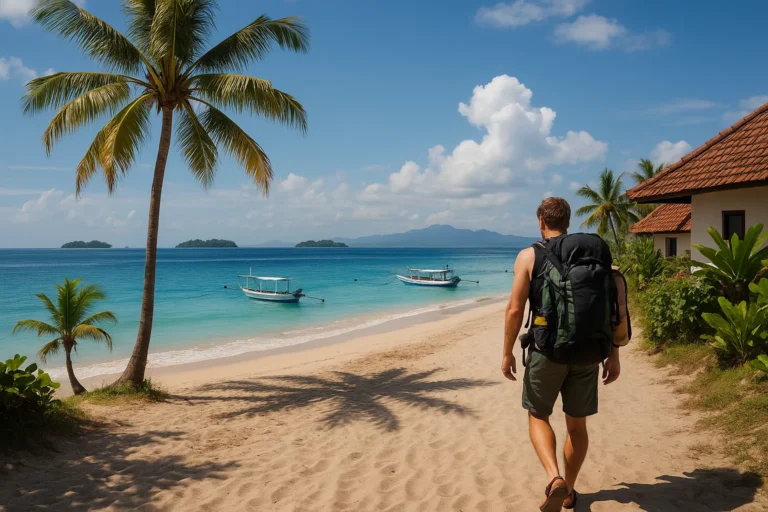
Lombok’s interior and northern regions hide some of its most memorable experiences. Traditional Sasak villages like Sade and Ende offer a window into a way of life that hasn’t been entirely reshaped by tourism. The island’s waterfalls — particularly those around Senaru in the north — are genuinely impressive and often surrounded by jungle that makes the walk there feel like an adventure in itself. Spend a night in Senggigi and use it as a launchpad for exploring this part of the island.
Island-Hopping to the Gili Islands
No lombok itinerary is complete without at least a couple of nights on the Gili Islands. These three small islands — Gili Trawangan, Gili Meno, and Gili Air — sit just off Lombok’s northwest coast and are connected to the mainland and to each other by regular boat services. Each one has a distinct personality, and choosing the right one depends entirely on what you’re looking for.
Gili Trawangan: The Social One
Gili Trawangan, known locally as Gili T, is the largest and liveliest of the three. It has a well-developed strip of bars, restaurants, and guesthouses along its eastern shore, and a rotating cast of travelers who arrive for a night and end up staying a week. There are no motorized vehicles on any of the Gilis — you get around by foot, bicycle, or cidomo (a horse-drawn cart) — which gives even the busiest island a certain charm. The snorkeling and diving here are genuinely excellent, and the sunsets from the west side of the island are worth the short walk.
👉 Read also: Bali vs Lombok: Which Indonesian Island Matches Your Travel Style
Gili Meno: The Quiet One
If Gili T feels too social, Gili Meno is its polar opposite. It’s the smallest of the three, the least developed, and the one that still feels closest to what the Gilis must have been like before the tourist boats started arriving in numbers. Accommodation here tends toward small bungalows and simple guesthouses. The pace is slow. The beach is quiet. If you’re traveling with someone and want a couple of days completely off the grid, Gili Meno is hard to beat.
Gili Air: The Middle Ground
Gili Air splits the difference between the other two. It has enough going on to keep you entertained — good food, yoga classes, beach bars — without the noise levels of Gili T. It’s popular with travelers who want community without chaos, and it tends to attract a slightly older crowd of backpackers and digital nomads. The snorkeling is also excellent, and the island is small enough to walk around in under an hour.
Getting Between the Islands
Fast boats connect the Gili Islands to Lombok’s Bangsal harbor and to Bali’s ports. Services run throughout the day, and the crossing from Bangsal to Gili Trawangan typically takes around fifteen to thirty minutes depending on the boat. Always check current schedules and operators before you travel, as timings and routes can change seasonally. Anywhere.com’s Gili Islands guide is a useful starting point for understanding the connections and logistics. Booking your boat in advance during peak season is strongly recommended — these routes fill up quickly.
Practical Tips for Traveling Lombok on a Budget
Lombok is genuinely one of the more budget-friendly destinations in Southeast Asia, but it rewards travelers who do a little planning. Here’s what to know before you go.
- Scooter rental is the most cost-effective way to explore the island. Prices vary by location and season, but renting by the day is almost always cheaper than hiring a driver for individual trips.
- Eat local. Warung and market stalls serve generous portions of fresh, delicious food at a fraction of what you’d pay at a tourist restaurant. Nasi campur, sate, and fresh seafood are all excellent and widely available.
- Accommodation ranges from very basic guesthouses to mid-range boutique stays. Booking a day or two in advance rather than on arrival gives you more options, especially in popular areas like Kuta and Senggigi.
- Dry season (roughly May to September) is the most popular time to visit, with clearer skies and calmer seas. Shoulder season can offer better value without sacrificing too much on weather.
- Bargain respectfully. In markets and for transport, negotiating is normal and expected. Keep it friendly — it’s part of the culture, not a battle.
- Carry cash. ATMs exist in major towns, but smaller villages and some guesthouses operate on a cash-only basis. Don’t get caught short.
What Makes Lombok Feel Different
There’s something about Lombok that’s difficult to fully articulate until you’ve spent a few days there. It’s not just the bluer water or the emptier beaches or the fact that you can find a quiet corner without much effort. It’s the feeling that the island hasn’t yet been entirely packaged and sold. The Sasak culture is alive and visible. The landscapes feel genuinely wild in places — rainforests, volcanic ridges, coastal cliffs that drop straight into the sea. And the people you meet, both local and traveling, tend to be the kind who chose Lombok specifically because they wanted something a little more real.
The Bali–Gili–Lombok triangle works so well as an itinerary because each destination offers something the others don’t. Bali has temples and terraces and a cultural richness that’s hard to match. The Gilis have that perfect small-island energy. And Lombok has space, scale, and a depth that rewards travelers who stick around long enough to find it. Building a lombok itinerary that gives you time in the south, the north, the interior, and the Gilis is entirely achievable in ten to fourteen days — and if you can stretch to three weeks, you’ll leave wishing you had more.
Lombok is one of those places that earns its reputation quietly. It doesn’t shout for attention. It doesn’t need to. You arrive, you slow down, you explore — and somewhere between a sunrise on an empty beach and a bowl of ayam taliwang eaten at a plastic table by the road, you realize this was exactly the kind of trip you were looking for.
This article was produced with AI assistance and reviewed editorially.


Teaching English Abroad in 2026: Top Countries, Visa Requirements & Real Salaries

Where to Stay in Latin America’s Top Destinations: Buenos Aires, Bogota & Beyond


