
Asia
Southeast Asia on a Budget: Laos Backpacking & Vietnam’s Vung Tau
Discover how to backpack Southeast Asia on a budget through Laos and Vung Tau. Get practical tips on costs, accommodation, food, and transport for under $20 daily.

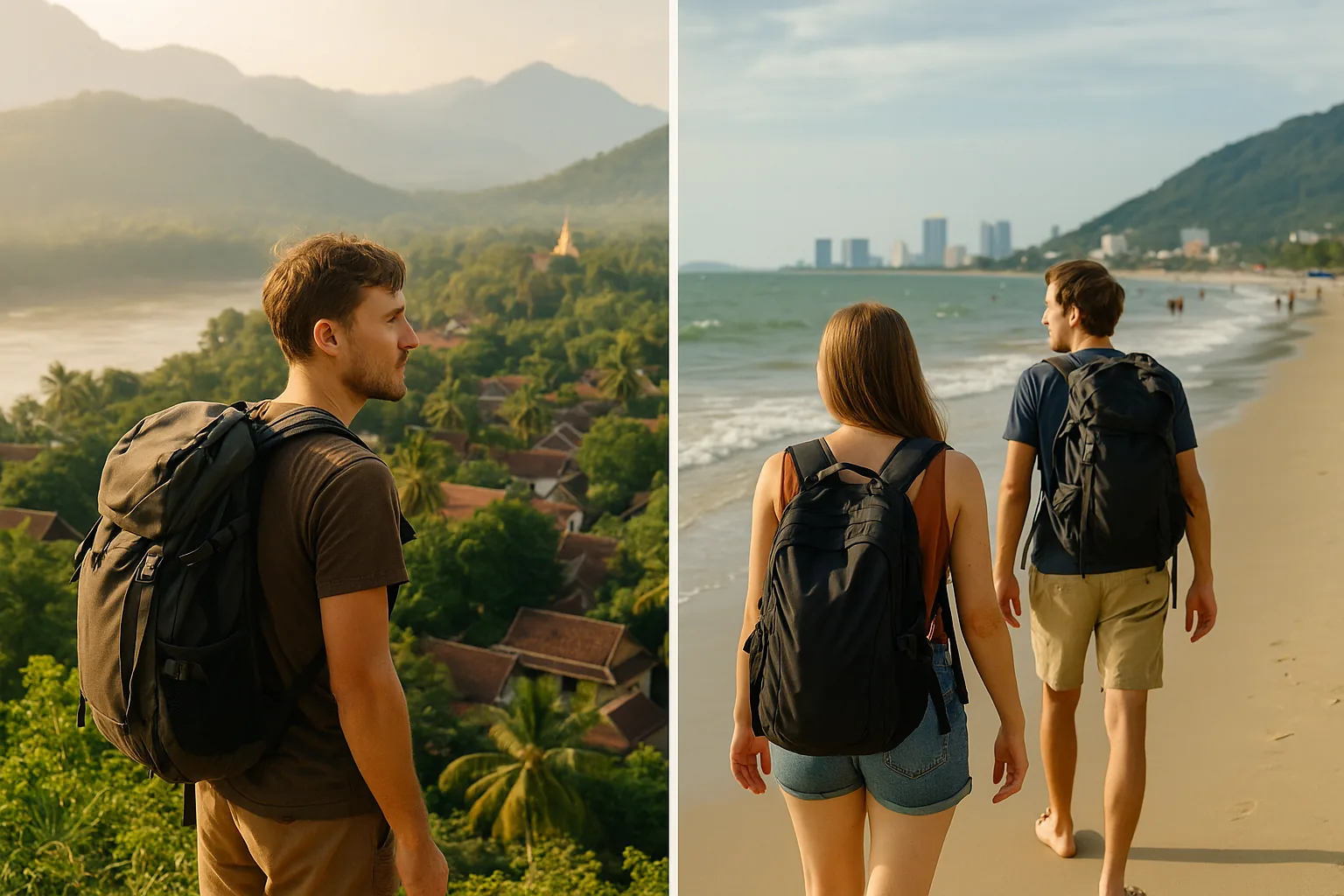
Planning a trip through Southeast Asia doesn’t have to drain your savings before you’ve even bought a flight. The region remains one of the most rewarding destinations in the world for young, curious travelers who want to stretch every dollar without sacrificing the experiences that actually matter. Backpacking Southeast Asia on a budget opens up a world of ancient temples, slow river journeys, sizzling street food, and coastlines that still feel genuinely undiscovered — especially when you step off the well-worn tourist trail and explore places like Laos and Vung Tau in southern Vietnam. These two destinations don’t always top the Instagram algorithm, but that’s exactly what makes them worth your time.
Why Laos Belongs on Your Southeast Asia Itinerary
There’s a reason experienced backpackers keep coming back to Laos. It sits firmly on the banana pancake trail — the loosely defined backpacker route that winds through Southeast Asia — and it has a rhythm entirely its own. Unlike the frenetic energy of Bangkok or the party-heavy scenes of Bali, Laos moves slowly. That slowness is a feature, not a flaw.
The country is landlocked, so don’t come expecting palm-fringed beaches. What you get instead is something arguably more memorable: dense jungle, mist-covered mountains, the mighty Mekong River cutting through ancient towns, and a culture that feels genuinely unhurried. Laos rewards patience, and if you’re willing to give it that, it gives back tenfold.
The classic route takes you from the north to the south, or vice versa. Most travelers enter through Luang Prabang in the north, a UNESCO-listed town where saffron-robed monks collect alms at dawn and French colonial architecture lines the riverfront. From there, you can drift south to Vang Vieng, a town that’s found a better balance in recent years between its party reputation and its genuinely stunning karst landscape. Then comes Vientiane, the capital — one of the quietest, most laid-back capitals in all of Asia — before crossing south toward the Si Phan Don (Four Thousand Islands) region, where hammocks, river dolphins, and sunsets over the Mekong make it nearly impossible to leave on schedule.
What Backpacking Laos Actually Costs
Here’s the part that makes Laos genuinely exciting for budget travelers: it’s cheaper than Thailand, and that gap is more significant than most people expect. A shoestring daily budget of roughly $20 per day is realistic and covers the essentials — a dorm bed in a hostel, local transport between towns, and three meals a day from street stalls or local restaurants.
That figure comes from keeping things simple, which in Laos is easy to do. Street food is delicious and inexpensive. Khao niao — sticky rice — is a staple, and you’ll eat it with grilled meats, papaya salad, and noodle soups for very little money. Hostel dorm beds are widely available in the main backpacker towns, and the quality has improved noticeably in recent years without the prices following suit.
When budgeting, it helps to think in terms of what a standard backpacker day actually includes: your accommodation, three meals (street food or a local restaurant), local transport (tuk-tuks, shared minibuses, or slow boats), and one activity or entry fee. That might be a temple visit, a waterfall hike, or a kayaking session. Build your daily estimate around those categories and you’ll rarely be surprised.
- Accommodation: Hostel dorm beds are widely available; private rooms cost more but are still affordable by regional standards.
- Food: Eat where locals eat — market stalls, noodle shops, and small family restaurants — and your food costs stay very low.
- Transport: Shared minibuses and slow boats are the budget-friendly way to move between towns; night buses save on accommodation costs.
- Activities: Many natural attractions like waterfalls and viewpoints cost little or nothing to visit.
The slow boat down the Mekong from the Thai border to Luang Prabang is one of those experiences that’s worth every hour it takes — two days on the river, watching the jungle slide past, sharing food and stories with other travelers. It costs a fraction of a flight and delivers ten times the memory.
👉 Read also: Southeast Asia Beyond the Backpacker Trail: Vung Tau, Hat Yai & Kuala Lumpur's Real Neighborhoods
How Laos Compares to Thailand and Cambodia
Travelers who’ve already done Thailand or Cambodia often ask whether Laos is worth adding to the route. The honest answer is yes — but for different reasons than you might expect.
Thailand offers more infrastructure, more variety, and more of everything. That’s wonderful, but it also means more crowds at the major sites, higher prices in tourist zones, and a sometimes overwhelming sense that you’re moving through a well-oiled machine built for visitors. Laos doesn’t have that. The tourist infrastructure exists, but it hasn’t consumed the place. You can still wander into a village and feel like a curious traveler rather than a customer.
Cambodia’s Angkor Wat is genuinely unmissable, and the country has a depth of history that demands respect and time. But Laos offers a different kind of immersion — less dramatic in its headline attractions, more rewarding in its day-to-day texture. The people are famously warm, the landscapes are spectacular without being overrun, and the pace of life is something you carry home with you long after the tan fades.
What Laos doesn’t have is a beach. That’s the one gap in the experience. If you’re craving coastline after weeks of river and jungle, you’ll need to cross into Thailand or Vietnam — and that’s where Vung Tau enters the picture.
Discovering Vung Tau: Vietnam’s Underrated Coastal Escape
Vung Tau sits on a small peninsula about two hours from Ho Chi Minh City, jutting into the South China Sea. While most international travelers head straight to Da Nang, Hoi An, or the islands of Phu Quoc, Vung Tau quietly draws a loyal crowd of domestic Vietnamese tourists and a growing number of backpackers who’ve figured out that the less-hyped option is often the better one.
The town has a genuinely layered character. It was a French colonial resort in an earlier era, then an important port city, and today it blends fishing village life with beach-town energy in a way that feels organic rather than manufactured. You’ll find working fishing boats moored alongside seafood restaurants, a giant statue of Christ the King watching over the peninsula from a hilltop, and stretches of beach that get busy on weekends but remain calm during the week.
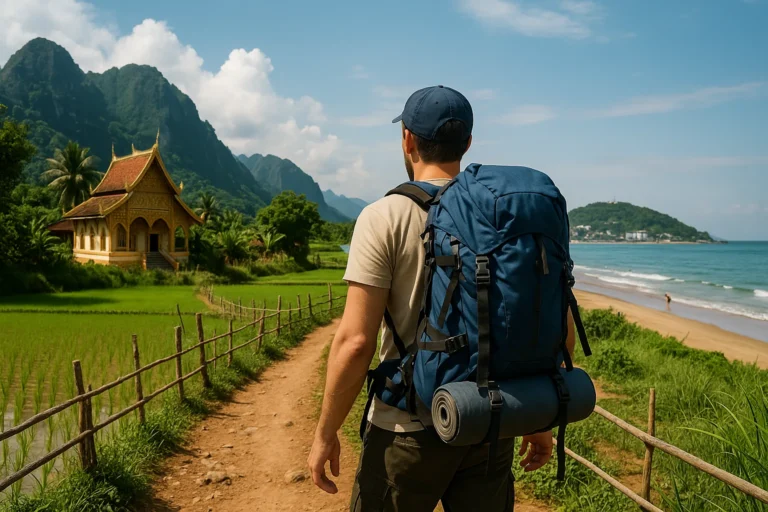
This isn’t a party destination. It’s a place where you wake up early to watch fishing boats come in with the morning catch, eat bánh mì from a cart on the seafront, and spend the afternoon on a rented motorbike exploring the quieter back roads of the peninsula. It has the kind of charm that rewards slow travel — the same instinct that makes Laos so compelling.
Getting Around and Eating Well in Vung Tau
Vung Tau is compact enough to navigate easily. Renting a motorbike is the most liberating way to explore — you can loop around both the Front Beach and Back Beach areas, climb up to the lighthouse, and find your own quiet corner of coastline in an afternoon. Xe om (motorbike taxis) and ride-hailing apps work well for shorter trips within town.
The food scene here is one of the best arguments for visiting. Vung Tau is known for its fresh seafood, and eating at a plastic-table seafood spot near the harbor — ordering grilled clams, steamed crab, and cold bia hơi (fresh draft beer) — is one of those meals you’ll reconstruct in your head for years. Street food is abundant and inexpensive. Look out for bánh khọt, a local specialty of small savory rice cakes topped with shrimp that you’ll rarely find done as well anywhere else in Vietnam.
👉 Read also: Southeast Asia's Underrated Coastal Towns: Vung Tau, Hat Yai & Beyond
Budget accommodation options have expanded in recent years, with guesthouses and small hotels offering clean, comfortable rooms at prices that feel almost too reasonable. The town isn’t as hostel-dense as a major backpacker hub, but you’ll find good options, especially if you book a few days ahead for weekend visits when domestic tourists fill the town.
Connecting the Two: Building a Route That Makes Sense
Combining Laos and Vung Tau in a single trip takes a bit of planning, but the route is more logical than it might first appear. The most natural flow is to travel overland through the region — entering Laos from Thailand or China in the north, working your way south through the classic route, then crossing into Vietnam.
From southern Laos, you can cross into central Vietnam and work your way down the coast, or travel directly toward Ho Chi Minh City. From there, Vung Tau is a short journey by ferry or bus — making it an ideal final stop before a flight home, or a gentle decompression after weeks of intense travel through temples, mountains, and river towns.
The contrast between the two destinations is part of what makes the combination work so well. Laos gives you depth, culture, and that slow-travel mindset that backpacking Southeast Asia on a budget is really about at its best. Vung Tau gives you coastline, seafood, and a chance to exhale before the journey ends. Together, they sketch out a version of Southeast Asia that most travelers never quite find — because they’re too busy following the crowd to the same five places everyone else goes.
Smart Budget Habits That Work Across Both Destinations
Whether you’re navigating the slow boats of the Mekong or the seafront of Vung Tau, a few consistent habits will keep your budget healthy without making you feel like you’re missing out.
- Eat local, always. The best food in Southeast Asia is never in the tourist restaurant with the English menu out front. Follow the plastic stools, the charcoal smoke, and the crowd of locals.
- Move slowly. Frequent transport between destinations adds up fast. Spending more time in fewer places saves money and gives you a better experience.
- Negotiate respectfully. In markets and with tuk-tuk drivers, a friendly negotiation is expected. Don’t haggle aggressively, but don’t accept the first price either.
- Travel in the shoulder season. Prices drop and crowds thin in the periods just before and after peak season. You often get better weather than you’d expect, too.
- Use local transport. Shared minibuses, local buses, and ferries are dramatically cheaper than tourist shuttle services and often more interesting.
- Track your spending daily. Even a rough mental note of what you’ve spent keeps you from drifting over budget without realizing it.
For a deeper look at how daily costs break down across the region, Hostelworld’s guide to the cheapest backpacking countries in Southeast Asia is a useful reference point when you’re building your initial budget estimates.
What These Destinations Teach You About Traveling Well
The thing about places like Laos and Vung Tau is that they don’t perform for you. They exist on their own terms, and the best moments happen when you stop trying to optimize your itinerary and just let the day unfold. That might mean sitting on a riverbank in Luang Prabang longer than planned because the light is extraordinary and the conversation is good. Or it might mean following a local’s recommendation to a seafood spot in Vung Tau that has no name on a sign but produces the best clams you’ve ever tasted.
Backpacking Southeast Asia on a budget is, at its core, about making choices — choosing experience over comfort, curiosity over convenience, depth over breadth. These two destinations embody that philosophy better than almost anywhere else in the region. They’re not the flashiest stops on the map, and that’s precisely why they stay with you.
The travelers who find their way to a slow boat on the Mekong or a quiet beach morning in Vung Tau tend to be the ones who come home with the best stories — not because they spent the most, but because they paid attention. That’s the kind of travel that changes how you see the world, and it doesn’t cost anywhere near as much as you think.
This article was produced with AI assistance and reviewed editorially.


Teaching English Abroad in 2026: Top Countries, Visa Requirements & Real Salaries

Where to Stay in Latin America’s Top Destinations: Buenos Aires, Bogota & Beyond


