
Asia
Lombok vs. Bali 2026: Which Indonesian Island Actually Fits Your Travel Style
Comparing Lombok and Bali across beaches, crowds, costs, and vibe. Discover which Indonesian island matches your travel personality.

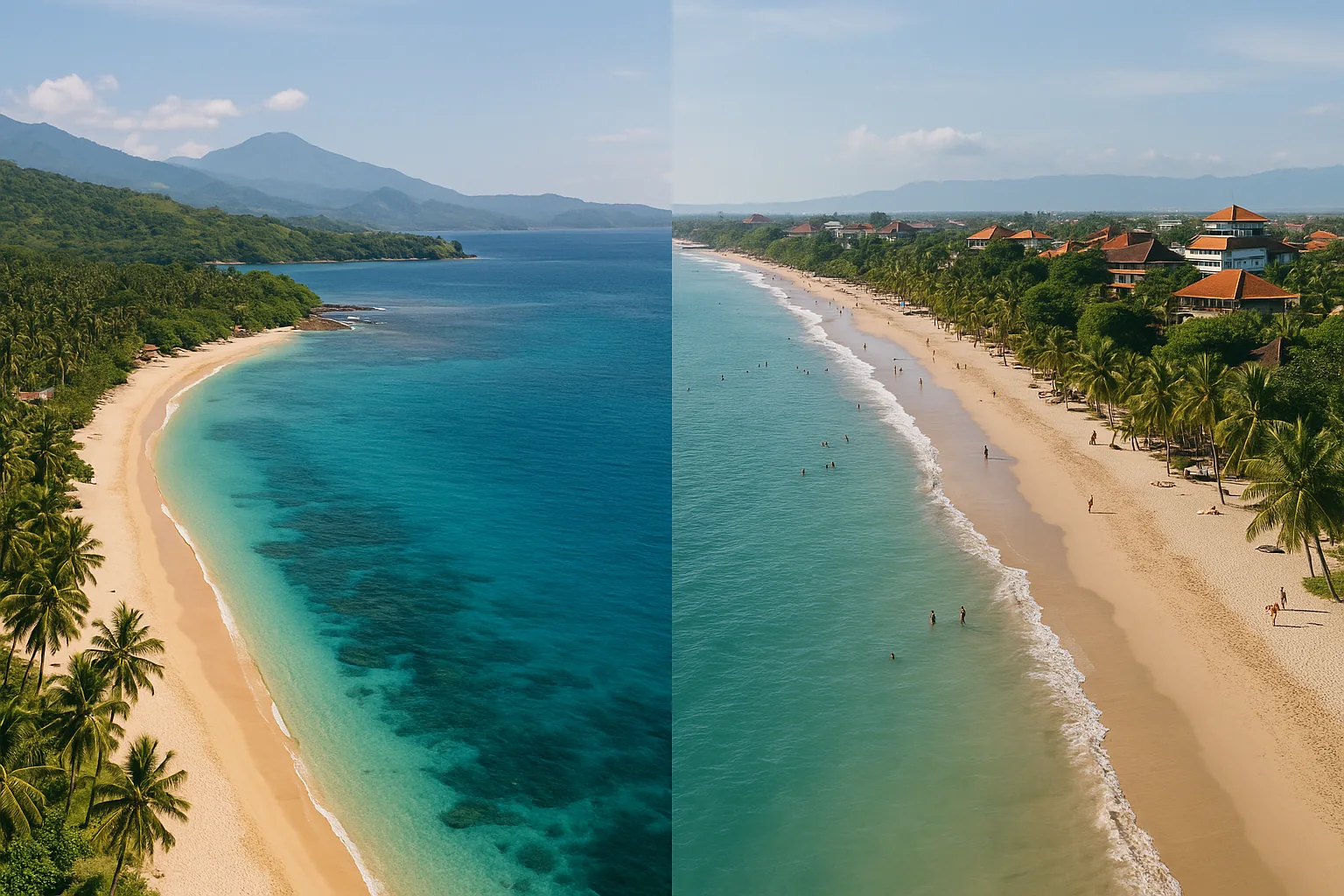
Two islands. One strait between them. And a decision that could completely shape the kind of trip you have. If you’re planning a journey to Indonesia and wrestling with the Lombok vs Bali question, you’re not alone — it’s one of the most common dilemmas for young travelers heading to Southeast Asia. Both islands are stunning, both have their own energy, and both will leave you with memories you’ll carry for years. But they’re not the same place, and they’re not right for the same traveler. So before you default to Bali just because it’s the name you’ve heard more often, let’s actually dig into what each island offers — and figure out which one fits you.
Two Islands, One Strait, Very Different Vibes
Bali and Lombok are neighboring Indonesian islands separated by the Lombok Strait — a stretch of water that’s narrow enough to feel almost symbolic. You can get from one to the other in a relatively short time, yet step off the boat and feel like you’ve entered a completely different world.
Bali is the island that built its reputation over decades. It’s vibrant, layered, and endlessly photogenic. You’ll find yourself wandering through the serene temples of Ubud, staring out over the emerald-green rice terraces of Tegallalang, or catching a sunset from a clifftop bar in Uluwatu. The infrastructure is polished. The options are almost overwhelming. And yes, the crowds are real — especially in peak season.
Lombok, on the other hand, offers something increasingly rare in Southeast Asia: space. It’s a quieter, less densely touristed island with its own long-standing Sasak traditions that feel genuinely rooted in the land. The tourism scene exists, but it hasn’t taken over. You can still find a beach where the only footprints are yours.
Neither island is better in an absolute sense. But one of them is probably better for you. Let’s break it down properly.
Beaches: What You’ll Actually Find on Each Island
Both islands have coastlines worth crossing the world for. But the beach experience feels completely different depending on which side of the strait you’re on.
In Bali, the beaches are famous for good reason. Seminyak and Kuta are lively, social, and packed with surf schools, beach clubs, and vendors. Nusa Dua offers calm, crystal-clear water in a more resort-style setting. The south coast near Uluwatu has dramatic cliffs and powerful waves that draw serious surfers. If you want a beach with atmosphere, a cocktail in hand, and people to meet, Bali delivers.
Lombok’s beaches feel like a different chapter entirely. Kuta Lombok — not to be confused with Kuta in Bali — is a beach and surf town that’s been quietly gaining a reputation among travelers who want something rawer and more real. The bays around Kuta Lombok are wild and beautiful, with turquoise water and pale sand framed by dry hills. The vibe is laid-back in a way that Bali’s south coast simply isn’t anymore.
Beyond Kuta, Lombok’s coastline continues to surprise. The Gili Islands — a trio of small islands off Lombok’s northwest coast — are famous for their underwater statues, which make for an unforgettable snorkeling or diving experience. The islands themselves are car-free, slow-paced, and genuinely peaceful. It’s the kind of place where you lose track of time in the best possible way.
If your dream beach day involves a sun lounger, a beachside restaurant, and easy access to everything, Bali is your answer. If you want to explore, discover hidden coves, and feel like you’ve earned your sunset, Lombok is calling.
Crowds and Tourism Infrastructure: Knowing What You’re Walking Into
This is one of the most important differences between the two islands, and it’s worth being honest about.
👉 Read also: Bali vs Lombok: Which Indonesian Island Matches Your Travel Style
Bali is one of the most visited destinations in Southeast Asia. That brings incredible benefits — well-developed transport links, a huge range of accommodation options, reliable Wi-Fi in most areas, and a tourism industry that knows how to cater to international travelers. For first-time visitors to the region, or for anyone who values convenience, that infrastructure matters.
But it also means traffic in Seminyak that can grind to a halt, popular viewpoints crowded with tour groups, and the occasional feeling that you’re experiencing a version of the island that’s been packaged for export. It’s still magical — just busier than the postcards suggest.
Lombok has seen thoughtful infrastructure developments as of 2026, and the island is genuinely more accessible than it was a few years ago. Roads have improved, accommodation options have expanded, and the international airport near Praya connects it to more destinations than before. But it still operates at a slower pace, with fewer crowds and a more local feel in most areas.
It’s also worth noting that Indonesia is shifting its tourism approach for 2026 toward a high-value, low-impact model, with visitor caps being discussed for some of the country’s most sensitive destinations. This means the window to experience Lombok before it changes significantly might be shorter than you think — and it makes the island an even more compelling choice right now.
For families with young children, Bali is generally the better fit — its robust infrastructure and abundance of kid-friendly resorts make it easier to navigate with little ones in tow. But if you’re a solo traveler, a couple, or a group of friends in your twenties looking for adventure over convenience, Lombok’s relative quietness is a genuine asset.
Cost: Stretching Your Budget on Both Islands
Here’s the honest answer: both islands can be done cheaply or expensively, depending entirely on how you travel.
In Bali, the range is enormous. You can eat a full meal at a warung — a local Indonesian eatery — for very little, or spend a lot more at a trendy café in Canggu. Budget guesthouses and hostels exist throughout the island, but so do luxury villas with private pools that cater to a higher-spending crowd. The more touristy the area, the more prices tend to rise.
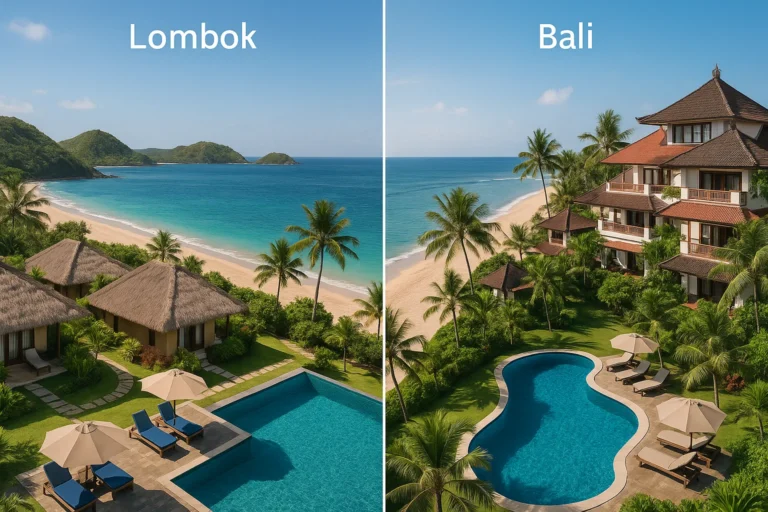
Lombok generally trends slightly more affordable in everyday costs, particularly outside the main tourist zones. Local food, transport, and accommodation in less-developed areas can stretch your budget further. That said, as the island’s tourism scene grows, prices in popular spots like Kuta Lombok and the Gili Islands have been creeping upward. The gap between the two islands is narrowing.
The practical advice? Wherever you are, eat where locals eat, use local transport where possible, and book accommodation a few days in advance rather than on the spot in peak season. Both islands reward travelers who are flexible and curious enough to step away from the obvious tourist trail.
Where to Stay: From Kuta Lombok to Senggigi and Beyond
Choosing where to base yourself is one of the most important decisions you’ll make on either island.
In Bali, your base largely determines your experience. Ubud is for culture lovers — rice terraces, yoga studios, traditional art markets, and a creative community that’s been drawing curious travelers for generations. Seminyak and Canggu are the go-to zones for nightlife, surf, and the digital nomad crowd. Uluwatu suits surfers and anyone who wants dramatic coastal scenery with a more relaxed pace. Choosing the right neighborhood matters almost as much as choosing the island itself.
👉 Read also: Sri Lanka vs Bali vs Lombok: Which Southeast Asian Island Fits Your Travel Style in 2026
In Lombok, the options are more spread out but equally worth considering. Kuta Lombok is the natural base for beach lovers and surfers — it’s a town with genuine character, a growing café scene, and easy access to some of the most beautiful bays on the island. It’s the kind of place where you arrive planning to stay two nights and end up staying five.
For a more laid-back coastal experience, the areas around Senggigi and Mangsit on Lombok’s west coast offer beachfront stays with views across the strait toward Bali’s volcanic peaks. It’s quieter than Kuta Lombok, more suited to travelers who want to slow down completely and just exist by the water for a while.
And if you want to be close to the Gili Islands for day trips or multi-day island hopping, basing yourself near the northwest coast makes logistics much simpler.
Beyond the Beach: What Lombok Has to Offer Inland
One of the biggest misconceptions about Lombok is that it’s only about beaches. The interior of the island is just as compelling — maybe more so for travelers who want to push themselves a little.
Mount Rinjani dominates the northern part of the island, rising to become one of Indonesia’s highest active volcanoes. It sits near quiet villages where life moves at its own pace, untouched by the tourism economy that shapes the coast. Trekking Rinjani is a serious undertaking — multiple days, significant altitude, and real physical effort — but the reward is a crater lake, volcanic landscapes, and the kind of view that makes you feel genuinely small in the best possible way. It’s the kind of experience you don’t find in Bali.
Lombok’s Sasak villages offer another dimension entirely. The Sasak people have their own language, architecture, weaving traditions, and ceremonies that predate modern tourism. Visiting these communities — respectfully, with a local guide where possible — gives you a window into Indonesian culture that’s far removed from the commercialized version you might encounter elsewhere.
Bali, of course, has its own extraordinary inland experiences. The temples of Ubud, the rice terraces, the traditional dance performances, and the rich Hindu spiritual culture make the island’s interior just as rewarding as its coastline. But Bali’s cultural sites are well-known and well-visited. Lombok’s inland discoveries still feel like something you found yourself.
Lombok vs Bali: Matching the Island to Your Travel Style
By now, a picture is probably forming. But let’s make it concrete.
Choose Bali if you:
- Want a mix of culture, nightlife, surf, and wellness in one place
- Are traveling with family or first-time visitors who need reliable infrastructure
- Want a wide range of accommodation at every price point
- Love the energy of a place with a vibrant international community
- Want to explore temples, rice terraces, and traditional Balinese arts
Choose Lombok if you:
- Want uncrowded beaches and a slower, more authentic pace
- Are drawn to trekking, adventure, and genuine outdoor challenges
- Want to connect with local culture before it’s been shaped by mass tourism
- Are traveling solo or with a small group and value flexibility
- Want to feel like you discovered something — not just visited it
And here’s a thought worth sitting with: you don’t have to choose just one. The islands are close enough that combining them in a single trip is genuinely feasible. Spend a week in Bali, then take the fast boat or a short flight to Lombok for another week. You get the best of both — the infrastructure and cultural richness of Bali, followed by the space and rawness of Lombok. Many travelers find that this combination gives them a fuller, more honest picture of what Indonesia actually is.
Whatever you decide, the most important thing is to go in with an open mind. The Lombok vs Bali debate is really just a starting point — a way to figure out what kind of traveler you are right now, in this moment of your life. Both islands will challenge your expectations, surprise you in ways you didn’t plan for, and give you stories worth telling. Check out Quartz’s guide to Indonesia’s best places beyond Bali if you want to go even deeper into the country’s emerging destinations. Because once you’ve fallen for these two islands, you’ll start wondering what else Indonesia is hiding — and that curiosity is exactly where the best adventures begin.
This article was produced with AI assistance and reviewed editorially.


Almaty & Tashkent: Central Asia’s Modern Cities Beyond the Silk Road Clichés

Stay Smart in Asia: Budget Accommodation in Osaka, Kyoto & Kuala Lumpur 2026


