
United Kingdom
London Beyond the Icons: 8 Walks That Show You the Real City (Not Just the Landmarks)
Discover real London through 8 walking routes that take you past tourist landmarks into local neighbourhoods, markets, and hidden streets where Londoners actually spend t

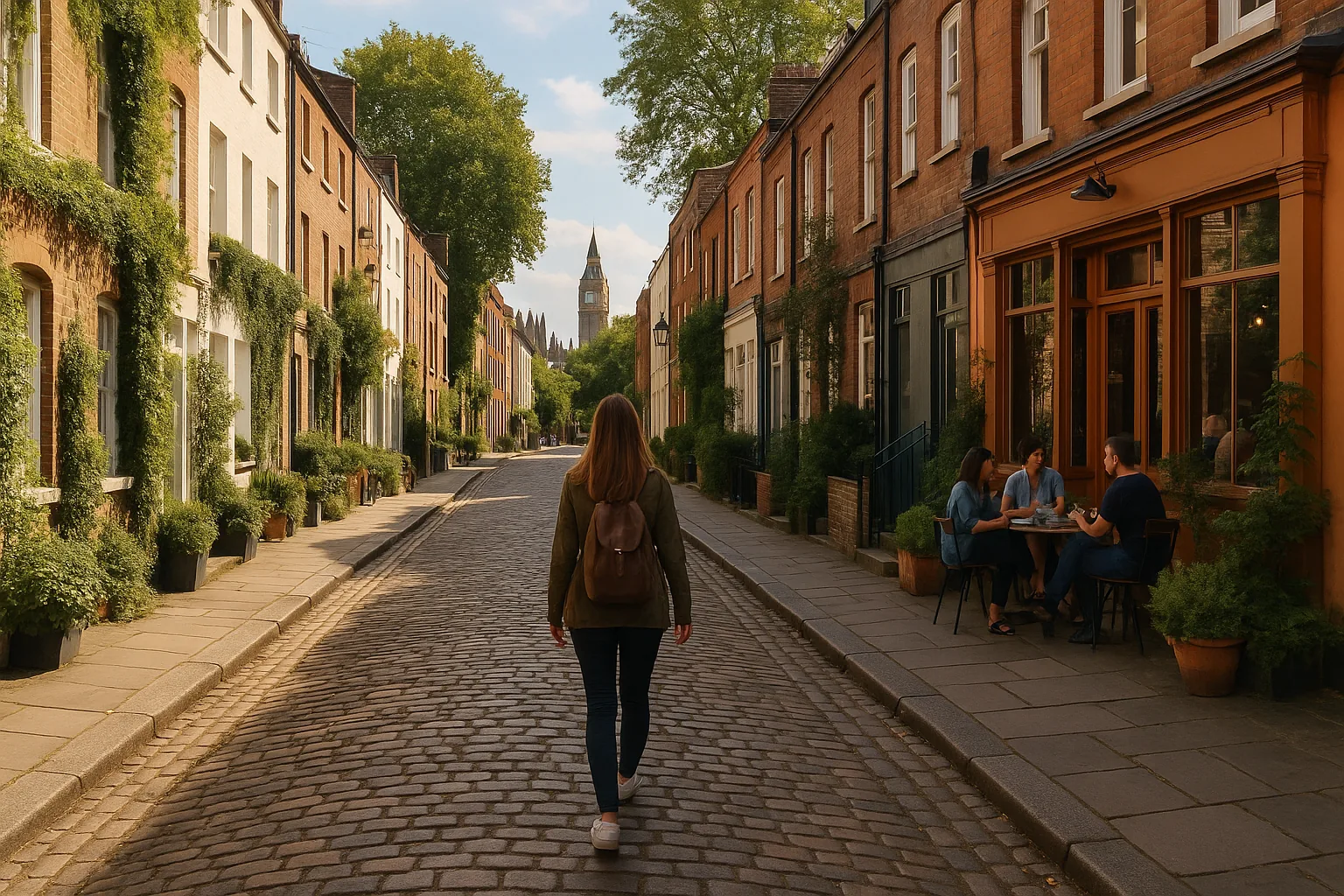
London is one of those cities that rewards the curious. You can spend a week here, tick off the Tower of London, snap a photo on Tower Bridge, and still feel like you’ve only scratched the surface. The truth is, the real London — the one locals actually live in — unfolds street by street, through neighbourhood markets and corner cafés, along canal towpaths and cobbled backstreets that don’t appear on any tourist map. These london walking routes are designed to take you there: past the postcard version and into the city that breathes.
Why Walking Is the Best Way to Know London
There’s a reason seasoned travellers always say: put the Tube map away and use your feet. London’s geography is layered in a way that public transport simply can’t reveal. One neighbourhood bleeds into the next. A quiet residential street suddenly opens onto a buzzing market. A narrow alley leads to a pub garden that’s been there for three hundred years.
Walking also keeps your budget intact. London’s transport network is excellent but costs add up fast. A well-planned walk of two to three hours can cover the distance of several Tube stops while giving you ten times the experience. You’ll notice the architecture shifting, the accents changing, the energy of each postcode doing something different. That’s the kind of travel that stays with you.
Most of the routes here are manageable in a half-day, roughly two to four hours on foot depending on your pace and how often you stop. All of them connect to the Underground or major bus routes, so you can jump on and off as needed. And all of them will show you a version of London that most visitors never see.
Eight London Walking Routes Worth Your Time
1. Notting Hill to Portobello Road and Beyond
Notting Hill is famous enough that most travellers put it on their list — but the majority arrive, photograph the pastel houses, and leave. Go deeper. Start at Notting Hill Gate station and head west along Pembridge Road before turning into the network of streets around Portobello Road. Saturday mornings are when the market is fully alive, with antique dealers, street food vendors, and vintage clothing rails stretching for several blocks.
Push further north past the Westway flyover and you hit the less-visited, more local end of Portobello — fruit stalls, Caribbean food shops, and a different pace entirely. From here, loop back through Ladbroke Grove and Arundel Gardens, where the garden squares feel genuinely residential and unhurried. Allow around two to three hours. The nearest Tube connections are Notting Hill Gate (Central, Circle, District lines) and Ladbroke Grove (Hammersmith & City line).
2. Shoreditch to Columbia Road and Hackney
Start at Old Street station and walk east through Shoreditch High Street. This is one of London’s most visually striking neighbourhoods — street art on every surface, independent coffee shops in converted railway arches, vintage boutiques next to concept stores. Don’t rush it. Take side streets off Brick Lane, where the Bengali community and the creative scene exist side by side in a way that’s genuinely interesting rather than performatively multicultural.
On Sunday mornings, Columbia Road Flower Market is one of the best free experiences in the city. Vendors shout prices, the street fills with cut flowers and potted plants, and the cafés along the route are packed with locals. From Columbia Road, continue north into Hackney proper — Broadway Market on Saturdays is another highlight, with independent food stalls, bookshops, and a canal-side atmosphere that feels miles from central London. Plan for three to four hours if you’re doing this properly. Best days: Saturday or Sunday.
👉 Read also: London Beyond the Landmarks: 8 Walks from Tourist Icons to Hidden Neighborhoods (2026)
3. The South Bank from Tate Britain to Borough Market
Tate Britain makes an excellent starting point for a walk that takes you along the south side of the Thames. Cross over Vauxhall Bridge — where you’ll get a clear view of the MI6 building, one of London’s more architecturally bizarre landmarks — and head east along the Albert Embankment. Lambeth Palace, the historic residence of the Archbishop of Canterbury, sits just across from the Houses of Parliament and is easy to miss if you’re not looking for it.
Continue along the riverbank through Waterloo, passing the London Eye and the cultural cluster around the Southbank Centre. This stretch has some of the best views of the Palace of Westminster you’ll find anywhere. Keep walking east through Bermondsey and you’ll reach Borough Market, one of London’s oldest and most celebrated food markets. Arrive hungry. The walk takes roughly two and a half to three hours at a relaxed pace. Nearest Tube: London Bridge (Jubilee, Northern lines).
4. Knightsbridge to Chelsea via the Back Streets
Most people who visit Knightsbridge make a beeline for Harrods and leave. Fair enough — it’s an extraordinary building. But the neighbourhood around it is worth exploring on foot. Head south from Knightsbridge station through Pont Street and Cadogan Place, where the architecture shifts from Victorian grandeur to quieter Edwardian terraces. This is one of London’s wealthiest postcodes, and walking through it feels like stepping into a different century.
Continue south into Chelsea, specifically the King’s Road, which was the epicentre of London’s counterculture in the 1960s and 70s and still has an interesting mix of independent shops alongside the more upscale boutiques. Cut through the residential streets around Cheyne Walk, which runs along the Thames, for some of the most beautiful domestic architecture in the city. Allow two to three hours. Best time: weekday mornings, when it’s quieter.
5. Greenwich and the Peninsula
Greenwich is technically southeast London and feels like a separate town entirely — which is part of its appeal. Take the DLR to Cutty Sark station and start your walk in Greenwich Market, a covered market with food, crafts, and antiques that runs most days of the week. From there, walk up through Greenwich Park to the Royal Observatory, where you can stand on the Prime Meridian and look out over one of the best panoramic views of London’s skyline.
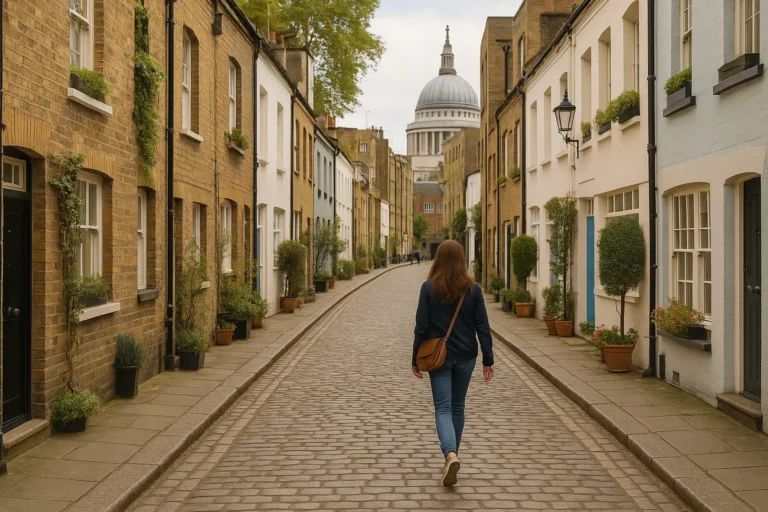
On the way back down, explore the streets around Nelson Road and Turnpin Lane, where independent coffee shops and bookshops cluster together in a way that feels genuinely neighbourhood-oriented. If you have energy left, the walk along the Thames path towards the O2 arena gives you a completely different perspective on the river. Plan for three to four hours. Nearest transport: Cutty Sark DLR or Greenwich National Rail and Elizabeth line.
6. Dalston to Stoke Newington
This is a walk for people who want to see where young Londoners actually live. Start at Dalston Kingsland Overground station and walk north along Kingsland Road. The street is lined with Turkish restaurants, Vietnamese cafés, and independent bars. Ridley Road Market, just off the main road, is a proper working-class market — fruit, vegetables, fabric, and everything in between — that has been running for decades and feels completely untouched by gentrification.
Continue north into Stoke Newington, where Church Street is the social heart of the neighbourhood. Independent bookshops, brunch spots with queues out the door on weekends, a Victorian park called Clissold Park where locals spend entire afternoons. This walk is best on a Saturday or Sunday morning and takes around two to three hours. Nearest transport: Dalston Kingsland or Stoke Newington (both Overground).
7. Bermondsey and Peckham
Start at Bermondsey station and head south along Bermondsey Street, one of London’s most quietly stylish strips — independent galleries, design studios, a brilliant Saturday antiques market that starts early and finishes by midday. The neighbourhood has a long industrial history and the architecture reflects it: converted warehouses, railway arches turned into restaurants and workshops.
👉 Read also: Best Walks in London: From Iconic Landmarks to Secret Neighborhoods (2026 Local Guide)
From Bermondsey, it’s a straightforward walk south to Peckham, which has emerged over the past decade as one of London’s most creatively energetic neighbourhoods. Rye Lane is chaotic and brilliant — a sensory overload of market stalls, fried chicken shops, fabric stores, and Caribbean grocers. Head up to Peckham Rye Park for a breather, or climb to the rooftop of Peckham Levels, a multi-storey car park converted into studios and bars, for a view that surprises most visitors. Allow three to four hours. Best day: Saturday. Nearest transport: Peckham Rye (Overground, National Rail).
8. Islington to King’s Cross via the Regent’s Canal
This is one of the most satisfying london walking routes for anyone who wants to feel like they actually live here. Start at Angel station and walk through Islington’s Upper Street — one of the most concentrated strips of restaurants, theatres, and independent shops in north London. Turn off into the residential streets around Barnsbury and Canonbury for some of the finest Georgian and Victorian terraces in the city, most of them still lived in rather than converted into offices.
Pick up the Regent’s Canal towpath at City Road Basin and follow it west towards King’s Cross. This stretch of canal is one of London’s great secrets — narrowboats moored along the banks, willow trees trailing into the water, cyclists and dog walkers passing in both directions. The walk ends at King’s Cross, which has been transformed over the past decade into one of the city’s most interesting mixed-use neighbourhoods, with Granary Square, Coal Drops Yard, and a string of good places to eat and drink. Allow two to three hours. Nearest transport: King’s Cross St. Pancras (six Tube lines, Eurostar, National Rail).
Practical Things to Know Before You Go
London’s weather is famously unpredictable, so a lightweight waterproof layer is worth carrying regardless of the forecast. Comfortable shoes matter more than you’d think — the city’s pavements are uneven in older neighbourhoods, and you’ll cover more ground than you expect. A reusable water bottle saves money and the environment, since tap water in London is perfectly safe to drink.
Most of these routes work best on weekends when markets are open, but weekday mornings have their own appeal — quieter streets, shorter queues at cafés, and a chance to see the city going about its actual daily life. Google Maps walking mode is reliable for navigation, but don’t be afraid to take a wrong turn. Some of the best discoveries on these london walking routes happen when you stop following directions entirely.
For deeper context on London’s history and neighbourhoods as you explore, the Museum of London’s online resources offer genuinely useful background on the areas you’ll be walking through, including the social history behind streets that might otherwise just look like streets.
How to Mix and Match These Routes
You don’t have to treat these as fixed itineraries. The beauty of london walking routes is that they’re suggestions, not schedules. If you’re staying in east London, the Shoreditch-to-Hackney walk and the Dalston-to-Stoke Newington walk can be combined over a full day with a long lunch in between. If you’re based south of the river, the South Bank walk and the Bermondsey-to-Peckham route cover complementary ground.
The Regent’s Canal towpath, in particular, connects several of these routes — follow it in either direction and you’ll eventually surface somewhere interesting. That’s the thing about exploring London on foot. The city doesn’t really end. Every walk opens up three more you want to do. Which, honestly, is the best possible problem to have.
London rewards the people who slow down. The ones who take the long way, who duck into the side street, who sit with a coffee and watch the neighbourhood move around them. These eight routes won’t show you everything — nothing could — but they’ll show you enough to understand why this city gets under people’s skin and stays there long after they’ve gone home.
This article was produced with AI assistance and reviewed editorially.


Teaching English Abroad in 2026: Top Countries, Visa Requirements & Real Salaries

Where to Stay in Latin America’s Top Destinations: Buenos Aires, Bogota & Beyond


