
United Kingdom
Best Walks in London: From Iconic Landmarks to Secret Neighborhoods (2026 Local Guide)
Discover eight curated walking routes through London that blend iconic sights with secret neighborhoods and local pubs where you’ll experience the real city.

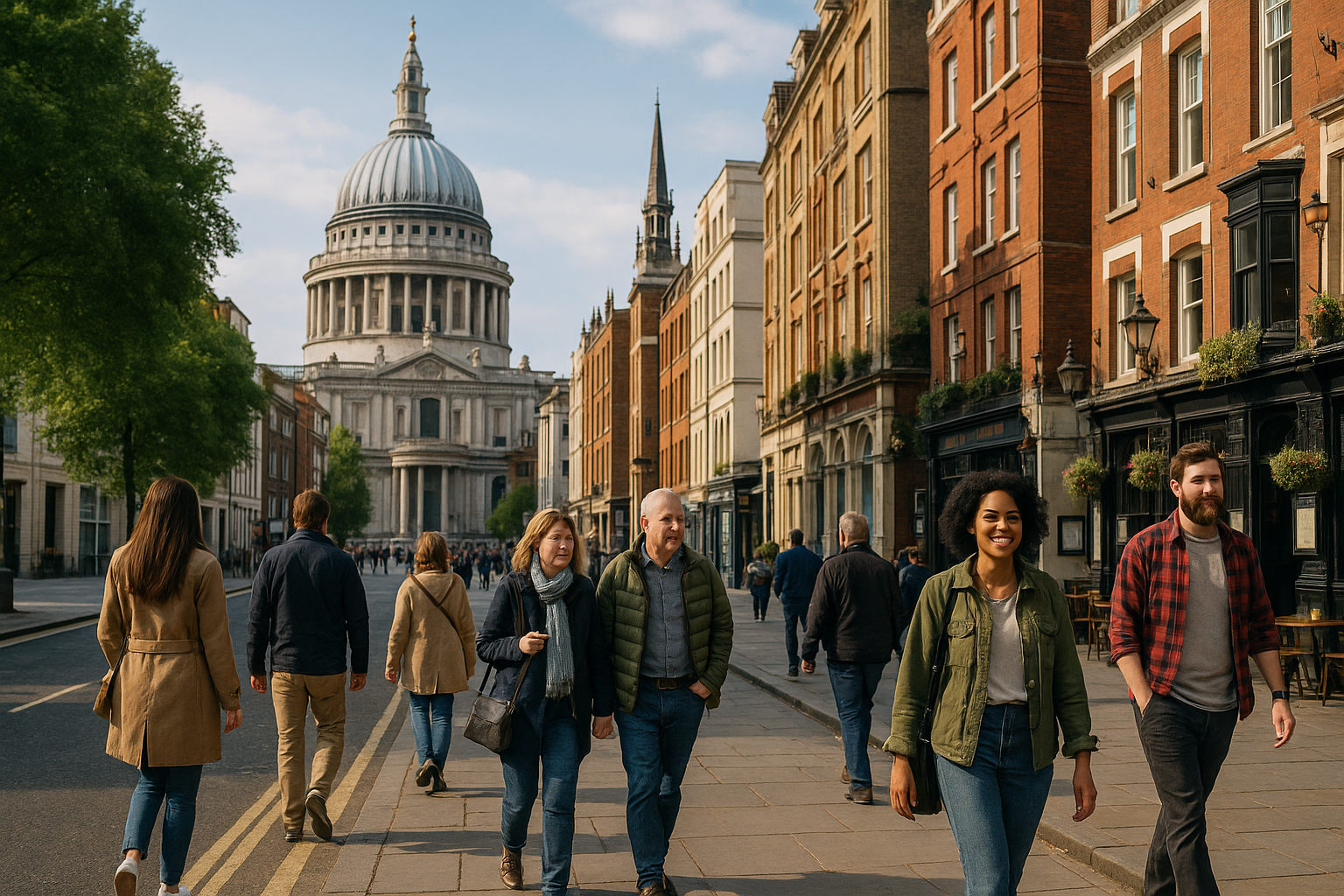
Why London Is Made for Walking
There’s a version of London that most visitors never see. It lives in the narrow alleyways between Victorian warehouses, in the churchyards where wild herbs grow between old gravestones, in the corner pubs where the same group of locals has been meeting on Thursday evenings for decades. The only way to find that London is on foot. Walks in London aren’t just a way to get from A to B — they’re how you actually start to understand the city.
London is enormous, yes. But it’s also a collection of villages stitched together over centuries, and each one has its own personality, its own rhythm, its own way of surprising you. You can walk from the grandeur of Westminster to the creative chaos of Brixton, from the riverside elegance of Greenwich to the raw, independent energy of Hackney, and feel like you’ve visited four different cities in a single day.
This guide covers some of the most rewarding walking routes the city has to offer — a mix of iconic sights and genuinely local neighborhoods, designed for curious travelers who want more than just a selfie at the landmarks. Lace up your most comfortable shoes. London is waiting.
Route 1: The Classic Riverside Walk — London Bridge to Tower Bridge
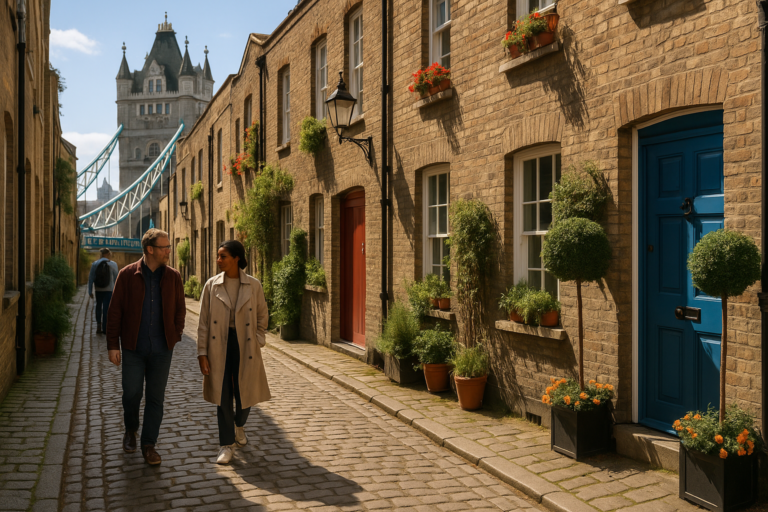
If you’re visiting London for the first time, this is the walk that will make you fall in love with the city. Start at London Bridge Station and head toward the Thames. The moment you hit the riverbank and see the Shard rising behind you and Tower Bridge stretching across the water ahead, you’ll understand why people come from all over the world for this view.
Walk east along the South Bank, through the More London development, and you’ll pass some of the most dramatic architecture in the city. The Tower of London sits on the opposite bank, its stone walls looking almost impossibly ancient against the modern skyline. Cross Tower Bridge itself — it’s free to walk across — and take a moment in the middle to look both ways along the Thames. Few views in Europe match this one.
From there, you can loop back along the north bank, passing through the cobbled streets around St Katharine Docks, where old sailing barges sit alongside contemporary cafés. The whole route takes about two hours at a relaxed pace, and it packs in more visual drama per kilometer than almost anywhere else in the world.
What to look for along the way
- The medieval fortifications of the Tower of London
- The Victorian engineering of Tower Bridge’s towers up close
- The quiet marina at St Katharine Docks — a hidden pocket of calm
- Borough Market, just west of London Bridge, if you need to fuel up beforehand
Route 2: Westminster and the Political Heart of the City
This walk is for anyone who wants to feel the weight of history beneath their feet. Start at Trafalgar Square — one of London’s great public gathering places — and let the lions and Nelson’s Column set the scene. From there, walk down Whitehall, past the government ministries and the famous black door of Downing Street, toward Parliament Square.
Westminster Abbey stands on the corner of the square, one of the most extraordinary buildings in the country. Even if you don’t go inside, pause on the pavement and look up at the Gothic towers. They’ve been watching this city for nearly a thousand years. Across the square, the Houses of Parliament and Big Ben form one of the most recognizable silhouettes on earth — and somehow, seeing them in person still manages to surprise you.
Continue along the Embankment and cross Westminster Bridge for the classic view back toward the Houses of Parliament. Then loop through St James’s Park, where pelicans have been a fixture since the seventeenth century. End the walk around Covent Garden, where street performers, independent shops, and the old market building create an atmosphere that’s lively without feeling manufactured.
Route 3: The Hidden London Walk — Monument to the City’s Secret Past
This is where walks in London get genuinely interesting for people who like to dig a little deeper. The Monument Underground station makes a perfect starting point for exploring the historic Square Mile — the original walled city of London, which has been continuously inhabited for over two thousand years.
Guided options exist for this kind of route — hidden London walking tours typically run around two hours and are led by knowledgeable guides who know where to find the Roman city wall fragments, the medieval church ruins, and the alleyways that survived the Great Fire of 1666. But you can also explore independently, armed with a good map and a sense of curiosity.
Look for the narrow lanes between the office blocks — Bow Lane, Watling Street, and the streets around St Paul’s Cathedral contain remnants of a medieval city that most visitors walk straight past. Duck into the churchyard of St Dunstan-in-the-East, where a bombed-out church ruin has been transformed into a garden. It’s one of the most quietly beautiful spots in the city, and most tourists have never heard of it.
Tips for exploring the City of London
- Go on a weekday morning — the City is quiet on weekends but buzzing with energy during the week
- Look up and look down — architectural detail hides on rooftops and in pavement plaques
- Many of the historic churches are open for free during business hours
- The Museum of London Docklands is nearby if you want historical context
Route 4: Hackney and East London — Where the City Reinvents Itself
East London is where you go when you want to understand what London is becoming rather than what it used to be. Start in Shoreditch, walk through Brick Lane — still one of the most culturally layered streets in the city, with its Bangladeshi curry houses, vintage clothing shops, and street art covering every available surface — and continue north into Hackney.
Broadway Market on a Saturday morning is the kind of place you could spend an entire afternoon without noticing. Independent food stalls, second-hand bookshops, coffee roasters, and a genuine mix of local residents and creative types create an atmosphere that feels genuinely alive. From there, walk along the towpath of the Regent’s Canal toward Victoria Park, one of East London’s great green spaces.
This route rewards slow walkers. Stop to read the murals. Go into the shops that look interesting. Sit outside a café and watch the neighborhood move around you. East London changes fast, and part of the experience is noticing what’s new, what’s stayed the same, and what the tension between those two things feels like on the ground.
Route 5: Greenwich — History, Hills, and the River
Greenwich deserves a full day. Cross the Thames by ferry from central London — the river journey alone is worth it — and arrive at one of the most historically significant spots in the country. The Old Royal Naval College, the Cutty Sark, the National Maritime Museum, and the Royal Observatory all sit within walking distance of each other, creating a concentration of history that’s almost overwhelming.
The walk up to the Royal Observatory through Greenwich Park is a gentle climb that rewards you with one of the best panoramic views of London’s skyline. On a clear day, you can see from Canary Wharf to the City to the distant hills of North London. Stand on the Prime Meridian line and feel briefly, pleasingly absurd about being at zero degrees longitude.
From Greenwich, adventurous walkers can continue toward Blackheath — a wide, open heath that sits on a plateau above the river and offers a completely different kind of London landscape. The combination of riverside history, parkland, and open heath makes this one of the most varied and satisfying walking routes the city offers.
Route 6: Notting Hill and Portobello Road — Color, Community, and Character
West London has its own particular energy, and Notting Hill sits at the heart of it. Start at Notting Hill Gate station and walk down Pembridge Road toward Portobello Road Market. On Saturdays, the market stretches for nearly two kilometers, selling antiques, vintage clothing, street food, and fresh produce. It’s crowded and loud and completely worth it.
Beyond the market stalls, explore the residential streets that branch off Portobello Road. The pastel-colored houses — cream, powder blue, dusty pink — are as photogenic as anything in the city, but they’re also real homes in a real neighborhood, which gives the area a warmth that pure tourist zones often lack. Walk north toward Golborne Road for a quieter, more local version of the same area, with Portuguese cafés and independent shops that haven’t been touched by the tourist economy.
End the walk in Holland Park, one of London’s most beautiful green spaces, where peacocks wander freely through the Japanese Kyoto Garden. It’s the kind of place that makes you stop and think: this city is genuinely extraordinary.
Route 7: South Bank to Bermondsey — Art, Food, and the Other Side of the River
The South Bank is one of London’s great public spaces — a continuous riverside walkway lined with cultural institutions, street performers, food markets, and some of the best views of the north bank skyline. Start at Waterloo Station and walk east, passing the Southbank Centre, the Tate Modern, Shakespeare’s Globe, and Borough Market in quick succession.
Continue past London Bridge into Bermondsey, where the neighborhood’s industrial past has been converted into something genuinely exciting. Bermondsey Street is lined with independent restaurants, galleries, and the Fashion and Textile Museum. Maltby Street Market, tucked under the railway arches on weekend mornings, is smaller and more local-feeling than Borough Market, and arguably better for it.
This stretch of south London is one of the most rewarding for food lovers. Grab a coffee, try something from a street food stall, sit on the riverbank and watch the boats. The South Bank rewards people who walk slowly and pay attention — there’s always something happening, always something worth stopping for.
Route 8: Hampstead Heath — London’s Wild North
When you need to escape the city without actually leaving it, Hampstead Heath is the answer. This ancient heathland covers over three hundred hectares in North London, offering woodland paths, open meadows, swimming ponds, and hilltop views that stretch across the entire city.
Walk up to Parliament Hill — the highest point of the Heath — and you’ll see London spread out below you in a way that makes the whole place suddenly make sense. From up here, you can trace the river, spot the landmarks, and understand how all the neighborhoods you’ve been walking through fit together. It’s a genuinely moving experience, even if you’ve been to London many times before.
Explore the wooded paths that wind through the Heath’s quieter corners, where you can walk for twenty minutes without seeing another person. Then head into Hampstead village for one of the best pub experiences in London — the streets around the High Street are lined with old coaching inns and neighborhood locals that have been serving pints for centuries. It’s the perfect way to end a day of walking.
Practical tips for Hampstead Heath
- The Heath is free and open year-round — it’s beautiful in every season
- The swimming ponds are open to the public (separate ponds for men, women, and mixed swimming)
- Wear sturdy shoes — the paths get muddy after rain
- Kenwood House, on the north edge of the Heath, is free to enter and worth visiting
Making the Most of Your Walking Adventures in London
A few things will make all the difference when you’re exploring London on foot. First, get a good offline map — the city’s street layout doesn’t always follow logic, and phone signal can be unreliable in some areas. Second, build in time to get genuinely lost. The best moments in London often happen when you turn down a street you weren’t planning to take and find something completely unexpected.
Transport for London’s official website is your best resource for planning how to get between walking routes using the Tube, buses, or river ferries. The Oyster card or contactless payment makes hopping between neighborhoods simple and affordable. And if you want a guided experience for some of the more historically complex routes, guided walking tours are widely available and often led by people with a genuine passion for the city’s stories.
Walks in London work in every season. Spring brings the parks into bloom. Summer fills the outdoor spaces with life. Autumn turns the Heath and the royal parks into something painterly. Winter strips the crowds back and lets you see the city’s architecture without distraction. There’s no wrong time to explore.
London Rewards the Curious
The city will give you exactly as much as you’re willing to put in. Walk through it quickly, ticking off the landmarks, and you’ll have a perfectly good trip. But slow down, take the side streets, talk to people, follow your curiosity into neighborhoods you hadn’t planned to visit — and London becomes something else entirely. It becomes one of those places you’re still thinking about months after you’ve gone home, already planning the next time you’ll go back. That’s the real reward of exploring this city on foot: not the photographs you take, but the version of London you carry with you long after the journey is over.
This article was produced with AI assistance and reviewed editorially.


Vietnam Uncovered: Beyond the Chaos, Into the Real Story

Beyond the Guidebook: What Hanoi Actually Feels Like


