
Spain
Barcelona Like a Local: 12 Cafés & 14 Cocktail Bars Where Locals Actually Spend Time (2026)
Discover where Barcelona locals actually drink and linger. Our insider guide covers 12 cafés and 14 cocktail bars across neighborhoods like Gràcia and Eixample.

Why Barcelona’s Cafés and Bars Are Worth Getting Lost For
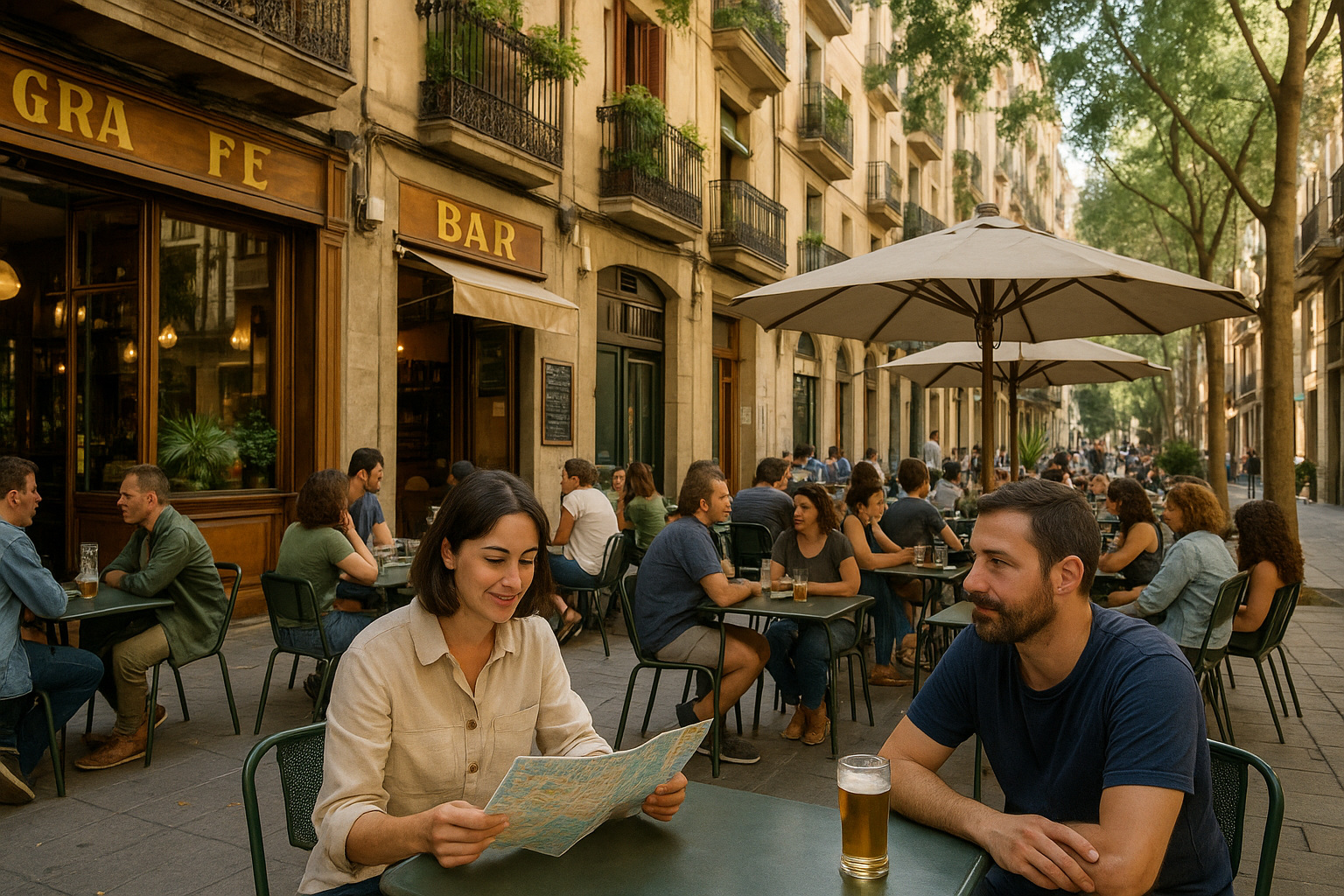
If you’ve ever wandered Barcelona clutching a tourist map, you already know the feeling — beautiful city, crowded spots, and a nagging sense that the real version of it is happening just around the corner. That’s because it is. The Barcelona cafes and bars local residents actually love exist in a completely different orbit from the Las Ramblas café with the laminated menu and the cocktail bar charging double for the view. The real Barcelona drinks vermut at a zinc counter on a Sunday morning. It lingers over coffee in a Gràcia side street. It discovers speakeasies through unmarked doors. This guide is your way in.
Barcelona is genuinely one of Europe’s most exciting cities for food and drink culture right now. It currently has six cocktail bars among Europe’s 50 Best Bars — a remarkable concentration for a single city, and a sign that the bar scene here has moved well beyond sangria and cava. But the best experiences aren’t always the ones with the international accolades. They’re the neighborhood spots where you sit down, order something you’ve never tried before, and suddenly feel like you actually belong somewhere.
This is a neighborhood-by-neighborhood guide to doing exactly that.
Understanding Barcelona’s Drinking and Coffee Culture
The Ritual of Vermut
Before you dive into the café and bar scene, it helps to understand the rhythm Barcelona runs on. The city has a deeply ingrained culture around vermut — a traditional fortified wine, usually served chilled with a slice of orange and an olive. Vermut isn’t just a drink here. It’s a time of day. Sunday midday, specifically, is when locals gather at their neighborhood bar for a glass before lunch. It’s social, slow, and completely unpretentious. If you’re visiting on a weekend, finding a bar that does a proper vermut service is one of the most authentically local things you can do.
Coffee culture is equally specific. Barcelona runs on short, strong coffee — a tallat (espresso with a splash of milk) or a cafè amb llet (coffee with milk, served in the morning only, by local convention). Ordering a large milky coffee in the afternoon will quietly mark you as a tourist. Ordering a tallat at a marble counter while reading something on your phone? You’re halfway to local already.
The Neighborhoods That Matter
Barcelona is a city of distinct neighborhoods, and each one has its own personality when it comes to where people eat and drink. The Gothic Quarter and El Born are beautiful but heavily touristic. To find the barcelona cafes and bars local residents actually frequent, you need to move into Gràcia, Eixample, Poblenou, El Raval, and Sant Antoni. These are the areas where the city breathes a little easier and the prices reflect what people actually earn.
The Café Scene: Where to Linger Like You Live There
Gràcia: The Neighborhood That Feels Like a Village
Gràcia is the neighborhood that most visitors discover and immediately wish they’d booked an apartment in. It’s a tangle of narrow streets, small plazas, and independent businesses that have somehow resisted the pull of chains and franchises. The café scene here is exactly what you’d hope for — mismatched furniture, natural light, good music at a volume that lets you actually talk.
Jaç Hi-Fi Café is one of those places that feels like a local secret even when it isn’t particularly hidden. The name gives it away — there’s a genuine attention to music here, and the coffee is taken seriously. It draws a crowd of regulars who come for the atmosphere as much as the espresso. Go on a weekday morning, find a corner, and let the city slow down around you.
Beyond specific spots, Gràcia rewards wandering. The neighborhood also has some of Barcelona’s best tapas bars, where locals eat rather than perform eating for an Instagram audience. Walk the streets around Plaça de la Vila de Gràcia and follow your instincts — a handwritten menu in Catalan on a chalkboard is usually a very good sign.
Eixample: Coffee With Architecture on the Side
Eixample is Barcelona’s grid-planned expansion district, famous for its modernist architecture and wide, tree-lined boulevards. It’s also home to some genuinely excellent cafés that manage to be sophisticated without being snobbish.
La Papa is a café in Eixample that locals return to regularly — the kind of place with a relaxed energy that makes it easy to spend two hours over a single coffee without feeling rushed. It attracts a mix of students, remote workers, and neighborhood regulars, which is usually the best indicator that a place has its priorities right. The food is simple and good. The coffee is properly made. The vibe is exactly what you want from a Barcelona café on a slow afternoon.
Poblenou: Industrial Cool, Genuine Community
Poblenou used to be Barcelona’s industrial waterfront. Now it’s one of the city’s most interesting neighborhoods — a mix of converted factories, creative studios, local families who’ve been there for generations, and a growing community of artists and digital workers. The café scene reflects all of this.
Raw Studio in Poblenou is a café that captures the neighborhood’s energy perfectly. It has the aesthetic of a creative workspace — open, airy, with an industrial edge — but it functions as a genuine community hub rather than a lifestyle prop. The coffee is excellent, the crowd is local, and the pace is refreshingly unhurried. If you’re spending a few days in Barcelona and want to feel what the city’s creative community actually looks like, Poblenou and a morning at Raw Studio is a very good place to start.
El Raval: Gritty, Genuine, and Underrated
El Raval gets a complicated reputation, but it’s one of Barcelona’s most culturally rich neighborhoods — diverse, creative, and home to some of the city’s most interesting independent businesses. La Central Café, connected to one of Barcelona’s beloved independent bookshops, is the kind of place that makes you wish you lived nearby. It’s calm, thoughtful, and full of people who are actually reading rather than performing the act of reading in a photogenic location. The coffee is good. The atmosphere is better.
The Cocktail Bar Scene: Barcelona After Dark
Why Barcelona’s Bar Scene Is Worth Taking Seriously
The fact that Barcelona has six bars in Europe’s 50 Best isn’t just a statistic — it reflects a genuine culture of craft and creativity that has developed here over the past decade. Barcelona bartenders are experimenting with local ingredients, Catalan flavors, and techniques that feel both rooted and forward-looking. The result is a cocktail scene that’s exciting without being exclusionary. You don’t need to be a drinks expert to enjoy it. You just need to show up curious.
For a deeper look at what’s driving Barcelona’s cocktail renaissance, Barcelona Food Experience’s guide to the city’s best cocktail bars is an excellent starting point — it covers the scene with real depth and highlights what makes each venue worth visiting.
The Bars That Define the Scene
Sips is one of those bars that justifies a trip on its own. It’s designed around the idea of a tasting experience — drinks are crafted with the same attention and intention you’d expect from a serious restaurant kitchen. The menu changes, the presentation is considered, and the team clearly loves what they’re doing. It’s not a place to come for a quick drink before dinner. It’s a destination in itself. Book ahead if you can.
Paradiso operates as a speakeasy — you enter through what appears to be a pastrami sandwich shop, push through the refrigerator door at the back, and find yourself in one of the most inventive bar environments in Europe. It sounds like a gimmick. It isn’t. The cocktails are genuinely exceptional, the space is beautiful, and the whole experience has a sense of theater that never tips into self-parody. It’s the kind of place you’ll be describing to people for years.
Aldea brings a different influence to Barcelona’s bar scene — it’s inspired by Mexican cuisine and flavors, which gives it a distinct identity in a city where most cocktail bars lean toward Mediterranean or European references. The drinks are creative and the food pairing element makes it a genuinely interesting evening out rather than just a stop on a bar crawl.
Vermut Bars: The Soul of the Scene
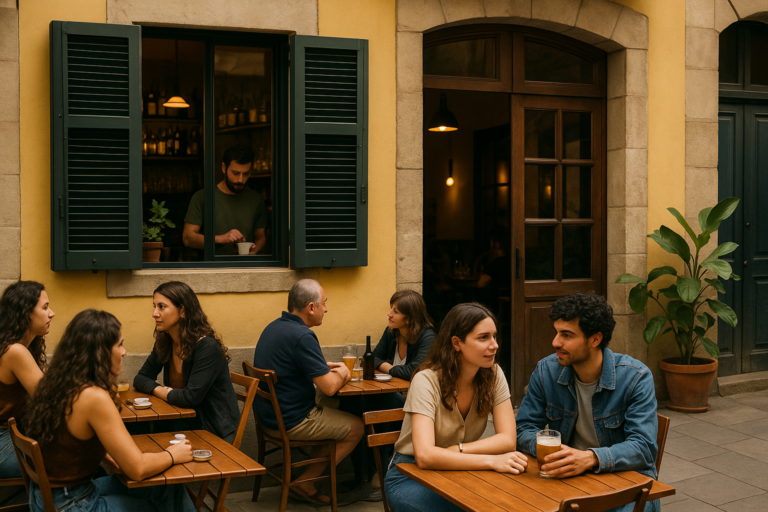
For all the excitement around craft cocktails, some of the most memorable drinking experiences in Barcelona happen at much simpler establishments. The city’s vermut bars — particularly in neighborhoods like Gràcia, Sant Antoni, and Poble Sec — are where you see Barcelona at its most relaxed and social. These are places with a few taps, a selection of vermut and cava, some olives and chips on the counter, and a crowd of people who are genuinely happy to be exactly where they are.
Finding these spots is less about research and more about instinct. Walk into a neighborhood on a Sunday morning. Follow the sound of conversation spilling onto the pavement. Look for places where the clientele is mixed — old and young, families and friends — because that’s usually the sign of somewhere that’s been doing things right for a long time.
Practical Tips for Drinking and Eating Like a Local
- Eat late. Barcelona runs on a later schedule than most European cities. Lunch is between 2pm and 4pm. Dinner rarely starts before 9pm. Showing up at 7pm for dinner will mark you immediately — and most kitchens won’t be ready anyway.
- Learn a few words of Catalan. Barcelona is a bilingual city — Catalan and Spanish are both spoken — and making even a small effort with Catalan (gràcies for thank you, bon dia for good morning) will be noticed and appreciated.
- Avoid the waterfront for drinks. The Barceloneta beach bars are fun for a specific experience, but they’re not where locals go for a regular night out. Head inland for better drinks at better prices.
- Book the serious cocktail bars in advance. Places like Sips and Paradiso are genuinely popular and often fully booked on weekends. Check their reservation systems before you arrive.
- Order the house vermut. At a traditional vermut bar, the house vermut is almost always the right choice. Don’t overthink it.
- Linger. One of the most noticeable differences between tourist and local behavior in Barcelona is pace. Locals don’t rush. They sit, they talk, they order another round. Give yourself permission to do the same.
- Explore Sant Antoni on a weekend morning. The neighborhood around the Sant Antoni market has become one of the city’s most vibrant spots for brunch and coffee culture — it’s a great place to start a day of exploration.
Moving Beyond the Obvious: How to Find Your Own Spots
The best barcelona cafes and bars local residents love aren’t always findable through a list. Some of them are discovered by turning down a street that looks interesting, noticing a hand-painted sign, and deciding to walk in. Barcelona rewards that kind of spontaneity more than almost any other city.
A useful approach is to pick a neighborhood you haven’t explored yet and give yourself a morning or an afternoon with no specific plan. Gràcia, Poblenou, and Poble Sec are all excellent choices for this kind of wandering. Walk until something catches your eye. Sit down. Order something. Talk to the person behind the bar if the moment feels right. That’s genuinely how most great travel memories get made — not from following a list perfectly, but from being present enough to notice what’s actually around you.
For broader context on what makes Barcelona’s food and drink culture tick, Condé Nast Traveler’s guide to the best bars in Barcelona offers a well-curated perspective that complements a more local-focused approach.
The Bigger Picture: What Barcelona’s Bar Culture Tells You About the City
Spending time in Barcelona’s cafés and bars isn’t just about finding good coffee or a well-made cocktail — though both of those things matter. It’s about understanding how the city actually works. Barcelona’s social life happens in public, in neighborhood spaces, at shared tables. The café is an office, a living room, and a community center all at once. The bar is where friendships are maintained and where the week is processed over a glass of something cold.
When you tap into that culture — when you find the barcelona cafes and bars local people genuinely love and spend real time in them — you stop being a tourist moving through Barcelona and start being someone who’s actually experiencing it. That’s the shift worth chasing. Not the perfect photo, not the most famous cocktail, but the feeling of sitting somewhere real, in a city that’s fully alive around you, with nowhere else you need to be.
Barcelona has a way of making that feeling easy to find, if you’re willing to look in the right places. Step away from the obvious, walk into the neighborhoods, follow the sound of conversation — and the city will meet you more than halfway.
This article was produced with AI assistance and reviewed editorially.


Vietnam Uncovered: Beyond the Chaos, Into the Real Story

Beyond the Guidebook: What Hanoi Actually Feels Like


