
Spain
Barcelona Like a Local: 12 Cafés & 14 Cocktail Bars Where Locals Actually Spend Time (2026)
Discover where locals actually spend time in Barcelona. This insider guide covers 12 authentic cafés and 14 cocktail bars across neighbourhoods beyond the tourist trail.

Why Barcelona’s Bars and Cafés Are the Real Heart of the City
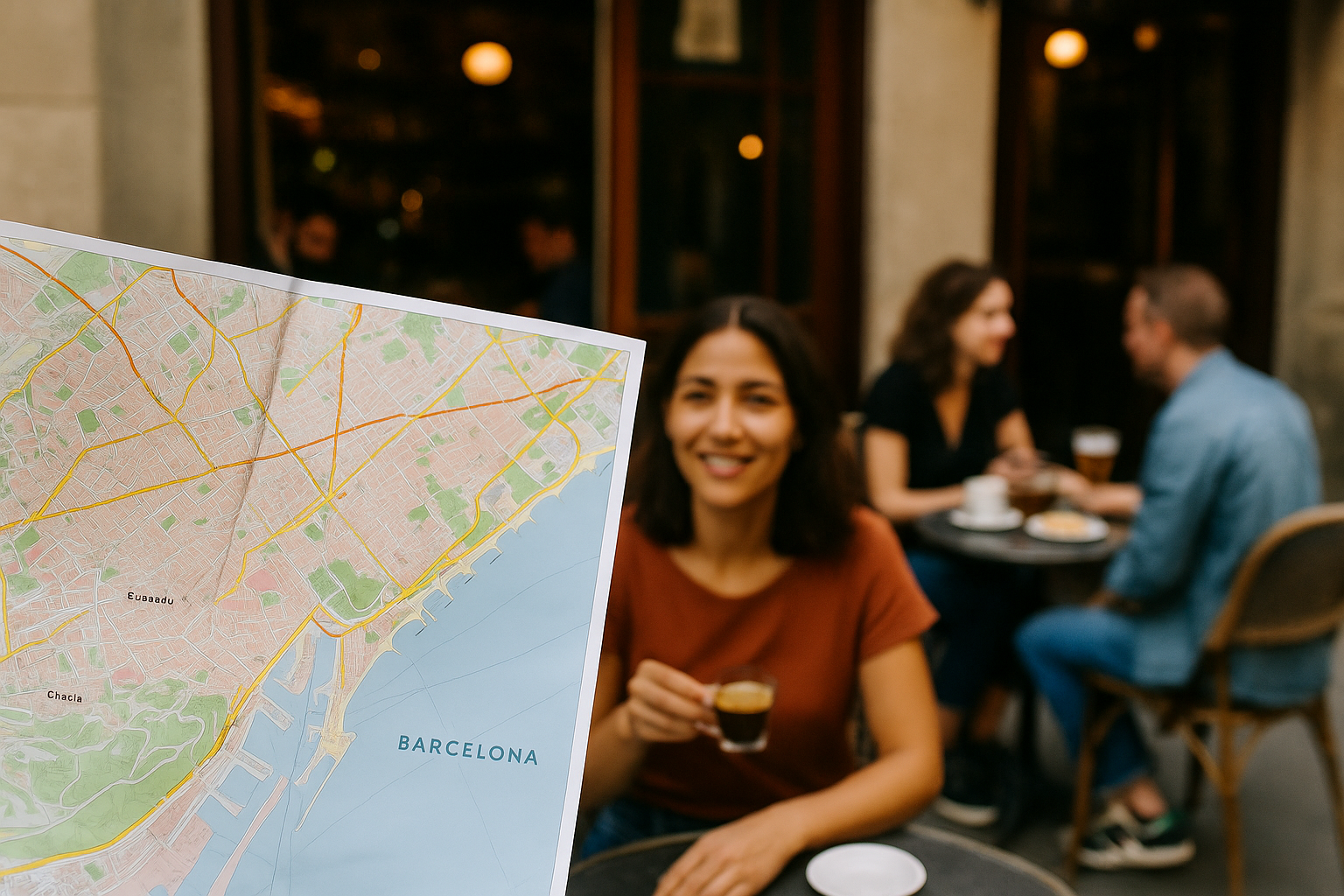
If you want to understand Barcelona — really understand it — skip the queue for the Sagrada Família for a morning and sit down at a neighbourhood bar instead. Watch who comes in. A retired couple sharing a coffee and a newspaper. A group of office workers stopping for a quick vermut before lunch. A grandmother catching up with the owner like they’ve been friends for decades. This is how the city actually lives. The barcelona bars and cafes scene isn’t just a backdrop to local life — it is local life, and once you start exploring it properly, you’ll see the city in a completely different way.
Barcelona is having a serious moment on the global cocktail map right now. In 2026, the city claims six entries in Europe’s 50 Best Bars — a remarkable concentration of world-class drinking culture in one place. But beyond the accolades, what makes the city’s bar and café culture so compelling for young travellers is how layered it is. You’ve got century-old neighbourhood spots serving three-euro coffees next to boundary-pushing cocktail bars that are redefining what a drink can be. Both are worth your time. Both are authentically Barcelona.
This guide moves beyond the tourist trail — past the overpriced sangria on Las Ramblas and the generic cocktail menus in the Gothic Quarter — and into the neighbourhoods where locals actually spend their mornings, afternoons, and evenings. Whether you’re after a slow coffee, a pre-lunch vermut, or a late-night cocktail that’ll make you question everything you thought you knew about mixology, this is where to start.
Understanding Barcelona’s Drinking Culture Before You Go
One thing that surprises a lot of first-time visitors is how different the rhythm of drinking in Barcelona is compared to what they’re used to. Bars here aren’t primarily nightlife venues — they’re social institutions. They serve multiple generations, multiple purposes, and multiple moments of the day. According to Condé Nast Traveler, Barcelona bars function as community anchors for office workers, families, and neighbours across age groups, not just places to go after dark.
The drinks you’ll encounter reflect this. Beer is everywhere, usually served cold and often in a small glass called a caña. Wine flows freely, often local and often cheap in the best possible way. And then there’s vermut — a fortified, herb-infused wine that’s become something of a cultural icon in the city. The ritual of fer el vermut (doing the vermut) on a Sunday afternoon, usually with some olives and anchovies on the side, is one of those small local experiences that stays with you long after you’ve gone home.
Understanding this rhythm — coffee in the morning, vermut before lunch, wine with food, cocktails later — helps you move through the city the way locals do rather than feeling like you’re just ticking boxes off a list.
The Neighbourhoods Worth Exploring for Cafés and Bars
Eixample and Sant Antoni
Eixample is Barcelona’s grid-pattern neighbourhood, famous for its Modernista architecture and wide boulevards. But beyond the grand facades, it’s home to some of the city’s most interesting café culture. Sant Antoni, which sits at the southwestern edge of Eixample, has transformed over the past decade into one of the coolest corners of the city. The Sant Antoni Market anchors the neighbourhood, and the streets around it are full of independent cafés, natural wine bars, and low-key spots that feel genuinely local rather than designed for Instagram.
This is a great area to spend a slow morning. Find a terrace, order a cortado, and watch the neighbourhood come to life. You’ll be surrounded by people who actually live here — not tourists looking for the next landmark.
Gràcia
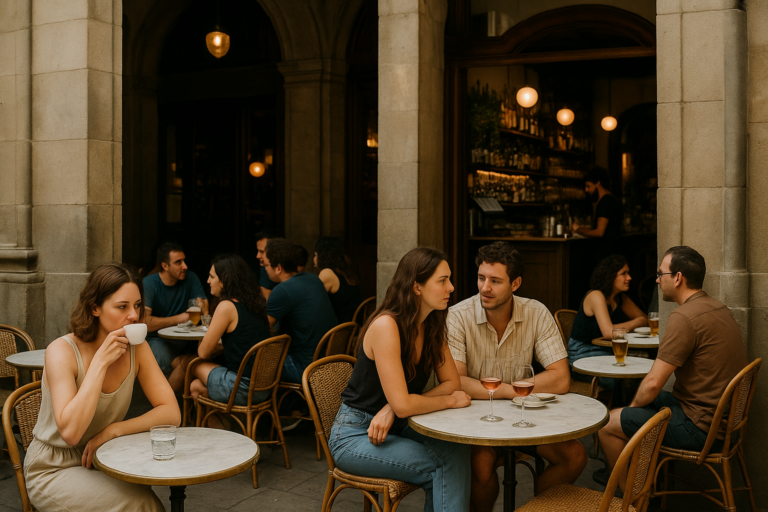
Gràcia used to be its own separate town before Barcelona absorbed it, and it still carries that independent spirit. The neighbourhood is full of small plazas that come alive in the evenings, with chairs spilling out from bars onto the cobblestones. It’s the kind of place where you sit down for one drink and end up staying for three hours because the conversation is good and nobody’s rushing you out.
Cafés in Gràcia tend to be relaxed, eclectic, and welcoming to solo travellers. Many double as bookshops, art spaces, or music venues. If you’re travelling alone and want to meet people without the pressure of a loud club, Gràcia’s café scene is one of the best places in the city to do it.
Poblenou
Once an industrial district, Poblenou has reinvented itself as Barcelona’s creative hub. It’s where you’ll find design studios, tech startups, and a café culture that reflects that energy — think specialty coffee, all-day brunch menus, and spaces that feel more like creative workshops than traditional bars. It’s also less crowded than the city centre, which means you can actually get a seat and take your time.
El Born and Raval
El Born is one of the most atmospheric neighbourhoods in the city, with medieval streets that open unexpectedly into small squares. It’s popular with visitors, but it’s popular for good reason — the bar and café density here is remarkable, and if you explore even slightly off the main drag, you’ll find spots that feel genuinely off the beaten path. Raval, just across the Ramblas, has a grittier, more multicultural energy and some of the most interesting independent bars in the city. It’s not polished, but that’s exactly why it’s worth exploring.
The Cocktail Bar Scene: World-Class and Getting Better
Barcelona’s cocktail culture has matured dramatically over the past decade, and 2026 is arguably the most exciting moment the city has seen for serious drinking. With six bars featured in Europe’s 50 Best Bars this year, the city is punching well above its weight on a global scale — and the quality shows.
Three bars in particular are worth knowing about before you visit. Sips, ranked third in Europe’s 50 Best Bars 2026, is a benchmark for what a modern cocktail bar can be. The approach here is precise, creative, and deeply considered — every drink feels like it’s been thought about from multiple angles before it lands in front of you. Getting a reservation takes planning, but it’s worth the effort. Paradiso, ranked ninth, is a speakeasy hidden behind a pastrami sandwich shop in El Born. The entrance alone is an experience — you push through what looks like a refrigerator door and emerge into a beautifully designed space where the drinks are just as theatrical. Aldea, ranked 26th, takes a different approach, drawing on natural ingredients and a more relaxed atmosphere while still delivering cocktails that are genuinely impressive.
For more context on Barcelona’s cocktail bar scene and what makes these venues stand out, Barcelona Food Experience’s cocktail bar guide is one of the most thorough resources available.
Beyond the headline names, the city has a deep bench of excellent cocktail bars that don’t make international lists but absolutely should be on yours. Look for spots in Eixample and Born that focus on local spirits, seasonal ingredients, and bartenders who actually want to talk to you about what they’re making. Barcelona’s cocktail culture rewards curiosity — if you ask questions, you’ll usually get a story.
How to Find Cafés That Locals Actually Use
Here’s the honest truth about finding good cafés in Barcelona: the ones with the most attractive storefronts and the best social media presence are rarely the ones where locals spend their mornings. The best neighbourhood cafés often look completely unremarkable from the outside. They’re the ones with handwritten menus, mismatched chairs, and a regular clientele who’ve been coming for years.
A few practical ways to find them:
- Walk at least two or three blocks away from any major landmark before you start looking.
- Look for places where the menu is in Catalan or Spanish first, with English as an afterthought (or not at all).
- Check whether the coffee comes with a small glass of sparkling water — this is a common local touch and a good sign.
- Notice whether the staff seem to recognise the other customers. Regulars are a reliable indicator of a genuinely local spot.
- Ask your accommodation host where they actually go for coffee — not where they send tourists, but where they go themselves.
The café experience in Barcelona is also worth slowing down for. Don’t order and immediately open your laptop. Sit with your coffee, watch the street, and let the neighbourhood come to you. Some of the best moments you’ll have in this city will happen when you’re not trying to make anything happen.
Vermut Culture: The Ritual You Need to Try
If there’s one drinking ritual that defines Barcelona more than any other, it’s vermut. This isn’t the sweet red vermouth you might know from cocktail recipes — Barcelona’s vermut culture is its own thing, usually served on ice with a slice of orange and an olive, and almost always accompanied by small snacks like chips, olives, or anchovies.
The ritual happens mostly on weekend afternoons, roughly between noon and two o’clock, before the main meal of the day. You’ll find dedicated vermuteries across the city, particularly in Sant Antoni, Poblenou, and Barceloneta. The atmosphere at a good vermut spot is relaxed, social, and completely unpretentious. Nobody’s performing. Nobody’s taking pictures of their drinks. Everyone’s just enjoying the afternoon.
If you’re visiting on a Sunday, building a vermut stop into your morning is one of the most genuinely local things you can do. Find a spot with outdoor seating, order a glass and whatever snacks they’re offering, and settle in. You’re not in a hurry. Neither is anyone else.
Practical Tips for Navigating Barcelona’s Bars and Cafés
A few things worth knowing before you dive in:
- Timing matters. Lunch in Barcelona happens late — often between two and four in the afternoon. Dinner rarely starts before nine. Plan your café and bar visits around this rhythm rather than fighting it.
- Reservations for top cocktail bars are essential. Places like Sips and Paradiso fill up quickly. Book well in advance, especially for weekends.
- Standing at the bar is cheaper. In many traditional bars, prices are lower if you stand at the counter rather than sitting at a table. This is a local habit worth adopting.
- Tipping is appreciated but not expected in the way it might be in other countries. Rounding up or leaving a small amount is perfectly normal.
- Don’t order sangria. It’s not something locals drink. Order wine, beer, or vermut instead and you’ll immediately feel more at home.
- Learn a few words in Catalan or Spanish. A simple bon dia (good morning in Catalan) or gràcies (thank you) goes a long way and signals that you’re making an effort.
- Late nights are genuinely late. Barcelona’s nightlife doesn’t really get going until midnight or later. Pace yourself accordingly.
Making the Most of the Barcelona Bars and Cafés Experience
The best way to experience the barcelona bars and cafes scene is to treat it as a journey rather than a checklist. Don’t try to visit twelve cafés and fourteen cocktail bars in three days — you’ll exhaust yourself and miss the point entirely. Instead, pick a neighbourhood each day, find a café you like the feel of, and make it your base for the morning. Let the afternoon unfold from there.
The city rewards this kind of slow, curious exploration. A conversation with a bartender might lead you to a spot you’d never have found otherwise. A chance encounter at a neighbourhood café might turn into an afternoon wandering through a part of the city you hadn’t planned to visit. This is how Barcelona reveals itself — not through landmarks, but through small moments in bars and cafés where the city’s real character shows up.
The barcelona bars and cafes world is also remarkably democratic. The same neighbourhood bar that serves a retired local his morning coffee will serve you yours with exactly the same warmth and exactly the same quality. There’s no velvet rope, no dress code, no sense that you don’t belong. Pull up a stool, order something, and let the city do the rest.
Barcelona’s drinking and café culture is one of the most genuinely enjoyable things about the city — and it’s entirely accessible to anyone willing to step off the main tourist trail and explore. The coffee is good, the cocktails are world-class, the vermut is an experience in itself, and the atmosphere in the right neighbourhood bar on a slow afternoon is something you’ll still be thinking about long after you’ve gone home. That’s the real Barcelona. Go find it.
This article was produced with AI assistance and reviewed editorially.


Vietnam Uncovered: Beyond the Chaos, Into the Real Story

Beyond the Guidebook: What Hanoi Actually Feels Like


