
Asia
Chiang Mai’s Burning Season: How to Travel Smart (Air Quality, Timing, 7 Safety Tips)
Navigate Chiang Mai’s burning season (February–April) with practical advice on air quality, timing, masks, and indoor activities. Travel safely during haze season.

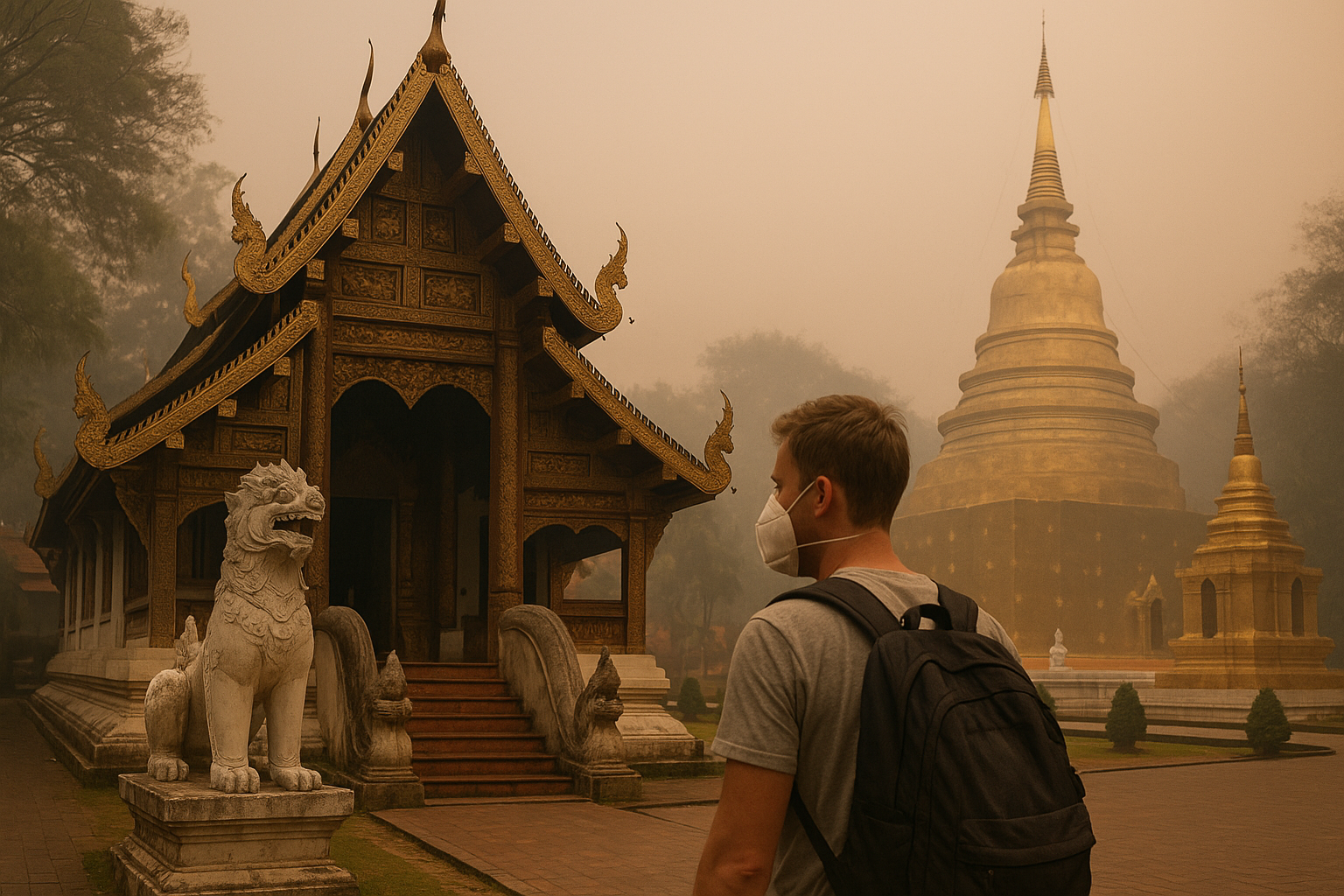
What Is Chiang Mai’s Burning Season — and Should It Stop You from Going?
If you’ve been researching a trip to northern Thailand, you’ve probably stumbled across warnings about the Chiang Mai burning season. Maybe it gave you pause. Maybe it almost made you rebook. Before you change your plans entirely, take a breath — ideally through a good mask — and read this first. Because the reality is more nuanced than most travel forums let on, and with the right preparation, Chiang Mai is still absolutely worth visiting, even during the hazy months.
This guide breaks down everything you actually need to know: what causes the haze, when it peaks, how it affects your health, and how to make smart decisions about your trip. No sugarcoating, no unnecessary panic. Just honest, practical advice so you can travel with your eyes open.
Understanding the Burning Season in Chiang Mai
The Chiang Mai burning season — also called the smoky season — typically runs from around February through April each year. During this period, a thick haze settles over the city and the surrounding mountains, turning what is usually one of Thailand’s most scenic landscapes into something that looks like a grey, smoggy blur.
The cause isn’t a mystery. The haze is primarily driven by slash-and-burn agricultural practices across northern Thailand and neighboring countries. Farmers clear land by burning crop stubble and forest undergrowth, a traditional method that has deep roots in the region’s agricultural calendar. The smoke from these fires accumulates in the valleys, and because Chiang Mai sits in a natural bowl surrounded by mountains, the air has nowhere to go. The result is a city that can, by March, regularly appear on lists of the worst air quality in the world.
That’s not a small thing. Air quality during peak burning season can reach levels that genuinely affect your health, especially if you have asthma, allergies, or any respiratory sensitivity. But it’s also not a reason to write off the entire season — it’s a reason to plan carefully.
When Is the Worst Time? Timing Your Visit Around the Haze
Not all of the burning season is created equal. The haze tends to build gradually, with conditions generally worsening as the weeks progress. Early in the season — think February — the air is often still manageable on many days, with clearer mornings and occasional breezy periods that provide some relief. By March, things tend to get significantly worse. This is when the fires are most widespread, the air is driest, and the smoke has the least chance of being cleared by rain. April can be a mixed bag: the season sometimes starts winding down as the first rains of the year arrive, but it can also extend uncomfortably into mid-April.
If you have flexibility in your travel dates, the general rule of thumb is this: the earlier in the season, the better. A trip in mid-February gives you a decent shot at reasonable air quality on many days. A trip in late March is a different story. That said, weather is unpredictable, and there are no guarantees either way.
It’s also worth knowing that the haze is primarily a northern Thailand issue. If you’re planning a longer Thailand trip and have the option to split your time, southern beach destinations like Phuket and Krabi tend to have much better air quality during this period. You could structure your itinerary to visit the south first and head north in late April or May, once the rains have started to clear the air.
What the Air Quality Actually Feels Like on the Ground
Reading about air quality is one thing. Understanding what it actually feels like to walk around Chiang Mai during peak haze is another. On bad days, the mountains that ring the city — usually a dramatic and beautiful backdrop — simply disappear. The sky turns a flat, yellowish-grey. There’s a faint smell of smoke in the air, almost like a distant campfire that never quite goes away. Your eyes might itch. Your throat might feel scratchy by the end of the day.
On moderate days, it’s more subtle. You might notice the haze more in photographs than in person, that slight softening of the light that makes everything look a little washed out. Many travelers spend a week in Chiang Mai during the burning season and have a wonderful time, especially if they’re staying active, spending time in air-conditioned spaces, and keeping an eye on the daily air quality readings.
On the worst days — and they do happen — the air quality can reach levels where it’s genuinely unwise to spend extended time outdoors, especially exercising. This is when you need to adapt your plans rather than push through.
Practical Safety Tips for Navigating the Haze
1. Check the Air Quality Index Every Morning
Make it a habit before you plan your day. There are several reliable apps and websites that track real-time air quality data for Chiang Mai. The Air Quality Index (AQI) gives you a number that tells you how safe the air is to breathe. On days when the reading is low, get outside and explore. On days when it spikes, adjust your plans accordingly. Treating the AQI like a weather forecast — something you check every morning — makes the whole season much more manageable.
2. Invest in a Proper Respirator Mask
A basic surgical mask won’t cut it when it comes to fine particulate matter, which is the main health concern during the burning season. Look for masks rated to filter fine particles — the kind you’d find at a hardware store or a pharmacy in Chiang Mai itself. You’ll see locals and expats wearing them on bad air days, and you should too. It might feel a bit awkward at first, but it’s genuinely effective at reducing your exposure. Pack a few before you leave home, or pick them up easily once you arrive.
3. Book Accommodation with Good Air Filtration
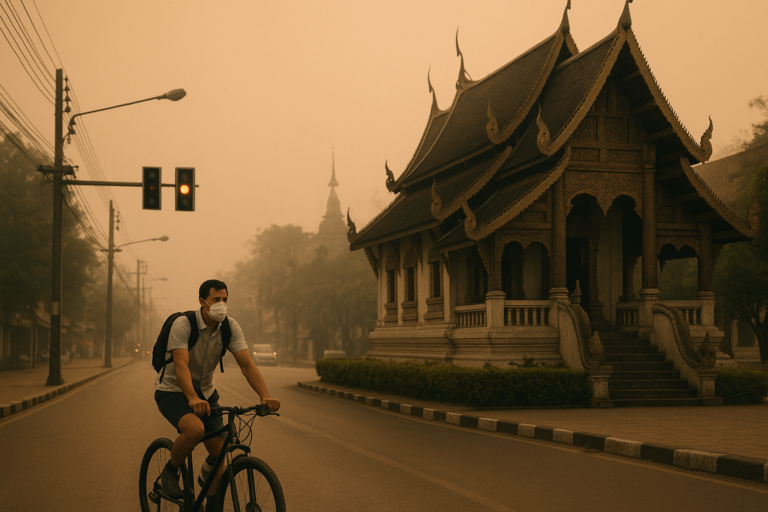
Your room is your refuge. During the burning season, spending time in a well air-conditioned space with good filtration makes a real difference to how you feel. When choosing accommodation, look for places that have air conditioning with proper filters, or consider bringing a small portable air purifier if you’re staying somewhere for an extended period. Some guesthouses and hotels in Chiang Mai are increasingly aware of this issue and market themselves accordingly.
4. Shift Your Outdoor Activities to Early Morning
Air quality in Chiang Mai during the burning season tends to be at its best early in the morning, before the heat of the day builds and before wind patterns shift the smoke over the city. If you want to explore the old city, visit temples, or hike, aim to be out by sunrise and back indoors by mid-morning on bad days. It’s actually a beautiful time to explore — the streets are quieter, the light is softer, and you’ll feel the city in a way that most tourists never do.
5. Embrace the Indoor Side of Chiang Mai
Here’s something that doesn’t get said enough: Chiang Mai has an extraordinary amount to offer indoors. The city has a thriving café culture, world-class cooking schools, incredible markets (many of which are covered), vibrant art galleries, traditional Thai massage studios, and some of the best street food in Southeast Asia — much of it served in covered spaces. A hazy day is the perfect excuse to sign up for that cooking class you’ve been eyeing, explore a local museum, or spend an afternoon learning about traditional northern Thai crafts. You won’t be bored.
6. Stay Hydrated and Listen to Your Body
Smoke inhalation, even at moderate levels, can be dehydrating and tiring. Drink more water than you think you need. If you start to feel headaches, unusual fatigue, or persistent throat irritation, take it seriously and spend the rest of the day indoors. Your body is giving you information — don’t ignore it in the name of squeezing in one more temple visit.
7. Consider Travel Insurance That Covers Health
This applies to any trip, but it’s especially relevant during the burning season. If you have respiratory conditions or are particularly sensitive to air quality, make sure your travel insurance covers medical care in Thailand. Chiang Mai has good medical facilities, but peace of mind costs nothing when you’re already planning ahead.
Why Chiang Mai Is Still Worth It
Here’s the honest truth: the burning season is a real issue, and it would be irresponsible to pretend otherwise. But Chiang Mai during February, March, or April is still Chiang Mai — one of the most culturally rich, warm, and genuinely fascinating cities in Southeast Asia.
The ancient temples of the old city don’t disappear behind the haze. The food is still extraordinary. The people are still welcoming. The night bazaar still comes alive after dark. The surrounding mountains — even if you can’t see them clearly — still hold incredible villages, waterfalls, and experiences that are completely off the radar for most travelers. Many travelers who visit during the burning season find that the lower tourist numbers actually make the experience feel more authentic and less crowded, which is its own kind of reward.
The burning season also coincides with some genuinely special cultural moments. The Thai New Year festival, Songkran, typically falls in mid-April and is one of the most joyful, chaotic, and memorable celebrations you’ll ever witness. If the air quality has started to improve by then — which it often does as the rains approach — you’ll be experiencing Chiang Mai at one of its most vibrant and community-driven moments.
A Note on Responsible Travel During This Season
It’s worth pausing to acknowledge the bigger picture. The burning season isn’t just a travel inconvenience — it’s an environmental and public health challenge for the people who live in northern Thailand year-round. Farmers who rely on burning practices often do so out of economic necessity, not indifference. The issue is complex, rooted in land rights, agricultural economics, and regional policy.
As a traveler, you can engage with this reality thoughtfully. Support local businesses. Buy from markets where farmers sell directly. Ask questions, listen to local perspectives, and resist the urge to reduce a complicated issue to simple judgment. The best travel always involves showing up with curiosity and respect — and that applies here more than most places.
The Bottom Line: Plan Smart, Go Anyway
The Chiang Mai burning season is real, it’s smoky, and on peak days it genuinely demands that you adjust your plans. But it’s also a manageable challenge with the right preparation — good masks, a daily AQI habit, smart scheduling, and a willingness to lean into the city’s incredible indoor culture when the air outside isn’t cooperating. If you can visit in February or wait until late April, do it. If March is your only window, go anyway, go prepared, and give yourself permission to have a different kind of adventure than you originally imagined. Chiang Mai has a way of surprising you, whatever the season — and that’s exactly why it keeps drawing travelers back.
This article was produced with AI assistance and reviewed editorially.


Vietnam Uncovered: Beyond the Chaos, Into the Real Story

Beyond the Guidebook: What Hanoi Actually Feels Like


