
United Kingdom
London for Explorers: Walking Routes, Hidden Neighborhoods & Beyond the Eye
Discover London walking routes through Shoreditch, Brixton, Hackney and hidden neighborhoods. Local tips, food scenes, and free activities beyond the tourist trail.

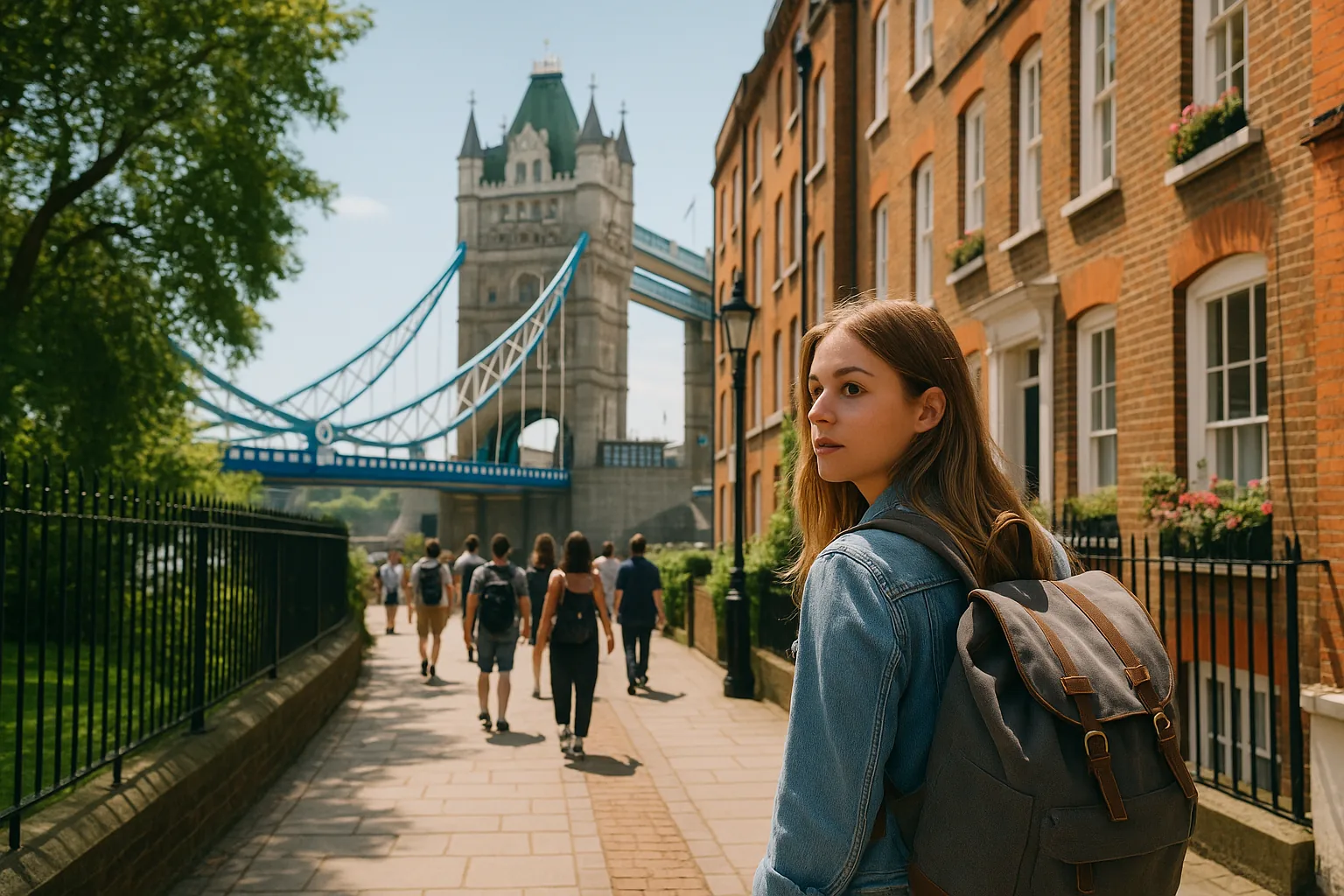
London doesn’t reveal itself to people who rush. The city has layers — centuries of them — and the best way to peel them back is on foot, moving at your own pace through streets that shift personality every few blocks. Whether you’re a first-time visitor or returning for another chapter, exploring London walking routes and neighborhoods is genuinely one of the most rewarding ways to understand what this city actually is, beyond the queues for the London Eye and the selfie spots outside Buckingham Palace. This guide takes you through some of London’s most compelling areas, with practical starting points, local culture, and the kind of detail that turns a good trip into a great one.
Why Walking London Changes Everything
London’s public transport is legendary, and yes, you’ll use it. But the Tube hides the city from you. You descend underground in one neighborhood and surface in another, missing everything in between — the canal paths, the murals, the tiny coffee shops with handwritten menus, the market stalls that appear and disappear with the week.
Walking connects the dots. It shows you how Shoreditch bleeds into Bethnal Green, how the Thames pulls Southwark and the City into the same frame, how Brixton’s energy spills out from its market and into the surrounding streets. London is a city of villages, each with its own character, and walking is the only way to feel that transition happen in real time.
Transport for London publishes a solid set of mapped walking routes across the city, and they’re free to use. These are a great foundation, but this guide goes further — into the neighborhoods themselves, the food scenes, the free experiences, and the moments that don’t make it onto the standard tourist map.
Shoreditch and Bethnal Green: Where Culture Gets Loud
Start your East London exploration at Old Street station. From there, walk south into the heart of Shoreditch and you’ll immediately feel the shift. This is one of London’s most visually striking areas — walls covered in street art, independent galleries tucked between vintage clothing stores, and a food scene that pulls from every corner of the world.
Brick Lane is the obvious anchor, and it earns its reputation. Walk it on a Sunday morning when the market is running and the whole street transforms into something between a flea market, a food festival, and a community gathering. You’ll find everything from secondhand vinyl to handmade jewellery to some of the best bagels in the city — a legacy of the area’s long Jewish history that still shows up in a handful of old-school bakeries that have been there for generations.
From Brick Lane, push east into Bethnal Green. The atmosphere changes almost immediately — quieter, more residential, but with its own creative energy. The area has a strong arts scene, with independent studios and community spaces that give it a grounded, less performative feel than parts of Shoreditch can have on a busy weekend. Columbia Road is worth the detour, especially on a Sunday when the flower market fills the street with colour and noise. It’s one of those London experiences that feels genuinely local rather than curated for visitors.
For food in this stretch, skip the tourist-facing spots and look for the smaller, less obvious places. Vietnamese canteens, Turkish bakeries, and Bangladeshi restaurants represent the real food culture of the area. Eat where the queues are made up of locals, not people consulting their phones.
👉 Read also: London Beyond the Eye: Walking Routes, Hidden Neighborhoods, and Authentic Experiences
Hackney: The Neighborhood That Keeps Reinventing Itself
Hackney is one of those places that resists easy description. It’s creative, diverse, politically engaged, and genuinely interesting in a way that feels earned rather than manufactured. Start a walk here at London Fields — a wide park that acts as the social centre of the area, especially in warmer months when the lido is open and the grass fills up with people reading, playing, and doing very little in the best possible way.
From London Fields, walk north toward Broadway Market, which runs on Saturdays and is one of the best markets in the city for food. You’ll find artisan producers, street food from around the world, and independent booksellers alongside it. It’s busy, but in a way that feels alive rather than overwhelming.
Continue through the residential streets toward Hackney Wick, and you’ll arrive at something that feels almost like a different city. This former industrial zone along the River Lea has become one of London’s most concentrated creative communities — studios, independent breweries, and arts spaces occupy old warehouses, and the whole area has a raw, unfinished energy that’s genuinely exciting. Walk along the canal towpath and you get views of the Olympic Park alongside the graffiti-covered bridges and houseboats that make Hackney Wick feel like nowhere else in London.
Transport tip: the Overground serves Hackney well. Hackney Central and Hackney Wick stations are both useful entry points, and the canal paths mean you can walk between several areas without touching the Tube at all.
Southwark: History You Can Walk Through
Cross the Thames and you’re in Southwark, one of London’s oldest and most layered boroughs. A walk here can cover enormous ground — literally and historically — without ever feeling repetitive.
Start at London Bridge station and head immediately to Borough Market, one of the oldest food markets in the country. It’s busiest Thursday through Saturday, and the range of produce, street food, and specialist ingredients is genuinely extraordinary. Grab breakfast here — a salt beef sandwich, a fresh pastry, a coffee from one of the roasters — and then walk west along the South Bank.
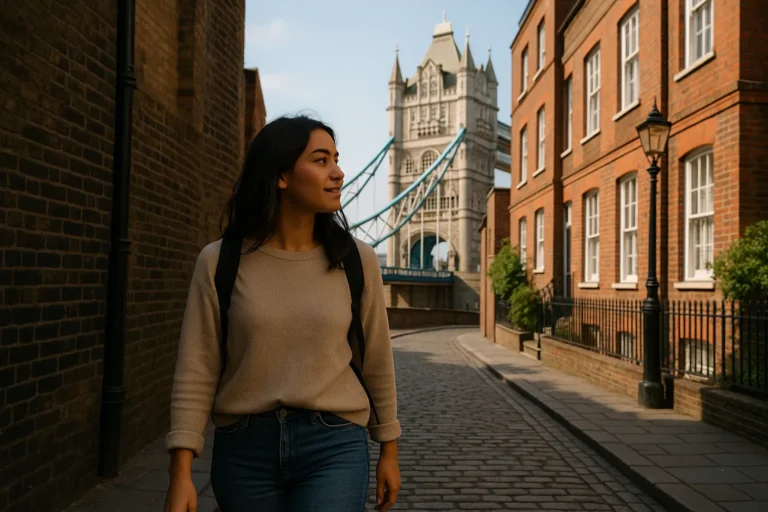
The South Bank walk is one of the classic London walking routes through neighborhoods that connect history and culture without any effort. You pass the Tate Modern (free to enter, and worth at least an hour), the Globe Theatre, the Millennium Bridge, and the National Theatre, all within a stretch of riverfront that also has some of the best views of the City of London skyline you’ll find anywhere.
Push further into Southwark’s residential streets — away from the river — and the character changes entirely. Bermondsey has a strong independent food and drink scene, with a Saturday market on Bermondsey Street that’s less famous than Borough but just as interesting. The area around Peckham, technically its own district but closely connected to Southwark’s cultural identity, has become one of the most dynamic parts of South London, with a rooftop bar scene, independent cinemas, and a food culture that reflects the area’s West African and Caribbean communities.
👉 Read also: Best Walks in London: From Iconic Landmarks to Secret Neighborhoods (2026 Local Guide)
Brixton: Sound, Food, and Unapologetic Energy
Brixton is one of those neighborhoods that announces itself. Come out of Brixton station and you’re immediately in the middle of it — market stalls, music drifting from open doors, the smell of jerk chicken, and a general sense that this is a place where people actually live rather than perform living for visitors.
Brixton Market and the connected Brixton Village are the heart of it. The covered arcades of Brixton Village are packed with independent restaurants and cafés representing cuisines from across the Caribbean, West Africa, Latin America, and beyond. It’s one of the best places in London to eat well and cheaply, and the atmosphere is genuinely warm. Go for lunch on a weekday if you want space; go on a Friday evening if you want the full energy.
Walking the streets around the market — Coldharbour Lane, Atlantic Road, the side streets heading toward Herne Hill — gives you a sense of how the neighborhood is changing while still holding onto its identity. There’s a tension here that’s worth paying attention to: Brixton has been under significant pressure from rising costs and development, and the community’s response to that is visible in the murals, the independent spaces, and the events that fill the area’s calendar.
For free culture, Brixton delivers. Street art is everywhere, and several community galleries and music venues operate on a pay-what-you-can basis. The area’s musical heritage — particularly its connection to reggae, dub, and later grime and electronic music — is something you feel rather than just read about.
Practical Notes for Walking London’s Neighborhoods
A few things worth knowing before you set out:
- Timing matters. Markets run on specific days — most of the best ones operate on Saturdays, with some on Sundays. Check before you go, because a street that’s electric on Saturday can be quiet on a Monday morning.
- Comfortable shoes are non-negotiable. London’s streets are uneven, the distances between neighborhoods are longer than they look on a map, and you’ll almost certainly walk further than you planned. Wear shoes you’d be happy to spend eight hours in.
- The Overground and the Elizabeth line are your friends for moving between neighborhoods efficiently. They’re faster and more surface-level than the deep Tube lines, which means you stay more connected to the city’s geography.
- Early mornings are underrated. London before 9am is a different city — quieter, more photogenic, and easier to navigate. Borough Market at 8am, before the crowds arrive, is one of the best experiences the city offers.
- Free is genuinely free. London’s major museums — the British Museum, the V&A, the Tate Modern, the National Gallery — charge nothing for general admission. Build them into your walking routes as natural stopping points rather than separate day-trip destinations.
- Canal paths and green spaces connect more neighborhoods than most people realise. The Regent’s Canal runs from Little Venice through Camden and into Hackney Wick. Walking it gives you a completely different perspective on the city.
Building Your Own London Walking Route
The best approach to exploring London on foot is to pick a starting neighborhood, walk in one direction, and let the city surprise you. The routes that feel most alive are rarely the ones that follow a strict itinerary — they’re the ones where you turn down a street because something caught your eye, or stop for coffee somewhere that looked interesting, and end up in a conversation that changes the whole shape of your afternoon.
That said, having a loose framework helps. A strong East London day might move from Shoreditch to Bethnal Green to Hackney Wick, following the canal for the final stretch. A South London day could run from Southwark along the river to Bermondsey and then south to Brixton, using the Overground to close the loop. Neither of these routes requires much planning beyond knowing where you’re starting and having a rough sense of direction.
The neighborhoods covered in this guide — Shoreditch, Bethnal Green, Hackney, Southwark, and Brixton — represent some of the most interesting and accessible parts of the city for young travelers who want to connect with London’s actual culture rather than its postcard version. Each one rewards slow exploration. Each one has layers that only reveal themselves when you’re moving at walking pace, paying attention, and staying curious.
London rewards the people who show up without a fixed plan and give the city room to show them something unexpected. Put your phone in your pocket, pick a direction, and start walking. The city will do the rest.
This article was produced with AI assistance and reviewed editorially.


Almaty & Tashkent: Central Asia’s Modern Cities Beyond the Silk Road Clichés

Stay Smart in Asia: Budget Accommodation in Osaka, Kyoto & Kuala Lumpur 2026


