
United Kingdom
London Beyond the Eye: Walking Routes, Hidden Neighborhoods, and Authentic Experiences
Discover the best walking routes London offers, from iconic landmarks to hidden neighborhoods. Explore free walking tours, local cafes, and authentic experiences on foot.

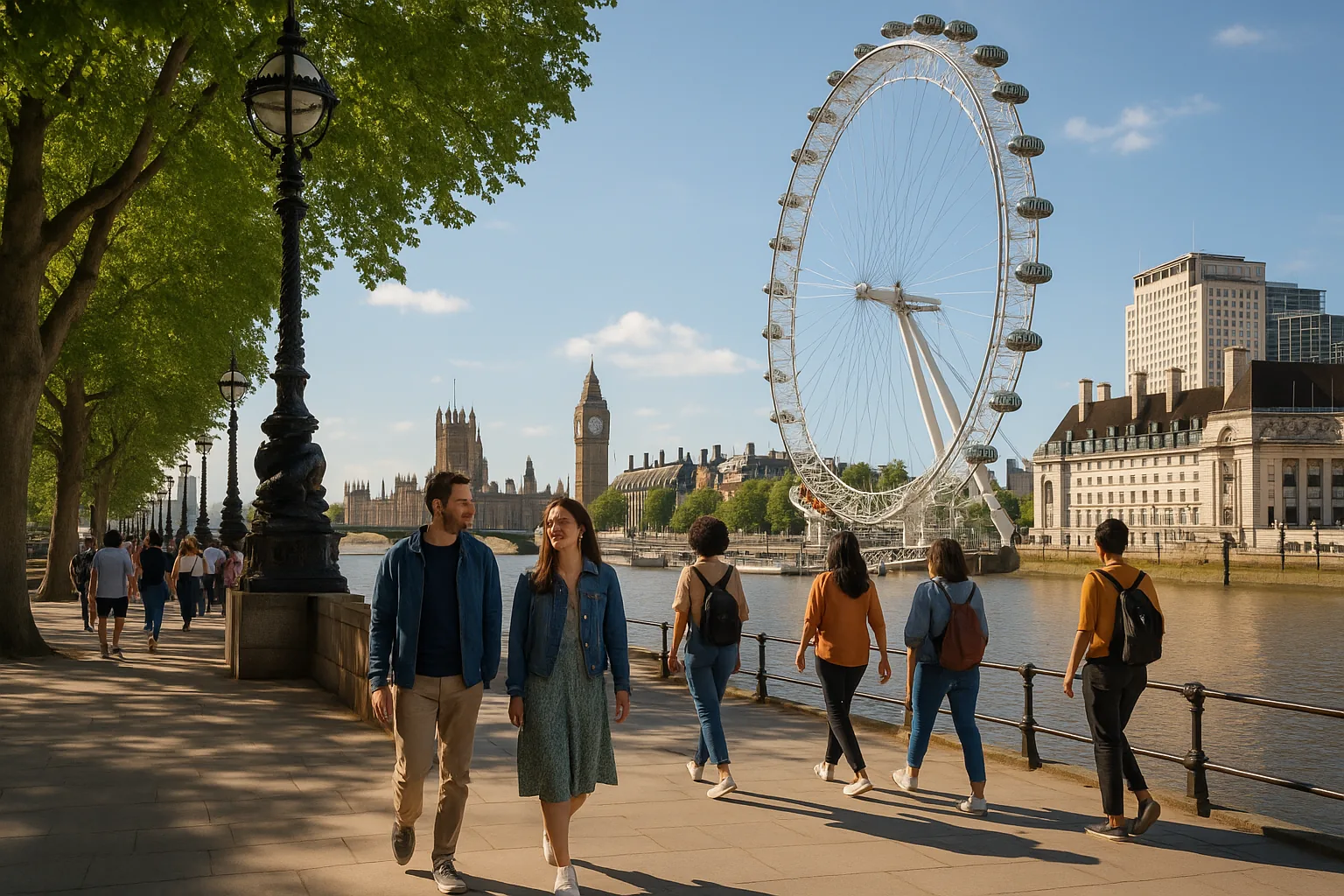
London is one of those cities that rewards curiosity more than any map ever could. If you’ve ever wondered what it actually feels like to wander past centuries-old markets, stumble into a canal-side neighbourhood you never expected, or finally understand why locals seem to move through the city with such ease — the answer is almost always the same: they walk. Exploring London on foot transforms a trip from a checklist of landmarks into something far more personal. And with some of the best walking routes London has to offer, you don’t need a tour bus, a packed itinerary, or even a lot of money to experience the city the way it was meant to be discovered.
Why Walking Is the Best Way to Experience London
London wasn’t built for cars. It was built for people — centuries of them — and that history shows up in every crooked alley, every Georgian square, and every hidden courtyard you’d never see from a taxi window. The city’s layers only reveal themselves when you slow down enough to notice them.
There’s also the practical side. London’s tube is efficient, but it skips over entire worlds between stations. Walk from Borough Market toward the Tate Modern and you’ll cross the Thames on the Millennium Bridge with one of the most striking skyline views in Europe. Take the tube and you’ll miss all of it. That’s the trade-off, and once you start walking, it’s hard to go back.
The Walk London Network — managed by Transport for London — is made up of eight official routes that together form one of the largest walking networks of any city in the world. These routes are well-signposted, free to use, and cover everything from riverside paths to green corridors cutting through the city’s heart. Whether you’re a first-time visitor or someone who’s been to London a dozen times, these routes offer a genuinely fresh way to experience the city. You can find the full network details on the Transport for London walking routes page.
The Classic Routes: Landmarks That Still Deliver
There’s a reason the classic central London walk never gets old. Starting around Trafalgar Square and moving through St James’s Park toward Buckingham Palace, then doubling back through Westminster to reach Big Ben — this is one of those routes that hits differently when you’re doing it on foot rather than viewing it on a screen.
From Westminster, you can continue through Covent Garden, where street performers and independent shops fill the piazza at almost any hour of the day. Wander further into Leicester Square and then duck into Chinatown for a late-afternoon snack before the crowds thicken. This particular stretch connects some of London’s most visited landmarks in a way that feels genuinely walkable — roughly two to three hours at a relaxed pace, with plenty of reasons to stop.
What makes this route work isn’t just the landmarks themselves. It’s the transitions between them. The quiet stretch of St James’s Park between the palace and Westminster is genuinely peaceful, especially early in the morning when the light hits the lake and the commuters haven’t yet taken over. These in-between moments are what make walking through London feel like more than sightseeing — they make it feel like living there, at least for a few hours.
Hidden Gem Neighbourhoods Worth Exploring on Foot
Once you’ve done the central route, London’s real character starts to emerge in the neighbourhoods that don’t make it onto most tourist itineraries. And the best way to find them is to simply start walking in a direction that feels interesting.
Notting Hill is well-known, but most visitors stick to Portobello Road and miss the colourful backstreets that run parallel to it. Wander off the main market strip and you’ll find quiet residential streets lined with pastel-painted houses, independent bookshops, and cafés that feel genuinely local. The neighbourhood rewards exploration — every block looks slightly different, and the architecture alone is worth the walk.
👉 Read also: London Beyond the Landmarks: 8 Walks from Tourist Icons to Hidden Neighborhoods (2026)
Greenwich offers something completely different: a riverside village feel within the city. Walk along the Thames Path toward the Cutty Sark, climb up through Greenwich Park to the Royal Observatory, and you’ll get a panoramic view of the London skyline that most visitors never bother to seek out. It’s the kind of place that makes you feel like you’ve discovered something, even though it’s technically right there on the map.
Content creator Sophie Nadeau has documented some of London’s most overlooked corners, covering areas including Paddington, Little Venice, Bermondsey, Borough, and the City of London — places that locals love but that often fly under the radar for visitors. Little Venice in particular is one of those spots that genuinely surprises people. Narrow boats line the canals, weeping willows trail into the water, and the whole area feels like it belongs in a different city entirely. It’s about a fifteen-minute walk from Paddington station, and most people walk straight past it.
Bermondsey and Borough on the south bank are worth an entire morning or afternoon. Borough Market is the obvious draw, but the streets around it — particularly the stretch toward Bermondsey Street — are full of independent galleries, vintage shops, and neighbourhood restaurants that feel genuinely rooted in the area rather than designed for tourists.
Self-Guided Walks: Going at Your Own Pace
One of the best things about exploring London on foot is that you don’t need a guide, a group, or a fixed schedule. Self-guided walks let you stop when something catches your eye, double back when you want to, and completely ignore the itinerary if the mood takes you somewhere else.
The A Lady in London blog has compiled an impressive collection of 45 self-guided London walking tours, covering everything from literary walks through Bloomsbury to architectural routes through the City. These are the kind of resources that turn a vague plan to “walk around London” into something with actual structure — without making it feel rigid. You can pick a theme that interests you and let the route do the rest.
For a more spontaneous approach, the Walk London Network routes are a reliable starting point. Each of the eight official routes has a distinct character. Some follow the Thames, others cut through parks and green spaces, and a few take you through residential areas that feel genuinely off the beaten path. You can walk a section, hop on the tube, and pick up a different route elsewhere — or just follow one from start to finish if you’ve got the energy and the right shoes.
Speaking of shoes: London’s pavements are uneven, its parks can be muddy, and a full day of walking will cover more distance than you expect. Comfortable footwear isn’t optional — it’s the difference between a great day and a miserable one.
The Food Scene, Neighbourhood by Neighbourhood
One of the best reasons to walk through London’s different neighbourhoods is the food. Not the tourist-facing restaurants near the major landmarks, but the places that locals actually eat — and those are almost always a short walk from wherever you happen to be.
In Borough and Bermondsey, the food scene is dense and genuinely exciting. Borough Market itself is one of the best food markets in Europe, with stalls covering everything from fresh pasta to West African street food. Arrive early on a Saturday and you’ll find it at its best — busy but not overwhelming, with vendors who are happy to talk about what they’re selling.
In Notting Hill and Portobello, the café culture is strong. The side streets off the main market strip are where you’ll find the spots that locals actually return to — small, independent, and usually with good coffee. These aren’t places you’ll find in a glossy guidebook, which is exactly the point.
👉 Read also: Best Walks in London: From Iconic Landmarks to Secret Neighborhoods (2026 Local Guide)
Hackney and Dalston in east London have developed a food scene that’s as diverse as the neighbourhood itself. Turkish restaurants, Vietnamese street food, Nigerian bakeries, and some of the city’s most interesting independent coffee shops all sit within walking distance of each other. If you’re staying in east London or willing to make the journey, a morning walk through Hackney followed by a long lunch is one of the more authentic ways to spend a day in the city.
The key with London’s food scene is to follow the neighbourhoods rather than the reviews. Walk somewhere interesting, look for the places with handwritten menus and no photos on the windows, and trust your instincts. That approach rarely disappoints.
Making the Most of Free and Budget-Friendly Exploration
London has a reputation for being expensive, and in some areas that reputation is fair. But walking is, by definition, free — and it opens up a version of the city that money can’t really buy anyway.
The Walk London Network routes are completely free to use. Most of London’s major parks — Hyde Park, Regent’s Park, Hampstead Heath, Victoria Park — are free to enter and genuinely worth exploring on foot. The Thames Path, which runs along both banks of the river, is one of the most rewarding urban walks in any city, and it costs nothing.
Free walking tours are available in London, typically operating on a pay-what-you-feel model. These can be a great way to get oriented in a new neighbourhood, pick up local knowledge, and meet other travellers. The quality varies, so it’s worth reading recent reviews before committing to one — but a good walking tour guide can completely change the way you see a neighbourhood.
For budget travellers, the combination of walking, free parks, and market food covers a significant chunk of what makes London worth visiting. You can spend a genuinely full and rewarding day in the city without spending much at all — especially if you’re willing to walk between areas rather than defaulting to the tube.
Practical Tips Before You Start Walking
A few things worth knowing before you lace up and head out:
- Download an offline map. Phone signal can be patchy in some areas, and relying on live data in an unfamiliar city is a gamble you don’t need to take.
- Start early. London’s most popular spots — Borough Market, Portobello Road, the South Bank — are significantly more enjoyable before the midday crowds arrive.
- Layer your clothing. London’s weather is famously unpredictable. A light waterproof layer takes up almost no space and will save you more than once.
- Use the Thames as your compass. If you know which side of the river you’re on and roughly where you’re heading, you’re rarely as lost as you feel.
- Give yourself permission to get lost. Some of the best things you’ll find in London aren’t on any map — they’re the result of turning down a street that looked interesting and seeing where it led.
- Carry a reusable water bottle. London tap water is safe to drink, and most cafés and public spaces will refill your bottle for free.
- Wear your most comfortable shoes. This bears repeating. Your feet will thank you by hour four.
Why London Keeps Rewarding the Curious
What makes London genuinely different from other major cities is the sense that there’s always more to find. It’s a city that has been built, rebuilt, bombed, regenerated, and reinvented over centuries — and all of those layers are still visible if you look for them. A Roman wall in the basement of a modern office building. A Georgian square tucked behind a busy high street. A canal network that once carried goods across the city and now carries narrowboats full of people who’ve chosen to live differently.
Travel blogger and local perspective writer Jackie Rezk captures this well — the idea that London as a local and London as a tourist are almost different cities, and that the gap between them closes the moment you start walking and paying attention. That shift doesn’t require insider knowledge or a local contact. It just requires slowing down, taking the longer route, and being genuinely curious about what’s around the next corner.
The walking routes London offers — official or self-guided, free or structured — are ultimately just invitations to engage with the city on its own terms. Take one up, and you’ll quickly discover that the version of London worth remembering isn’t the one you see from the top of a tour bus. It’s the one you find on foot, one neighbourhood at a time.
This article was produced with AI assistance and reviewed editorially.


Adventure Beyond the Beach: Things to Do in Jeju, South Korea & Tayrona Park, Colombia

Where to Stay in 2026: Budget Accommodation Guides for Vancouver, Wellington, Bruges & Andorra


