
Asia
Southeast Asia Without a Car: When to Rent, When to Skip It (Thailand, Vietnam, Malaysia)
Decide whether to rent a car in Southeast Asia. Compare costs, driving conditions, and insurance across Thailand, Vietnam, and Malaysia—plus when buses and ride-sharing m

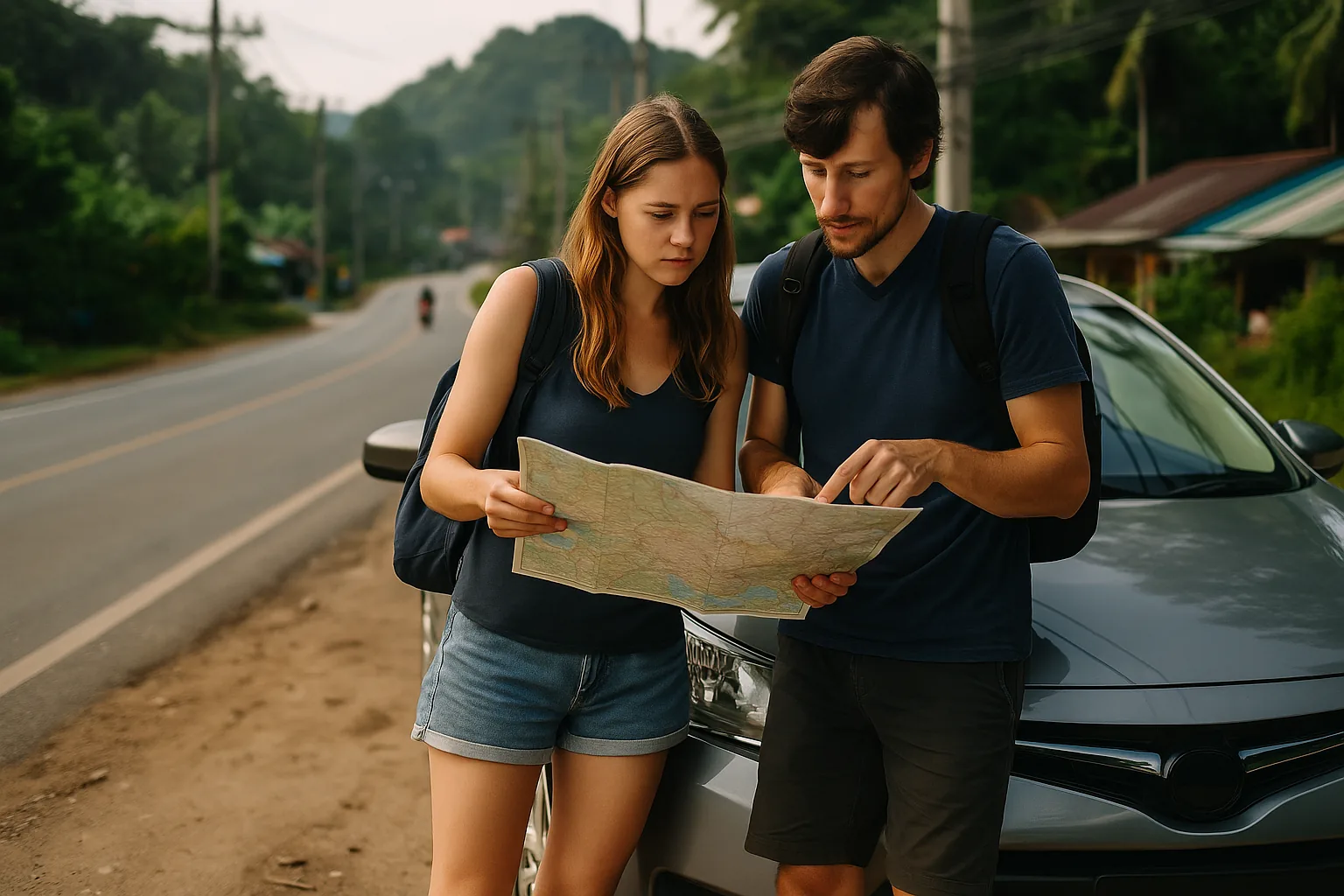
Southeast Asia has a way of making you question everything you thought you knew about getting from A to B. Trains that feel like adventures in themselves, overnight buses that save you a night’s accommodation, motorbike taxis weaving through traffic with effortless confidence — the region is genuinely one of the most exciting places in the world to travel independently. But sooner or later, especially if you’re planning a longer trip through Thailand, Vietnam, or Malaysia, you’ll find yourself staring at a car rental website and wondering: is this actually worth it? The answer, as with most things in travel, is it depends — and that’s exactly what this guide is here to help you figure out.
Why Car Rental in Southeast Asia Is a Different Conversation
Renting a car back home is usually pretty straightforward. You show up, sign some paperwork, and drive away. In Southeast Asia, the decision is far more layered. The region’s transport infrastructure varies wildly — not just between countries, but between regions within the same country. A city like Kuala Lumpur has a well-developed metro system, while rural Borneo operates on an entirely different logic. Bangkok sits in near-permanent gridlock during rush hour, while the winding mountain roads of northern Thailand open up landscapes you genuinely can’t access any other way.
Car rental in Southeast Asia isn’t inherently a bad idea. But it’s not automatically the adventurous, freeing choice it might seem from the outside, either. Before you commit, it’s worth understanding the actual conditions on the ground — and whether the freedom a car offers is freedom you’ll actually use.
Thailand: Where Car Rental Can Actually Make Sense
Thailand is probably the most car-rental-friendly destination in the region for independent travellers. The country has a relatively developed road network, a well-established tourism infrastructure, and some genuinely spectacular drives that are hard to replicate by public transport alone.
One of the most compelling cases for renting a car in Thailand is the Mae Hong Son Loop in the north. Departing from Chiang Mai, this route winds through mountains, past hill tribe villages, and into some of the country’s most atmospheric temple country. It’s a journey that’s technically doable by bus, but a car gives you the freedom to stop whenever something catches your eye — a roadside food stall, a viewpoint, a village that isn’t in any guidebook. That kind of spontaneity is hard to put a price on.
That said, driving in Thailand does come with real considerations. Traffic in major cities can be intense and the driving culture may feel unfamiliar if you’re used to quieter roads. Before you rent, you’ll want to research what documentation is required — most rental companies will ask for your home driving licence, and depending on your nationality, you may also need an International Driving Permit (IDP). It’s worth checking the requirements of both the rental company and local regulations well before you arrive, as these can vary.
Insurance is another area where you’ll want to pay close attention. Basic coverage is often included in rental quotes, but the level of protection it actually offers can differ significantly between providers. Reading the fine print — especially around excess amounts and what counts as a covered incident — is genuinely important here, not just a box-ticking exercise.
- The Mae Hong Son Loop from Chiang Mai is one of the strongest arguments for renting a car in the region
- City driving, especially in Bangkok, is rarely worth it — ride-sharing apps are faster and less stressful
- Always verify licence and IDP requirements with your specific rental company before booking
- Read insurance terms carefully and consider upgrading coverage if the base policy has a high excess
Vietnam: Probably Not the Place to Start Behind the Wheel
Vietnam is one of the most captivating countries in Southeast Asia — the food alone is worth the trip — but it’s also the destination where most experienced travellers would advise against renting a car, particularly if you’re new to driving in the region.
👉 Read also: Southeast Asia Without a Car: Getting Around Thailand, Vietnam & Cambodia Like a Local
The road culture in Vietnam is genuinely unlike anything most Western travellers will have experienced. Traffic in cities like Hanoi and Ho Chi Minh City operates on a kind of fluid, intuitive logic that takes time to read and even longer to navigate confidently. Motorbikes flow in every direction, rules of the road are interpreted flexibly, and the sheer volume of vehicles on urban streets can be overwhelming. This isn’t to say it’s impossible — plenty of travellers do drive in Vietnam — but it’s a significant step up in complexity compared to most places.
The good news is that Vietnam arguably has the most compelling alternatives to car rental in the entire region. The Reunification Express train running the length of the country is a genuine travel experience in its own right — you watch the landscape shift from the rice paddies of the north to the dramatic coastline of central Vietnam to the lush delta country of the south, all from the window of a sleeper carriage. It’s affordable, atmospheric, and connects most of the major destinations you’ll want to visit.
For shorter distances, ride-sharing apps have transformed urban mobility in Vietnam. You can get across a city quickly, cheaply, and without the stress of navigating unfamiliar traffic. Sleeper buses between cities are another popular option, particularly for the backpacker circuit between Hoi An, Da Nang, Nha Trang, and the south. They’re not glamorous, but they’re effective — and they give you the chance to meet other travellers in a way a rental car simply doesn’t.
If you’re determined to explore Vietnam with more freedom of movement, renting a motorbike is a more common and arguably more practical option than a car — though it comes with its own set of risks that deserve serious consideration. The Ho Chi Minh Trail route from north to south is a legendary motorbike journey, but it’s one that rewards experience and preparation, not impulsiveness.
Malaysia: A Country Where Car Rental Actually Competes
Malaysia is where the car rental conversation gets genuinely interesting. The country has one of the most developed road networks in Southeast Asia, a strong driving culture, and a geography that makes certain journeys significantly easier by car than by any other means.
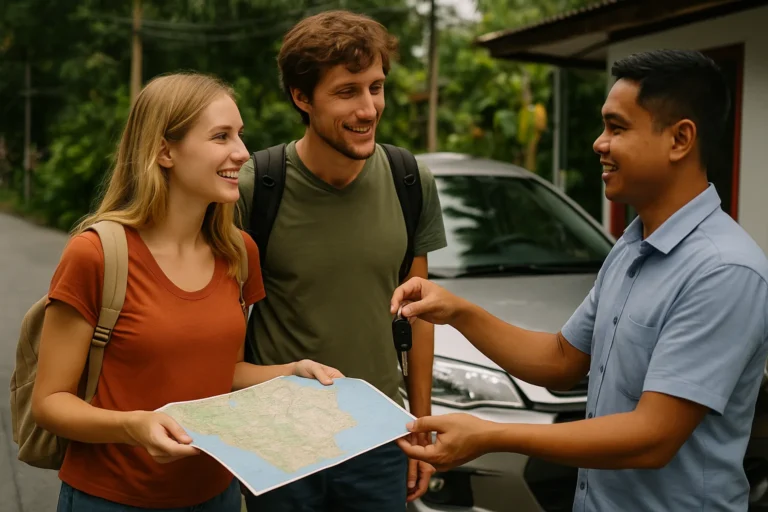
The Malay Peninsula is well-served by trains and buses between major cities — Kuala Lumpur, Penang, Ipoh, Johor Bahru — and the KTM rail network, combined with the ETS high-speed services, makes city-hopping straightforward and relatively comfortable. If your itinerary sticks to these urban centres, a rental car is probably more hassle than it’s worth. Parking in KL is its own adventure, and the city’s public transport covers most of the ground you’d want to cover anyway.
Where a car genuinely earns its place in Malaysia is in the less-connected corners of the country. Sabah and Sarawak in Malaysian Borneo, for example, are destinations where having your own vehicle opens up access to rainforest reserves, riverside villages, and wildlife sanctuaries that simply aren’t reachable by public transport on any reasonable schedule. The Cameron Highlands on the peninsula are another example — the tea plantations and jungle trails are far more accessible with a car, and the winding mountain roads are genuinely enjoyable to drive.
Malaysia also has the advantage of being one of the easier countries in the region to drive in if you’re coming from a country with left-hand traffic — Malaysia drives on the left, road signs are largely in both Malay and English, and the standard of road infrastructure in most areas is high. Requirements around licences and permits are worth verifying directly with your rental provider, as rules can change and vary by nationality.
- Stick to public transport for the KL–Penang–Ipoh corridor — it’s genuinely good
- Consider renting for Borneo or highland regions where buses are infrequent
- Malaysia’s left-hand traffic and English signage make it one of the more accessible driving environments in the region
- Confirm licence requirements with your rental company, especially if your licence is in a non-Roman script
The Real Cost Comparison: What You’re Actually Paying For
One of the biggest misconceptions about car rental in Southeast Asia is that it’s necessarily expensive. In some cases, a rental car — split between two or three travellers — can actually come close to the cost of buses or trains, especially over longer distances or in areas where public transport is sparse. But the headline rental price is rarely the full story.
👉 Read also: Do You Actually Need to Rent a Car in Thailand? A Practical Breakdown
You need to factor in fuel, which can add up quickly on longer routes. Parking fees in cities can be surprisingly significant. Toll roads, which are common in Malaysia and parts of Thailand, add another layer of cost. And then there’s the insurance question again — if you opt for comprehensive coverage to give yourself genuine peace of mind, the daily rate climbs noticeably.
Ride-sharing apps, on the other hand, have made urban transport in Southeast Asia genuinely competitive on price and dramatically more convenient than trying to navigate a rental car through city traffic. Apps are widely available across the region and cover most urban areas thoroughly. For city-based exploration, they’re almost always the smarter choice.
The sweet spot for car rental tends to be multi-day road trips in rural or mountainous areas, where the freedom to stop, explore, and change your plans on the fly genuinely justifies the additional cost and complexity. Think the Mae Hong Son Loop in Thailand, the tea country of the Cameron Highlands in Malaysia, or the national parks of Sabah. These are the journeys where a car transforms the experience rather than just replicating what you could do by other means.
Before You Book: Practical Things Worth Knowing
Regardless of which country you’re renting in, a few principles apply across the board. First, research the specific documentation requirements for your nationality well in advance. The need for an International Driving Permit, in particular, varies by country and by rental company — some will accept your home licence alone, others won’t. Arriving without the right paperwork can mean losing your booking entirely.
Second, take the insurance question seriously. It’s tempting to decline additional coverage to save money, but in a region where road conditions and driving cultures can be unpredictable, a high excess on a basic policy can turn a minor scrape into a major financial headache. Understand exactly what you’re covered for before you drive away.
Third, think honestly about your driving experience. If you’ve never driven in a country with significantly different road culture, starting in a busy Southeast Asian city is a steep learning curve. Consider whether your first rental experience in the region should be on a quieter rural route rather than in the middle of a major city.
Finally, check the terms around cross-border driving. Some rental agreements explicitly prohibit taking the car across national borders, which matters if you’re planning a multi-country itinerary. If you want to drive from Thailand into Malaysia, for example, you’ll need to confirm this is permitted with your rental company before you commit.
For a broader sense of how independent travel works across the region — including transport options, itinerary ideas, and practical logistics — Indie Traveller’s Southeast Asia itineraries is a solid resource worth bookmarking.
Southeast Asia rewards the travellers who stay curious and stay flexible. Sometimes that means renting a car and disappearing into the mountains for a few days. Sometimes it means boarding a night train with a window seat and watching the landscape change while the rest of the carriage sleeps. The best transport choice is always the one that takes you closer to the experience you’re actually after — and in a region this varied and this alive, there’s rarely just one right answer.
This article was produced with AI assistance and reviewed editorially.


Almaty & Tashkent: Central Asia’s Modern Cities Beyond the Silk Road Clichés

Stay Smart in Asia: Budget Accommodation in Osaka, Kyoto & Kuala Lumpur 2026


