
Asia
Southeast Asia Without a Car: Getting Around Thailand, Vietnam & Cambodia Like a Local
Navigate Southeast Asia without a car using buses, trains, boats and tuk-tuks. Learn why public transport beats car rental and how to travel safely across Thailand, Vietn

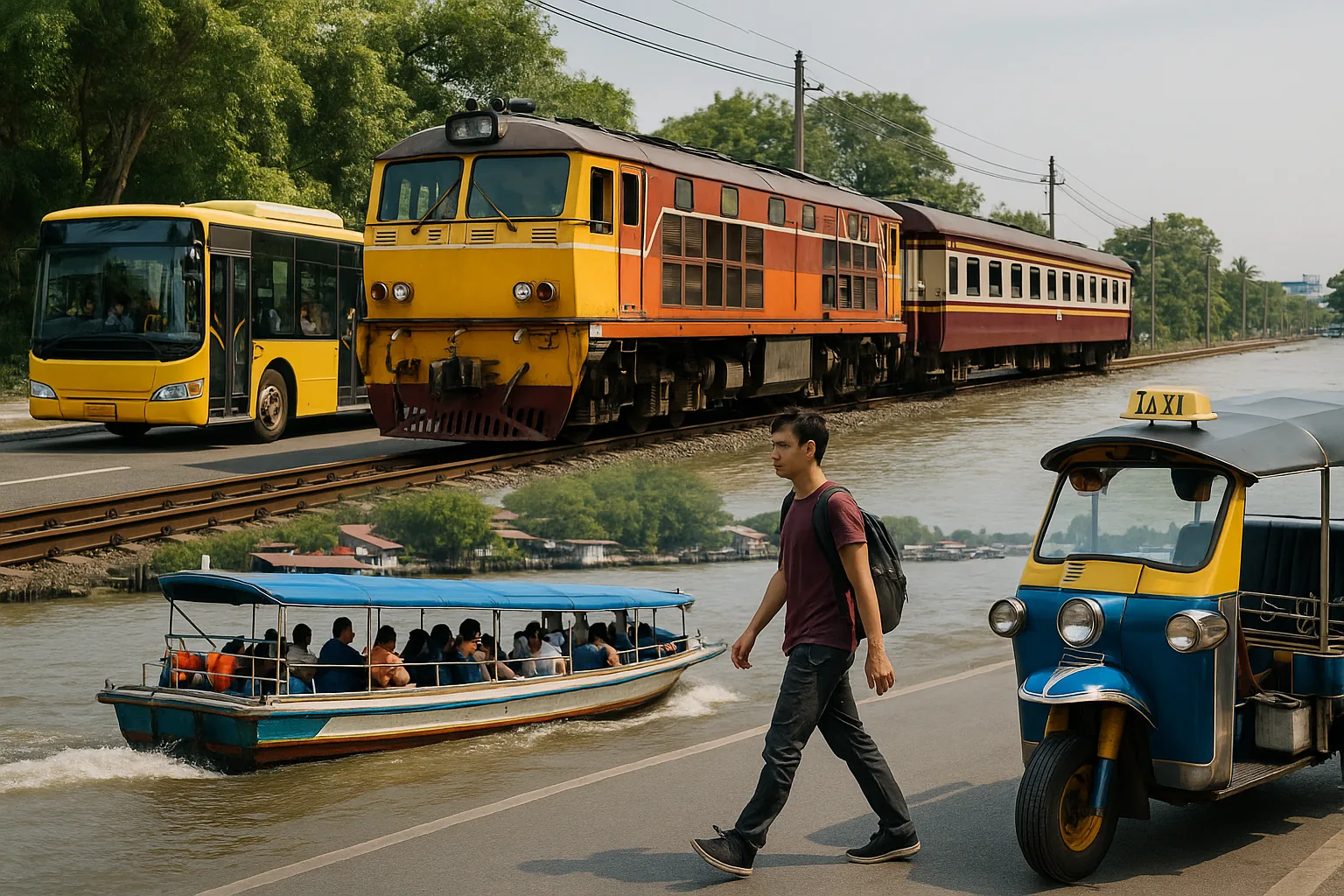
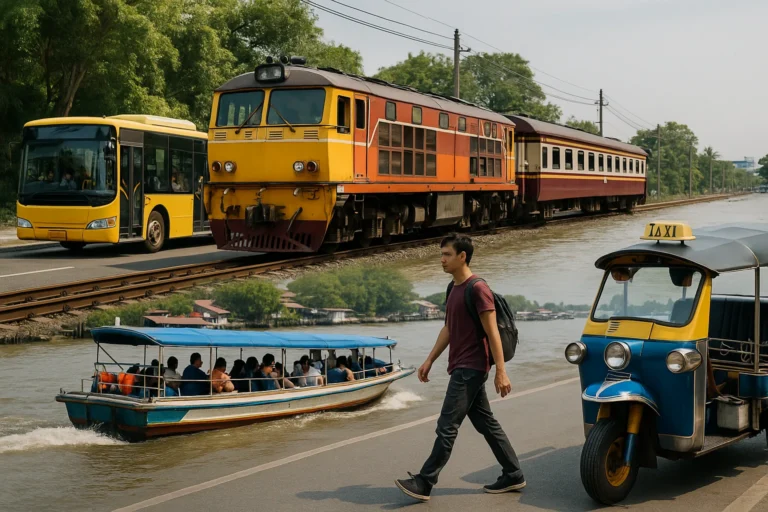
Getting around Southeast Asia without a car is not just possible — it’s genuinely one of the best ways to experience the region. Navigating southeast asia public transport puts you right in the middle of daily life: sharing a bus with monks heading to a temple, watching street food vendors blur past a train window, or haggling good-naturedly with a tuk-tuk driver at dusk. Thailand, Vietnam, and Cambodia each have their own rhythm when it comes to getting from A to B, and once you understand how the pieces fit together, the whole thing starts to feel less like logistics and more like the adventure itself.
Why You Almost Certainly Don’t Need to Rent a Car
Let’s get this out of the way early. A lot of first-time visitors to the region assume they’ll need a rental car to explore freely. In most cases, that assumption works against you. Driving in Thailand, Vietnam, and Cambodia comes with real challenges — traffic patterns that follow unwritten rules, roads that vary dramatically in quality once you leave major cities, and the genuine complexity of navigating unfamiliar signage in a foreign script.
Beyond the practical difficulties, renting a car is almost always the most expensive way to travel in this part of the world. Public and local transport is consistently the cheapest option across the region, and in many cases it’s also the fastest between popular destinations. When you factor in fuel, insurance, parking, and the mental load of driving on unfamiliar roads, the car rental equation rarely makes sense for a young traveler moving between cities.
There are exceptions. If you’re planning to explore remote rural areas in northern Thailand or venture deep into the Cambodian countryside far from tourist routes, a rented motorbike (not a car) can open up genuine freedom. But for the classic journey through Bangkok, Chiang Mai, Hanoi, Hoi An, Ho Chi Minh City, Siem Reap, and Phnom Penh — the kind of trip that follows what travellers call the Banana Pancake Route — public transport covers everything you need.
Buses: The Backbone of Budget Travel
Buses are the most widely used form of long-distance transport across all three countries, and they’re genuinely excellent value. In Thailand especially, the bus network is extensive and well-developed, connecting major cities to smaller towns and coastal destinations with reliable frequency. You’ll find everything from basic local buses to air-conditioned coaches with reclining seats and onboard entertainment.
For overnight journeys, sleeper buses are a game-changer. Instead of paying for a night’s accommodation, you board in the evening, stretch out on a reclining seat or flat pod, and wake up in a new city. It’s not the most luxurious sleep you’ll ever have, but it’s efficient, affordable, and — honestly — a little exciting. The first time you pull into a new destination at sunrise, still half-asleep with your bag on your lap, you’ll understand why so many travellers swear by them.
In Vietnam, buses connect the entire length of the country, which matters because Vietnam is long and narrow — travelling its full extent by road is an experience in itself. The journey from Hanoi in the north to Ho Chi Minh City in the south passes through dramatically different landscapes, climates, and cultures. Breaking it into stages and taking local transport between stops — rather than flying over it all — is how you actually get to know the country.
Cambodia’s bus network centres on connections between its main cities: Phnom Penh, Siem Reap, and Sihanoukville. Routes are well-travelled and easy to book, with options ranging from budget minibuses to more comfortable tourist coaches. The roads have improved significantly over recent years, though journey times can still be longer than the distance suggests — factor that in when you’re planning your days.
👉 Read also: Solo Travel in Southeast Asia: Finding Your People While Finding Yourself
When it comes to booking, you’ll generally find tickets through guesthouses, local travel agents, or online platforms that aggregate routes across the region. Ask at your accommodation — they’ll almost always know the most reliable current options and can often book on your behalf for a small fee that’s genuinely worth paying for the convenience.
Trains: Slow, Scenic, and Completely Worth It
Train travel in Southeast Asia is one of those experiences that deserves its own category. It’s not always the fastest option, and that’s precisely the point. Travelling by train forces you to slow down, look out the window, and actually absorb the landscape — rice paddies stretching to the horizon, mountains appearing through morning mist, coastal cliffs dropping into turquoise water.
Thailand has one of the most developed rail networks in the region. The State Railway of Thailand connects Bangkok to Chiang Mai in the north, to the southern peninsula, and to the border with Malaysia. Overnight sleeper trains are a particular highlight — book a berth in second class and you get a fold-down bed with clean sheets, a window to watch the countryside roll by at dusk, and a dining car serving surprisingly decent food. It’s the kind of travel experience that feels like it belongs in a novel.
Vietnam’s Reunification Express runs the full length of the country between Hanoi and Ho Chi Minh City, stopping at key destinations along the way including Hue, Da Nang, and Nha Trang. Booking individual segments rather than the full journey lets you stop wherever catches your interest. The stretch between Da Nang and Hue is particularly celebrated for its coastal scenery — the train hugs the hillside with the South China Sea spread out below, and it’s genuinely one of the most beautiful train journeys in Asia.
Cambodia’s rail network is more limited, but a line connecting Phnom Penh to the coast does operate and offers a local experience that most tourists skip entirely. It’s not the most efficient way to travel, but if you have the time and the curiosity, it’s memorable in exactly the way that efficient things rarely are.
Tuk-Tuks, Motorbike Taxis, and Getting Around Cities
Once you arrive in a city, a whole new layer of transport culture opens up. This is where Southeast Asia really comes alive at street level, and learning to navigate it confidently is part of the experience.
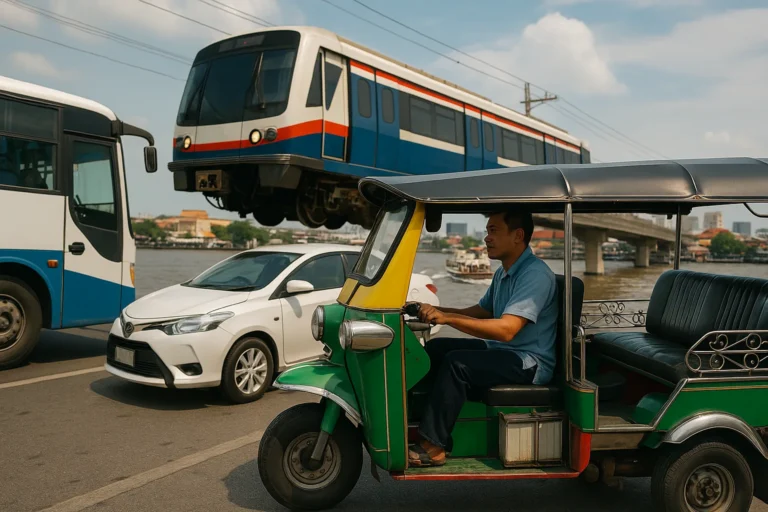
The tuk-tuk — a three-wheeled motorised vehicle that varies in style from country to country — is one of the region’s most iconic ways to get around. In Thailand, tuk-tuks are small and nippy, weaving through Bangkok traffic with cheerful recklessness. In Cambodia, the remork (a motorbike pulling a covered carriage) is the local equivalent, and it’s the standard way to get around Siem Reap, especially when visiting Angkor Wat at sunrise. In Vietnam, the xe ôm — a motorbike taxi — is the classic short-distance solution, though app-based ride services have largely taken over in major cities.
Speaking of apps: Grab has transformed urban transport across Southeast Asia. It works like a ride-hailing app, covers cars and motorbikes, and removes the need to negotiate fares in advance — which is genuinely useful when you’re new to a city and not yet confident about what a fair price looks like. Download it before you arrive and use it as your baseline for understanding local pricing.
That said, don’t let apps replace the experience of negotiating with a tuk-tuk driver. Agree on a price before you get in, keep the exchange friendly, and treat it as what it is: a small human interaction that’s part of travelling in this part of the world. Most drivers are perfectly straightforward — just make sure you’ve confirmed the destination clearly and settled the fare before you set off.
👉 Read also: Southeast Asia on a Shoestring: Rookie Mistakes, Budget Hacks, and Real Costs
Boats, Ferries, and Moving Between Islands
Water transport is an essential part of getting around Southeast Asia, particularly in Thailand where island-hopping is one of the region’s great pleasures. Ferries connect the mainland to destinations like Koh Samui, Koh Tao, Koh Lanta, and the Phi Phi Islands, and the network is well-organised and regularly used by travellers of all experience levels.
In Cambodia, slow boats along the Mekong and across Tonle Sap Lake connect Phnom Penh to Siem Reap and offer a perspective on the country that road travel simply can’t match. Villages built on floating platforms, fishermen casting nets at dawn, children waving from the riverbank — it’s the kind of journey that reminds you why you chose to travel this way in the first place.
Vietnam’s coastal geography also lends itself to boat travel, most famously in Ha Long Bay, where overnight cruises are one of the country’s signature experiences. Kayaking through limestone karsts at your own pace is a very different thing from watching them from a tour bus window.
Staying Safe and Travelling Smart
Southeast Asia is widely considered one of the world’s most accessible and rewarding regions for independent travel, and the vast majority of journeys go smoothly. That said, a few habits will make your experience significantly better.
- Always agree on fares before you get in — whether it’s a tuk-tuk, a motorbike taxi, or a boat. A friendly, firm agreement upfront prevents confusion at the other end.
- Use reputable booking points for buses and trains. Your guesthouse or a well-reviewed local travel agent is usually safer than buying from someone who approaches you on the street with an unsolicited offer.
- Keep your bag with you on buses and trains, especially on overnight journeys. Use your bag as a pillow if you’re sleeping — it’s practical and it means you’re not worrying about it.
- Screenshot or download your tickets before you board. Mobile data can be unreliable in transit, and having your confirmation accessible offline saves stress.
- Be sceptical of deals that seem unusually cheap. The region is genuinely inexpensive, but prices that seem too good to be true sometimes come with hidden costs — an extra “fee” at the destination, a detour to a shop that pays the driver a commission, or a vehicle that’s less comfortable than advertised.
- Learn a few words in the local language. Even basic greetings go a long way in establishing goodwill and signal that you’re engaging with the culture rather than just passing through it.
The Frommer’s Southeast Asia planning guide is a solid starting point for understanding the broader logistics of the region before you dive into country-specific details.
Putting It All Together: Planning Your Route
The beauty of travelling through Thailand, Vietnam, and Cambodia using southeast asia public transport is that the region’s most popular destinations are already well-connected. The classic overland route — Bangkok to Chiang Mai, then south to the islands, across to Cambodia via Siem Reap and Phnom Penh, then north through Vietnam to Hanoi — can be done almost entirely on buses, trains, and boats, with the occasional tuk-tuk bridging the gaps.
Budget travellers who embrace local transport don’t just save money — they have more interesting journeys. You meet other travellers on overnight buses. You share food with a family on a slow train. You watch a city wake up from the back of a remork at six in the morning. These are the moments that don’t make it into the highlight reel but end up being the ones you actually remember.
Young travellers gather at places like Khao San Road in Bangkok, Pub Street in Siem Reap, and Hanoi’s Old Quarter — and most of them got there without a rental car. They figured out the buses and the trains and the tuk-tuks, made mistakes, asked locals for help, and came out the other side with stories worth telling. That’s the real case for travelling this way: not just that it’s cheaper, but that it puts you inside the experience rather than passing through it behind glass.
Southeast Asia rewards the curious and the patient. Give yourself time, stay flexible, and trust that the transport will get you there — maybe not always on schedule, maybe not always in comfort, but always with something worth remembering waiting at the other end.
This article was produced with AI assistance and reviewed editorially.


Almaty & Tashkent: Central Asia’s Modern Cities Beyond the Silk Road Clichés

Stay Smart in Asia: Budget Accommodation in Osaka, Kyoto & Kuala Lumpur 2026


