
Asia
Slow Travel Through Southeast Asia: Discovering Hanoi’s Soul and Vietnam Beyond the Guidebook
Discover how to experience slow travel in Hanoi, Vietnam with authentic neighborhoods, local culture, and a myth-busting guide that goes beyond stereotypes.

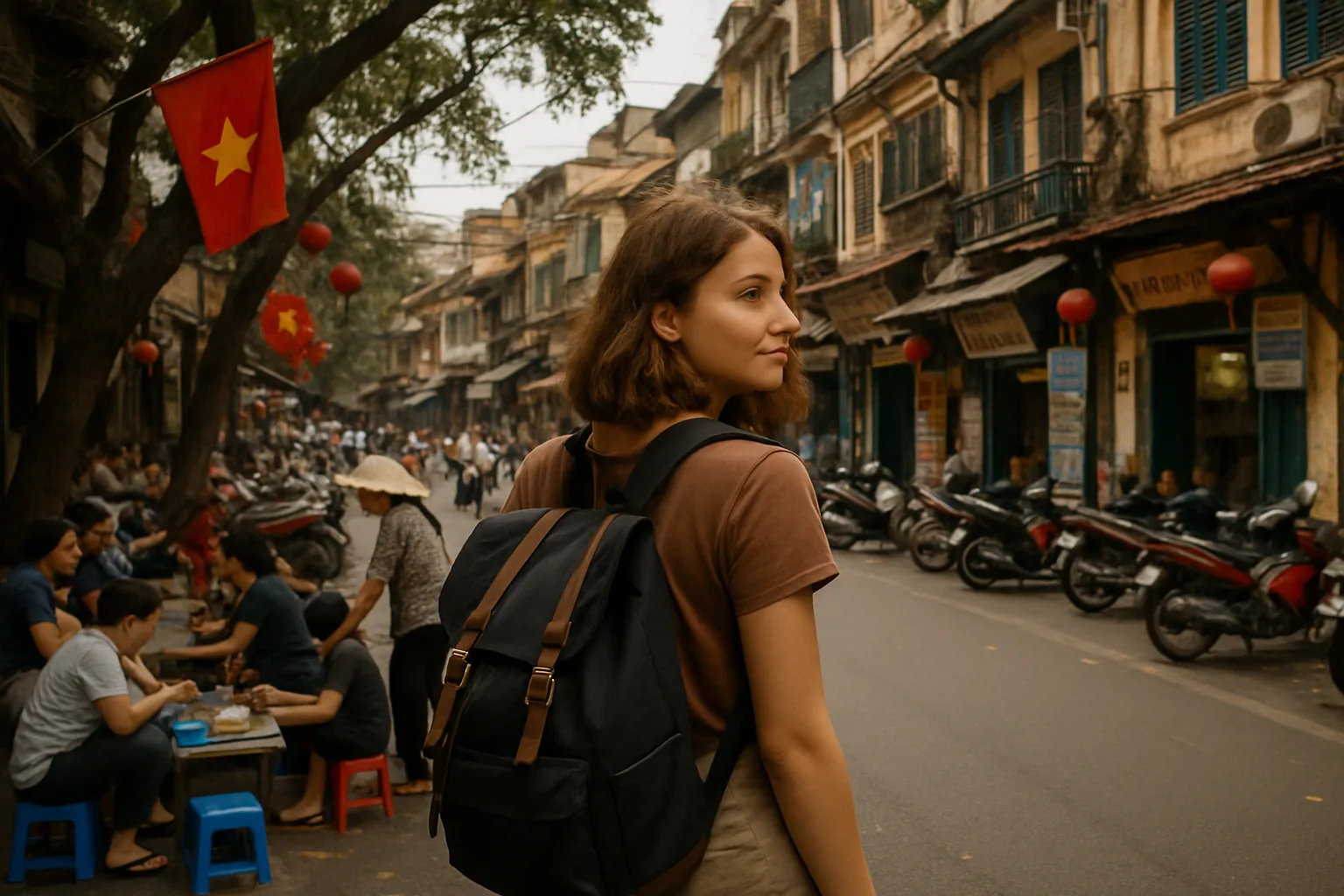
If you’ve been scrolling through travel content and wondering whether Hanoi is actually worth slowing down for — the answer is a quiet, confident yes. Slow travel in Hanoi, Vietnam isn’t a trend or a hashtag strategy. It’s the only way to really understand a city that has been layering history, culture, and daily life on top of itself for over a thousand years. Rush through it and you’ll miss everything that matters. Stay a while, and Hanoi starts to feel like somewhere you actually belong.
What Slow Travel Actually Means in a City Like Hanoi
The idea of slow travel gets thrown around a lot, but in Vietnam it has a very specific meaning. It’s not just about spending more nights in one place. It’s about depth over speed, connection over consumption, and presence over performance — choosing to actually live somewhere rather than photograph it and move on. Hanoi rewards this approach more than almost any other city in Southeast Asia.
Think about what rapid tourism does to a place like Hanoi. You land, you tick off Hoan Kiem Lake, you eat pho once, you buy a few magnets, and you leave thinking you’ve seen Vietnam’s capital. You haven’t. You’ve seen the surface of it — the part that was designed for people passing through. The real city exists in the rhythm of morning coffee on a plastic stool, in the sound of motorbikes navigating the Old Quarter at dusk, in the conversations that happen when you’re not rushing anywhere.
Creators like Nick and Karen from the Slow Travel With Us channel spent a full month in Hanoi in 2025, documenting everything from local transport and the city’s cash culture to authentic Vietnamese food and day trips to Ha Long Bay. A month. That’s the kind of timeline that lets a city reveal itself to you. You don’t need a month to have a meaningful experience — but you do need to let go of the idea that more cities equals a better trip.
One of the most liberating things about Vietnam as a destination is how plan-as-you-go friendly it is. You don’t need a rigid itinerary booked six months in advance. The country — and Hanoi especially — is set up for travelers who want to figure it out as they go, which makes it an ideal place to practice the slow travel mindset for the first time.
Getting to Know Hanoi’s Neighborhoods Beyond the Tourist Trail
Hanoi has a well-worn tourist circuit, and there’s nothing wrong with it. Hoan Kiem Lake is genuinely beautiful. The Old Quarter is genuinely fascinating. But if that’s all you see, you’re essentially visiting a curated version of the city rather than the city itself.
The Old Quarter — the 36-street district that dates back centuries — is where most first-time visitors spend most of their time, and for good reason. It’s dense with history, street food, and atmosphere. But even within the Old Quarter, there’s a difference between the streets that cater almost entirely to tourists and the ones where locals still go about their actual lives. Hang Be Market, for instance, pulls in far fewer foreign visitors than the more famous spots nearby, but it gives you a much clearer picture of daily Hanoian life.
Venture further and the city opens up. Tay Ho — the West Lake district — has a completely different feel. It’s where many long-term expats and young Vietnamese professionals live, and it has a quieter, more residential energy. The lakeside in the early morning is one of those experiences that’s hard to describe without sounding like you’re overselling it: locals doing thể dục (exercise), vendors setting up, the light coming off the water. It’s the kind of scene you only catch if you’re not in a rush.
Ba Dinh, the political and administrative heart of the city, is worth exploring for its wide boulevards, French colonial architecture, and the area around Ho Chi Minh Mausoleum. It feels entirely different from the chaotic energy of the Old Quarter — more measured, more monumental. And then there’s Dong Da, a mostly residential district that rarely appears in travel guides but gives you a genuine sense of how most Hanoians actually live.
→ Read also: Vietnam Beyond the Postcard: What You Actually Need to Know About Hanoi
The point isn’t to avoid the tourist areas — it’s to use them as a starting point rather than a destination. Walk outward from what’s familiar, follow streets that look interesting, and let yourself get a little lost. Hanoi is described by National Geographic as a buzzing hub of culture, history, and cuisine with a thousand-year-old past, featuring pagodas, French colonial architecture, and modernist designs — and you’ll find all of that layered together in ways that only reveal themselves when you slow down enough to look.
Busting the Misconceptions That Keep People Away
Vietnam carries a weight of outdated stereotypes that still shape how many Western travelers think about it before they arrive. Some of these misconceptions are harmless misunderstandings. Others actively discourage people from visiting — or from engaging authentically when they do. Here’s an honest look at the ones that come up most often.
The Traffic Will Terrify You
Yes, Hanoi’s traffic is intense. The motorbike culture is real, the intersections are chaotic by Western standards, and there are no crosswalk signals that anyone actually obeys. But here’s the thing: it works. The traffic moves like a fluid system, with everyone anticipating everyone else. The key to crossing the street is to walk slowly and steadily, without stopping or speeding up. Drivers will flow around you. It takes about twenty minutes to get comfortable with it, and then it becomes one of the things you love about the city.
The Food Is Only Pho
Pho is extraordinary. It deserves every bit of its fame. But Vietnamese cuisine — and Hanoian cuisine specifically — is vastly more diverse than a single dish. Bún chả (grilled pork with noodles and herbs), bánh cuốn (steamed rice rolls), chả cá (turmeric fish with dill), xôi (sticky rice with various toppings) — the list goes on, and each dish has regional variations that change depending on where you eat it. One of the great joys of slow travel in Vietnam is having enough time to work through the menu properly.
It’s Not Safe for Solo Travelers
Vietnam consistently ranks among the safer destinations in Southeast Asia for solo travelers, including young women traveling alone. Like anywhere, common sense applies — keep an eye on your belongings in crowded areas, be aware of your surroundings at night, use reputable transport options. But the idea that Vietnam is a high-risk destination is simply not supported by the experience of the many travelers who visit every year.
You Need to Speak Vietnamese
You don’t. English is widely spoken in tourist areas, and younger Vietnamese people especially tend to have strong English skills. That said, learning even a handful of Vietnamese phrases — xin chào (hello), cảm ơn (thank you), bao nhiêu tiền? (how much?) — will earn you genuine warmth and respect. Vietnamese is a tonal language and notoriously difficult for English speakers, so locals don’t expect fluency. They appreciate the effort.
It’s All Budget Backpacker Culture
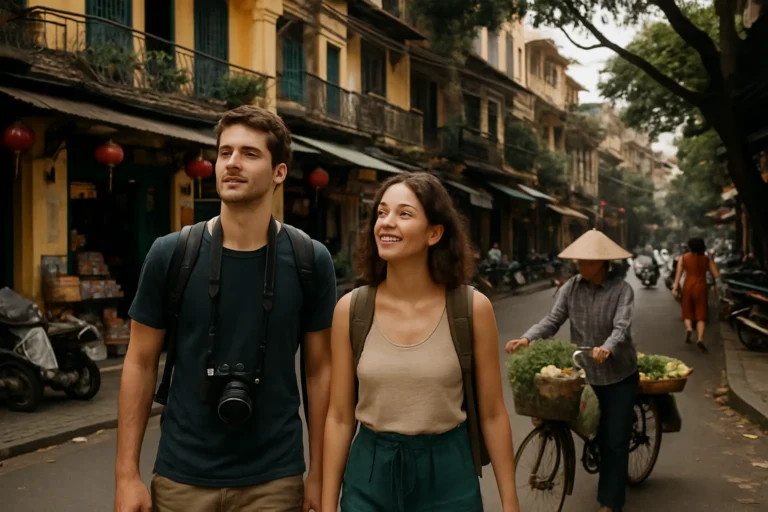
Vietnam has a well-established backpacker infrastructure, and it’s genuinely excellent value for money. But the country has evolved significantly, and Hanoi in particular now offers a full spectrum of experiences — from street food that costs almost nothing to sophisticated restaurants, boutique hotels, and cultural experiences that rival anywhere in the region. The budget traveler and the more comfort-focused traveler can both find exactly what they’re looking for.
Vietnam Is Stuck in the Past
This is perhaps the most persistent and most damaging misconception. Vietnam is a young, dynamic, rapidly developing country with a median age well below many Western nations. Hanoi has a thriving arts scene, a growing tech sector, a café culture that rivals any city in Asia, and a generation of young Vietnamese people who are deeply connected to global trends while remaining proud of their own heritage. The country deserves to be seen beyond outdated associations with its twentieth-century conflicts. As Travelfish puts it, Vietnam should be embraced for its contemporary flair rather than filtered through stereotypes that no longer apply.
Eating Authentically in Hanoi: Where and How
Food in Hanoi is not a tourist activity. It’s a way of life, and the locals take it seriously. Understanding this changes how you approach eating in the city.
→ Read also: Southeast Asia Decoded: Hanoi 3-Day Itinerary + Vietnam Misconceptions Debunked
The most important rule: follow the crowds. If a street food stall has a queue of locals at seven in the morning, that’s where you want to eat. The places with English menus and photos on the wall are convenient, but they’re rarely where the best food is. The best food is often served from a single pot by someone who has been making that one dish for decades.
Morning is the most important meal time in Hanoi. Pho is traditionally a breakfast food, and eating it at a proper street stall — low plastic stools, a steaming bowl arriving within seconds of sitting down, a plate of fresh herbs and bean sprouts on the side — is one of those travel experiences that stays with you. Bún chả is another morning or lunchtime staple, made famous internationally but best eaten in the city where it originated.
For coffee, Hanoi has its own distinct culture. Cà phê trứng — egg coffee — is a Hanoian invention: strong Vietnamese coffee topped with a creamy, whipped egg yolk mixture that tastes like a warm dessert. It sounds unusual. It’s wonderful. The café district around Dinh Tien Hoang and the streets near Hoan Kiem Lake are good places to start exploring the coffee scene, but again, wandering into residential neighborhoods will reveal the places where locals actually go.
Street food tours are a legitimate way to navigate the food scene if you’re new to the city, but choose ones led by local guides rather than large tourist operators. The difference in experience is significant — you’ll end up in places you’d never find on your own, eating things you might not have ordered independently, and learning about the food from someone who grew up eating it.
Cultural Etiquette That Will Make Your Trip Better
Vietnam has a rich set of cultural norms, and being aware of them isn’t just polite — it genuinely improves your experience. Locals notice when visitors make an effort, and that effort opens doors.
- Dress modestly at temples and pagodas. Shoulders and knees should be covered. This applies to all genders. Carrying a light scarf or sarong in your bag makes this easy to manage on the go.
- Remove your shoes when entering someone’s home or a place of worship. Look for shoes at the entrance — that’s your signal.
- Use both hands when giving or receiving something, especially from an older person. It’s a small gesture that communicates respect.
- Avoid public displays of frustration. Losing your temper or raising your voice is considered deeply disrespectful in Vietnamese culture. If something goes wrong — a booking error, a miscommunication — stay calm and patient. It will resolve faster.
- Bargaining is normal in markets, but it should be friendly and good-humored. The goal is a fair price for both sides, not a victory. If you agree on a price, follow through.
- Ask before photographing people. It seems obvious, but it’s worth saying. A smile and a gesture toward your camera is usually enough to ask permission. Respect the answer if it’s no.
The broader principle behind all of these is straightforward: approach Vietnam with genuine curiosity and humility rather than as a consumer of experiences. The country has a deep and complex history, a living culture that predates most Western nations, and people who are warm and welcoming to travelers who show up with respect.
Planning Your Time: The Slow Travel Mindset in Practice
If you’re planning a trip to Hanoi with a slow travel approach, the first thing to do is resist the urge to over-schedule. Give yourself at least four or five days in the city — ideally more. Spend the first day or two getting oriented without any agenda. Walk. Get lost. Eat when you’re hungry. Find a café you like and sit in it for a while.
By day three, you’ll start to notice things. A street you want to explore more. A neighborhood that felt interesting as you passed through. A dish you want to try again. This is when slow travel starts to work — when the city begins to feel familiar enough that you can move through it with intention rather than anxiety.
Day trips from Hanoi are excellent and easy to arrange. Ha Long Bay is the obvious one, and it’s genuinely spectacular — the karst landscape rising from the water is one of those sights that earns its reputation. But there are also less-visited options: the highlands around Mai Chau, the ancient capital of Hoa Lu, or the wetlands at Van Long. Vietnam’s plan-as-you-go infrastructure means you can often arrange these trips with a day or two of notice, which suits the spontaneous traveler perfectly.
The slow travel philosophy applied to Vietnam isn’t about seeing less — it’s about seeing more clearly. It’s about choosing depth over breadth, returning to the same pho stall three mornings in a row because the owner has started to recognize you, learning the name of the street you’ve been walking down every day, and leaving with the feeling that you actually knew a place rather than just passed through it. That’s what Hanoi offers, if you give it the time it deserves.
This article was produced with AI assistance and reviewed editorially.


Slow Travel Through Southeast Asia: Discovering Hanoi’s Soul and Vietnam Beyond the Guidebook

Vietnam Beyond the Postcard: What You Actually Need to Know About Hanoi


