
Asia
Southeast Asia Decoded: Hanoi 3-Day Itinerary + Vietnam Misconceptions Debunked
Explore Hanoi in 3 days with a practical itinerary from a long-term resident. Discover cultural sites, street food, and neighborhoods while debunking common Vietnam misco

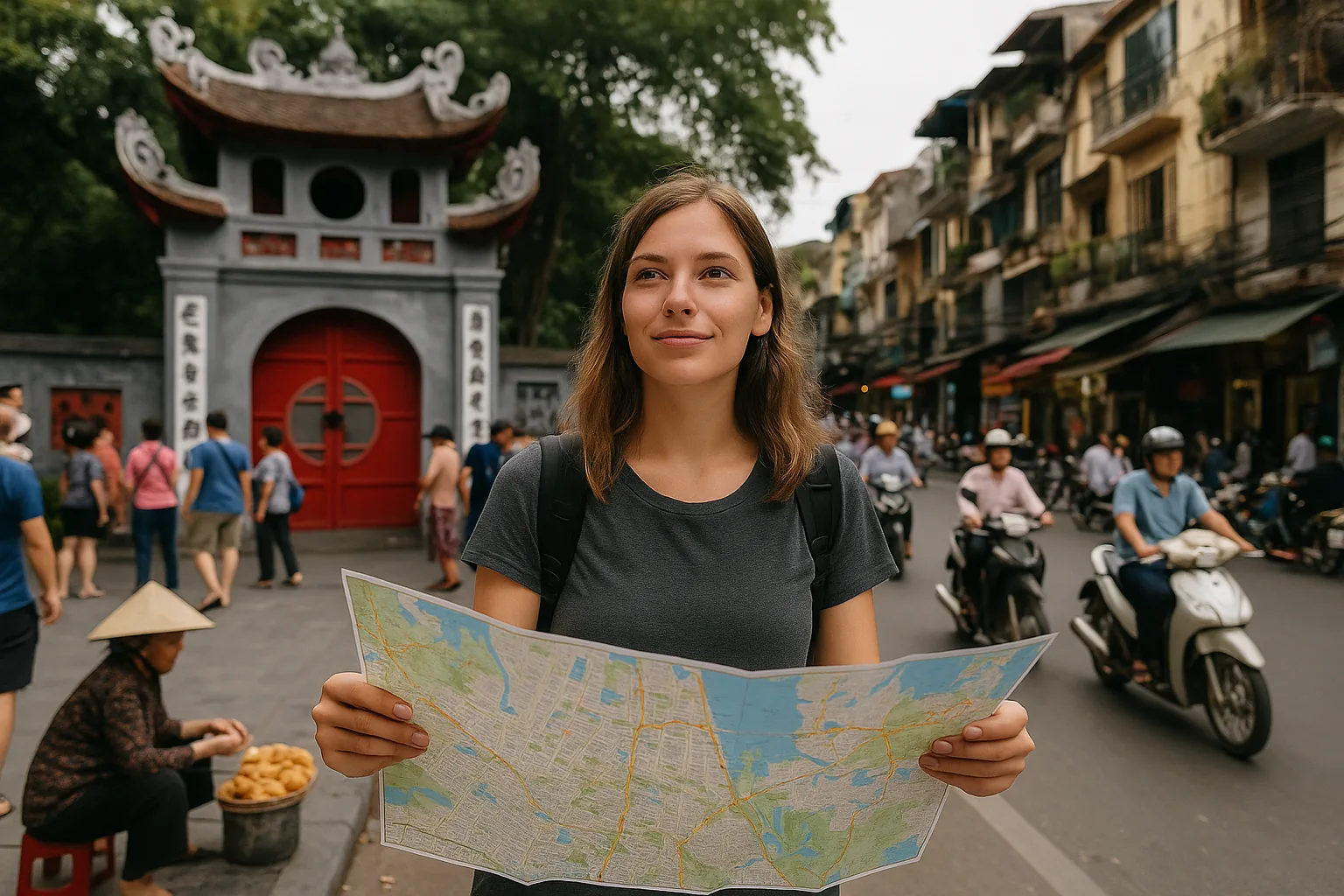
Hanoi doesn’t ease you in gently. The moment you step outside, the city grabs you — motorbikes weaving past in every direction, the smell of phở drifting from a sidewalk stall, a vendor balancing baskets on a shoulder pole, and somewhere in the background, the quiet shimmer of a lake between ancient trees. If you’ve been putting off this city because you’re not sure where to start, a solid Hanoi 3 day itinerary is genuinely all you need to unlock one of Southeast Asia’s most layered, surprising, and deeply human capitals. But before you plan a single morning, it’s worth clearing up a few things people tend to get wrong about Vietnam — because the misconceptions are real, and they stop a lot of young travelers from showing up at all.
What People Get Wrong About Vietnam Before They Arrive
Vietnam has a reputation that doesn’t always match reality. Some travelers arrive braced for chaos, scams, and stomach trouble. Others assume it’s just another cheap beach destination. Both camps tend to leave with their assumptions completely rearranged.
The most common fear is safety. Vietnam is, by most measures, a very safe country for solo travelers — including solo women. Petty theft exists in any major city, and you should keep your phone in your pocket on busy streets, but the kind of serious crime that travelers dread is genuinely rare. The bigger risk is crossing the road without understanding how traffic flows — and that’s a learnable skill, not a danger sign.
Speaking of traffic: yes, Hanoi is loud and fast and full of motorbikes. But the chaos is actually organized. Drivers anticipate each other. The trick is to walk at a steady, predictable pace and let traffic flow around you. Don’t freeze. Don’t sprint. Just move calmly, make eye contact if you need to, and you’ll be fine within a day.
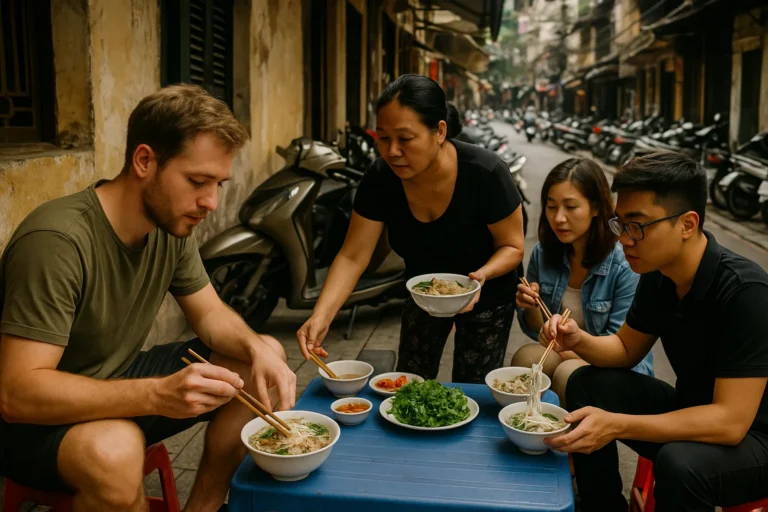
Then there’s the food anxiety. Some travelers worry about street food — hygiene, unfamiliar ingredients, the unknown. This is where the misconception really costs people something. Vietnamese street food is some of the most carefully prepared, freshly made food you’ll encounter anywhere in the world. Stalls with high turnover are almost always a safer bet than a quiet restaurant with a laminated tourist menu. Look for the places where locals are already eating. That’s your best guide.
People also assume the language barrier will be a wall. It won’t be. Vietnamese is tonal and genuinely difficult to learn quickly, but in Hanoi — especially in the Old Quarter — enough English is spoken to get by. Learning a few words (cảm ơn for thank you, xin chào for hello) goes a long way in terms of warmth and connection, even if your pronunciation makes people smile.
Finally, there’s the assumption that you need weeks to experience Vietnam properly. You don’t. Three focused days in Hanoi can give you a real sense of the city’s culture, history, and spirit — if you know where to direct your energy.
Understanding Hanoi Before You Walk Its Streets
Hanoi is a city of around 8.6 million people, and it carries centuries of history in its layout. You’ll find colonial architecture from the French period sitting beside ancient temples, still lakes reflecting pagoda rooftops, and a tightly packed Old Quarter where the street names still reflect the trades that once defined them — Hàng Bạc (silver), Hàng Gai (silk), Hàng Đường (sugar). The city doesn’t try to hide its layers. They’re all visible at once, sometimes on the same block.
What makes Hanoi distinct from other Southeast Asian capitals is its pace — faster than you’d expect from a city this old, but more deliberate than somewhere like Ho Chi Minh City. There’s a northern reserve to the culture here. People are proud of their city. They’re not always immediately effusive with strangers, but genuine curiosity and respect open doors quickly.
Geographically, most of what you want to see is walkable or a short ride away. The Old Quarter sits at the heart of things, with Hoan Kiem Lake acting as a natural landmark and gathering place. Getting oriented around the lake first makes everything else easier to navigate.
👉 Read also: Vietnam Beyond the Stereotypes: Hanoi in 3 Days + 11 Debunked Misconceptions
Your Hanoi 3 Day Itinerary: Day One — The Old Quarter and the Lake
Start early. Hanoi mornings have a quality that disappears by mid-morning — a softness in the light, an energy that’s active but not yet overwhelming. Get to Hoan Kiem Lake by 7am if you can. You’ll find people doing tai chi, couples walking, older residents doing their morning exercises. It’s one of those rare moments in a city where you feel like you’re seeing something real rather than something performed for visitors.
The red bridge leading to Ngoc Son Temple on the lake’s small island is worth crossing early, before the crowds build. The temple is modest in size but rich in atmosphere — incense, offerings, the sound of the city muffled by water and trees. It sets a tone for the day.
From the lake, head north into the Old Quarter. This is where you’ll spend most of your morning, and the best approach is to simply wander. Pick a direction and follow it. The streets are narrow, the buildings lean close, and around every corner there’s something worth pausing for — a woman selling flowers from a bicycle, a family running a noodle shop out of their front room, a tailor working in a doorway. Don’t rush this.
For breakfast, find a local phở stall. Look for plastic stools, a steaming pot, and a queue of people who clearly know what they’re doing. A bowl of phở bò (beef noodle soup) costs almost nothing and will fuel you for hours. This is the meal Hanoi does better than anywhere else in the world.
In the afternoon, make your way to Hanoi Train Street — a narrow residential lane where a working railway line runs close enough to the houses that residents have to pull their chairs inside when a train passes. It’s become well-known among travelers, and while it’s more visited than it used to be, the experience of watching a train roll through what looks like someone’s living room is still genuinely striking. Go in the late afternoon for the best light.
End the day in the Old Quarter as the night market sets up. Beer in Hanoi is famously affordable — around 50 cents a glass at a street stall — and sitting on a low plastic stool with a cold bia hơi (fresh draft beer) while the city moves around you is one of those experiences that costs almost nothing and stays with you for years.
Day Two — Temples, History, and the West Lake
Day two is where you go deeper. Start with the Temple of Literature (Văn Miếu), one of Hanoi’s most significant historical sites. Built in the 11th century, it served as Vietnam’s first national university and remains a place of quiet, considered beauty. The courtyards are peaceful, the stone steles listing the names of doctoral graduates across centuries are remarkable to stand in front of, and the architecture is a genuine window into pre-colonial Vietnamese culture. Go in the morning before tour groups arrive.
From there, consider visiting the Vietnam Museum of Ethnology if you want to understand the country’s extraordinary cultural diversity. Vietnam has 54 recognized ethnic groups, and this museum presents their traditions, architecture, and daily life with real depth. It’s one of the best ethnographic museums in Southeast Asia, and it’s often overlooked by travelers who stick to the Old Quarter.
In the afternoon, head to West Lake (Hồ Tây). This is where Hanoians come to breathe. The lake is large, the surrounding streets are lined with cafés and restaurants, and the atmosphere is noticeably more relaxed than the city center. Find a lakeside café, order a Vietnamese iced coffee (cà phê sữa đá), and just sit for a while. Some of the best travel moments are the ones where you stop trying to see things and simply exist somewhere.
The Tran Quoc Pagoda, sitting on a small island connected to the West Lake shore, is one of the oldest Buddhist temples in Hanoi. It’s still an active place of worship, and the combination of the water, the ancient architecture, and the smell of incense makes it one of the most atmospheric spots in the city. Dress respectfully — shoulders and knees covered.
👉 Read also: Hanoi in 3 Days: A Local's Itinerary (From a Repeat Visitor)
For dinner, explore the streets around Hàng Gai and look for a bún chả restaurant. This Hanoi specialty — grilled pork patties served with rice noodles, fresh herbs, and a dipping broth — is one of the city’s defining dishes. It’s simple, perfectly balanced, and deeply local.
Day Three — Beyond the Tourist Trail
By day three, you’ve got your bearings. Use that confidence to go somewhere less mapped. The French Quarter offers a completely different visual language — wide boulevards, grand colonial buildings, tree-lined streets that feel almost European until a motorbike cuts through the frame. The Hanoi Opera House is worth seeing from the outside, and the surrounding streets are good for a slow morning walk.
If you haven’t yet visited the Ho Chi Minh Mausoleum complex, this is the morning for it. The mausoleum itself requires respectful dress and quiet behavior, and it’s a genuinely significant cultural and political site regardless of your personal views on history. The surrounding gardens and One Pillar Pagoda nearby add to the experience. This area gives you a sense of how the Vietnamese relationship with national history and identity is lived, not just commemorated.
Spend your last afternoon back in the Old Quarter, but this time with a specific goal: find something you almost missed. Talk to a shopkeeper. Sit in a tea house. Follow a sound or a smell into an alley. The best thing about a well-structured Hanoi 3 day itinerary is that it gives you enough context to know when to put the map away.
Practical Things Worth Knowing Before You Go
Getting around Hanoi is easier than it looks. Ride-hailing apps work well here and take the stress out of negotiating fares. Grab is the dominant platform, and it’s reliable, affordable, and easy to use even without a local SIM. For longer distances, the app gives you a price upfront — no surprises.
For shorter distances in the Old Quarter, walking is almost always faster than riding. The streets are narrow, traffic slows everything down, and the neighborhood rewards the kind of attention you can only give it on foot.
On cultural norms: remove your shoes when entering a home or temple if others are doing so. Dress modestly at religious sites. Keep your voice down in temples and around older residents. Bargaining is normal in markets but should be friendly, not aggressive. A smile goes further than you’d think.
The best time to visit Hanoi is generally between October and April, when the weather is cooler and drier. Summer brings heat and the possibility of heavy rain, though the city is absolutely worth visiting year-round. Pack layers for the cooler months — northern Vietnam winters can be genuinely chilly, which surprises a lot of travelers expecting tropical heat.
For a deeper dive into planning, Dustin Kemp’s Hanoi guide at Indie Traveller — written from the perspective of someone who has lived in Vietnam for over a decade — is one of the most grounded, honest resources available.
Why Hanoi Stays With You
There’s a quality to Hanoi that’s hard to define until you’ve been there. It’s not the most immediately beautiful city in Southeast Asia. It’s not the easiest or the most polished. But it has a texture — a density of history, culture, flavor, and human life — that makes it one of the most genuinely rewarding cities you can spend time in as a young traveler.
Three days won’t make you an expert on Hanoi. But if you follow a thoughtful Hanoi 3 day itinerary, stay curious, eat where the locals eat, and resist the urge to rush from landmark to landmark, you’ll leave with something more valuable than a checklist. You’ll leave with a real sense of a place — its rhythm, its contradictions, its warmth. And you’ll almost certainly start looking up flights back before you’ve even landed at your next destination.
This article was produced with AI assistance and reviewed editorially.


Southeast Asia Decoded: Hanoi 3-Day Itinerary + Vietnam Misconceptions Debunked

Central Asia’s Silk Road Cities: Samarkand & Bukhara—What Makes Each One Different


