
Spain
Barcelona & Beyond: Best Beaches, Neighborhoods & Where to Actually Stay in 2026
Find the best neighborhoods and accommodation options for your Barcelona trip. Discover authentic beaches, local vibes, and how to avoid tourist traps while staying centr

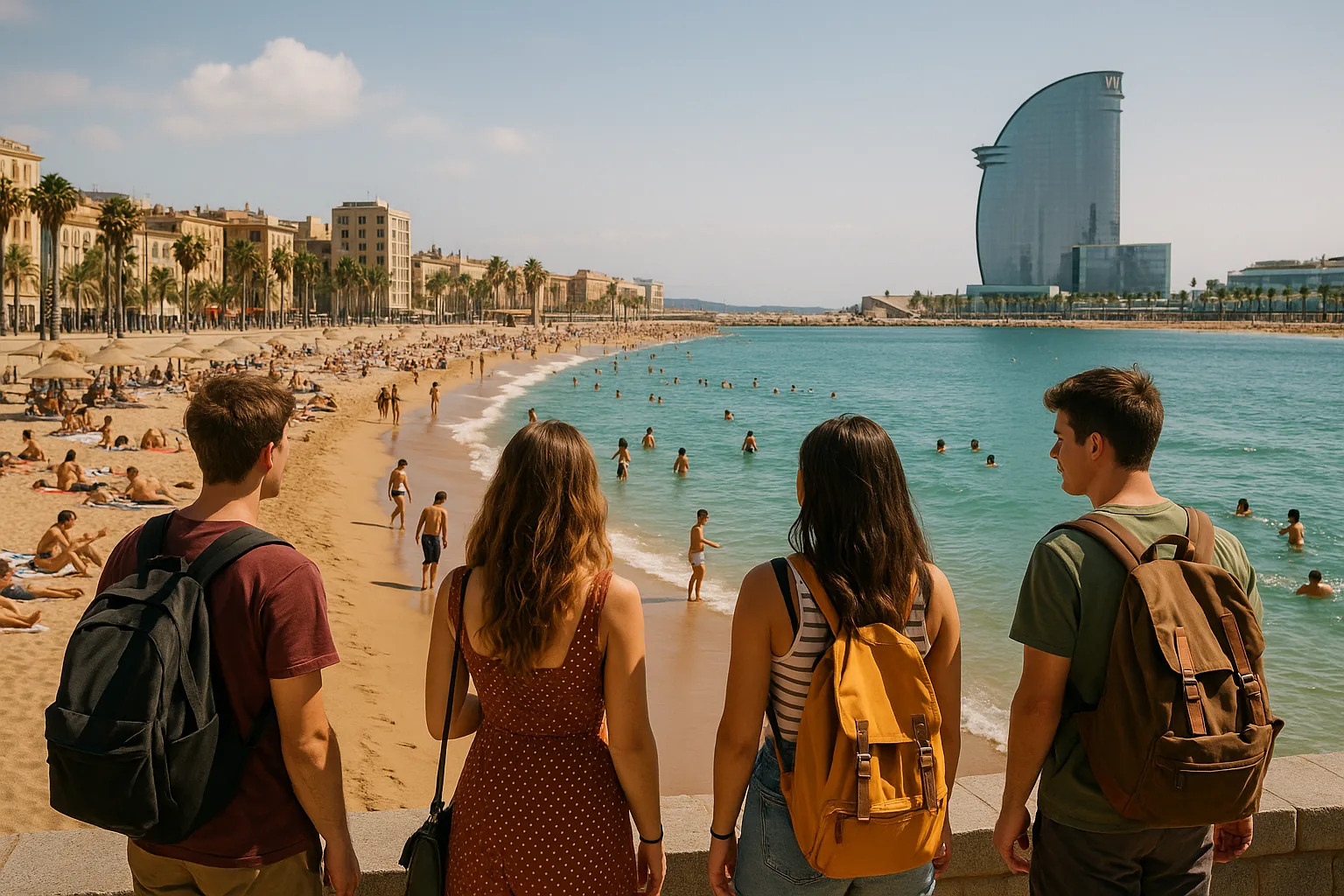
Barcelona is one of those cities that grabs you from the moment you arrive — the warm air, the noise, the colors, the feeling that something interesting is always happening just around the corner. It has extraordinary architecture, outstanding food, beaches right in the city, and nightlife that runs until dawn. But here’s the thing: Barcelona is also busier and pricier than it used to be, and if you don’t plan carefully, you can easily end up in a tourist bubble that has almost nothing to do with the real city. That’s why figuring out where to stay in Barcelona — and where to spend your days — matters more than you might think. This guide cuts through the noise and helps you experience the city the way it’s meant to be lived.
Why Barcelona Rewards the Curious Traveler
There’s a version of Barcelona that most visitors see: Las Ramblas, Sagrada Família, Barceloneta beach, sangria in a tourist bar. That version is fine. But it’s only the surface. Underneath it is a city with distinct neighborhoods, each with its own rhythm and personality. A city where locals eat late, stay out later, and have strong opinions about where you should and shouldn’t spend your time.
The good news is that Barcelona is genuinely accessible. Its metro system is efficient, the streets are walkable, and the layout makes it easy to move between the beach, the old town, and the wider city without burning half your day on transport. Once you understand how the city is organized, you stop being a tourist and start feeling like a temporary resident — which is the best version of any trip.
The key is choosing your base wisely. Where you sleep shapes everything: how far you walk, what you stumble across on a morning coffee run, which market you pass on the way home. Get that right, and the rest tends to fall into place.
Barcelona’s Beaches: More Than Just Barceloneta
Ask a local about the best beaches in Barcelona and you might get a knowing smile. There’s a running joke among residents that the best beaches in Barcelona are actually outside of Barcelona — a nod to the quieter coves and stretches of coastline a short train ride from the city. But within the city itself, there’s more variety than most visitors realize, and the right beach depends entirely on what kind of day you’re after.
Barceloneta: The Classic Choice
Barceloneta brings the classic buzz and a broad shoreline that’s hard to beat for energy and convenience. It’s the beach most people picture when they think of Barcelona — wide, sandy, lined with chiringuitos (beach bars), and always lively. If you want to feel the full pulse of the city by the sea, this is where you come. Just arrive early in summer, because by midday it fills up fast.
Nova Icaria and Bogatell: For a Calmer Vibe
If you’d rather have more space to breathe, Nova Icaria and Bogatell are excellent alternatives. These beaches sit just north of Barceloneta and offer calmer water and noticeably fewer crowds. They’re popular with locals who want to actually relax rather than navigate through a sea of tourists. The atmosphere is more laid-back, the vibe is more neighborhood-friendly, and you’ll find it much easier to claim a good spot on the sand.
Mar Bella: Where Young Barcelona Goes
Platja de la Mar Bella is one of the most modern, cosmopolitan, and authentic beaches in the city. It represents a side of Barcelona that feels young and sporty — you’ll find beach volleyball, skate parks nearby, and a crowd that’s genuinely local. It’s the kind of beach where you feel like you’ve discovered something rather than been directed to it. If you want to meet people your age who actually live in Barcelona, Mar Bella is a strong choice.
Sant Sebastià, Sant Miquel, and Llevant: Relaxed and Shallow
For a more relaxed pace — or if you’re traveling with a mixed group that includes less confident swimmers — Sant Sebastià, Sant Miquel, and Llevant are worth knowing about. These beaches offer more relaxed space and shallower water, making them comfortable for a long, unhurried afternoon. Sant Sebastià in particular sits at the quieter southern end of the beach strip and has a more local feel than the central stretches.
👉 Read also: Barcelona's Best Cafes & Cocktail Bars: A Local's 2026 Guide to Living Like a Catalan
Timing Your Beach Days
The best times to visit Barcelona’s beaches are late May, June, September, or early October. The water is warm enough to swim, the crowds are manageable, and the city itself is more enjoyable — restaurants are easier to get into, prices are slightly lower, and you’re not competing with half of Europe for a square meter of sand. July and August are peak season; the beaches are packed and the heat can be intense. If that’s when you’re going, plan your beach mornings early and spend midday in the shade.
Neighborhoods Worth Knowing
Barcelona is a city of barrios — neighborhoods — and choosing the right one as your base can completely change your experience. Here’s what you need to know about the areas that matter most for young travelers.
Gothic Quarter: History at Your Doorstep
The Gothic Quarter is the oldest part of the city, a dense maze of narrow medieval streets that feels like stepping into another century. It’s central, walkable to almost everything, and genuinely atmospheric — especially at night, when the stone alleyways glow with warm light. The trade-off is that it can feel very touristy during the day. The trick is to go deeper into the quarter, away from the main pedestrian routes, where you’ll find smaller bars and local life still going strong.
Hotels here include the Mercer Hotel, a thoughtfully restored 4-star property built into Roman walls, and the Grand Hotel Central, which has a rooftop pool and is a great option if you want to treat yourself while staying in a central location.
Eixample: Gaudí Country
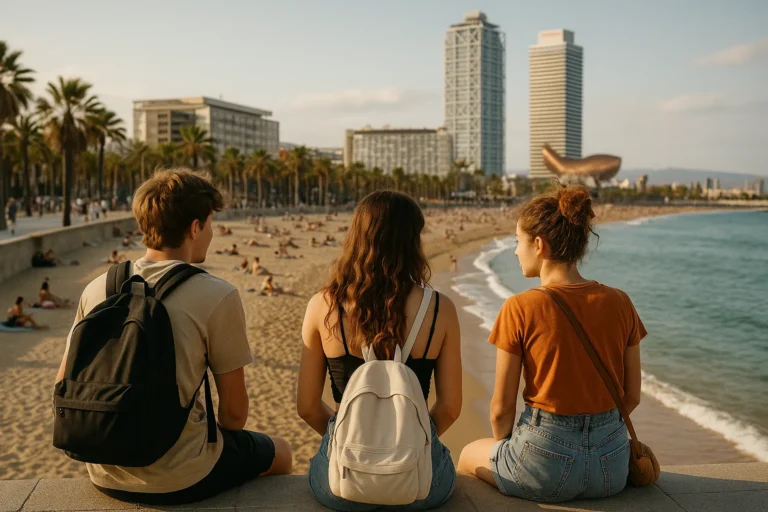
The Eixample district is Barcelona’s modernist heartland — wide boulevards, geometric city blocks, and some of the most remarkable architecture you’ll ever see on a casual walk. It’s also one of the best neighborhoods for food, with a huge range of restaurants catering to every budget. Staying here puts you close to Sagrada Família, Passeig de Gràcia, and Casa Batlló, without being trapped in the tourist core.
Accommodation options in Eixample range from the luxurious El Palace (a classic 5-star that has been welcoming guests for over a century) to the more accessible Praktik Rambla, a 3-star hotel that delivers solid value without sacrificing style or location. Cotton House, a 5-star hotel near Passeig de Gràcia, is worth mentioning for anyone who wants something genuinely special — it’s housed in a former cotton guild building and has a character that most hotels simply can’t manufacture.
Gràcia: Local Life, Genuine Character
Gràcia is the neighborhood that locals tend to recommend when friends ask where to actually spend time. It sits just above Eixample and has the feel of a small village that got absorbed into a big city — which is essentially what happened. The streets are quieter, the squares are filled with people drinking coffee and talking, and the bars are the kind of places where regulars have their own stools. If you want to experience Barcelona without the tourist layer, Gràcia is one of the best places to base yourself or at least spend an evening.
El Raval: Creative, Edgy, Evolving
El Raval sits on the western side of Las Ramblas and has gone through a significant transformation over the past couple of decades. It’s now one of the most culturally diverse and creatively active parts of the city — home to the MACBA contemporary art museum, independent bookshops, vintage stores, and a restaurant scene that rewards exploration. It can feel a little rough around the edges in places, but that’s part of its appeal. It’s not polished, and that’s exactly why it’s interesting.
Poblenou: The New Creative Hub
Poblenou is Barcelona’s former industrial district, now reinvented as a hub for tech companies, design studios, and creative spaces. It has a relaxed, slightly hipster energy that feels genuinely contemporary — wide streets, street art, coffee shops that take their craft seriously, and easy access to the northern beaches including Mar Bella and Bogatell. If you’re a digital nomad or just someone who likes a neighborhood with a bit of edge and a lot of character, Poblenou is worth serious consideration.
👉 Read also: Barcelona Like a Local: Best Cafes & Cocktail Bars (2025–2026 Guide)
Where to Stay in Barcelona: Matching Your Style
Choosing where to stay in Barcelona comes down to two things: what kind of traveler you are and what kind of trip you want. The city has options across every budget, but location matters as much as price.
If you want to be close to the beach, Hotel Arts near the Port Olímpic waterfront is one of the most well-positioned options in the city. Waking up a short walk from the Mediterranean is a genuinely good feeling, and the surrounding area has restaurants and bars that stay busy well into the night.
For couples or anyone who wants a romantic, central base, Hotel Bagués on Las Ramblas offers a polished experience in one of the city’s most iconic locations. Las Ramblas itself can be overwhelming, but having it as your front door — rather than a place you have to navigate to — changes your relationship with it entirely.
Budget travelers should look at hostels in Eixample and Gràcia, where you’ll find well-run social spaces, private rooms at reasonable prices, and easy access to the metro. The hostel culture in Barcelona is strong, and staying in one is genuinely one of the better ways to meet other travelers and get honest local tips from staff who actually live in the city.
For longer stays or groups, apartment rentals in Poblenou or Gràcia offer more space, a kitchen, and a more immersive local experience. You’ll shop at the neighborhood market, figure out which café does the best breakfast, and start to feel like you actually live there — which is the whole point.
Practical Tips for Staying Smart in Barcelona
Barcelona rewards preparation. A few things worth knowing before you arrive:
- Book accommodation early if you’re visiting between June and August. The city fills up quickly, and last-minute options tend to be expensive or poorly located.
- The metro is your best friend. It’s fast, cheap, and connects all the major neighborhoods. Get a T-Casual card (a multi-trip card) and you’ll save money compared to buying individual tickets.
- Avoid eating directly on Las Ramblas. The restaurants there are almost universally overpriced and underwhelming. Walk one street in either direction and the quality improves dramatically.
- Barcelona runs on a late schedule. Lunch is typically from 2pm, dinner rarely starts before 9pm, and nightlife doesn’t get going until midnight. Adjust your rhythm accordingly and you’ll enjoy the city far more.
- The beach neighborhoods and the Gothic Quarter are both prime areas for pickpockets, especially in summer. Keep your valuables secure and stay aware in crowded areas.
- If you have an extra day or two, consider a day trip up the coast. The locals aren’t wrong — some of the most beautiful swimming spots are just outside the city, reachable by regional train in under an hour.
Making the Most of Your Time
The travelers who get the most out of Barcelona are the ones who treat it as a city to inhabit rather than a checklist to complete. Yes, see the Sagrada Família — it earns every bit of its reputation. Yes, walk through the Gothic Quarter at night. But also: find a square in Gràcia on a warm evening and just sit there. Wander into Poblenou without a plan. Take the metro to Mar Bella on a Tuesday morning when it’s quiet. Eat at a place with no English menu and figure it out.
Knowing where to stay in Barcelona is really about knowing what kind of trip you want to have. The city is big enough to offer almost any experience, and every neighborhood has something worth discovering. The key is to choose a base that puts you close to the version of Barcelona you actually came for — and then let the city do the rest. A local’s complete guide to Barcelona’s beaches is a great starting point if you want to go deeper on the coastline before you arrive.
Barcelona doesn’t need to be rushed. It needs to be felt. Give it a few days, stay somewhere that makes you want to come home at the end of the day, and you’ll leave with the kind of memories that are genuinely hard to explain to anyone who wasn’t there.
This article was produced with AI assistance and reviewed editorially.


Volunteering in Mexico: Finding Authentic Community Work + Where to Base Yourself

Escape Ibiza’s Party Scene: Hidden Beaches, Local Spots & Quieter Things to Do


