
Asia
Japan & Turkey for Budget Backpackers: Fukuoka & Bodrum Neighborhood Guides
Discover budget backpacking in Japan and Turkey through Fukuoka and Bodrum. Neighborhood guides, local food, accommodation tips, and cost breakdowns for young travelers.

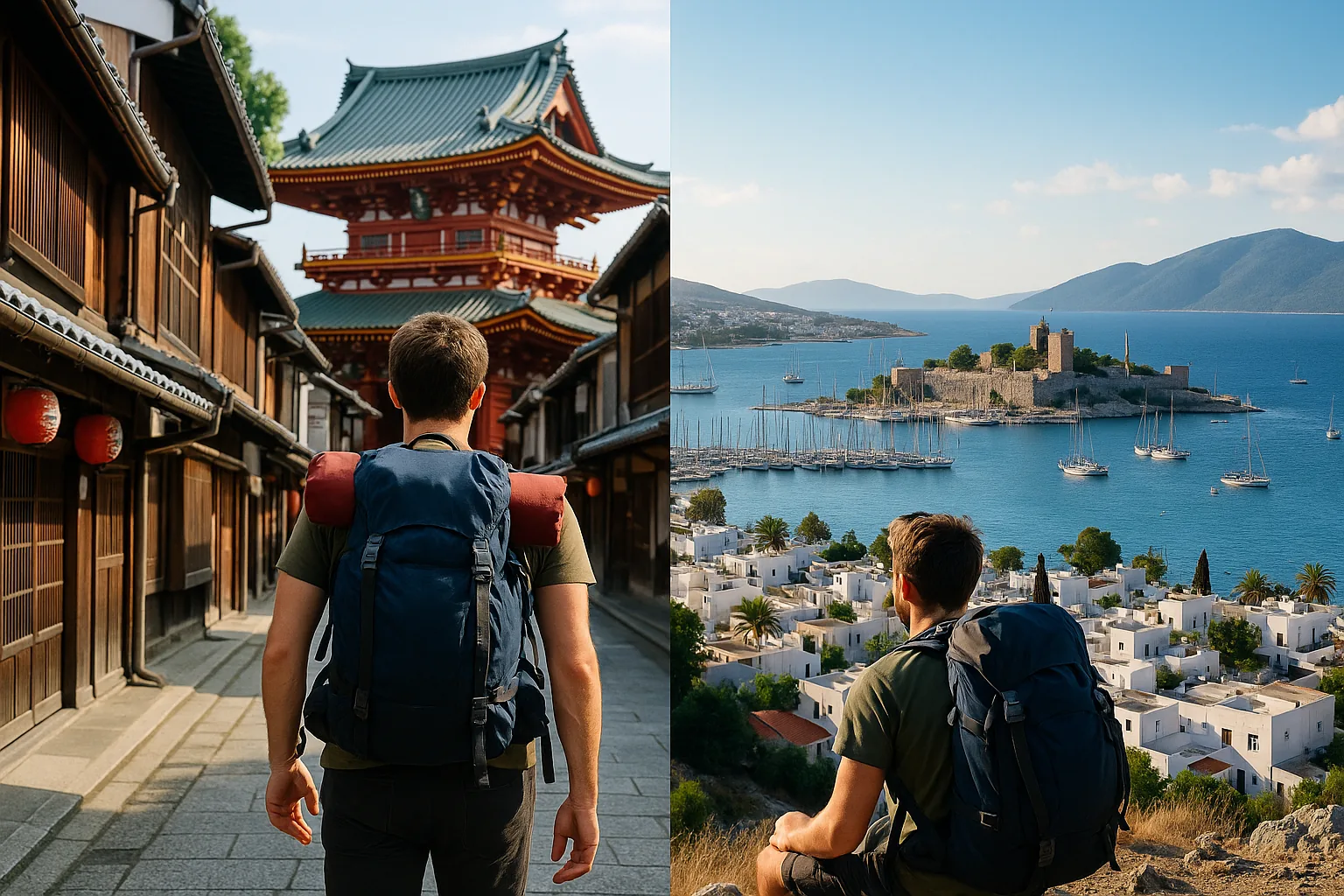
If you’re serious about budget backpacking Japan Turkey-style adventures — the kind where you actually live in a city rather than just photograph it — then two destinations deserve a lot more of your attention than they typically get: Fukuoka on Japan’s southern island of Kyushu, and Bodrum on Turkey’s Aegean coast. Neither is a secret exactly, but both sit in the shadow of more famous neighbours, which means lower prices, more authentic encounters, and a travel experience that feels genuinely yours rather than something lifted from a highlight reel.
Why Fukuoka and Bodrum Make the Perfect Backpacker Pairing
On the surface, a Japanese city and a Turkish coastal town might seem like an odd couple. But spend a little time in each and you’ll notice something they share: a warmth that bigger, more touristy destinations often lose. Fukuoka and Bodrum both reward the traveler who slows down, wanders without a strict agenda, and eats where the locals eat. They’re cities where the neighbourhood you choose to stay in shapes your entire experience — which is exactly why this guide focuses on where to be, not just what to see.
There’s also a practical logic to pairing them. If you’re planning a longer trip across Asia and Europe — a route that many young backpackers piece together — stopping in Fukuoka before crossing into South Korea or Southeast Asia, then looping back through Turkey on your way west, makes genuine geographic and financial sense. Both cities give you serious value without making you feel like you’re roughing it unnecessarily.
Fukuoka: Japan’s Most Underrated City
Fukuoka is the capital of Kyushu Prefecture and Japan’s sixth-largest city, with just over 2.5 million people in the metro area. That’s not a small town — it’s a fully functioning, culturally rich urban centre with great transit, a lively food scene, and a distinct personality. Yet most international backpackers still fly straight to Tokyo or Osaka, leaving Fukuoka delightfully uncrowded by comparison.
The city has been ranked among the world’s most livable cities in quality-of-life surveys, and once you spend a few days there, it’s easy to understand why. It has the infrastructure and cultural depth of a major Japanese city without the exhausting scale or tourist density of the capital. Streets are walkable, people are approachable, and the pace feels genuinely human.
For budget travelers, one of the most striking things about Fukuoka is cost. Rents in Fukuoka run roughly half of what you’d pay in Tokyo for a comparable space — and that same principle applies to accommodation, food, and daily spending. You get the full Japan experience — the temples, the street food, the convenience stores, the local izakayas — without the Tokyo price tag. That’s a significant difference when you’re stretching a travel budget across weeks or months.
Choosing Your Neighbourhood in Fukuoka
Fukuoka is divided into two historic areas that have since merged into one city: Hakata and Tenjin. Understanding the difference between them helps you pick the right base for your style of travel.
Hakata is the older, more traditional side of the city. It’s where you’ll find the main train station — one of the best-connected in western Japan — as well as historic temples, covered shopping arcades, and the famous yatai, the open-air food stalls that line the riverbanks at night. If you want to feel the historic pulse of the city and stay close to transport links for day trips, Hakata is your neighbourhood. It’s also typically where you’ll find the most budget-friendly accommodation options, from hostels to compact guesthouses.
Tenjin sits just west of Hakata and functions as the commercial and social heart of the city. It’s busier, younger-feeling, and packed with cafés, independent shops, and a nightlife scene that doesn’t try too hard. If you want to be in the middle of everything social, Tenjin is the place. The two areas are connected by a short metro ride or a very walkable distance, so you’re never really cut off from either.
Beyond these two central hubs, neighbourhoods like Ohori — built around a large park and lake — offer a quieter, more residential feel that’s ideal if you’re staying longer and want to experience Fukuoka the way its residents do. Waking up early for a run around Ohori Park, grabbing coffee from a local spot, and spending the afternoon exploring at your own pace: that’s the kind of travel that actually stays with you.
👉 Read also: Turkey's Coastal Towns: Where to Stay in Bodrum & Other Aegean Gems
Food Culture: More Than Just Ramen
You cannot talk about Fukuoka without talking about food. Fukuoka is the birthplace of Hakata-style tonkotsu ramen — the rich, pork-bone broth that’s become famous across all of Japan and far beyond. The city takes this seriously. You’ll find ramen shops ranging from tiny counter-seat spots that seat eight people to larger, more modern restaurants, and the quality across the board is remarkable.
But the food culture goes deeper than one dish. The yatai stalls along the Nakasu and Tenjin riverbanks are a Fukuoka institution — small, temporary food stalls that set up in the evenings and serve everything from grilled skewers to seafood to, yes, more ramen. Eating at a yatai isn’t just a meal; it’s a social experience. You sit elbow-to-elbow with strangers, the cook is right in front of you, and conversations happen naturally. It’s one of those travel moments that’s impossible to manufacture and easy to stumble into.
Fukuoka also has a strong culture around mentaiko — spiced pollock roe — which appears in everything from rice bowls to pasta to convenience store onigiri. It’s a local specialty worth trying in as many forms as possible.
Getting Around and Beyond Fukuoka
Fukuoka’s public transport system is clean, reliable, and easy to navigate even without Japanese language skills. The metro covers the main areas, and the JR train network connects you to the rest of Kyushu efficiently. The city also has fewer earthquakes than Tokyo, Yokohama, or Osaka — a practical consideration that matters more than you might think when you’re deciding where to base yourself in Japan.
From Fukuoka, you’re well-positioned to explore the rest of Kyushu. Cities like Nagasaki and Kumamoto are reachable within an hour or two by train, and the island as a whole has a character distinct from Honshu — slightly warmer, slightly more relaxed, and genuinely worth exploring slowly rather than rushing through.
Bodrum: Turkey’s Coastal Gem Beyond the Tourist Circuit
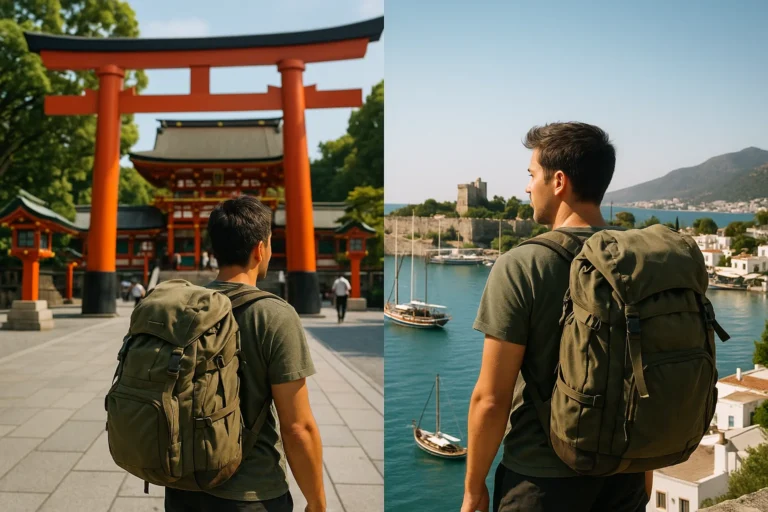
Bodrum sits on a peninsula jutting into the Aegean Sea in southwestern Turkey, and it’s one of those places that looks almost too beautiful to be real. White-washed buildings, turquoise water, a medieval castle rising from the harbour — it has all the visual drama you’d expect. What surprises most first-time visitors is how varied it actually is. The Bodrum Peninsula comprises 17 distinct neighbourhoods, each with its own atmosphere, crowd, and price point. Choosing the right one for budget backpacking Japan Turkey-style travel makes all the difference between an expensive tourist trap and a genuinely memorable experience.
Navigating Bodrum’s Neighbourhoods
The town of Bodrum itself — the central hub — is where most backpackers land first, and it’s a solid base. The harbour area is lively, the covered bazaar is excellent for wandering and snacking, and the Castle of St. Peter dominates the skyline in a way that never gets old. Central Bodrum has the widest range of budget accommodation and the easiest access to ferries and buses heading elsewhere on the peninsula.
But the real magic of Bodrum is in getting out to the smaller neighbourhoods. Gümüşlük is one of the most beloved — a bohemian, low-key village at the western tip of the peninsula known for its sunset views, seafood restaurants built right over the water, and a creative, artistic community. It’s the place to go if you want to feel like you’ve found somewhere special. Prices are more reasonable than the marina areas, and the vibe is relaxed in a way that invites you to stay longer than you planned.
Bitez is worth knowing about as the most family-friendly neighbourhood on the peninsula, with a calm, shallow bay that’s ideal for swimming and water sports. It’s quieter than central Bodrum but close enough to dip into the main town when you want more energy. Budget travelers often find good value here, especially outside the peak summer weeks.
On the more upscale end of the spectrum — useful to know even if you’re not staying there — Yalıkavak is the neighbourhood for marina life, yacht culture, and high-end nightlife. Türkbükü (also known as Göltürkbükü) is quieter and more exclusive, the kind of place associated with celebrity retreats and private pools. These areas are worth a day visit for the scenery, but they’re not where you want to base yourself on a backpacker budget.
👉 Read also: Budget Stays in Japan: Capsule Hotels, Airbnbs & Guesthouses Across Tokyo, Kyoto & Mt. Fuji
If you’re arriving by air, Torba is the closest luxury waterfront area to Bodrum-Milas Airport — roughly 20 minutes away — which makes it a convenient first night option before you figure out where you actually want to settle.
Eating and Drinking Like a Local in Bodrum
Turkish food culture is one of the great joys of travel in this part of the world, and Bodrum is no exception. The key to eating well without spending a lot is to move away from the harbour-front restaurants aimed at tourists and find the spots where local workers and families actually eat. Lokanta-style restaurants — simple, home-cooking places where you point at what you want from a display of prepared dishes — are your best friend. You’ll eat well, spend little, and often end up in conversations with people who are curious about where you’ve come from.
Fresh fish is central to Bodrum’s food culture, and the morning fish market near the harbour is worth visiting early just for the atmosphere. Grilled fish, meze spreads, stuffed vine leaves, and cold ayran on a warm afternoon — this is the kind of eating that makes you feel genuinely connected to a place rather than just passing through it.
Tea culture is everywhere in Turkey, and Bodrum is no different. Çay — black tea served in small tulip-shaped glasses — is offered constantly, in shops, at guesthouses, after meals. Accept it. It’s one of the warmest gestures of hospitality you’ll encounter anywhere in the world.
Moving Around the Peninsula
Getting around the Bodrum Peninsula is straightforward once you understand the dolmuş system — shared minibuses that run fixed routes between the town centre and the various neighbourhoods. They’re inexpensive, frequent during the summer months, and used by everyone. For more flexibility, renting a scooter or bicycle is popular and gives you the freedom to explore quieter coves and viewpoints that you’d never find on a tour bus.
From Bodrum, ferry connections to nearby Greek islands are available during the warmer months, which opens up interesting possibilities if you’re planning a broader Mediterranean loop. The peninsula also sits within reasonable reach of other significant Turkish destinations — ancient ruins, inland valleys, and other coastal towns — making it a natural hub for a longer exploration of the Aegean region.
Practical Notes for Budget Backpacking Japan and Turkey
When it comes to budget backpacking Japan Turkey routes, a few principles apply to both destinations equally. Book accommodation in advance during peak periods — late spring through summer for Bodrum, cherry blossom season and Golden Week for Fukuoka — but outside those windows, you’ll often find better deals by being flexible. Both cities have solid hostel cultures with social common areas, which makes meeting other travelers easy without any effort.
In Fukuoka, convenience stores — konbini — are a legitimate meal strategy. The food quality at Japanese convenience stores is genuinely good, and a full meal can cost very little. In Bodrum, street food and market shopping will stretch your budget further than any restaurant, however modest it looks from the outside.
Both cities reward walking. Some of the best discoveries in Fukuoka happen when you wander away from the main shopping streets and into quieter residential blocks. In Bodrum, getting lost in the narrow whitewashed lanes behind the harbour is practically a travel activity in itself. Resist the urge to plan every hour. The best moments in both cities tend to arrive unscheduled.
For anyone serious about planning the Fukuoka leg of this journey, The Broke Backpacker’s Fukuoka neighbourhood guide is a thorough, regularly updated resource worth bookmarking.
Fukuoka and Bodrum are the kinds of cities that change how you think about travel. Not because they’re the most famous or the most dramatic, but because they’re genuinely livable — places where you stop ticking boxes and start actually being somewhere. That shift, from tourist to traveler, is what budget backpacking is really about. And both of these cities will give it to you, if you let them.
This article was produced with AI assistance and reviewed editorially.


Mountain Towns in the US Rockies: Where to Stay in Vail, Telluride & Glacier National Park

Japan & Turkey for Budget Backpackers: Fukuoka & Bodrum Neighborhood Guides


