
Asia
Hanoi vs. Saigon: Which Vietnamese City Should You Visit First?
Discover which Vietnamese city suits you best. Compare Hanoi’s cultural depth and walkability with Saigon’s modern energy to plan your first Vietnam trip.

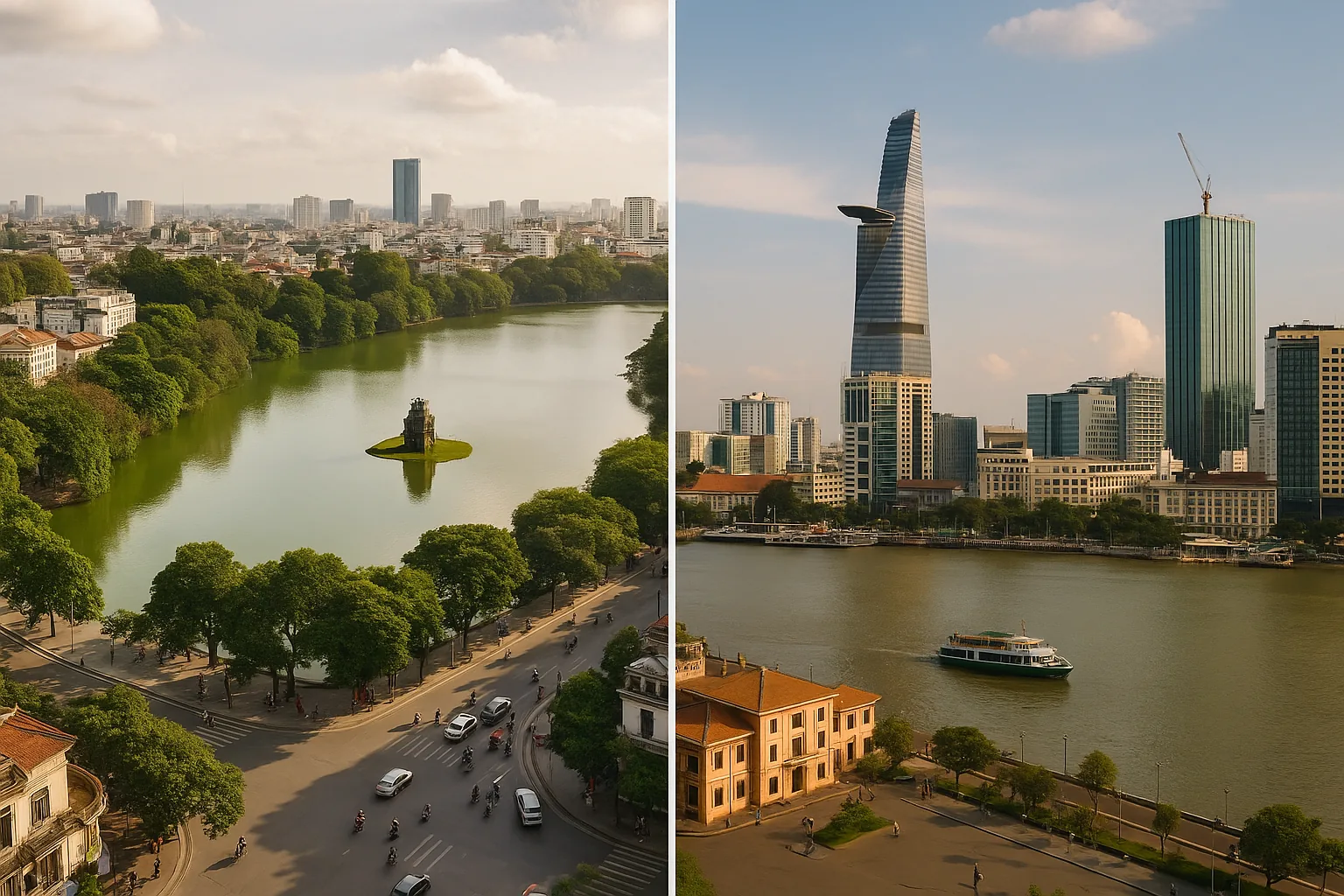
If you’re planning your first trip to Vietnam and staring at a map wondering where to land, you’re not alone. The Hanoi vs Saigon debate is one of the most common dilemmas among first-time visitors to Southeast Asia — and honestly, it’s a great problem to have. Both cities are electric, layered, and completely worth your time. But they are not the same experience, and choosing the right starting point can shape your entire relationship with this country. So let’s break it down properly, without the hype, and help you figure out which city deserves to be your first chapter in Vietnam.
Two Cities, Two Completely Different Vibes
The first thing to understand is that Hanoi and Ho Chi Minh City — still widely called Saigon by locals and travelers alike — are not just geographically distant. They feel like they belong to different eras of the same story. Hanoi is the north: older, cooler in temperature and in character, deeply rooted in tradition. Saigon is the south: louder, faster, buzzing with the kind of restless energy that keeps you up past midnight without realizing it.
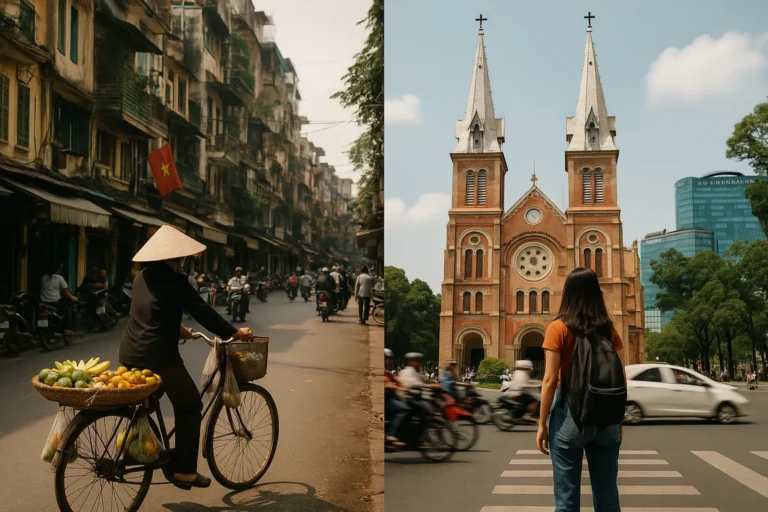
Walk through Hanoi’s Old Quarter on a weekday morning and you’ll find elderly residents doing tai chi by the lake, street vendors selling phở from steaming pots balanced on bicycles, and narrow streets that have been trading in silk, paper, and spices for a thousand years. It’s a city that rewards slowness. Saigon, by contrast, hits you immediately — motorbikes everywhere, skyscrapers catching the light, rooftop bars filling up before sunset. Ho Chi Minh City feels younger, faster, and more energetic, showcasing modern urban life in Vietnam at full volume.
Neither is better. They’re just different conversations, and knowing which one you want to start with makes all the difference.
Why Hanoi Works So Well for First-Time Vietnam Travelers
Here’s a perspective that might surprise you: Hanoi is the city that most experienced travelers recommend as the more distinctly Vietnamese experience. Ho Chi Minh City, for all its energy and appeal, can feel — at least in its central districts — not entirely unlike other major Southeast Asian capitals. It shares a certain cosmopolitan rhythm with Bangkok or Manila. That’s not a criticism; it’s just context.
Hanoi is different in a way that’s harder to replicate. The lakeside morning exercise culture, the plastic stools spilling onto the pavement for a cold bia hơi (fresh draught beer) at the end of the day, the electric tangle of the Old Quarter at night — these are experiences that feel genuinely, specifically Hanoi. They don’t exist in quite the same form anywhere else.
If you’re drawn to history, food traditions, and the kind of travel where a single street can tell you a thousand-year story, Hanoi is calling your name. The city’s streets in the Old Quarter were historically organized by trade — one street for paper, one for tin, one for silk — and that legacy is still visible if you know where to look. You can spend a full day just wandering and never feel like you’ve missed the point.
Hanoi is also the ideal base for some of northern Vietnam’s most celebrated destinations. From here, you can reach Halong Bay for an overnight cruise among limestone karsts rising from emerald water. You can head up to Sapa for mountain trekking through terraced rice fields and villages that feel worlds away from any city. Or you can explore Ninh Binh, a landscape of rivers, caves, and ancient temples that feels almost surreal. If your trip extends beyond the city, Hanoi gives you serious geographical advantages.
The Case for Starting in Saigon
That said, there are real reasons why Saigon makes an excellent entry point — particularly if you’re on a shorter trip or if this is your first time in Southeast Asia altogether.
Ho Chi Minh City is English-friendlier, which matters more than people admit when you’re jet-lagged and trying to figure out a SIM card at midnight. The food scene is more immediately accessible to newcomers — bánh mì from a street cart, cơm tấm (broken rice with grilled pork) at a local spot, a glass of cà phê sữa đá (iced coffee with condensed milk) that will absolutely ruin all other iced coffee for you forever. Saigon’s flavours are bolder, sweeter, and more varied in style, which makes them easier to dive into without much prior knowledge of Vietnamese cuisine.
👉 Read also: Vietnam Beyond the Stereotypes: Hanoi in 3 Days + 11 Debunked Misconceptions
Airport connections are also a practical consideration. Saigon’s Tan Son Nhat International Airport handles a high volume of international routes and can be a more convenient entry point depending on where you’re flying from. If you have under a week in Vietnam and you want to hit the ground running without a steep learning curve, Saigon absorbs you quickly and generously.
Think of it this way: Saigon welcomes you loudly and immediately. Hanoi reveals itself more slowly — and that revelation is deeply rewarding, but it does ask a little more of you.
Hanoi vs Saigon: A Food Lover’s Breakdown
If food is a major part of how you travel — and it should be — then the Hanoi vs Saigon food comparison deserves its own conversation, because these two cities have genuinely distinct culinary identities.
Hanoi’s food culture is more refined and subtle. Northern Vietnamese cooking tends toward less sweetness, more sourness, and a careful balance of flavours that rewards attention. Phở — the fragrant noodle soup that the world has fallen in love with — is widely considered to be at its absolute best in Hanoi. The broth is cleaner, less embellished, and deeply aromatic. Then there’s bún chả: grilled pork patties served with vermicelli noodles and a dipping broth that is, without exaggeration, one of the great dishes of Vietnamese cooking. You’ll only find it done properly in Hanoi.
And then there’s cà phê trứng — egg coffee. A Hanoi original. Robusta coffee topped with a whipped egg yolk and sugar cream that somehow tastes like a dessert and a morning ritual at the same time. You sit in a tiny café, maybe on the second floor overlooking a narrow street, and you understand exactly why people come back to this city again and again.
Saigon’s food scene is wider and more eclectic. The southern palate runs sweeter, and the variety of dishes — from fresh spring rolls to rich coconut-based curries — reflects a more diverse culinary history. Neither city is better for food in absolute terms. But they’re offering you different conversations, and ideally, you’d have both.
Common Misconceptions About Visiting Vietnam
Before you book anything, it’s worth clearing up a few things that tend to put first-time visitors off — or that set unrealistic expectations in the other direction.
Vietnam is extremely safe for tourists. The country has a strong culture of hospitality, and solo travelers — including young women traveling alone — consistently report feeling comfortable and welcomed. Like any major city anywhere in the world, basic street awareness applies, but Vietnam is not a dangerous destination by any reasonable measure.
The traffic is genuinely chaotic by Western standards, especially in both Hanoi and Saigon. Motorbikes move in fluid, unpredictable streams that look terrifying until you learn the key insight: walk slowly and steadily. Don’t stop, don’t run, don’t make sudden movements. The traffic flows around pedestrians like water around a stone. It takes about twenty minutes to get used to, and then it becomes one of the most memorable things about being in Vietnam.
Another misconception worth addressing: you don’t need to speak Vietnamese to have a meaningful, connected experience. English is widely spoken in tourist areas, menus often have photographs or translations, and the warmth of locals tends to bridge any language gap with remarkable efficiency. A smile and a genuine attempt go a long way.
👉 Read also: Hanoi in 3 Days: A Local's Itinerary (From a Repeat Visitor)
Some travelers also worry about the food being too unfamiliar or difficult to navigate with dietary restrictions. In reality, Vietnamese cuisine is naturally abundant in vegetables, fresh herbs, and rice-based dishes, making it one of the more accommodating food cultures in Asia for people with varied diets. Vegetarian options are widely available, particularly near Buddhist temples and in dedicated chay (vegetarian) restaurants.
Finally: Vietnam is not expensive. For budget-conscious young travelers, both Hanoi and Saigon offer genuinely affordable accommodation, street food that costs next to nothing, and transport options that won’t drain your funds. You can eat extraordinarily well, sleep comfortably, and move around without spending anywhere near what you’d spend in Western Europe or Australia.
A Practical Hanoi Framework for First Visits
If you decide Hanoi is your starting point — and there are strong reasons to make that call — here’s a rough framework for making the most of your first few days there.
Day one belongs to the Old Quarter. Walk it slowly. Get lost on purpose. Find a phở spot that’s been open since before you were born, eat at a plastic stool on the pavement, and end the evening with a cold bia hơi at one of the corner spots near Hoan Kiem Lake. Watch the city settle into its night rhythm.
Day two is for depth. Visit the Temple of Literature, Vietnam’s first university, which has been standing since the eleventh century. Wander around Hoan Kiem Lake in the early morning when locals are exercising and the light is soft. Try egg coffee at a traditional café. In the evening, explore the West Lake area — quieter, more residential, and a side of Hanoi that many short-stay visitors miss entirely.
Day three, if you have it, is perfect for a day trip. Ninh Binh is reachable within a couple of hours and offers a landscape of limestone formations, ancient temples, and river boat rides through flooded valleys that will stay with you long after you’ve gone home. Alternatively, use this day to explore Hanoi’s excellent museum scene — the Vietnam Museum of Ethnology is one of the best in Southeast Asia for understanding the country’s cultural complexity.
So — Hanoi vs Saigon: Which One First?
Here’s the honest answer: it depends on what kind of traveler you are right now, not the one you aspire to be.
If you’re visiting Vietnam for the first time and you have a week or less, and you want an energetic, immediately accessible city that eases you into Southeast Asia without overwhelming you — start in Saigon. It’s forgiving, fast-paced, and genuinely exciting. You’ll leave wanting more of Vietnam, which is exactly the right feeling.
If you have more time, if you’re drawn to history and food traditions and the kind of travel that asks you to slow down and pay attention — start in Hanoi. It’s the city that most people who know Vietnam well tend to recommend as the more textured, more distinctly Vietnamese experience. It’s the city of lakes and thousand-year-old streets, of egg coffee and morning tai chi, of a pace that feels almost radical in the best possible way.
And if you can? Visit both. Fly into one and out of the other. Let Vietnam show you two faces of itself — the ancient and the modern, the subtle and the bold — and you’ll understand why so many people who come here for two weeks end up staying for two months. The Holiday Friends put it well: both cities are worth your time, but they reward different kinds of curiosity. The question isn’t really which city is better. It’s which version of yourself you want to bring to Vietnam first.
Either way, you’re going to want to come back. That much is almost guaranteed.
This article was produced with AI assistance and reviewed editorially.


Mountain Towns in the US Rockies: Where to Stay in Vail, Telluride & Glacier National Park

Japan & Turkey for Budget Backpackers: Fukuoka & Bodrum Neighborhood Guides


