
Asia
Vietnam Beyond the Stereotypes: Hanoi in 3 Days + 11 Debunked Misconceptions
Explore Hanoi in 3 days with a practical itinerary that debunks myths about traffic, safety, and food culture. Perfect for first-time travelers to Southeast Asia.

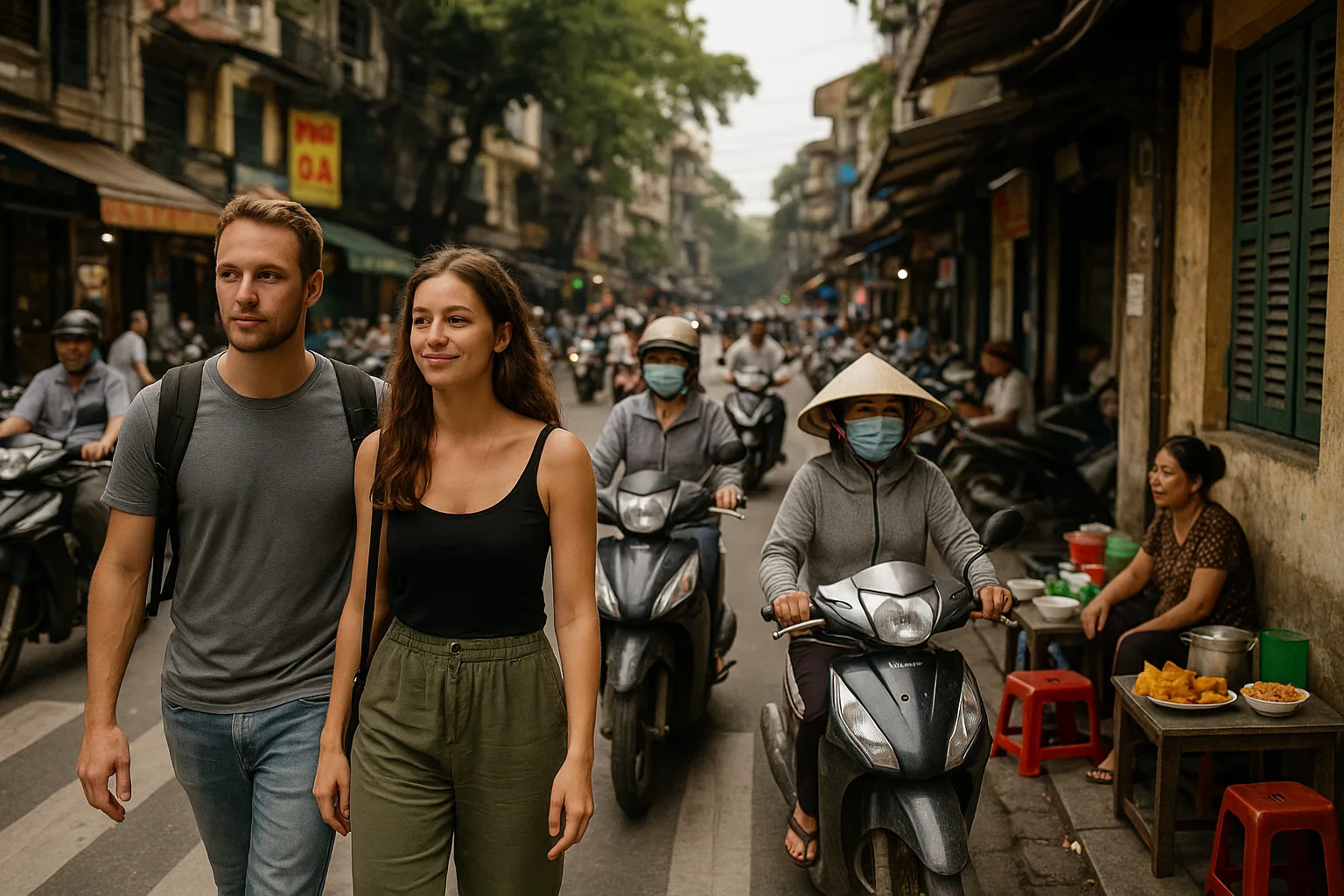
Hanoi has a reputation problem — and it’s almost entirely undeserved. Ask most first-time travelers what they know about Vietnam’s capital and you’ll hear the same handful of worries: the traffic is impossible, it’s not safe, the food is too extreme, the city is chaotic beyond reason. A well-planned Hanoi itinerary 3 days long can dismantle every single one of those fears before your first morning is even over. This guide is for anyone who’s curious about Hanoi but a little nervous about what they’ll actually find — and it combines a practical day-by-day plan with an honest look at the misconceptions that keep too many travelers away.
Why Hanoi Deserves More Credit Than It Gets
Hanoi is a city of roughly 8.6 million people, and it carries the kind of layered, complicated energy that only a capital city with thousands of years of history can produce. It sits inland in northern Vietnam, not far from the Chinese border, and is a couple of hours’ drive from the coast of the South China Sea. That geography matters — it means the city has absorbed influences from the north, the south, and across the water, and you can feel that blend in the architecture, the food, and the way people move through daily life.
What you’ll actually find when you arrive is colonial architecture sitting alongside ancient temples, still lakes reflecting the sky at dawn, and an Old Quarter that genuinely earns its reputation as one of the most atmospheric urban neighborhoods in Southeast Asia. The city doesn’t pretend to be polished. It’s layered, textured, and alive in a way that a lot of over-touristed destinations have long since lost. That’s exactly what makes it worth three full days of your time.
Clearing the Air: Common Misconceptions About Vietnam
Before the itinerary, let’s talk about the myths — because they shape how travelers prepare, and bad preparation leads to bad trips.
The traffic will kill you (it won’t)
This is probably the most repeated concern, and it’s the one that dissolves fastest once you’re actually there. Yes, Hanoi’s streets are busy. Yes, motorbikes move in ways that look chaotic from the outside. But there’s a rhythm to it — a flow that experienced locals navigate instinctively and that you can learn within a few hours. The key is to walk slowly and steadily when crossing the street. Don’t run, don’t freeze, don’t make sudden changes in direction. The traffic moves around you. Thousands of tourists cross Hanoi’s streets every single day without incident. You will too.
It’s not safe for solo travelers
This one tends to be aimed particularly at solo female travelers, and it’s largely unfounded. Hanoi is a city where people are out at all hours, where street food stalls keep the pavements lit and lively well into the night, and where a strong culture of community means eyes are always around. Like any major city, common sense applies — don’t flash expensive gear, be aware of your surroundings in unfamiliar areas, and trust your instincts. But the idea that Hanoi is dangerous or lawless simply doesn’t match what travelers consistently experience on the ground.
You’ll be pressured into eating dog meat
This misconception is worth addressing directly because it causes genuine anxiety for some visitors. Dog meat does exist as a dish in parts of Vietnam, particularly in the north, but it is not a mainstream or widely-served food, and you will not encounter it unless you specifically seek it out. The vast majority of restaurants, street stalls, and food markets in Hanoi serve the same incredible spread of phở, bún chả, bánh mì, and fresh spring rolls that you’ve probably already seen online. Nobody is going to trick you into eating something you don’t want.
Vietnam is all beaches and rice paddies — Hanoi is just a stopover
This one undersells the city dramatically. Hanoi is a destination in its own right, not just a transit point to somewhere more photogenic. Its Old Quarter alone could fill two days of genuine exploration. Add in the cultural sites, the food scene, the lakes, and the neighborhoods that most tourists never reach, and three days starts to feel like not quite enough.
It’s too hot to enjoy
Unlike southern Vietnam, Hanoi actually has four distinct seasons. Winters can be genuinely cool and sometimes grey. Spring brings mild temperatures and occasional drizzle. Summer is hot and humid, yes — but early mornings and evenings are always manageable, and that’s when the city is at its most alive anyway. Check the season before you go and pack accordingly, and you’ll be fine.
English is rarely spoken
In the tourist-facing areas of Hanoi — the Old Quarter, the main cultural sites, most restaurants — English is spoken well enough for easy communication. Younger Vietnamese in particular often have solid English skills. Away from the tourist trail, a translation app and a willingness to gesture and smile will take you further than you’d expect. Language has never stopped a curious traveler.
👉 Read also: Saigon Day Trips: 5 Escapes Within 90 Minutes for Overwhelmed First-Timers
Your Hanoi Itinerary: 3 Days, Done Right
Day 1: The Old Quarter and Hoan Kiem Lake
Start your first morning early — before the city fully wakes up. The Old Quarter at dawn is something else entirely. The streets are narrow, the buildings lean toward each other overhead, and the first wave of vendors is just setting up. It’s colourful, chaotic, and it never really sleeps, but the early hours give you a version of it that feels almost intimate.
Spend the morning wandering without a fixed plan. The Old Quarter’s streets were historically organized by trade — silk here, paper there, tin goods around the corner — and traces of that system still exist. Let yourself get a little lost. That’s the point.
By mid-morning, make your way to Hoan Kiem Lake, the calm green heart of the city. Walk the full perimeter, cross the red bridge to Ngoc Son Temple on the small island, and sit for a while. This is where locals come to exercise in the mornings, to meet friends, to just exist. It’s one of those spots that shows you a city’s real character.
In the afternoon, find St Joseph’s Cathedral nearby — a striking piece of French colonial architecture that feels genuinely surprising in the middle of a Vietnamese city. The streets around it are lined with independent cafés and small boutiques, and this is a good area to slow down, have a coffee, and watch the city move.
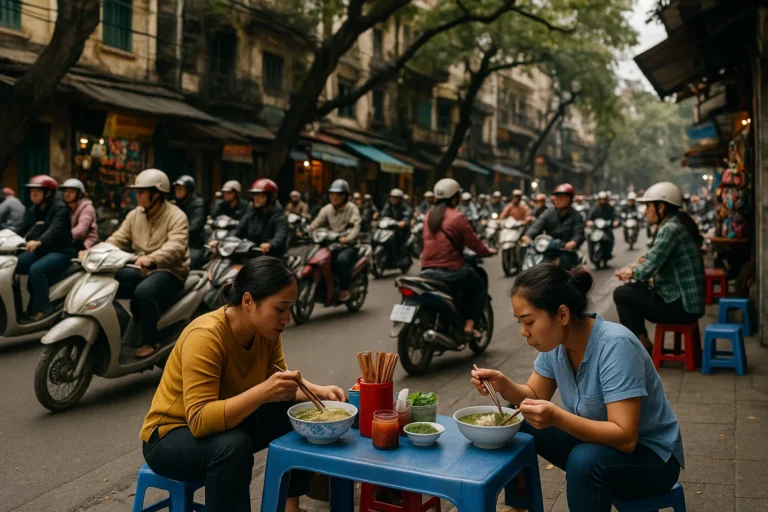
For dinner, eat bún chả — grilled pork with noodles and fresh herbs — at a local spot in the Old Quarter. It’s the kind of meal that makes you understand why Hanoi has a food reputation worth protecting.
Day 2: History, Culture, and West Lake
Day two takes you deeper into Hanoi’s cultural and historical layers. Start at the Ho Chi Minh complex, which includes the mausoleum, the presidential palace gardens, and the Ho Chi Minh Museum. This is a significant site, and it deserves a few hours of genuine attention rather than a rushed walk-through. The gardens alone are worth the visit — quiet, green, and surprisingly peaceful for a site of such political weight.
From there, make your way to the Temple of Literature, Vietnam’s first university, founded in the 11th century. It’s one of those places where the age of what you’re looking at becomes genuinely hard to process. Students still come here before exams to ask for good results — a tradition that’s been running for centuries.
In the afternoon, head to West Lake (Hồ Tây). It’s Hanoi’s largest lake, and the neighborhood around it has a slower, more residential feel than the Old Quarter. Rent a bicycle and circle part of the lake, stop at a lakeside café, and watch the light change over the water as the afternoon cools. This is the kind of afternoon that doesn’t make for dramatic photos but stays with you longer than the landmark shots do.
For dinner, explore the local wet markets in the early evening — they’re winding down but still lively, full of color and smell and noise. Then find somewhere nearby for a bowl of phở made the northern way: clear, clean broth, simple toppings, no fuss.
Day 3: Hidden Corners and a Slower Pace
By day three, you’ve earned the right to move at a different speed. This is the day for going deeper rather than wider. Pick a neighborhood you haven’t explored yet — the French Quarter, with its wide tree-lined boulevards and elegant colonial buildings, is a strong choice. Walk it without a destination in mind and pay attention to what’s happening at street level: the woman selling fruit from a bicycle, the old man reading a newspaper outside a shuttered shop, the children heading to school in matching uniforms.
Spend part of the morning at one of Hanoi’s smaller, less-visited museums. The Vietnam Museum of Ethnology is particularly worth your time — it covers the country’s 54 ethnic groups with real depth and care, and it gives you a much broader picture of what Vietnam actually is beyond the capital city experience.
👉 Read also: Vietnam Beyond Saigon: 5 Day Trips & Real Ecotourism Destinations in 2026
Use your last afternoon to revisit somewhere that stayed with you. Maybe it’s a café you passed on day one, or a corner of Hoan Kiem Lake you didn’t sit at long enough. One of the best things about a three-day stay is that you get a second look at things — and the second look almost always reveals something you missed.
Hanoi vs. Ho Chi Minh City: Two Very Different Vietnams
If you’re planning a longer Vietnam trip, you’ll probably encounter the question of Hanoi versus Ho Chi Minh City (still widely called Saigon). They are genuinely different cities, and the contrast is worth understanding before you go.
Hanoi is older, more traditional, and carries a stronger sense of its own history. The pace is a little slower, the food is more restrained, and the city has a northern reserve that can feel cooler on first encounter but rewards patience. Ho Chi Minh City, by contrast, is faster, louder, more commercially driven, and more internationally connected. It’s a city in the middle of reinventing itself at speed.
Neither is better. They’re just different versions of a country that contains more variety than most travelers expect. If you have time, visit both — the contrast alone is worth the internal flight. If you only have three days in Vietnam, Hanoi is the stronger choice for first-timers who want cultural depth over urban energy.
Getting Around Without Losing Your Mind
Hanoi is more walkable than it looks on a map, especially within the Old Quarter and around the lakes. For longer distances, ride-hailing apps are reliable, affordable, and remove the stress of negotiating fares. Download a reputable local option before you arrive and use it confidently — it’s how most younger locals get around too.
Renting a bicycle is genuinely one of the best ways to explore West Lake and the quieter residential neighborhoods. It puts you at street level, lets you stop whenever something catches your eye, and moves at a pace that’s actually useful for noticing things.
Avoid the urge to over-schedule. A Hanoi itinerary 3 days long works best when it has breathing room built in. Leave gaps in the plan. Some of the best moments in this city happen when you wander off the route and follow something that looked interesting from a distance.
For practical travel health and entry requirements, check the UK Foreign Travel Advice for Vietnam or your own government’s equivalent — it’s updated regularly and covers everything from visa requirements to health recommendations.
What to Eat and Where to Find It
Hanoi’s food culture is one of its greatest strengths, and it’s accessible at every budget level. Phở is the obvious starting point — northern-style phở is simpler and more focused than the southern version, and a bowl from a good street stall will cost almost nothing and taste like everything. Bún chả is another essential: grilled pork patties served with vermicelli noodles, fresh herbs, and a dipping broth that you’ll be thinking about for weeks afterward.
Bánh mì — the Vietnamese sandwich that fuses French baguette with local fillings — is perfect for breakfast on the move. Egg coffee (cà phê trứng) is a Hanoi invention worth trying at least once: strong coffee topped with a thick, sweet egg yolk foam that sounds strange and tastes extraordinary.
Eat where the locals eat. Look for places with plastic stools on the pavement, handwritten menus, and a queue. That’s usually where the best food is hiding.
Hanoi doesn’t ask you to love it immediately. It reveals itself slowly, through early mornings at the lake, through bowls of soup eaten on a low stool, through the moment you realize the traffic isn’t chaos — it’s choreography. Three days is enough to get past the misconceptions and into the actual city. And the actual city is something worth discovering for yourself.
This article was produced with AI assistance and reviewed editorially.


SafetyWing Travel Insurance: Real Claims Process Review & What Actually Happens When You Need It

Underrated Cities in Southeast Asia and South America: Hat Yai, Vung Tau & Quito


