
Asia
Saigon Day Trips: 5 Escapes Within 90 Minutes for Overwhelmed First-Timers
Discover five accessible day trips from Ho Chi Minh City within 90 minutes. Explore the Mekong Delta, Cu Chi Tunnels, and more rural Vietnam escapes for first-time visito

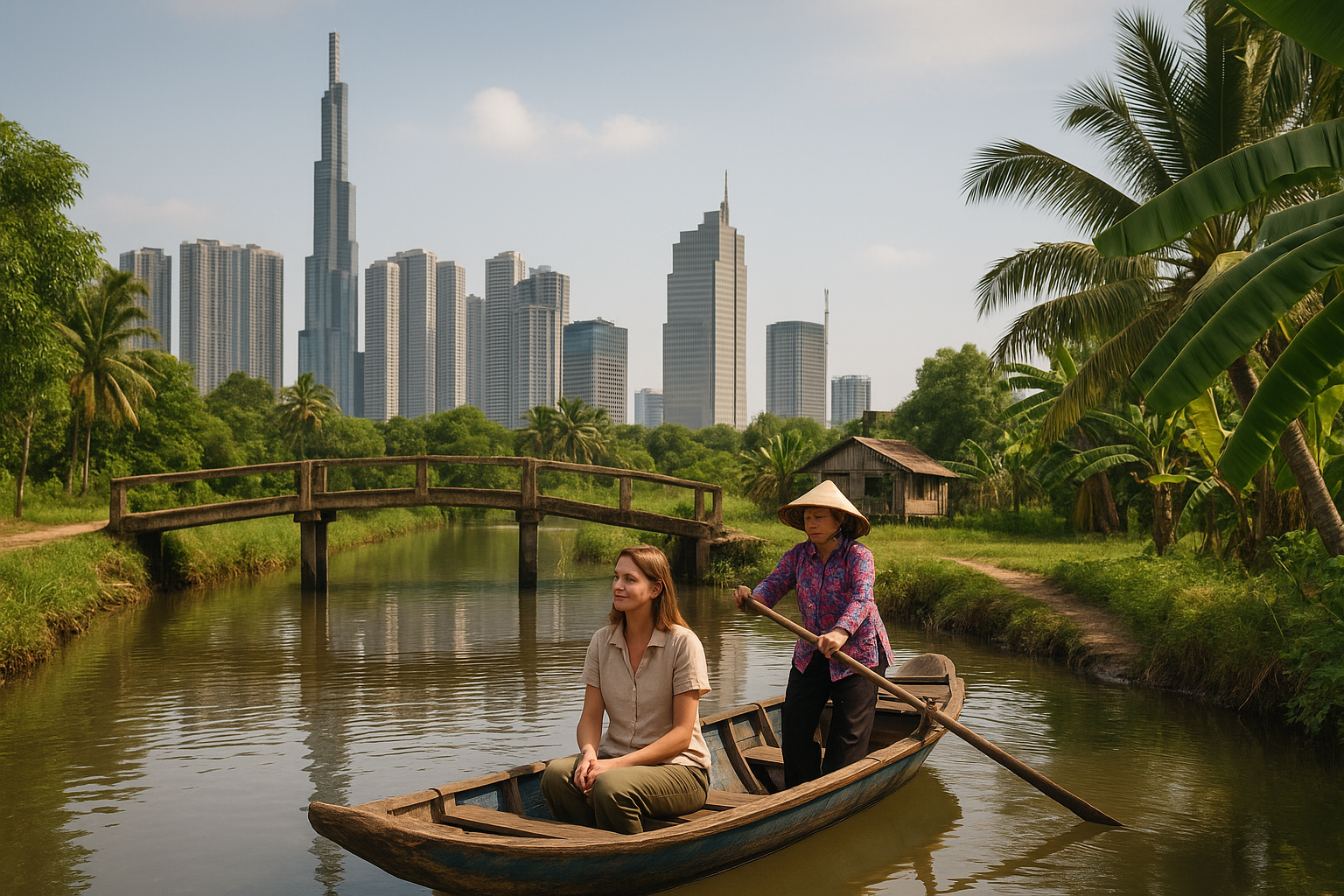
Why Ho Chi Minh City Sends You Running for the Exit (In the Best Way)
Ho Chi Minh City doesn’t ease you in gently. From the moment you step outside, the city hits you with noise, heat, scooters weaving between lanes, and a sensory overload that’s equal parts thrilling and exhausting. If you’re a first-time visitor, the intensity is part of the magic — but after a few days, you might find yourself craving something slower, greener, and a little more breathing room. That’s exactly where saigon day trips come in. Within a couple of hours of the city, you can be drifting through river channels in the Mekong Delta, crawling through wartime tunnels beneath the jungle floor, or standing quietly inside one of Southeast Asia’s most visually striking spiritual sites. The contrast is striking, and it’s one of the things that makes this region of Vietnam so endlessly compelling.
This guide covers five accessible escapes from Ho Chi Minh City — each one genuinely worth your time, each one offering something the city itself simply can’t. Whether you’ve got a free day between flights or you’re planning a longer stay, these destinations will give you a completely different perspective on southern Vietnam.
The Mekong Delta: Life on the Water
The Mekong Delta is one of the most iconic day trips from Ho Chi Minh City, and it earns that reputation. This vast network of rivers, canals, and rice paddies stretches out south of the city, and the pace of life here feels like it belongs to a different world entirely. Farmers move between fields on narrow wooden boats. Fruit vendors paddle through early-morning markets. Children cycle along raised paths between flooded rice paddies. It’s the kind of place that makes you want to slow down and just watch.
Most visitors head to the delta via organized day tours, which typically depart early in the morning and include boat rides through smaller canals, stops at local workshops producing coconut candy or rice paper, and lunch at a riverside restaurant. If you want to go independently, buses and minivans depart regularly from the city toward towns like My Tho and Ben Tre, both of which serve as good entry points to the delta.
What to Actually Expect
The Mekong Delta is genuinely beautiful, but it’s worth being realistic about the experience. Many of the popular tour routes have become heavily visited over the years, and some stops feel more like performance than authentic local life. The best way to get something real out of the delta is to either book a smaller group tour with a reputable local operator, or venture beyond the most obvious tourist circuit.
- Wake up early — the delta comes alive in the morning hours, especially around the floating markets.
- Opt for a boat ride through the smaller canals rather than sticking to the main river routes.
- Try the local food — fresh spring rolls, grilled fish, and tropical fruits you won’t easily find elsewhere.
- If you can, stay overnight in a homestay and experience the delta at sunset and sunrise when most day-trippers have already left.
The Mekong Delta isn’t just a backdrop for photos. It’s a working landscape where millions of people live, farm, and build their lives. Approach it with curiosity rather than a checklist, and it will give you far more than you expected.
Cu Chi Tunnels: Underground History
Located around 60 kilometres from District 1, the Cu Chi Tunnels are one of the most significant historical sites in southern Vietnam. During the Vietnam War, this network of underground tunnels served as a stronghold for Vietnamese fighters — a hidden world beneath the jungle floor that included living quarters, kitchens, hospitals, and command centres. Thousands of people lived and worked underground here for years, surviving conditions that are almost impossible to imagine.
Today, visiting the tunnels is one of the most popular saigon day trips, and for good reason. It’s not just a history lesson — it’s an immersive, physical experience that puts you directly in contact with the past. You can crawl through sections of the original tunnels (they’ve been widened slightly for visitors, but they’re still incredibly tight), inspect the ingenious booby traps that were used to defend the area, and walk through a jungle landscape that still carries the weight of what happened here.
Getting the Most Out of Your Visit
There are two main tunnel sites open to visitors: Ben Dinh and Ben Duoc. Ben Dinh is closer to the city and more frequently visited, while Ben Duoc is larger, quieter, and gives you a more expansive sense of the site. If you have the choice, many experienced travellers prefer Ben Duoc for exactly that reason.
- Go early to beat the heat and the crowds — the jungle gets very warm by midday.
- Wear comfortable, close-fitting clothes if you plan to actually crawl through the tunnels.
- Take your time with the outdoor exhibits before entering the tunnels — the context makes the experience much more meaningful.
- Consider hiring a local guide rather than relying solely on the recorded audio tour. The personal stories and details they share are invaluable.
The Cu Chi Tunnels are sobering, fascinating, and genuinely unlike anything else you’ll encounter on your travels. Even if you don’t consider yourself a history enthusiast, this is the kind of place that stays with you. For more context on the history before you visit, Lonely Planet’s guide to day trips from Ho Chi Minh City offers a solid overview of what to expect.
Tay Ninh: Colour, Ceremony, and the Cao Dai Holy See
If you’re looking for something visually and spiritually unlike anything you’ve encountered before, Tay Ninh is worth every kilometre of the journey. The main draw here is the Cao Dai Holy See — the central temple of Caodaism, a Vietnamese religion that blends elements of Buddhism, Taoism, Confucianism, and Christianity into something entirely its own. The architecture alone is extraordinary: a vast, ornate temple painted in vivid pinks, yellows, and blues, decorated with dragons, clouds, and an all-seeing divine eye that watches over everything.
Caodaism was founded in the early twentieth century and has millions of followers across Vietnam. The Holy See in Tay Ninh is the religion’s most important site, and attending one of the daily prayer ceremonies is an experience that’s difficult to put into words. Hundreds of worshippers dressed in white, yellow, or blue robes fill the temple floor in a ceremony that’s both deeply formal and visually spectacular. Visitors are welcome to observe from the upper balconies, and the atmosphere is one of genuine reverence.
Visiting Respectfully
Because this is an active place of worship — not a tourist attraction — how you visit matters.
- Dress modestly: cover your shoulders and knees before entering the temple grounds.
- Ceremonies typically take place several times daily, so check the schedule in advance and time your visit accordingly.
- Photography is generally permitted from the balconies, but be discreet and respectful during the ceremony itself.
- Speak quietly and follow the guidance of temple staff about where visitors are permitted to stand.
Tay Ninh also sits near the Cambodian border, which gives the surrounding area a distinct frontier character. The journey from Ho Chi Minh City takes around two hours by bus or organized transport, making it a slightly longer day trip — but one that rewards the effort significantly.
Vung Tau: Coastal Air and a Change of Pace
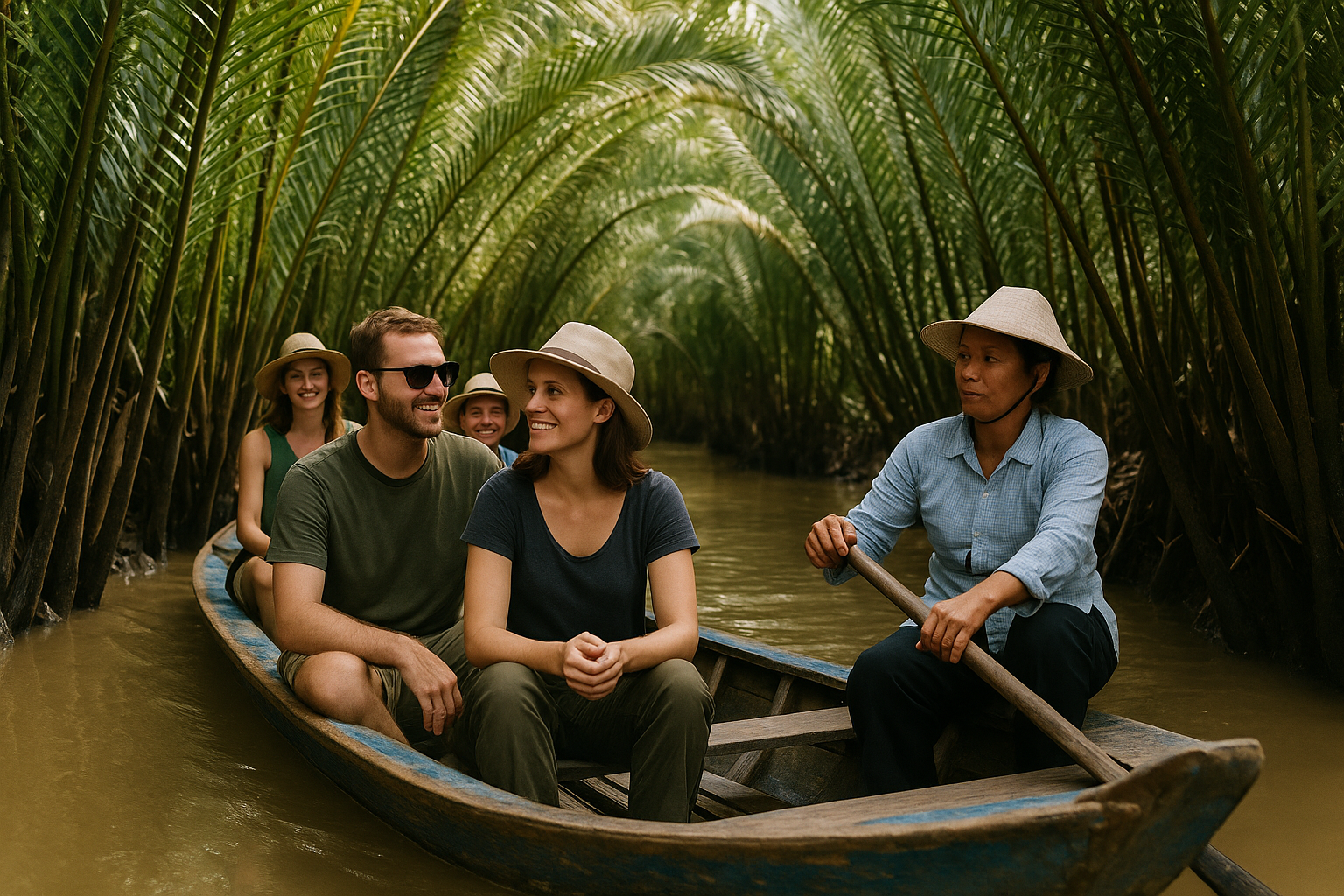
Sometimes what you need after days in the city is simply the sea. Vung Tau is a coastal town sitting on a small peninsula southeast of Ho Chi Minh City, and it’s been a popular escape for city residents for generations. The beaches here aren’t the powdery white sand of a tropical postcard, but that’s almost beside the point. What Vung Tau offers is atmosphere: seafood restaurants along the waterfront, a giant white Christ statue on the hill overlooking the town, colonial-era villas, and a relaxed pace that feels genuinely restorative.
Getting there is straightforward. High-speed ferries run regularly between Ho Chi Minh City and Vung Tau, and the journey across the river and bay takes roughly an hour and a half, making it one of the more scenic ways to arrive anywhere in Vietnam. Buses are also available and take a similar amount of time via road.
Once you’re there, rent a motorbike or bicycle and explore the peninsula at your own pace. The coastal road that wraps around the headland offers great views, and the smaller Back Beach tends to be quieter than the main Front Beach. Grab fresh seafood at one of the local restaurants for lunch — the grilled prawns and clams are the kind of meal you’ll be talking about for the rest of your trip.
Can Gio: Mangroves, Monkeys, and Quiet Waterways
Can Gio is the least-visited of these five destinations, and that’s exactly what makes it special. Located on a coastal district southeast of the city, Can Gio is home to a UNESCO-recognised mangrove biosphere reserve — a vast, protected forest of mangrove trees threaded through with tidal channels and waterways. It’s a world away from the city in every sense.
The journey to Can Gio involves a ferry crossing, which immediately signals that you’re heading somewhere different. Once inside the reserve, you can take boat tours through the mangrove channels, visit a crocodile farm, and stop at Monkey Island — where a colony of long-tailed macaques has made themselves very much at home. The monkeys are entertaining, but keep your belongings secure. They’re opportunistic and experienced at relieving tourists of snacks, sunglasses, and anything else left unattended.
Why Can Gio Deserves More Attention
Can Gio doesn’t get the same level of coverage as the Cu Chi Tunnels or the Mekong Delta, but it offers something genuinely different: a sense of wildness and ecological richness that’s rare this close to a major city. The mangrove forest plays a crucial role in protecting the coastline and supporting local fishing communities, and visiting it gives you a perspective on southern Vietnam that goes beyond the historical and cultural.
- Start early — Can Gio is best experienced in the morning before the heat peaks.
- Bring insect repellent; the mangrove environment is beautiful but mosquito-rich.
- Try the local seafood at one of the simple restaurants near the reserve entrance — the crab dishes here are a local staple.
- If you’re interested in ecology or conservation, look for guides who can explain the importance of the mangrove ecosystem in detail.
For a broader look at what’s available beyond the city, Indie Traveller’s guide to Saigon day trips is one of the more thorough independent resources available and covers several of these destinations in useful detail.
Practical Advice for Planning Your Day Trips
Planning saigon day trips doesn’t need to be complicated, but a few practical considerations will make a real difference to your experience.
Organised Tours vs. Going Independent
For most of these destinations, you have the choice between booking an organised tour or making your own way. Tours offer convenience, transport, and often include a guide — which adds genuine value at historical and cultural sites like the Cu Chi Tunnels and the Cao Dai Holy See. Going independently gives you more flexibility and often a more authentic experience, but requires more planning and a higher comfort level with navigating local transport.
If you’re a first-time visitor or travelling alone, starting with an organised tour for at least one or two destinations is a sensible approach. Once you’ve got a feel for the distances and logistics, going independent becomes much easier.
Timing and Transport
Most of these destinations are reachable within roughly two to two and a half hours of Ho Chi Minh City by road or water. Buses, minivans, and ferries all operate regularly, and booking through a reputable local travel agency or hostel is usually the easiest way to arrange transport. Grab (Southeast Asia’s equivalent of a rideshare app) is also widely used for shorter journeys and can be a convenient option for getting to departure points within the city.
Leave early. Traffic leaving Ho Chi Minh City can be significant in the morning rush, and arriving at most of these destinations before the midday heat makes the experience considerably more enjoyable. Aim to be on the road or water by seven or eight in the morning if possible.
Avoiding the Tourist Trap Experience
Popular destinations attract tourist infrastructure, and not all of it serves the traveller well. A few general principles help here: read recent reviews from independent travellers rather than relying solely on agency recommendations, choose smaller group tours over large coach excursions where possible, and be willing to spend a little more for a guide who genuinely knows the area. The cheapest option is rarely the most memorable one.
At sites like the Mekong Delta, where the tourist circuit is well-worn, consider asking your tour operator specifically about visiting less-frequented villages or taking routes that avoid the most commercialised stops. The extra effort almost always pays off.
The City Is Just the Beginning
Ho Chi Minh City is one of the most dynamic urban environments in Southeast Asia, and it deserves every day you give it. But the region surrounding it is equally rich — historically layered, ecologically diverse, and home to communities and landscapes that tell a completely different story about Vietnam. These saigon day trips aren’t just a way to decompress from the city’s intensity. They’re an invitation to go deeper, to move beyond the obvious, and to come back to the city in the evening with a fuller picture of the country you’re exploring. Whether you spend a morning crawling through wartime tunnels, an afternoon drifting through mangrove channels, or a full day watching the Mekong Delta wake up around you, you’ll return to Saigon with something that no amount of time in the city could have given you: perspective. And that, more than any particular destination, is what travel is really for.
This article was produced with AI assistance and reviewed editorially.


New Zealand’s Geothermal Wonders: Rotorua & Where to Stay for Adventure & Maori Culture

Adventure Beyond the Beach: Things to Do in Jeju, South Korea & Tayrona Park, Colombia


