
Roaming Around the World
Hanoi in 3 Days: Where Ancient Streets Meet Incredible Street Food
Explore Hanoi’s Old Quarter, French colonial architecture, and authentic street food with this 3-day itinerary written from a long-term resident’s perspective.

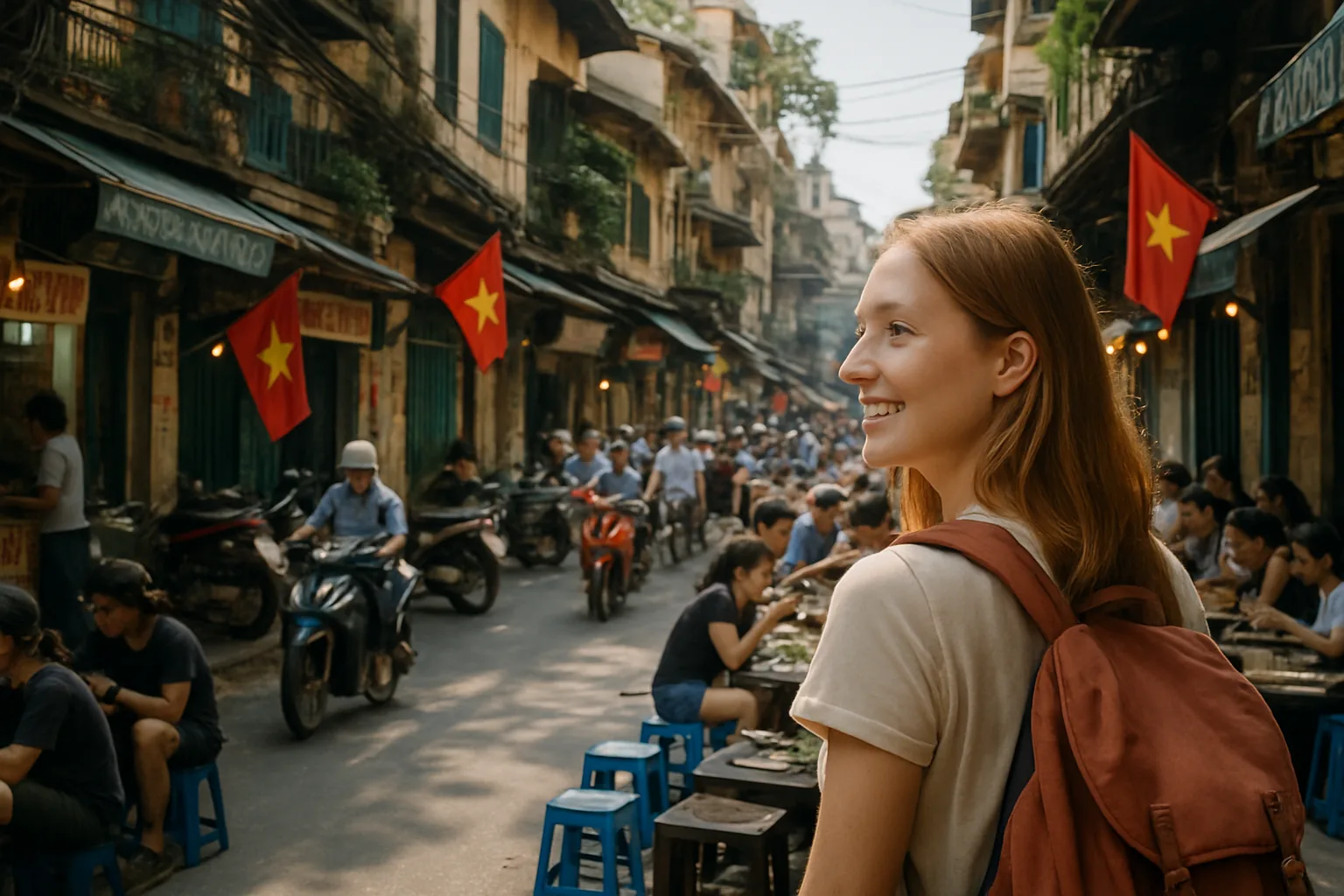
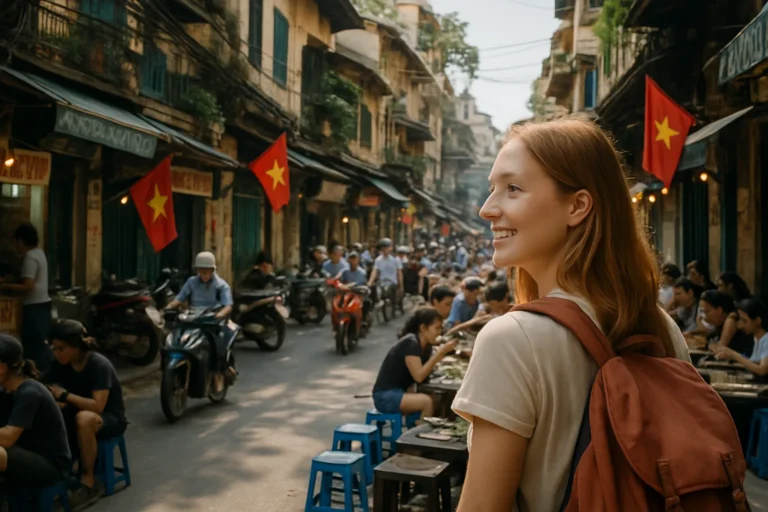
Hanoi doesn’t ease you in gently. The moment you step outside, the city hits you — the hum of scooters weaving through narrow lanes, the smell of broth simmering on a street corner, the sight of French colonial facades standing shoulder to shoulder with ancient temples draped in incense smoke. This is Vietnam’s 1,000-year-old capital, a city of roughly 8.6 million people that somehow manages to feel both overwhelming and deeply intimate at the same time. If you’re putting together a Hanoi 3 day itinerary, you’re making the right call — three days gives you just enough time to peel back the surface and find the city that actually lives beneath the tourist trail.
Why Hanoi Deserves More of Your Attention Than You Think
A lot of young travelers fly into Vietnam, spend a day or two in Hanoi, and rush south to Ho Chi Minh City. It’s a mistake. Hanoi operates at a different frequency. Where the south is loud and relentless in an electric kind of way, Hanoi has a slower, more layered rhythm — one that rewards curiosity and patience.
Travel writer Dustin Kemp, who has spent over a decade living in Vietnam and is based in Saigon, has spoken openly about his deep affection for Hanoi despite calling the south home. That kind of perspective matters. It tells you that Hanoi isn’t just a stop on the way to somewhere else — it’s a destination that earns loyalty even from people who’ve built their lives in Vietnam’s most frenetic city.
What makes Hanoi special is the layering. You’ll walk down a street and find a bia hoi corner — a local outdoor beer spot — wedged between a centuries-old temple gate and a crumbling French colonial building. Street food vendors set up on pavements that have hosted the same dishes for generations. The city doesn’t perform for tourists. It just keeps living, and you get to walk through it.
Getting Your Bearings: The Neighborhoods That Matter
Before you start building your days, it helps to understand how Hanoi is laid out. The city has several distinct zones, and knowing which one you’re in changes everything about how you experience it.
The Old Quarter
This is ground zero for most visitors, and for good reason. The Old Quarter is a dense web of narrow streets, each historically named after the trade it once specialized in — silk, paper, tin, bamboo. Today it’s a mix of guesthouses, street food stalls, souvenir shops, and local businesses. It can feel chaotic, but slow down and you’ll notice the details: the grandmother selling bánh mì from a basket, the kids kicking a ball in a courtyard hidden behind a gate, the sound of a motorbike horn echoing off walls that have stood for centuries.
The Old Quarter is where most travelers base themselves, and it’s a solid choice. It keeps you close to Hoan Kiem Lake, the spiritual and geographic heart of the city, and within walking distance of most of Hanoi’s key cultural landmarks.
The French Quarter and Beyond
A short walk south of Hoan Kiem takes you into the French Quarter, where wide tree-lined boulevards replace the tight alleyways of the Old Quarter. The architecture here is stunning — grand colonial buildings, some beautifully restored, others wonderfully crumbling. This area is quieter, more residential in feel, and worth exploring on foot in the late afternoon when the light turns golden.
Further out, neighborhoods like Tay Ho (West Lake) offer a more local, expat-friendly atmosphere. You’ll find independent cafés, yoga studios, and restaurants here that cater to people who actually live in Hanoi rather than pass through it. If you have time, it’s worth an evening.
Your Hanoi 3 Day Itinerary, Day by Day
Three days is enough to experience the highlights without rushing, as long as you’re intentional about how you spend your time. Here’s how to structure it in a way that feels natural rather than like a checklist.
→ Read also: Hanoi in 3 Days: A Local's Itinerary (From a Repeat Visitor)
Day One: The Old Quarter and Hoan Kiem Lake
Start early. Seriously — Hanoi mornings are magic. By 6am, the streets around Hoan Kiem Lake are already alive with locals doing tai chi, walking, and socializing. Join them. Walk the perimeter of the lake, cross the red bridge to Ngoc Son Temple, and take in the city before the heat and crowds arrive.
Breakfast is non-negotiable, and in Hanoi, that means phở. Hanoi is the birthplace of pho, and the northern style — cleaner, more delicate, less garnished than the southern version — is something you need to try in its home city. Find a small local spot, grab a plastic stool, and order a bowl. It costs next to nothing and it’s one of the most satisfying meals you’ll have anywhere in the world.
Spend the rest of the morning wandering the Old Quarter on foot. Get deliberately lost. Turn down alleys. Duck into courtyards. The streets around Hàng Gai, Hàng Bạc, and Hàng Đào are particularly interesting for their mix of old trades and modern life. In the afternoon, visit the Temple of Literature, Vietnam’s first university, which dates back to the 11th century and offers a rare moment of calm and beauty away from the bustle.
End your first evening with a Water Puppet Show — a UNESCO-recognized art form that originated in the Red River Delta. It sounds like a tourist trap, but it genuinely isn’t. The performance is hypnotic, the puppetry is extraordinary, and the live traditional music that accompanies it stays with you. Book tickets in advance during busy periods.
Day Two: Street Food Deep Dive and Local Culture
Day two is about eating your way through the city. Hanoi is the foodie capital of northern Vietnam, and its street food culture is one of the most accessible and rewarding in Southeast Asia. You don’t need a guide or a food tour (though both can be great) — you just need to be willing to sit on a plastic stool and point at what looks good.
Start with egg coffee — cà phê trứng — one of Hanoi’s most iconic inventions. It’s exactly what it sounds like: strong Vietnamese coffee topped with a whipped egg yolk and sugar mixture that creates something between a dessert and a drink. Hanoi is the birthplace of egg coffee, and drinking it in a tiny café tucked up a narrow staircase, looking out over a rooftop view of the Old Quarter, is one of those travel moments that genuinely stays with you.
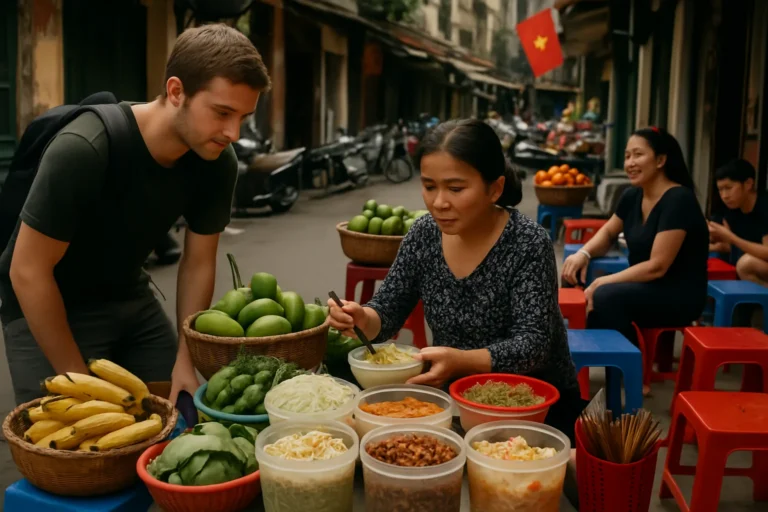
For lunch, explore the street food landscape further. Look for bún chả — grilled pork served with rice noodles and a dipping broth that’s distinctly northern Vietnamese. Or try bánh cuốn, steamed rice rolls filled with minced pork and mushrooms, served with a clear dipping sauce and crispy shallots. These aren’t dishes you’ll necessarily find on restaurant menus back home, and eating them here, where they’ve been made the same way for generations, is the whole point.
In the afternoon, visit the Vietnam Museum of Ethnology if you want genuine cultural depth. It covers the 54 ethnic groups of Vietnam with thoughtful, well-curated exhibits and beautiful outdoor reconstructions of traditional homes. It’s one of the best museums in Southeast Asia and almost always less crowded than it deserves to be.
As the day winds down, make your way to Train Street — a narrow residential alley where a working railway line passes just inches from the front doors of homes and cafés. It’s one of those places that sounds gimmicky until you’re standing there and a train actually comes through. The café culture that’s grown up around it is worth experiencing, though be respectful of the residents who actually live there.
Day Three: Wider Hanoi and Slow Mornings
By day three, you’ll have a feel for the city. Use it. Sleep a little later, find a café you like, and sit with your coffee for a while. Hanoi rewards the traveler who isn’t always rushing to the next thing.
Head to the Ho Chi Minh Mausoleum complex in the morning — a significant historical and cultural site that includes the mausoleum itself, the Presidential Palace grounds, Ho Chi Minh’s stilt house, and a beautiful garden. It’s a sobering and genuinely interesting few hours that gives you a much deeper sense of Vietnam’s modern history.
→ Read also: Slow Travel Through Southeast Asia: Discovering Hanoi's Soul and Vietnam Beyond the Guidebook
Spend the afternoon at West Lake (Hồ Tây). It’s a different side of Hanoi — quieter, more residential, with pagodas along the water and a promenade that’s perfect for a long walk. The Tran Quoc Pagoda, one of the oldest in the city, sits on a small island connected to the shore by a causeway and makes for a beautiful late-afternoon visit.
For your final evening, skip the tourist restaurants and find somewhere local. Ask your guesthouse host where they eat. Walk until something smells good. Sit down, order whatever’s on the table next to you, and let the city have one last conversation with you.
Practical Things Worth Knowing Before You Go
Hanoi is genuinely explorable on foot, especially in the Old Quarter and French Quarter. Comfortable shoes matter more than almost anything else you’ll pack. The city is compact enough that you can walk between most of the main landmarks, which also means you get to experience the streets — the best part of Hanoi — rather than riding past them.
- Getting around: Walking is your best option in the center. For longer distances, xe ôm (motorbike taxis) and ride-hailing apps are cheap and reliable. Cyclos (bicycle rickshaws) are available in the Old Quarter and worth trying once for the experience.
- Weather: Hanoi has four distinct seasons, unlike the more tropical south. Spring (March to April) and autumn (September to November) are generally the most comfortable for walking around. Summers are hot and humid with heavy rain. Winters can be surprisingly cool and grey — bring a layer.
- Money: Cash is still king in most street food situations. ATMs are widely available. Having small denominations of Vietnamese đồng makes street food transactions much easier.
- Pace yourself: The heat and the sensory intensity of the city can be draining. Build in slow hours. A café break in the middle of the afternoon isn’t wasted time — it’s part of the experience.
- Respect the culture: Cover your shoulders and knees when visiting temples and pagodas. Speak quietly in sacred spaces. Smile — it goes a long way everywhere in Vietnam.
For planning your route and checking opening hours for major attractions, the GetYourGuide Hanoi explorer page is a useful starting point with regularly updated information.
The Street Food Philosophy: Eat Where the Locals Eat
There’s a simple rule in Hanoi that will serve you better than any restaurant recommendation: follow the plastic stools. If a pavement spot has a crowd of locals hunched over bowls at 7am, join them. If a woman with a basket on a bicycle keeps stopping to serve people, buy what she’s selling. The best food in Hanoi is almost never in a restaurant with a printed menu and air conditioning.
This isn’t about being adventurous for the sake of it. It’s about the fact that Hanoi’s street food culture is genuinely one of the most refined and delicious in the world, and the best version of it exists at street level, cooked by people who’ve been making the same dish their entire lives. A bowl of pho from a street stall that opens at 5am and sells out by 9am will be better than almost anything you order in a sit-down restaurant. That’s just the truth of it.
Be open to not knowing exactly what you’re eating. Point, smile, pay, and eat. You’ll almost never be disappointed, and occasionally you’ll discover something that you’ll spend the next few years trying to recreate at home.
How to Carry the Right Mindset Into the City
Hanoi can feel chaotic to first-time visitors. The traffic doesn’t follow rules you’ll immediately recognize. The streets are loud. The heat is real. Vendors will approach you. It can be a lot.
But here’s the thing: the chaos is also the energy. The scooters weaving around you aren’t a problem — they’re the city moving. The noise is the sound of 8.6 million people living their lives. Once you stop trying to navigate Hanoi like a Western city and start experiencing it on its own terms, something shifts. The overwhelm becomes fascination. The confusion becomes curiosity.
Give yourself permission to wander without a destination. Some of the best moments in Hanoi happen when you put your phone away, take a random left turn, and end up in a courtyard where someone’s grandmother is making dumplings and a kid is doing homework on the steps. That’s the Hanoi worth traveling for — not the attractions on a map, but the life happening between them.
Three days in this city won’t be enough. It never is. But if you spend those days walking slowly, eating adventurously, and staying genuinely curious, you’ll leave Hanoi with the kind of memories that don’t fade — and a very strong feeling that you need to come back.
This article was produced with AI assistance and reviewed editorially.


Sri Lanka in October: Skip the Crowds, Embrace the Adventure

Vietnam Beyond the Guidebook: What You Actually Need to Know


