
Asia
Vietnam Debunked: What You Actually Need to Know About Hanoi and Staying Safe
Is Hanoi safe for tourists? Yes. Discover what travelers actually need to know, debunk 11 common Vietnam misconceptions, and get a practical 3-day itinerary from a long-t

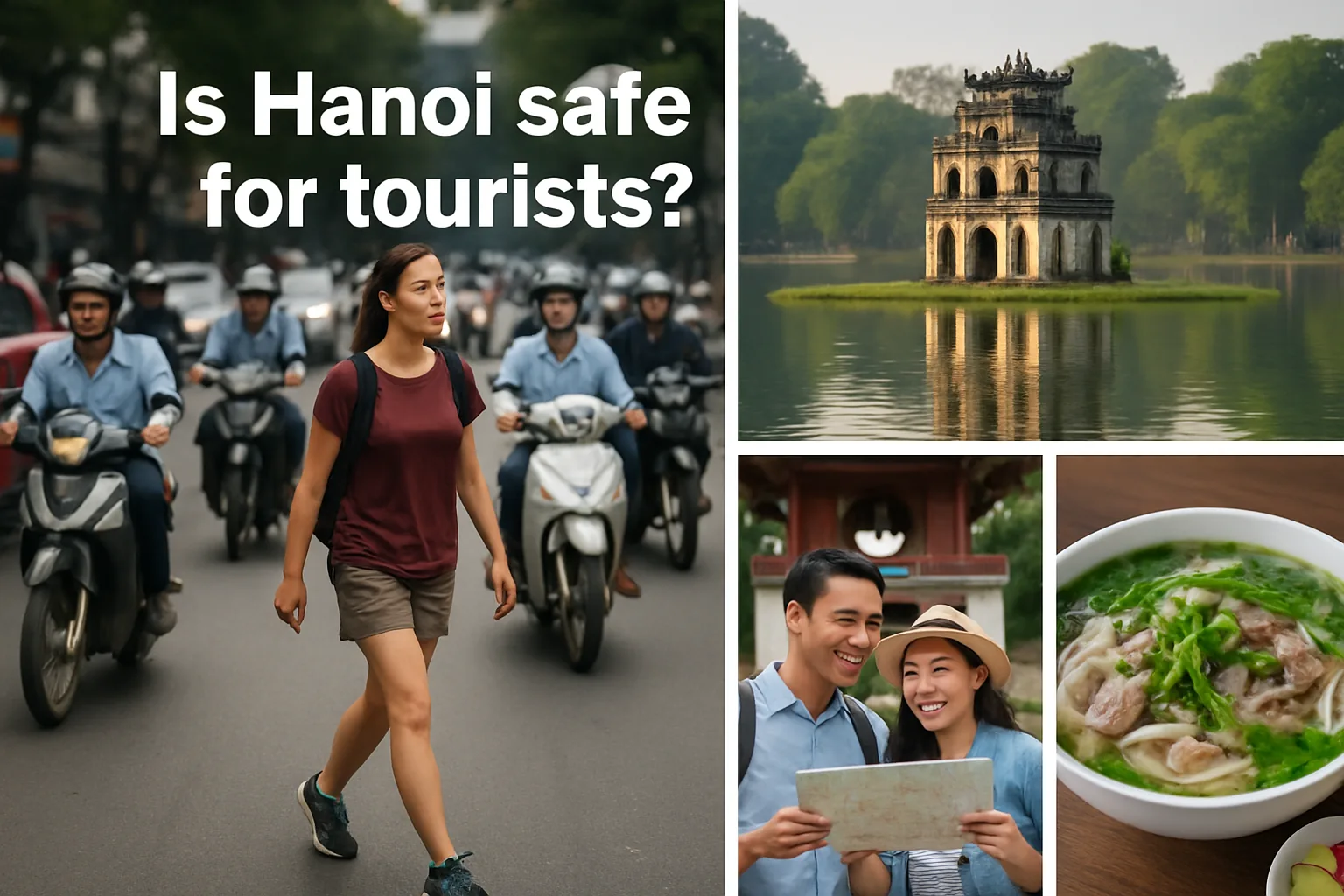
Vietnam has a reputation that arrives before you do. Friends warn you about the traffic. Travel forums argue about the food. Someone’s cousin swears it’s “too chaotic” to enjoy. But if you’ve been wondering is Hanoi safe for tourists — or whether Vietnam is even the right destination for a young, independent traveler — the honest answer is that most of what you’ve heard is either exaggerated, misunderstood, or just plain wrong. Hanoi is one of Southeast Asia’s most rewarding cities to explore, and the gap between the myths and the reality is exactly what this guide is here to close.
The Misconceptions That Keep Travelers Away
Every destination carries a set of stories that circulate long after they’ve stopped being accurate — or were never accurate to begin with. Vietnam is no exception. Before you even land, you’ve probably absorbed a handful of assumptions about safety, difficulty, and what kind of traveler “belongs” there. Let’s break those down honestly.
Misconception one: Vietnam is too dangerous for solo travelers. Multiple travel sources, including TNK Travel, describe Vietnam’s crime landscape as mild and largely non-threatening. Petty theft exists — as it does in every major city on earth — but violent crime targeting tourists is genuinely uncommon. The country consistently ranks as one of the safer destinations in Southeast Asia for independent travel.
Misconception two: the traffic will ruin your trip. Rough Guides describes Vietnam as “full-on” — five types of horns before breakfast, half the population on motorbikes, and street corners doubling as kitchens. That description is accurate. But “full-on” isn’t the same as dangerous. The traffic in Hanoi operates on a kind of fluid, unspoken logic. Once you understand it — walk slowly, move predictably, and let the motorbikes flow around you — crossing the street becomes almost meditative. It takes about twenty minutes to figure out. After that, it’s just part of the rhythm.
Misconception three: the food is risky. Street food in Hanoi is one of the great culinary experiences available to any traveler anywhere in the world. The idea that eating local will make you sick is rooted more in anxiety than in evidence. Use common sense — eat where locals eat, choose stalls with high turnover, and look for food that’s cooked fresh in front of you. Your stomach will thank you.
Misconception four: you need to speak Vietnamese. You don’t. English is widely spoken in tourist-facing businesses, and even where it isn’t, the hospitality culture in Vietnam makes communication feel warm rather than frustrating. A translation app, a smile, and a willingness to point at things on a menu will take you very far.
Misconception five: Hanoi is just a stopover. This one might be the most costly mistake a traveler can make. People rush through Hanoi on their way south, treating it as a logistical stepping stone. In reality, the city deserves at least three full days — and many travelers who give it that time end up wishing they’d stayed longer.
What the Safety Picture Actually Looks Like
When people ask whether Hanoi is safe for tourists, they’re usually imagining a worst-case scenario. The reality is considerably more reassuring. Hanoi has relatively few street robberies, and while travelers should absolutely stay alert, the level of vigilance required is no different from what you’d apply in any European or Latin American city of comparable size.
The practical precautions are straightforward. Avoid carrying more money than you need for the day. Don’t wear excessive valuables — flashy jewellery, expensive cameras dangling loosely, or a wallet visibly bulging from a back pocket. These aren’t Vietnam-specific rules; they’re just sensible travel habits that apply everywhere. In Hanoi specifically, the Old Quarter can get crowded, and crowded spaces are always where opportunistic theft is most likely to occur. A crossbody bag worn in front, a money belt for your cards, and a basic awareness of your surroundings are all you really need.
→ Read also: Beyond the Guidebook: What Hanoi Actually Feels Like
Scams do exist, and it’s worth knowing the common ones. Cyclo drivers quoting one price and demanding another at the end of the ride. Taxi drivers taking longer routes. Unsolicited guides who attach themselves to you and then request payment. None of these are unique to Hanoi, and none of them are dangerous — they’re just annoying and avoidable. Use reputable ride-hailing apps for transport, agree on prices before you get in anything, and politely but firmly decline services you didn’t ask for.
For solo travelers — especially solo female travelers — Hanoi is generally considered a comfortable city to navigate. The streets of the Old Quarter are active and well-populated well into the night, which naturally creates a safer environment than isolated or poorly-lit areas. Stick to busy streets after dark, trust your instincts, and you’ll find the city is far less intimidating than the forums suggested.
A Three-Day Framework for Experiencing Hanoi Properly
Three days won’t make you a Hanoi expert. But approached with intention rather than a checklist, three days is enough to feel the city’s personality — its pace, its flavors, its contradictions. Here’s a framework that prioritizes experience over box-ticking.
Day One: The Old Quarter and the Art of Getting Lost
Start early. Hanoi’s Old Quarter is at its most alive in the morning, when the streets fill with pho vendors, elderly residents doing tai chi by the lake, and the general organized chaos of a city beginning its day. Find a plastic stool at a street-side pho spot and eat breakfast the way locals do — leaning over a bowl of broth, watching the motorbikes stream past.
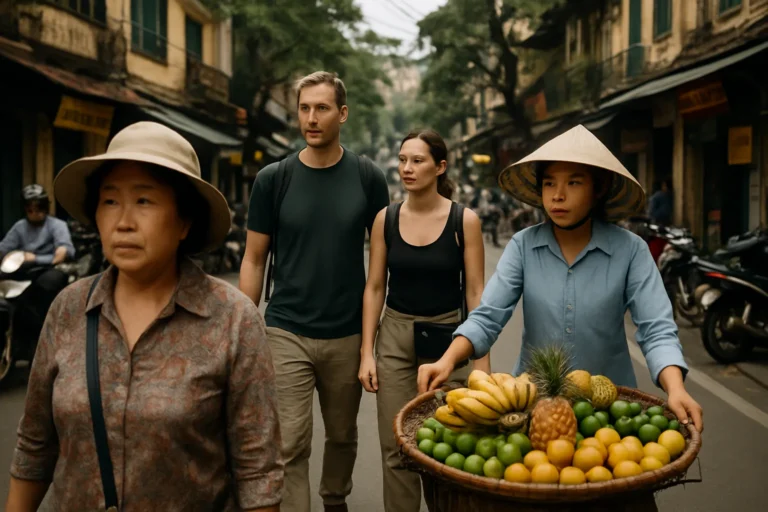
Spend the morning wandering. The Old Quarter’s 36 streets were historically organized by trade — silk street, paper street, tin street — and traces of that heritage still exist if you look for them. Don’t over-plan this part. The best discoveries in the Old Quarter happen when you take a wrong turn and end up somewhere you didn’t expect.
In the afternoon, visit Hoan Kiem Lake. It sits at the heart of the city and functions as a kind of communal living room — people come here to walk, to talk, to exercise, to sit quietly. The Ngoc Son Temple on the small island in the lake is worth visiting for its atmosphere as much as its history. By early evening, the lakeside area fills with locals, street food vendors, and the kind of ambient energy that makes you want to just sit and watch the world move.
Day Two: History, Culture, and the City Beyond the Tourist Trail
Hanoi carries deep historical weight, and day two is a good moment to engage with it seriously. The Vietnam Museum of Ethnology is one of the finest museums in Southeast Asia — genuinely interesting, well-curated, and largely uncrowded compared to the more obvious tourist sites. It gives you a real sense of the country’s cultural diversity, which extends far beyond what most visitors realize.
The Ho Chi Minh Mausoleum complex is worth visiting even if you approach it with ambivalence. The surrounding area — the Ba Dinh square, the Presidential Palace gardens, the One Pillar Pagoda — is peaceful and historically significant. Dress respectfully and follow the site’s rules, which are enforced seriously.
For the afternoon, head to the Tay Ho district. This is where many long-term expats and younger Vietnamese professionals live, and the vibe is noticeably different from the Old Quarter — quieter, more residential, with excellent cafés and a beautiful stretch of West Lake. It’s the kind of neighborhood that makes you imagine what it would be like to actually live in Hanoi.
→ Read also: What Hanoi Is Actually Like: A Local's Honest Take
Day Three: Day Trip, Markets, and a Proper Send-Off
If you have the energy, day three is ideal for a day trip to the surrounding countryside. The landscape around Hanoi — rice paddies, limestone hills, rivers threading through flat plains — is genuinely striking, and getting out of the city for even a few hours gives you a completely different perspective on the region. Several day-trip options exist within a two-to-three-hour radius.
If you’d rather stay in the city, spend the morning at Dong Xuan Market, Hanoi’s largest covered market. It’s busy, a little overwhelming, and completely authentic — nothing about it is staged for tourists. You can find everything from fresh produce to fabric to hardware. It’s a good place to buy practical souvenirs and to practice the art of gentle bargaining.
End your last evening in Hanoi slowly. Find a rooftop bar in the Old Quarter, order something cold, and watch the city from above. The noise, the movement, the layering of old and new — it’s the kind of view that makes you understand why people who visit Hanoi once often find themselves planning to come back.
Why Hanoi Rewards Curious Travelers
Hanoi isn’t a city that immediately gives itself to you. It asks something of you first — a willingness to slow down, to pay attention, to sit with discomfort for a moment before the magic becomes visible. That’s actually what makes it so well-suited to the kind of traveler who’s after something real.
The city is remarkably walkable at its core. The Old Quarter, Hoan Kiem Lake, and the French Quarter are all connected on foot, and walking is genuinely the best way to experience them. You notice things from the pavement that you’d completely miss from a taxi — the smell of incense drifting from a doorway, the sound of a family eating dinner through an open window, the way the architecture shifts from colonial to traditional to contemporary within the space of a single block.
The food culture alone is worth a dedicated trip. Bun cha, banh mi, cha ca, egg coffee — Hanoi has its own distinct culinary identity, separate from the food you’ll find in Ho Chi Minh City or Hoi An. Eating here isn’t just sustenance; it’s a form of cultural immersion. Every meal is a conversation with the city.
And then there are the people. Hanoi residents have a reputation for being more reserved than their southern counterparts — less immediately effusive, more quietly observant. But spend enough time here and that reserve reveals itself as something more interesting: a dry humor, a genuine curiosity about where you’re from, a hospitality that feels earned rather than performed. Those are the connections that stay with you long after you’ve left.
Practical Things Worth Knowing Before You Go
A few final notes that will make your trip smoother without turning this into a checklist article.
- Weather matters. Hanoi has a genuine four-season climate, which is unusual for Southeast Asia. Winters (roughly November through February) can be cool and grey. Summers are hot and humid, with heavy rain. Spring and autumn tend to offer the most comfortable conditions for walking and exploring.
- Cash is still king in many parts of the city, especially for street food and local markets. ATMs are widely available, but carry smaller denominations and don’t flash large amounts of cash in public.
- Dress with awareness. When visiting temples, pagodas, or government sites, cover your shoulders and knees. It’s a simple sign of respect that goes a long way.
- Download a ride-hailing app before you arrive. They’re significantly more transparent on pricing than flagging down a random taxi, and they remove the negotiation stress entirely.
- Give yourself time to adjust. The first few hours in Hanoi can feel genuinely overwhelming — the noise, the pace, the sensory density. This is normal. Most travelers find their footing quickly, and what felt chaotic on arrival starts to feel energizing within a day.
Hanoi isn’t the easiest city in Southeast Asia, and it doesn’t pretend to be. But “easy” and “rewarding” are rarely the same thing. The travelers who arrive with open eyes, a loose itinerary, and a genuine appetite for something different — those are the ones who leave with stories they’ll still be telling years from now. The city has a way of getting under your skin, quietly and completely, until you realize you’re already planning the next visit before the first one has even ended.
This article was produced with AI assistance and reviewed editorially.


15 Essential Apps Every Backpacker Needs Before Leaving Home

10 Cheapest Countries to Travel to Right Now (2026)


