
Roaming Around the World
Uzbekistan’s Silk Road Cities: Samarkand & Bukhara in 2026
Explore Samarkand and Bukhara, two historic Silk Road cities in Uzbekistan. Discover Registan, bazaars, local food, and authentic travel tips for 2026.

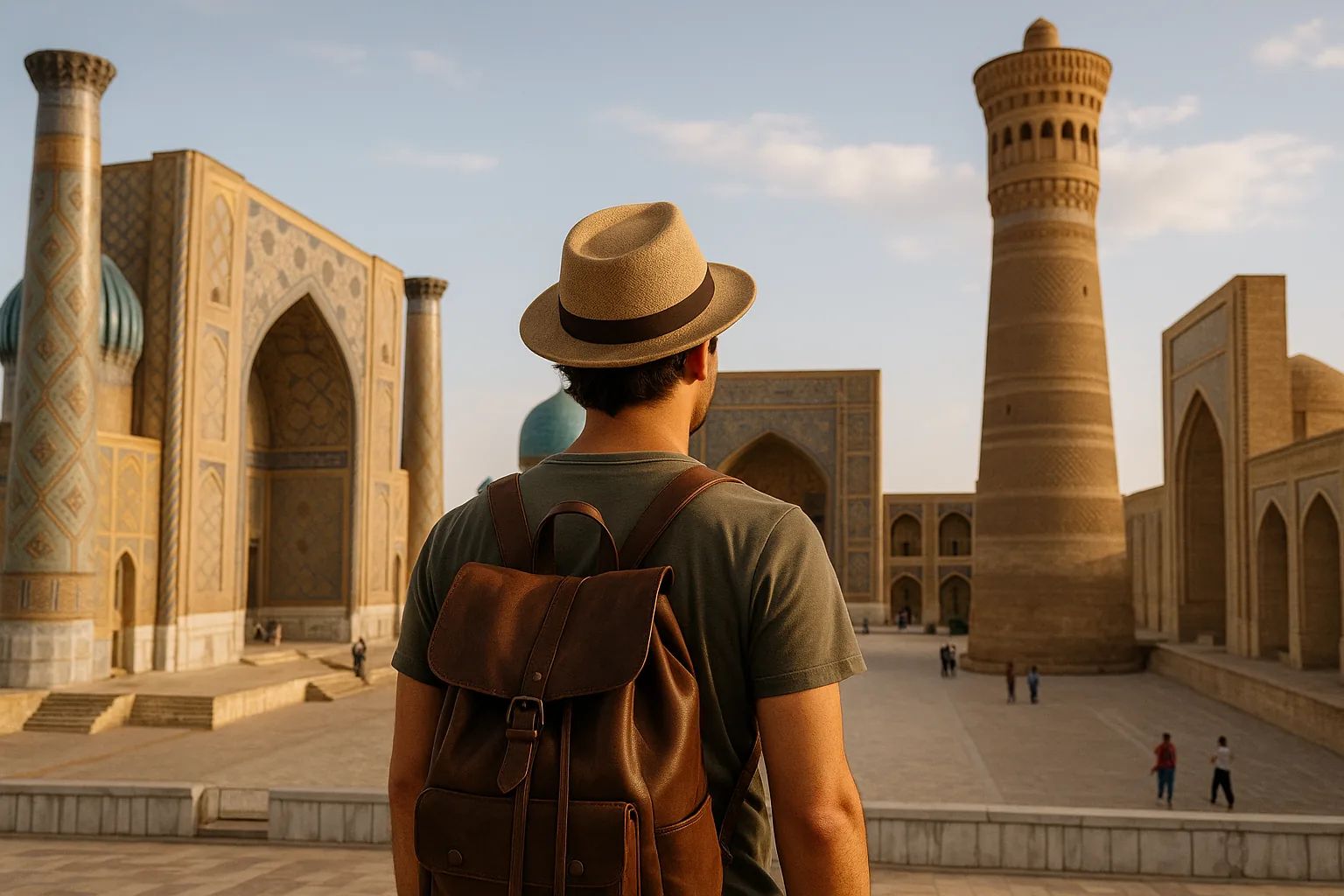
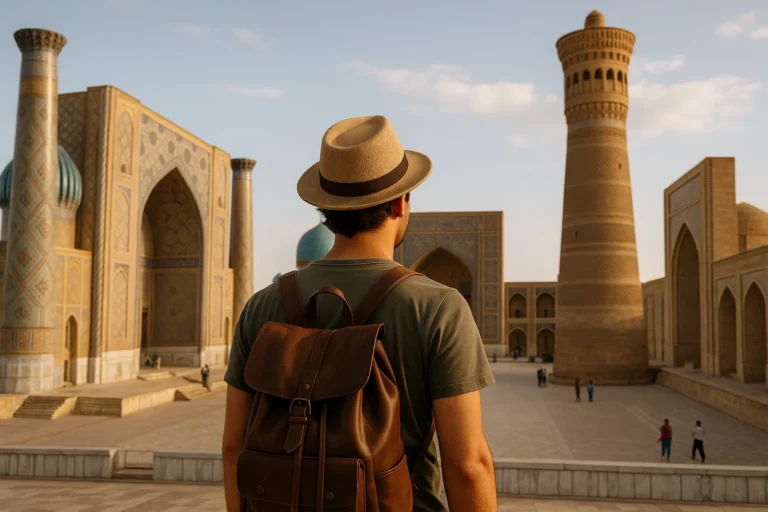
If you’re looking for a destination that genuinely stops you in your tracks — somewhere that feels like stepping into another world entirely — then a Samarkand Bukhara travel guide might be exactly what you need right now. These two Uzbek cities sit at the heart of the ancient Silk Road, and in 2026, they’re quietly becoming one of the most talked-about journeys for young travelers who want history, culture, and adventure without the overcrowded tourist trail. Think dazzling blue-tiled domes, fragrant bazaars, and tea poured in a courtyard while the afternoon light turns everything golden.
Why Uzbekistan Deserves a Spot on Your 2026 Radar
Central Asia has been on the edge of the travel conversation for years, but Uzbekistan is finally stepping fully into the spotlight. And honestly, it’s earned it. The country is home to some of the most spectacular Islamic architecture on the planet — mosques, mausoleums, and madrasahs that have stood for centuries and still manage to feel alive and relevant today. These aren’t just ruins. They’re places where locals gather, where students study, and where history breathes through every tile.
One of the most practical things to know upfront: Uzbekistan offers visa-free entry for many nationalities, which makes the logistics significantly easier than you might expect. Check your passport before you go, but chances are you can arrive without weeks of paperwork. That alone removes one of the biggest mental barriers people have about visiting Central Asia.
The country sits on the crossroads of ancient trade routes, and that heritage shows up everywhere — in the architecture, the food, the craftsmanship, and the way people move through their cities. You’re not just visiting a place. You’re walking through a living chapter of world history.
Samarkand: Where Empires Left Their Marks
Samarkand is the kind of city that genuinely lives up to its reputation. You arrive, you turn a corner, and suddenly you’re standing in front of Registan Square — one of the most jaw-dropping public spaces in the world. Three enormous tiled madrasahs face each other across a vast courtyard, their facades shimmering with intricate geometric patterns in cobalt blue, turquoise, and gold. The Ulugbek Madrasa and the Tillya Kari Madrasa are among the defining structures here, each one a masterpiece of medieval Islamic architecture.
Go early in the morning if you can. The square is quieter, the light is softer, and you’ll get a sense of the space that’s harder to find once the day gets busy. Stand in the center and just look around. It’s one of those moments where you stop thinking about your phone and just exist somewhere extraordinary.
But Registan is just the beginning. Shah-i-Zinda is another unmissable part of Samarkand — a long avenue of mosaic mausoleums climbing up a hillside, each one more intricate than the last. The tilework here is some of the finest you’ll see anywhere, with deep blues and greens that seem almost luminous in the afternoon sun. It’s a place of both beauty and quiet reverence, and it tends to leave people more moved than they expected.
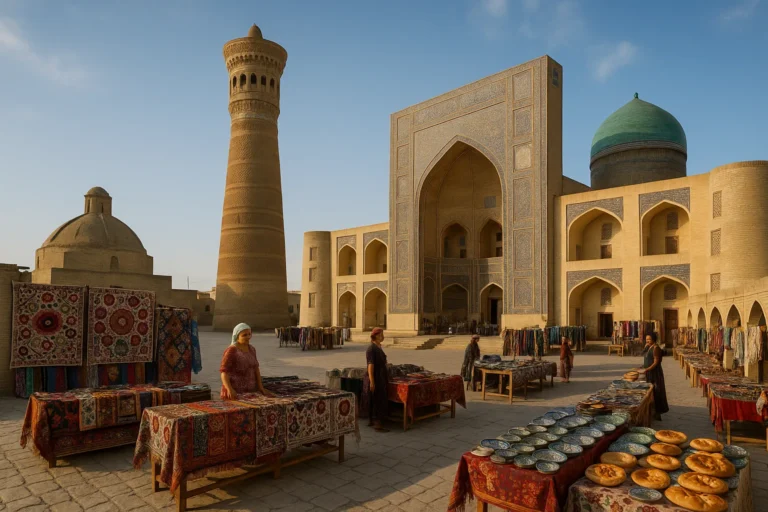
Wander beyond the main sites and Samarkand reveals a more everyday side. The bazaars are worth spending real time in — not rushing through, but actually stopping. Silk Road bazaars here are filled with spices piled into fragrant mountains, handwoven textiles in rich patterns, and local crafts that reflect centuries of artisanal tradition. Haggling is part of the culture, but do it with a smile. The vendors have seen every type of traveler, and genuine curiosity and warmth go a long way.
Samarkand also has a surprisingly vibrant café and restaurant scene developing around its historic center. You’ll find places to try plov — Uzbekistan’s iconic rice dish cooked with lamb, carrots, and spices — alongside freshly baked flatbread from tandoor ovens. Eating here isn’t a tourist activity. It’s just what people do, and joining in feels natural.
👉 Read also: Southeast Asia's Underrated Cities: Bandung, Malang, and Luang Prabang Beyond the Guidebook
Bukhara: The Desert City That Feels Untouched by Time
If Samarkand is grand and imperial, Bukhara is intimate and atmospheric. The two cities are only a few hours apart, but they feel like entirely different chapters of the same story. Bukhara’s old city is one of the best-preserved historic urban landscapes in Central Asia, with a layout that still follows ancient patterns. Walking through it feels genuinely different from most historic districts you’ll visit — there’s less of a sense that it’s been packaged for tourists, and more of a feeling that you’ve simply arrived somewhere that has always been this way.
The trading domes are one of Bukhara’s most distinctive features. These covered bazaar structures — low, rounded, built from brick — once served as the commercial hubs of the Silk Road. Merchants traded silk, spices, and precious goods beneath them. Today, you’ll find craft sellers and local artisans working inside, and the architecture itself is worth pausing to appreciate. It’s functional history.
Bukhara also carries a different atmosphere — something drier, quieter, more contemplative. The city sits closer to the desert, and that geography shapes everything from the color of the buildings (warm sandy brick rather than Samarkand’s more vivid blues) to the pace of life. Evenings here are special. Find a spot near one of the old pools — called hauzes — as the sun goes down, order tea, and watch the city settle into dusk. It’s the kind of moment that stays with you.
The old city is compact enough to explore on foot, and that’s exactly how you should do it. Get slightly lost. Follow a narrow lane that looks interesting. Duck into a courtyard that catches your eye. Bukhara rewards the curious traveler who’s willing to slow down and look beyond the obvious. There are hidden gems tucked behind every corner — a centuries-old caravanserai, a quiet mosque, a workshop where artisans still practice traditional crafts by hand.
Getting There and Moving Between Cities
Most travelers arrive in Uzbekistan through Tashkent, the capital, which is well-connected to major European and Asian hubs. From Tashkent, both Samarkand and Bukhara are accessible, and the journey between all three cities is a significant part of the experience.
A high-speed train connects Tashkent to Samarkand in a relatively short and comfortable journey, and the same rail network extends toward Bukhara. Train travel in Uzbekistan is generally considered the most practical and enjoyable way to move between these cities — you get to watch the landscape shift from urban sprawl to open steppe to the edges of desert as you go. Book tickets in advance when possible, especially during peak travel seasons.
If you prefer more flexibility, shared taxis and private transfers are also available between cities, though they take longer and the comfort level varies. For the full experience, the train is hard to beat — it’s affordable, reliable, and gives you a window into the country’s geography that you simply don’t get from the air.
A common itinerary runs Tashkent → Samarkand → Bukhara, spending two to three nights in each city. That gives you enough time to go beyond the main sights and actually settle into each place. Some travelers add a day or two in Tashkent at the beginning or end, which is worth considering — the capital has its own energy and a food scene that’s increasingly worth exploring.
Food, Tea, and the Art of Slowing Down
Uzbek food is one of the great underrated culinary traditions in the world. Plov is the dish everyone talks about, and for good reason — when it’s made well, it’s deeply satisfying in a way that’s hard to explain until you’ve had it. But the food culture goes well beyond one dish. You’ll find lagman (hand-pulled noodles in a rich broth), samsa (flaky pastries filled with meat and onion), and grilled meats served with flatbread that comes straight from the oven.
👉 Read also: Southeast Asia Slow Travel: Luang Prabang, Saigon Day Trips, and Cusco Hostels for Real Backpackers
Tea culture is central to daily life in both cities. Chaikhanas — traditional teahouses — are where conversations happen, where deals are made, and where the rhythm of the day slows down to something manageable. Green tea is the default, often served with dried fruit and nuts on the side. Sitting in a chaikhana for an hour isn’t wasting time. It’s participating in a social ritual that has existed here for centuries, and it’s one of the most authentic ways to connect with local life.
Don’t be afraid to eat where locals eat. The places without English menus, the small spots near the bazaar, the canteen-style restaurants with communal tables — these are often where the best food is. Point at what someone else is having if you’re unsure. Smile. It works.
Planning Your Visit: Timing and Practical Tips
The best times to visit Uzbekistan are spring (March to May) and autumn (September to November). In 2026, both windows offer ideal conditions — warm enough to enjoy long days exploring, cool enough that you’re not wilting in the heat. Summer in this part of Central Asia can be genuinely intense, with temperatures that make midday sightseeing uncomfortable. Winter is cold and some sites feel quieter than they should.
Spring brings a particular magic. The light is soft, the air is fresh, and the cities feel energized. Autumn has its own appeal — the heat of summer has lifted, and there’s a golden quality to the afternoons that makes everything look like it belongs in a photograph.
A few practical things worth knowing before you go:
- Currency: Uzbekistan uses the Uzbek som. Cash is still widely used, so arrive with some exchanged or withdraw from ATMs in Tashkent before heading to smaller cities.
- Connectivity: Local SIM cards are affordable and easy to get at the airport. Data speeds are generally decent in city centers.
- Dress: Both cities have significant religious heritage. Covering shoulders and knees when visiting mosques and madrasahs is respectful and often required.
- Language: Uzbek and Russian are the main languages. English is spoken in tourist-facing businesses in both cities, but learning a few words of Uzbek or Russian goes a long way and is always appreciated.
- Accommodation: Both cities have a growing range of options, from boutique guesthouses in historic buildings to budget-friendly hostels. Staying in the old city areas gives you immediate access to the best of each destination.
For more context on the broader Silk Road travel experience, G Adventures’ Uzbekistan tours page offers useful overviews of the region and how the cities connect as part of a longer journey.
How to Experience Both Cities Authentically
The honest truth about Samarkand and Bukhara is that they’re not undiscovered. Travelers have been coming here for years, and both cities have developed infrastructure to support tourism. But they haven’t been over-polished the way some famous destinations have. There’s still real life happening all around the historic sites, and that’s what makes them worth the journey.
The key is to move at a pace that allows you to notice things. Don’t try to tick off every site in a single day. Walk streets that aren’t on the map. Talk to the person running the tea stall. Spend an extra hour at the bazaar not buying anything, just watching. These are the moments that turn a trip into something you actually remember.
In Samarkand, consider visiting Registan at different times of day — the light changes dramatically, and the evening atmosphere is completely different from the morning one. In Bukhara, resist the urge to rush through the old city and instead pick a neighborhood to explore slowly, returning to the same spots as the light shifts.
Both cities reward travelers who show up with curiosity rather than a checklist. The architecture is extraordinary, yes — but the experience of being in these places, of feeling the weight of history and the warmth of the people who live there, is what you’ll carry home. Uzbekistan’s Silk Road cities aren’t just beautiful to look at. They’re places that genuinely change the way you see the world, and that’s a rare thing worth traveling a long way for.
This article was produced with AI assistance and reviewed editorially.


Sri Lanka by Backpack: The Route, Costs, and Unmissable Stops

Uzbekistan’s Silk Road Cities: Samarkand & Bukhara in 2026


