
Asia
Southeast Asia Slow Travel: Luang Prabang, Saigon Day Trips, and Cusco Hostels for Real Backpackers
Discover authentic southeast asia backpacking through slow travel in Luang Prabang, Ho Chi Minh City, and beyond. Find budget guesthouses, spiritual retreats, and day tri

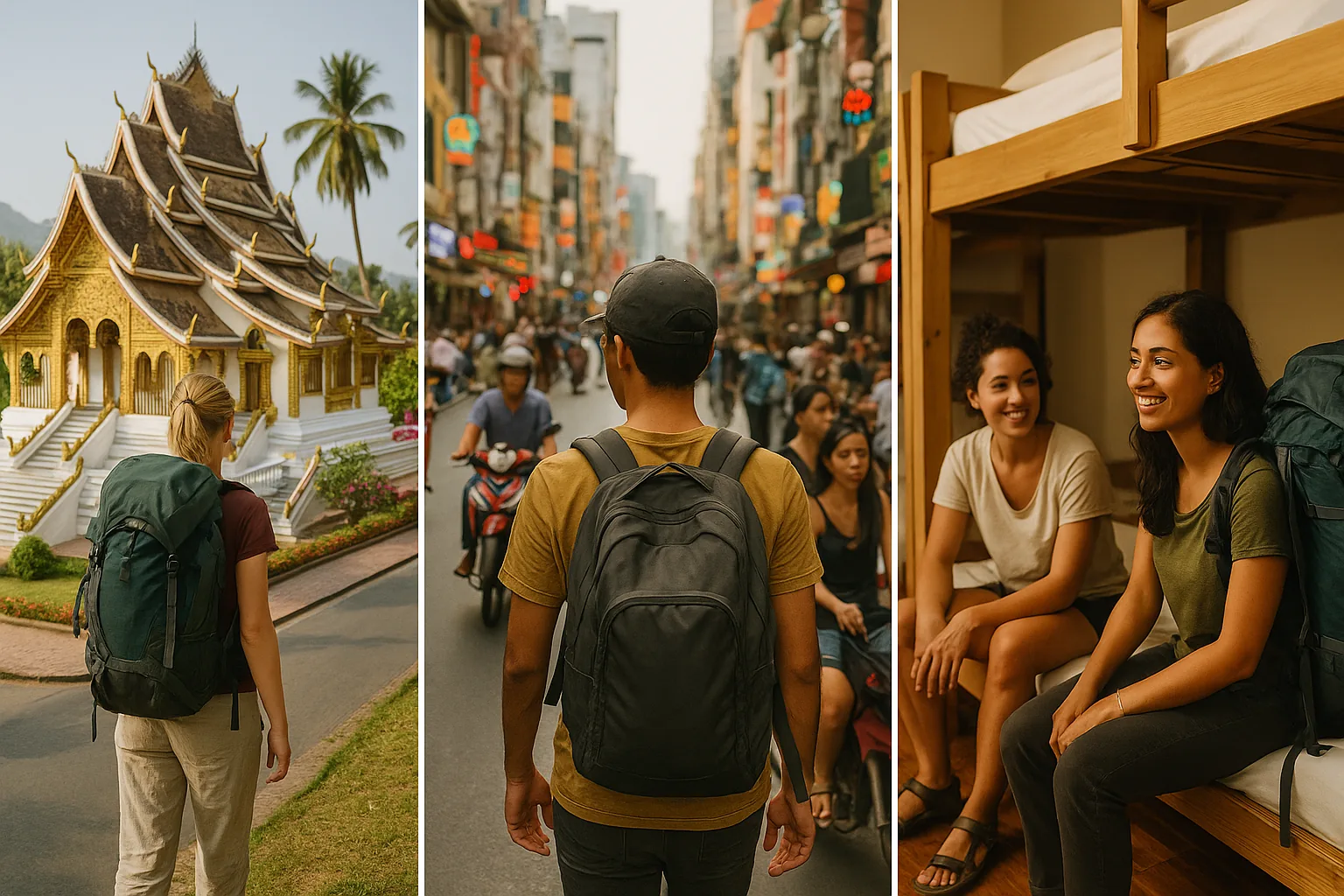
Slow Travel, Real Connections: A Backpacker’s Guide to Luang Prabang, Ho Chi Minh City, and Cusco
There’s a particular kind of traveler who isn’t interested in ticking off landmarks. They want to wake up without an agenda, eat where the locals eat, and stay long enough in one place to actually feel it. If that sounds like you, then southeast asia backpacking — and the wider slow travel movement it’s part of — might be exactly what you’re looking for. This guide takes you through three destinations that reward patience: Luang Prabang in Laos, Ho Chi Minh City (still affectionately called Saigon by many) in Vietnam, and Cusco in Peru. Yes, Cusco is in South America — but the backpacker philosophy that connects all three is the same. Stay longer. Spend smarter. Go deeper.
What Slow Travel Actually Means for Backpackers
Slow travel isn’t about moving slowly. It’s about choosing depth over breadth. Instead of cramming eight countries into three weeks, you pick two or three places and actually live in them for a while. You learn the rhythm of the morning market. You figure out which street stall has the best noodles. You stop feeling like a tourist and start feeling like a temporary resident.
For backpackers on a budget, slow travel also makes financial sense. Moving between destinations costs money — buses, trains, flights, border crossings. When you stay put, your daily costs drop. You find the cheaper guesthouses, the local restaurants, the free things to do. According to Simology’s Southeast Asia backpacking guide, a one-month trip through Thailand, Laos, and Vietnam is comfortably doable on a budget of $1,200 to $1,800 USD — covering visas, accommodation, food, transport, and activities. That’s genuinely manageable if you’re thoughtful about where you slow down.
The classic route runs Bangkok → Chiang Mai → Luang Prabang → Vang Vieng → Vientiane → Hanoi → Ha Long Bay → Hội An → Ho Chi Minh City. It’s a well-worn path for good reason. But within that route, some cities deserve more of your time than others.
Luang Prabang: The Art of Doing Less
Luang Prabang is one of those places that immediately slows your heart rate. The moment you arrive — whether by slow boat down the Mekong or by the small airport perched in the hills — you feel it. The pace here is different. The air is different. Even the light feels softer.
This UNESCO-listed city sits at the confluence of the Mekong and Nam Khan rivers, surrounded by forested mountains. Its colonial French architecture blends with ancient Lao temples in a way that feels organic rather than curated. You’re not walking through a museum. You’re walking through a living town where monks still practice alms-giving ceremonies at dawn and river life continues as it has for generations.
The Spiritual Side of Luang Prabang
The early morning alms-giving ritual — known as tak bat — is one of the most quietly moving experiences you can have in Southeast Asia. Saffron-robed monks walk in single file through the streets just after sunrise, collecting offerings from local residents. If you choose to observe, do it respectfully: stand back, keep quiet, and don’t treat it as a photo opportunity. Watch instead of performing. That restraint is exactly what slow travel asks of you.
Beyond tak bat, Luang Prabang has a handful of temples worth spending real time in — not just photographing the exterior and moving on. Wat Xieng Thong, near the northern tip of the peninsula, is considered one of the most beautiful temple complexes in Laos. Arrive early, sit in the courtyard, and watch the monks go about their morning routines. Some temples also welcome visitors who want to meditate quietly or speak with resident monks, though you should always ask permission and follow the guidance of those present.
If you want a more structured spiritual experience, look into meditation sessions offered at various temples and wellness centers around town. These aren’t tourist traps — they’re genuine opportunities to learn something, even if you only have an hour. Several guesthouses and small retreats in the surrounding hills also offer yoga and mindfulness programs, typically at very affordable rates compared to similar offerings in Thailand or Bali.
Where to Stay and How to Budget
Luang Prabang has accommodation for every budget. At the lower end, guesthouses near the night market area offer clean, simple rooms with fans or air conditioning for just a few dollars a night. Many are family-run, which means you get local knowledge alongside your morning rice porridge. Mid-range guesthouses along the Mekong riverside are a step up — some have terraces where you can watch the river at dusk with a cold Beerlao in hand.
The key is to book a few nights and then explore on foot before committing to a longer stay. Luang Prabang is small enough to walk almost everywhere, which makes it easy to find hidden spots — a quiet café tucked behind a temple, a bakery run by a local family, a riverside spot where you can rent a kayak for the afternoon.
👉 Read also: Southeast Asia Slow Travel: Luang Prabang's Spiritual Side & Day Trips from Saigon
Ho Chi Minh City: Vibrant, Overwhelming, and Worth Every Minute
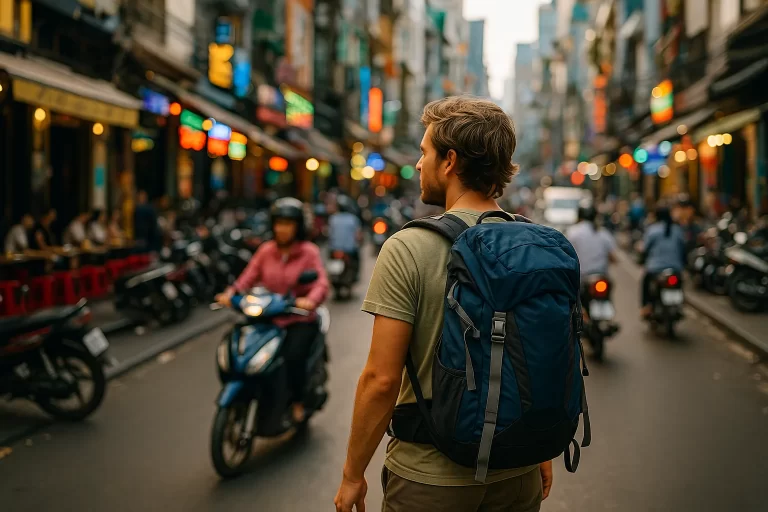
If Luang Prabang is a deep breath, Ho Chi Minh City is a sprint. The city — still widely known as Saigon, a name that carries enormous cultural weight — is one of the most energetic places in Southeast Asia. Motorbikes pour through every intersection. Street food vendors line every alley. The noise, the smells, the constant motion — it can feel like too much, especially after the calm of Laos.
But here’s the thing: overstimulation and cultural richness often come packaged together. The trick is to give yourself permission to step back when you need to, rather than forcing yourself to keep up with everything at once.
Finding Your Footing in the City
Start in District 1 to get your bearings, then push outward. District 3 has a more residential feel — quieter streets, local coffee shops, fewer tourists. District 4, just across the canal, is where you’ll find some of the best street food in the city without the inflated prices of the tourist center. Wander without a plan for a morning and let the city reveal itself to you.
The War Remnants Museum is essential — not because it’s enjoyable, but because it’s honest. It offers context that no guidebook can fully provide. Give yourself time afterward to sit somewhere quiet and process what you’ve seen. That processing time is part of the experience.
Day Trips Within Reach
One of the great advantages of using Ho Chi Minh City as a base is how much is accessible within a few hours. The Mekong Delta region, reachable in roughly two to three hours by road, offers a completely different side of Vietnam — rice paddies, floating markets, river villages, and a pace of life that feels worlds away from the city. You can join a guided day trip or, if you’re more adventurous, rent a motorbike and explore independently (though road conditions and traffic require genuine experience and care).
The Cu Chi Tunnels, northwest of the city, are another powerful half-day experience. The tunnel network used during the Vietnam War is now partially open to visitors, giving you a physical sense of the ingenuity and hardship that defined that period. It’s not comfortable — literally or emotionally — but it’s one of those experiences that sticks with you.
Closer to the city, the neighborhood of Binh Thanh is worth a wander for its mix of old colonial villas, modern cafés, and local markets. It doesn’t appear on most tourist itineraries, which is exactly the point.
Managing Overstimulation Without Missing Out
Every backpacker hits a wall at some point. You’ve been moving for weeks, absorbing new information and experiences constantly, and suddenly you feel completely empty. This is normal. It’s not a sign that you’re doing travel wrong — it’s a sign that you’re doing it honestly.
When you feel that wall approaching in Ho Chi Minh City, give yourself a day off. Not a day of sightseeing, but a genuine rest day. Find a café with good coffee and slow Wi-Fi. Read a book. Write in a journal. Eat something familiar if that’s what you need. You’ll come back to the city refreshed, and you’ll see things you missed when you were running on fumes.
Southeast Asia Backpacking Meets South America: Cusco, Peru
Cusco doesn’t fit neatly into a southeast asia backpacking itinerary — geographically, it’s on the other side of the world. But the backpacker culture that thrives here is built on exactly the same values: community, authenticity, budget-consciousness, and a genuine desire to connect with local culture. If your travel ambitions extend beyond Southeast Asia, Cusco deserves a serious look.
Situated in the Peruvian Andes at over 3,400 meters above sea level, Cusco was once the capital of the Inca Empire. Walking through the historic center, you can see Inca stonework forming the foundations of Spanish colonial buildings — a literal layering of histories in a single street. It’s one of the most visually and culturally complex cities in the Americas.
The Hostel Scene: Something for Every Type of Traveler
Cusco has one of the most developed hostel scenes in South America. According to Hostelworld, there are over 100 hostels in the city as of 2026, with prices starting from as little as US$4 per night. That range means there’s genuinely something for every type of backpacker.
👉 Read also: Southeast Asia Slow Travel: Luang Prabang & Saigon Day Trips for First-Time Visitors
If you’re a solo traveler looking to meet people, look for hostels with communal kitchens, rooftop terraces, and organized social events. These tend to be the places where friendships form quickly — a shared meal, a card game, a group hike to a nearby ruin. The social infrastructure of a good hostel is one of the most underrated parts of backpacking.
If you’re more introverted — or just tired of the party hostel circuit — Cusco also has quieter options. Smaller guesthouses in the San Blas neighborhood, a hillside barrio above the Plaza de Armas, offer a more peaceful base. The streets are cobblestoned and steep, the views over the city are spectacular, and the atmosphere is noticeably calmer than the center.
Couples or small groups traveling together might prefer private rooms in boutique hostels — still affordable, still social if you want to be, but with the option to close the door and have your own space. Many Cusco hostels offer private rooms with shared bathrooms that hit a sweet spot between cost and comfort.
Altitude, Acclimatization, and Slowing Down
One thing Cusco forces on you — whether you like it or not — is slowness. Altitude sickness affects many visitors in the first day or two. The local remedy is coca tea, widely available and genuinely helpful. But the real cure is rest. Don’t plan activities for your first day. Walk slowly. Drink water. Let your body adjust.
That enforced slow start often turns out to be a gift. You sit in a café watching the Plaza de Armas fill with life. You wander without purpose and stumble onto a market you wouldn’t have found otherwise. You talk to the person at the next table because you have nowhere to be. Slow travel, sometimes, is just what happens when you stop rushing.
Balancing the Rush and the Stillness
Whether you’re navigating the sensory overload of Ho Chi Minh City, absorbing the spiritual quiet of Luang Prabang, or catching your breath in the thin air of Cusco, the core challenge of backpacking is the same: how do you stay open to everything without burning out?
The answer most experienced travelers arrive at is rhythm. Build a routine within each destination, even a loose one. A morning coffee ritual. An afternoon walk in a particular direction. A regular spot for dinner. These small anchors give you stability without turning your trip into a schedule. They also help you feel less like a visitor and more like someone who belongs — at least temporarily.
Give yourself permission to miss things. You won’t see everything, and that’s fine. The waterfall you skipped might have been spectacular. The temple you chose not to visit might have been the most beautiful one. But the conversation you had instead, the afternoon you spent doing nothing in particular, the sunset you watched from a guesthouse rooftop — those are the things you’ll actually remember.
Slow travel isn’t a compromise. It’s a choice to trade quantity for quality, breadth for depth, and a full itinerary for a full experience. Whether your journey takes you through the river towns of Laos, the electric streets of Vietnam, or the ancient plazas of Peru, the places that stay with you longest are always the ones where you stayed long enough to really arrive.
Practical Tips Before You Go
- Budget realistically. A month through Thailand, Laos, and Vietnam can cost between $1,200 and $1,800 USD all-in — but that requires mindful spending, not deprivation. Cook occasionally, take local transport, and avoid the tourist-price trap by eating where locals eat.
- Don’t overplan. Book your first night in each city in advance, then leave the rest flexible. The best experiences in slow travel are almost always unplanned.
- Pack light, seriously. A heavy bag is the enemy of spontaneous movement. If you’re not sure whether you need it, leave it at home.
- Learn a few words of the local language. Even a basic greeting or thank-you in Lao, Vietnamese, or Quechua opens doors that a phrase book never will.
- Respect the culture you’re visiting. Cover your shoulders in temples. Ask before photographing people. Be a guest, not a spectator.
- Acclimatize properly in Cusco. Give yourself at least a full day of rest before attempting any altitude-heavy activities like hiking. Coca tea helps. So does patience.
- Use hostel common areas. Some of the most valuable travel information comes from other backpackers. Ask where they’ve been, what they’d skip, what surprised them.
The Kind of Traveler These Places Make You
There’s a version of travel that’s about accumulation — stamps in a passport, photos in an album, destinations crossed off a list. And then there’s the kind of travel that changes how you think. Luang Prabang teaches you stillness. Ho Chi Minh City teaches you resilience and the value of stepping back. Cusco teaches you humility — both in the face of altitude and in the face of a civilization that built something extraordinary long before the modern world existed.
Southeast asia backpacking, at its best, isn’t about the route or the budget or the number of countries. It’s about the version of yourself you become when you’re forced to navigate unfamiliar places, connect with strangers, and figure things out as you go. That’s the real souvenir — and it’s one that actually fits in your bag.
Your next adventure is already taking shape. All you have to do is start.
This article was produced with AI assistance and reviewed editorially.


Planning Your First Solo Trip: A Step-by-Step Blueprint for Unforgettable Travel

Teaching English Abroad in 2026: Top Countries, Visa Requirements & Real Salaries


