
Asia
Chiang Mai Beyond the Burning Season: What to Expect and How to Stay Safe
Plan a trip to Chiang Mai during burning season with practical safety strategies. Learn about air quality, 7 essential tips, and indoor activities to enjoy the city safel

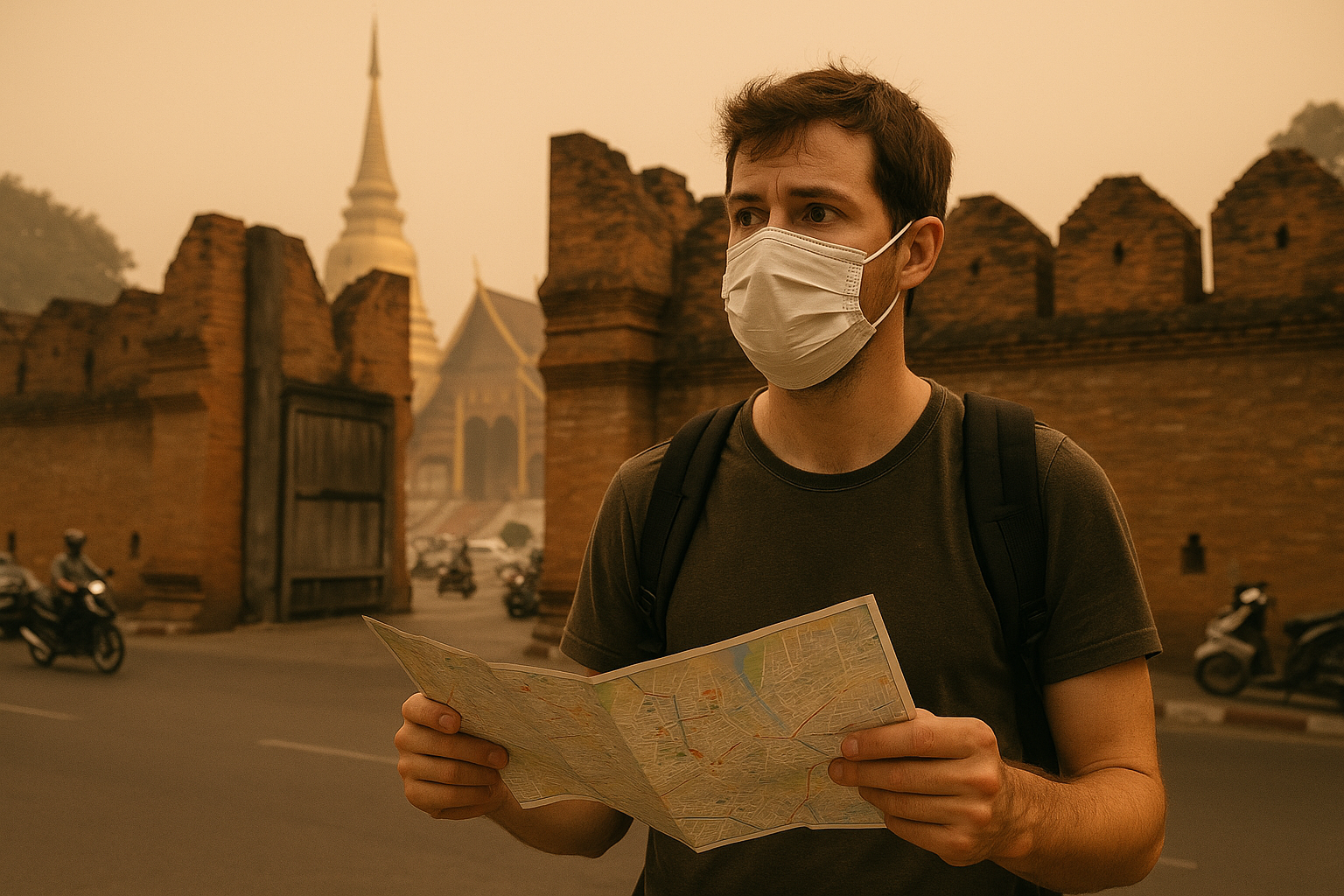
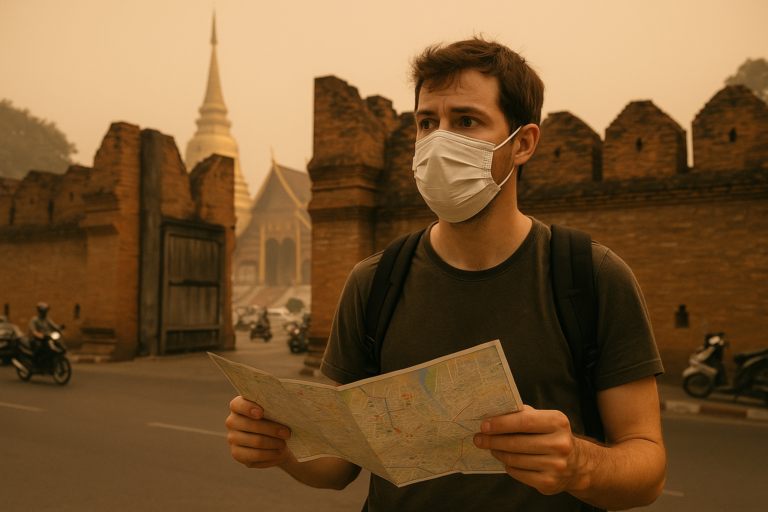
Why Visiting Chiang Mai During Burning Season Is Still Worth Considering
Here’s the honest truth about visiting Chiang Mai during burning season: it’s complicated. Every year, roughly between February and April — with March being the most intense month — northern Thailand’s skies fill with smoke from agricultural burning across the region. The air quality drops sharply. Chiang Mai, one of Southeast Asia’s most beloved cities, regularly appears on global lists for the worst air pollution during this period. And yet, travelers keep coming. Some even plan their trips specifically around it.
If you’re weighing up whether visiting Chiang Mai during burning season makes sense for your trip, the short answer is: it depends on how you prepare. This guide gives you the full picture — the risks, the rewards, the practical safety steps, and the genuine reasons why this city still has so much to offer even when the air is at its worst. Because Chiang Mai is extraordinary, and no season changes that entirely.
Understanding Burning Season: What’s Actually Happening
Burning season isn’t a natural phenomenon. It’s the result of agricultural burning — farmers across northern Thailand, Myanmar, and Laos clearing fields and forests after harvest, using fire as the fastest and most affordable method available to them. The smoke drifts across the region, and Chiang Mai, nestled in a valley surrounded by mountains, traps it particularly badly.
March is consistently the worst month. During peak burning season, Chiang Mai regularly lands on international rankings of cities with the most hazardous air quality in the world. That’s not a scare tactic — it’s a documented, recurring reality that anyone planning a trip needs to understand before booking flights.
The burning season typically begins to build in February, peaks in March, and starts to ease in April as pre-monsoon rains arrive. Some years are worse than others depending on wind patterns, rainfall levels, and how much burning is happening across the wider region. You can track real-time air quality data through tools like IQAir’s Chiang Mai monitoring page, which gives you live AQI (Air Quality Index) readings before and during your trip.
Understanding what you’re dealing with is step one. Burning season isn’t a reason to automatically cancel your plans — but it is a reason to plan very differently than you would in, say, November or December.
The Real Risks — and How Seriously to Take Them
Air pollution at the levels Chiang Mai can experience during March is genuinely harmful, particularly for people with respiratory conditions like asthma, allergies, or any existing lung or heart issues. Even for healthy travelers, extended exposure to high-pollution air causes irritation, headaches, fatigue, and discomfort. This isn’t something to brush off.
That said, Thailand as a whole — and Chiang Mai specifically — is considered one of the safest travel destinations in the world. The city is well-organized, has strong infrastructure for tourists, and is particularly recognized as a welcoming and secure destination for solo travelers. The burning season doesn’t change the city’s safety in terms of crime, transport, or general travel logistics. What it changes is the environmental context.
The people most affected by burning season air quality are:
- Travelers with asthma, COPD, or other respiratory conditions
- Anyone with cardiovascular issues
- Young children and older adults
- People who are pregnant
- Travelers who plan to spend most of their time outdoors
If you fall into any of these categories, it’s worth having a serious conversation with your doctor before booking a March trip to Chiang Mai. For everyone else, the risks are manageable — especially if you come prepared.
7 Practical Safety Tips for Visiting Chiang Mai During Burning Season
1. Pack a High-Quality Respirator Mask
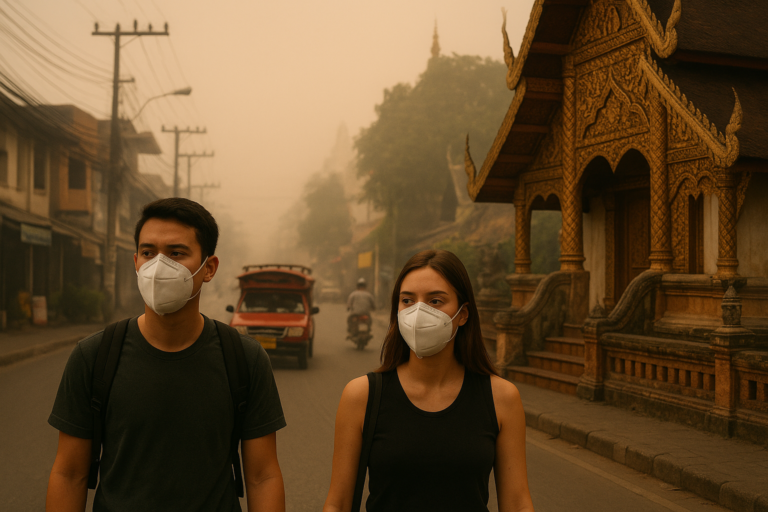
A standard surgical mask or a thin cloth mask won’t cut it during heavy smoke days. You need an N95 or KN95 respirator — masks rated to filter out fine particulate matter. Pack several, and replace them regularly. Wearing one whenever you’re outside during high-AQI days is one of the most effective things you can do to protect your lungs.
2. Monitor Air Quality Daily
Download an air quality app before you arrive and check it every morning. AQI levels can shift significantly from day to day, and some days during burning season are genuinely manageable while others are severely hazardous. Plan your outdoor activities around the data, not the calendar. A day with AQI under 100 is very different from a day pushing 300.
3. Choose Accommodation Wisely
Look for a hotel or guesthouse that has air conditioning and, ideally, air purifiers in the rooms. Spending time indoors in a filtered environment gives your lungs a chance to recover. When you’re searching for places to stay, it’s worth asking properties directly whether they have air purification systems — more and more accommodations in Chiang Mai are investing in these specifically because of burning season.
4. Limit Early Morning and Evening Outdoor Time
Pollution levels often peak in the early morning and late evening when cooler air settles and traps smoke closer to the ground. If you want to explore outdoor markets, temples, or neighborhoods, aim for midday when air tends to circulate more. It’s counterintuitive if you’re used to avoiding the midday heat, but during burning season the timing logic shifts.
5. Stay Hydrated and Rest More Than Usual
Your body works harder when it’s processing polluted air. Drink more water than you normally would, take breaks during outdoor activities, and don’t push yourself through exhaustion. If you feel unusual headaches, eye irritation, or fatigue, those are signals to head indoors and rest. Listen to your body — it’s giving you accurate information.
6. Have a Travel Insurance Policy That Covers Medical Care
This is good advice for any trip, but it matters especially here. If you develop respiratory symptoms that need medical attention, Chiang Mai has good hospitals and clinics that are accustomed to treating tourists. Make sure your travel insurance covers medical treatment in Thailand, and know where the nearest clinic is to your accommodation before you need it.
7. Plan Your Trip Around Indoor and Covered Experiences
Burning season doesn’t have to mean sitting in your hotel room. Chiang Mai has a rich cultural and culinary scene that exists largely indoors or under cover. Planning your itinerary with this in mind — rather than treating indoor activities as a backup — transforms the experience. More on this below.
What to Do in Chiang Mai When the Air Is Heavy
One of the things that surprises first-time visitors to Chiang Mai during burning season is how much the city still has to offer. This is a place with centuries of history, a thriving food culture, world-class wellness and spa traditions, and an arts scene that doesn’t stop for smoke.
Some of the best experiences during burning season are indoors or under cover:
- Thai cooking classes: Chiang Mai is one of the best cities in the world to learn northern Thai cuisine. Most cooking schools operate in covered or indoor kitchens, and a half-day class is one of the most rewarding ways to spend a smoky morning.
- Temple interiors: Wat Phra Singh, Wat Chedi Luang, and Wat Suan Dok all have stunning interior spaces worth exploring slowly. The smoke outside doesn’t follow you in, and you’ll often find these places quieter during burning season.
- Traditional Thai massage: Chiang Mai has a deep tradition of therapeutic massage, and the city is home to some genuinely excellent practitioners. A few hours at a reputable massage school or spa is a perfect burning season afternoon.
- The Saturday and Sunday Night Markets: These covered and semi-open markets are worth visiting even in smoky conditions. Go with your mask, take breaks, and enjoy the food stalls and craft vendors at a relaxed pace.
- Museums and galleries: The Chiang Mai City Arts and Cultural Centre and the Lanna Folklife Museum offer deep dives into the region’s history and are fully indoors.
- Café culture: Chiang Mai’s café scene is genuinely one of Southeast Asia’s best. The city has a thriving community of specialty coffee shops, many of which are fully air-conditioned and make for perfect work-from-anywhere spots on heavy smoke days.
- Thai language or craft workshops: Local community organizations and cultural centers often run short workshops in everything from traditional weaving to basic Thai language. These are great ways to connect with the city beyond its tourist surface.
On days when the AQI drops to manageable levels, you can venture out to explore the Old City’s moat-lined streets, take a tuk-tuk to a quieter neighborhood, or visit the Nimmanhaemin area’s independent shops and street art. Burning season doesn’t lock you indoors entirely — it just makes you more intentional about when and how you go out.
The Honest Upside: Why Some Travelers Choose This Season
There’s a reason experienced travelers sometimes deliberately visit Chiang Mai during burning season, and it’s not masochism. The city during February and March is significantly less crowded than during peak season. Guesthouses, boutique hotels, and cooking schools that are booked weeks in advance in November are often available with short notice. Prices across accommodation, tours, and even some restaurants tend to be lower.
Beyond the practical savings, there’s something authentic about experiencing a city outside its most curated, tourist-optimized version of itself. During burning season, you’re more likely to find yourself in a temple with just a handful of other visitors, sharing a table at a local restaurant without competing for space, or having an actual conversation with a guesthouse owner who has time to talk. The city doesn’t disappear — it just gets a little quieter and, in its own complicated way, a little more real.
For travelers who are flexible, prepared, and genuinely curious about Chiang Mai beyond its highlight-reel moments, burning season can offer an unexpectedly meaningful experience. You just need to go in with clear eyes and the right gear in your bag.
Planning Your Trip: Timing, Preparation, and Mindset
If you have complete flexibility, the best months to visit Chiang Mai are November through early February — cool, relatively dry, and with excellent air quality. But if March or early April is what works for your schedule, don’t write the trip off. Plan around the conditions rather than against them.
Before you travel, it’s worth reading up on detailed firsthand accounts of air quality in northern Thailand from travelers who’ve been there during burning season. Real experiences give you a much more grounded picture than any official summary can.
Pack your N95 masks, download your air quality app, book accommodation with air conditioning, and build an itinerary that leans into the city’s indoor richness. Talk to your doctor if you have any health concerns. And then go — with curiosity, with preparation, and with the understanding that visiting Chiang Mai during burning season is a different kind of trip, but still a worthwhile one.
Chiang Mai Is More Than Its Air Quality
Burning season is a real challenge, and it would be dishonest to minimize it. But Chiang Mai is also a city with a soul that runs deeper than its seasonal air quality readings. It’s a place where ancient temples sit beside specialty coffee shops, where street food is some of the most complex and delicious you’ll find anywhere in Asia, where the surrounding mountains and hill tribe communities offer cultural encounters that stay with you long after you’ve come home.
Visiting Chiang Mai during burning season means accepting a trade-off: fewer perfect blue-sky days in exchange for a quieter, more affordable, and in many ways more intimate experience of a city that genuinely rewards curious travelers. Come prepared, stay informed, listen to your body, and let Chiang Mai show you what it has to offer — smoke and all. It’s one of those places you’ll still be thinking about long after you’ve gone home, and a bit of haze in the sky won’t change that.
This article was produced with AI assistance and reviewed editorially.


Vietnam Uncovered: Beyond the Chaos, Into the Real Story

Beyond the Guidebook: What Hanoi Actually Feels Like


