
Asia
Budget Travel in Southeast Asia: Sri Lanka, Laos & Thailand Itineraries
Explore three Southeast Asian countries on a budget with tested itineraries, cost breakdowns, and practical timing advice for temples, rivers, and mountains.

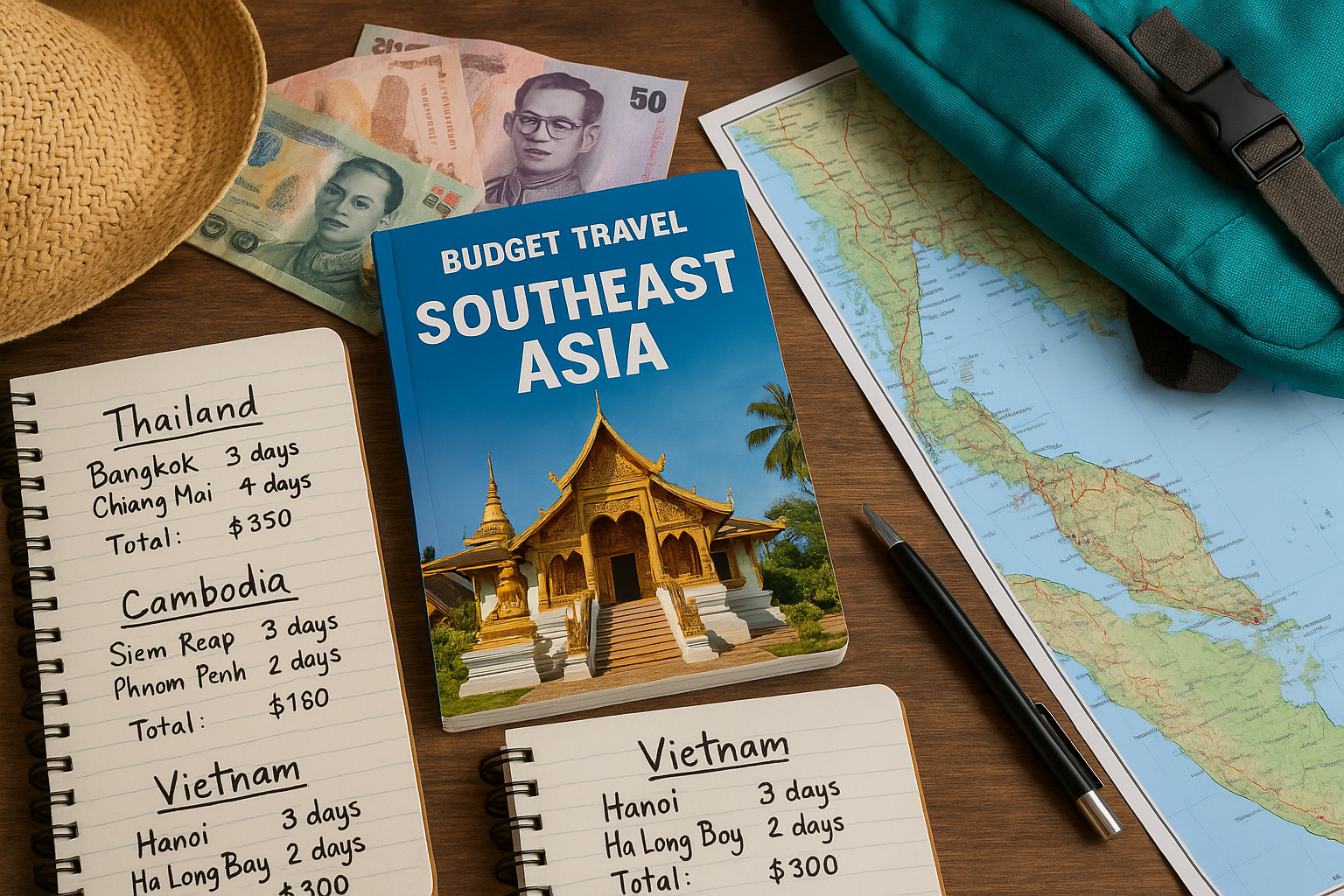
Why Southeast Asia Should Be Your Next Big Adventure
If you’ve been dreaming about long journeys through ancient temples, winding rivers, and mountain towns where the air smells like street food and incense, then budget travel in Southeast Asia is probably already on your radar. And for good reason. This corner of the world consistently delivers some of the most rewarding travel experiences on the planet — without demanding a huge bank account to get there.
The region stretches across a wildly diverse collection of countries, each with its own rhythm, cuisine, landscape, and culture. Sri Lanka, Laos, and Thailand are three destinations that deserve a lot more than a passing mention. They’re places where you can spend weeks exploring and still feel like you’ve only scratched the surface. Whether you’re a first-time backpacker or a seasoned traveler looking for a fresh route, these three countries offer something genuinely worth chasing.
This guide walks you through practical itineraries, honest cost expectations, and the kind of timing advice that makes the difference between a frustrating trip and an unforgettable one. Let’s get into it.
Sri Lanka: Ten Days of Temples, Tea, and Coastline
Sri Lanka sits just off the southern tip of India, and it punches well above its weight for travelers. It’s compact enough to explore thoroughly in ten days, yet varied enough that you’ll move through completely different worlds — ancient ruins, misty highlands, and golden beaches — all within a relatively short distance.
According to travel resources tracking long-term backpacker spending, Sri Lanka can be explored on a budget of under $500 for a full month, making it one of the most affordable destinations in the region. For a ten-day trip, that means you’re looking at a genuinely accessible experience even if you’re working with limited funds.
A Suggested Ten-Day Route
Start in Colombo, the capital. It’s chaotic and layered and worth a day or two of wandering. Skip the tourist-facing areas and head into neighborhoods like Pettah, where the market streets feel genuinely alive. Eat at local rice-and-curry spots rather than hotel restaurants — you’ll spend a fraction of the price and eat far better.
From Colombo, head north to the Cultural Triangle. This region is home to some of Sri Lanka’s most significant historical sites, including the ancient city of Sigiriya with its famous rock fortress rising dramatically above the surrounding jungle. Arrive early — well before midday — to beat the crowds and the heat. The climb is steep but the view from the top is one of those moments you’ll keep coming back to in your memory.
Nearby Dambulla’s cave temples are another highlight. They’re quieter than Sigiriya, often overlooked by visitors rushing between the headline sites, and the painted murals inside are extraordinary. This is exactly the kind of place that rewards slow, curious travelers.
After the Cultural Triangle, take the famous train journey through the hill country toward Ella. This route — winding through tea plantations, over bridges, and through misty valleys — is one of the most scenic rail journeys in the world. Book a second-class seat in advance, sit by the open door, and let the landscape do the talking. Ella itself is a small mountain town with great hiking, a relaxed atmosphere, and food that caters well to budget travelers.
Round out your trip with a few days on the southern coast. Towns like Mirissa and Tangalle offer beautiful beaches without the overdevelopment that has crept into some of the more famous spots. Accommodation ranges from simple guesthouses to beach bungalows, and you can eat fresh seafood for very little if you wander away from the main tourist strip.
Timing Your Sri Lanka Visit
Sri Lanka has two distinct monsoon seasons affecting different coasts at different times of year. The west and south coasts are generally best visited between November and April, while the east coast sees better weather from May through September. The hill country is pleasant year-round but can be misty and cool. Checking the regional weather patterns before you book will save you from arriving at a beach during heavy rain season.
Laos: A Month Along Rivers and Through Mountain Villages
Laos is one of those countries that travelers often describe as feeling like Southeast Asia used to feel before mass tourism arrived. It’s landlocked — bordered by China, Vietnam, Cambodia, Thailand, and Myanmar — which has historically kept it slightly off the main backpacker circuit. That’s changing, but slowly enough that the country still has a distinctive quietness to it.
A month in Laos gives you enough time to move at the pace the country seems to demand. Rushing through Laos misses the point entirely. The beauty here is in the slow river journeys, the conversations with monks in temple courtyards, the evenings spent watching the Mekong turn gold at sunset.
Starting in Vientiane
The capital is small and unhurried by regional standards. Spend a few days exploring the temples, wandering along the riverfront promenade, and eating at the night market. Pha That Luang, the golden stupa that appears on the national seal, is worth visiting at different times of day — the morning light and the late afternoon glow create completely different atmospheres.
From Vientiane, you have options. Many travelers head north toward Vang Vieng and then on to Luang Prabang. Vang Vieng has a reputation for party tourism, which is fair, but it also sits in genuinely stunning karst landscape. If you rent a bicycle and head out of town, you’ll find caves, rice fields, and river views with almost no one around.
Luang Prabang and Beyond
Luang Prabang is the cultural heart of Laos. It’s a UNESCO-listed town where saffron-robed monks collect alms at dawn, French colonial architecture lines the main street, and the pace of life feels like a deliberate antidote to the modern world. Wake up early for the alms-giving ceremony — watch respectfully from a distance rather than crowding in with a camera, and the experience becomes something genuinely moving.
North of Luang Prabang, the landscape shifts into mountain territory. The area around Nong Khiaw and Muang Ngoi is one of the most visually striking in the country — limestone peaks rising above the Nam Ou river, small villages accessible mainly by boat, and trekking routes that take you through communities where tourism is still relatively new. Stay in locally run guesthouses, hire local guides, and the money you spend goes directly into the community.
If you have the full month, consider extending south to the Bolaven Plateau and the 4,000 Islands (Si Phan Don) region near the Cambodian border. The plateau is known for its waterfalls and coffee — Laotian coffee is exceptional — while the islands offer a completely different, tropical atmosphere with hammocks strung between palm trees and very little to do except exactly what you feel like doing.
Getting Around Laos on a Budget
Slow boats on the Mekong are a classic budget option between certain towns, particularly the two-day journey from the Thai border down to Luang Prabang. It’s long, it’s basic, and it’s one of those travel experiences that people talk about for years. Minibus connections link most towns, and while the roads can be rough in places, the scenery more than compensates. Internal flights exist but aren’t necessary for a budget itinerary.
Chiang Mai and Northern Thailand: Mountains, Markets, and Honest Advice
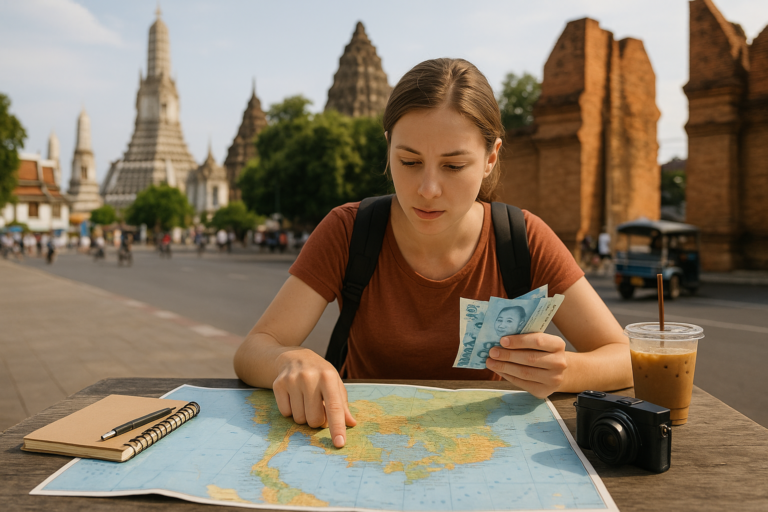
Thailand is often the entry point for budget travel in Southeast Asia, and Chiang Mai is one of its most compelling destinations. The city sits in the mountains of northern Thailand, surrounded by jungle-covered hills, and it has a character completely different from Bangkok or the beach resorts of the south.
Chiang Mai has a thriving expat and digital nomad community, excellent food, dozens of temples within the old city walls, and access to some of the best trekking and outdoor experiences in the country. It’s also one of the more affordable cities in Thailand, with a wide range of accommodation, from budget guesthouses to comfortable mid-range options, all within easy reach of the center.
What to Actually Do in Chiang Mai
The old city is compact and walkable. Spend a morning wandering between temples — Wat Chedi Luang and Wat Phra Singh are particularly impressive — and you’ll quickly notice that the atmosphere is quieter and more contemplative than Bangkok’s famous temple circuit. Hire a bicycle and you can cover the whole area comfortably in a day.
The Saturday and Sunday Walking Streets are genuinely worth your time. They’re popular, yes, but they’re also where you’ll find local artisans, street food that goes well beyond the tourist-facing pad thai, and a lively atmosphere that feels rooted in the city rather than performed for visitors. Arrive early in the evening before the crowds build.
For day trips, Doi Inthanon National Park — Thailand’s highest peak — offers waterfalls, hill tribe villages, and cool mountain air that feels like a complete change of scene. The road up to the summit passes through cloud forest and the views on a clear day are expansive. Go on a weekday if possible to avoid the weekend crowds from the city.
The Burning Season: What You Need to Know
This is important practical information that many travel guides gloss over. Northern Thailand, including Chiang Mai, experiences a burning season typically between February and April, when agricultural burning in the surrounding region creates significant air quality issues. On bad days, the smoke can be thick enough to obscure the mountains entirely and can cause health problems, particularly for anyone with respiratory conditions.
If you’re sensitive to air quality or planning to do a lot of outdoor activity, it’s worth timing your visit outside this window. The cooler months between November and February offer the best combination of weather and air quality in the north. That said, even during burning season, Chiang Mai itself remains a fascinating city — just plan your outdoor activities with air quality forecasts in mind, and consider carrying a quality mask for particularly smoky days.
Connecting the Route: Thailand to Laos and Back
One of the great things about this region is how naturally the countries connect. Crossing overland from northern Thailand into Laos — or making the Bangkok to Vientiane journey — is straightforward and well-traveled. Adventure tour operators run connections between Bangkok and Vientiane for travelers who want a guided introduction before going independent, and the overland border crossings are generally smooth and well-documented.
If you’re building a longer trip that combines all three countries covered here, a logical flow might look like: fly into Colombo for Sri Lanka, then connect to Bangkok as your Southeast Asia entry point, head north to Chiang Mai, cross into Laos, and work your way through the country before flying home from Vientiane or connecting onward to Vietnam or Cambodia.
Budget Realities: What Does It Actually Cost?
Honest budget conversations matter. Research tracking backpacker spending across Southeast Asia suggests that budget travelers average around $22 per day across the region when moving between multiple countries. That figure covers basic accommodation, local food, transport, and entry fees — it doesn’t include flights into the region or major splurges.
In practice, your daily spend will vary significantly by country and by how you travel. Sri Lanka and Laos both tend to sit at the more affordable end of the spectrum. Thailand is slightly more developed and prices in tourist areas reflect that, though it’s still very manageable on a backpacker budget if you make sensible choices about where you eat and sleep.
- Accommodation: Dorm beds in hostels and basic guesthouses across all three countries typically cost between $5 and $15 per night. Private rooms start from around $15 and go up from there depending on location and quality.
- Food: Eating at local restaurants, market stalls, and street food vendors keeps costs low — often $1 to $4 per meal. Eating at tourist-facing restaurants can easily triple that cost with no meaningful improvement in quality or experience.
- Transport: Local buses, shared minivans, and slow boats are all significantly cheaper than private transfers or taxis. Train travel in Sri Lanka is excellent value and often a highlight in itself.
- Activities: Many temples charge modest entrance fees. National parks and trekking guides add to daily costs but are generally still affordable by global standards.
The biggest budget killers are usually the choices that feel small in the moment: taking taxis instead of tuk-tuks or local transport, eating at restaurants that cater primarily to tourists, and booking through middlemen rather than directly with guesthouses. Make conscious choices on these and your money goes much further.
Practical Tips Before You Go
Visas and Entry
Visa requirements vary by nationality and change periodically, so always check the current rules for your passport well before you travel. Sri Lanka, Thailand, and Laos all have visa-on-arrival or e-visa options for many nationalities, but the specifics matter and it’s worth getting this right before you arrive at a border.
Health and Safety
Travel insurance is non-negotiable. Even on a tight budget, the cost of a policy is minimal compared to the potential cost of medical treatment or emergency evacuation. Vaccinations worth discussing with a travel health clinic include hepatitis A and B, typhoid, and tetanus at minimum — your doctor can advise based on your specific itinerary.
Connectivity
Local SIM cards are cheap and widely available in all three countries. Buy one at the airport when you arrive and you’ll have data for navigation, translation apps, and staying in touch throughout your trip. Don’t rely on roaming from your home country — it’s expensive and unnecessary.
Packing Light
A smaller pack genuinely changes how you travel. When you can carry everything on your back and still move freely, you have more options — you can take the local bus instead of the private transfer, change plans spontaneously, and navigate crowded markets without dragging luggage behind you. Pack for the climate, leave the “just in case” items at home, and remember that most things you forget can be bought cheaply on arrival.
The Bigger Picture: Why These Three Countries Work Together
Sri Lanka, Laos, and Thailand each offer something distinct. Sri Lanka gives you history, coastline, and a culture that feels genuinely different from mainland Southeast Asia. Laos offers slowness, natural beauty, and a sense of discovery that’s becoming harder to find in more heavily visited countries. Thailand — and Chiang Mai specifically — provides a comfortable base with excellent infrastructure, incredible food, and easy access to outdoor adventure.
Together, they form a journey that moves through multiple landscapes, climates, and cultures without ever feeling repetitive. The region as a whole supports itineraries ranging from two weeks to six months, depending on how deep you want to go and how long you can stay. Budget travel in Southeast Asia isn’t about cutting corners on experience — it’s about making choices that keep you on the road longer and put you closer to the places and people that make travel genuinely meaningful.
Wherever you start and however long you have, the most important thing is simply to go. Book the flight, pack the bag, and trust that the rest will figure itself out — because in this part of the world, it almost always does.
This article was produced with AI assistance and reviewed editorially.


Sri Lanka in October: Skip the Crowds, Embrace the Adventure

Vietnam Beyond the Guidebook: What You Actually Need to Know


