
Albania
Hidden Hiking Trails for Young Adventurers: Valbona-Theth (Albania) & Kumano Kodo (Japan) in 2026
Discover two lesser-known hidden hiking trails for adventurers: Albania’s Valbona-to-Theth route and Japan’s Kumano Kodo pilgrimage network. Detailed route guides, costs,

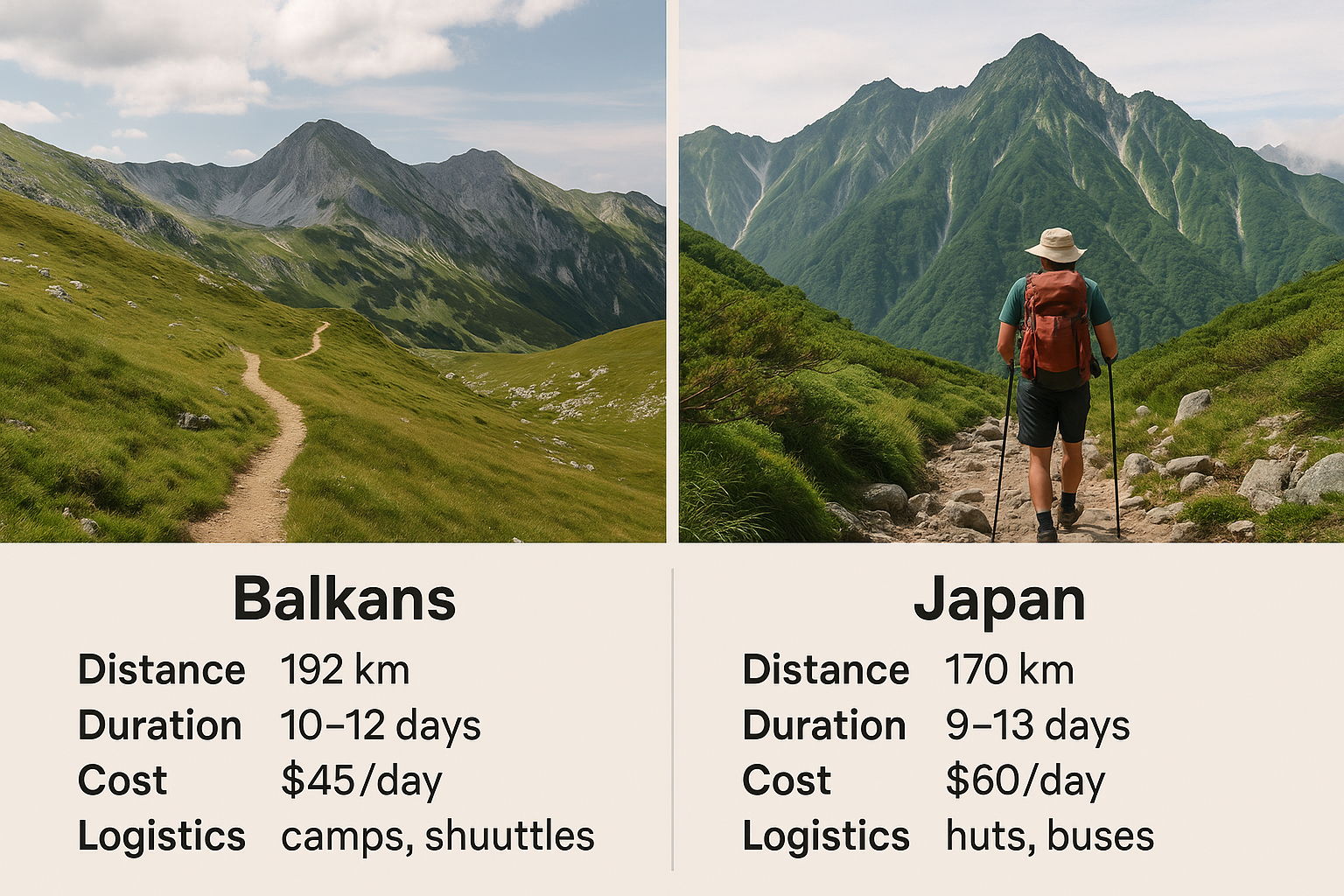
Why Hidden Hiking Trails Are the Best Way to Experience the World in 2026
There’s a particular kind of freedom that comes from stepping onto a trail that most people have never heard of. No queues at the trailhead, no crowds at the summit, no one photobombing your view. Hidden hiking trails offer something that the world’s famous routes simply can’t anymore: the feeling that you’ve genuinely discovered something. In 2026, two trails stand out as the most compelling options for young adventurers who want that experience — the Valbona-to-Theth route threading through the wild Albanian Alps, and the ancient Kumano Kodo pilgrimage network winding through the forested mountains of Japan’s Wakayama Peninsula. These aren’t just hikes. They’re journeys that will stay with you long after your boots have dried out.
Albania’s Best-Kept Secret: The Valbona-to-Theth Trail
Albania is one of those countries that surprises almost everyone who visits. Roughly 75% of the country is covered in mountains or hills, and yet it remains one of the least-visited destinations in Europe. That’s starting to change — but slowly enough that you can still arrive in the Albanian Alps and feel like you’re somewhere genuinely off the beaten path.
The Valbona-to-Theth trail is the centrepiece of hiking in northern Albania. It connects two of the most dramatic valleys in the Balkans, cutting through the Accursed Mountains — a range whose name alone should tell you something about the kind of landscape you’re walking into. Jagged limestone peaks, glacial rivers, traditional stone guesthouses, and a silence that feels almost prehistoric. This is the kind of trail that makes you put your phone away not because you’re told to, but because you simply forget it exists.
The Route and What to Expect
The trail begins in Valbona Valley, a long glacial valley in northern Albania that features prominently in any serious hiking itinerary for the region. From the village, you follow a well-marked path that climbs steadily toward Valbona Pass — the high point of the route and the moment where everything opens up. The hike from the village to the pass takes roughly three to four hours, and while the terrain is steep in places, the overall difficulty is moderate. You don’t need technical climbing experience, but you do need to be comfortable with sustained ascent and uneven ground.
From the pass, the descent into Theth is where the trail really earns its reputation. The views are expansive, the path winds through forest and meadow, and eventually you arrive at Theth National Park — a protected area of extraordinary natural beauty. One of the highlights along the route is the Blue Eye, a vivid natural spring that seems almost impossibly clear. It’s the kind of thing you stumble across and immediately want to photograph, then immediately put your camera down because no image will do it justice.
The full route is typically done as a multi-day experience, with most hikers spending at least one night in either Valbona or Theth to acclimatise and absorb the surroundings. Guesthouses in both villages are run by local families and offer an authentic slice of Albanian mountain hospitality — simple, warm, and genuinely memorable.
Difficulty and Who It’s For
The Valbona-to-Theth trail is well within reach for anyone with a reasonable level of fitness and some hiking experience. The ascent to Valbona Pass is the most demanding section, with steeper gradients that will test your legs if you’re not used to mountain terrain. That said, the path is well-marked, and you’ll encounter other hikers along the way — enough to feel reassured, not so many that it feels crowded.
If you’re a first-time long-distance hiker, this is actually a brilliant introduction. The distances are manageable, the scenery rewards every step, and the villages at either end provide genuine rest and recovery. If you’re a more experienced hiker, you’ll appreciate the rawness of the landscape and the absence of the over-developed infrastructure that plagues more famous European trails.
Getting There and Practical Logistics
The gateway to the Valbona Valley is the city of Shkodra, which is well-connected by bus from Tirana. From Shkodra, you can take a combination of minibus and ferry to reach Valbona — a journey that is itself part of the adventure. The ferry crossing of Lake Koman is widely considered one of the most scenic boat rides in Europe, cutting through a dramatic gorge that feels like something from a fantasy novel.
Accommodation along the trail is primarily in family-run guesthouses, which typically include meals. This is not a trail where you’ll need to carry a week’s worth of food. Costs in Albania remain low by European standards, making this one of the most accessible mountain experiences on the continent for budget-conscious travelers. For current pricing and guided options, resources like TourRadar’s Albania hiking listings and Wild Frontiers’ northern Albania hiking guide are worth consulting before you book.
Best Time to Visit and What to Pack
The trail is typically accessible from late spring through early autumn. Summer months bring the most reliable weather but also the most visitors — though even at peak season, the Albanian Alps feel uncrowded compared to the Alps of Switzerland or Austria. Spring and early autumn offer cooler temperatures and a quieter experience, though you should be prepared for variable weather, particularly at altitude.
For packing, the essentials are straightforward: sturdy hiking boots with ankle support, layers for temperature changes at altitude, a waterproof jacket, sun protection, and enough water capacity for the ascent to the pass. Trekking poles are genuinely useful on both the climb and the descent. Don’t overpack — guesthouses provide bedding and meals, so your bag can stay light.
Japan’s Ancient Path: Hiking the Kumano Kodo
On the other side of the world, in the forested mountains of Wakayama Prefecture in Japan, lies one of the most spiritually resonant hiking routes on earth. The Kumano Kodo is a network of ancient pilgrimage trails that have been walked for over a thousand years, leading to the three Grand Shrines of Kumano. In 2004, it was designated a UNESCO World Heritage Site — one of only two pilgrimage routes in the world to hold that distinction, the other being the Camino de Santiago in Spain.
And yet, despite this recognition, the Kumano Kodo remains one of the world’s genuinely hidden hiking trails. International visitor numbers are a fraction of what you’d expect for a route of this cultural and natural significance. Walk here and you’ll spend long stretches in complete solitude, surrounded by ancient cedar forest, moss-covered stone steps, and a quiet that feels almost sacred.
The Route and Its Character
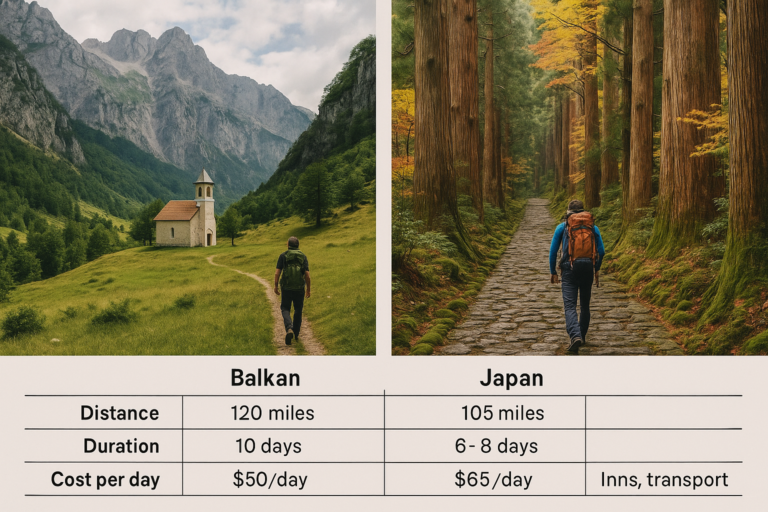
The Kumano Kodo comprises several interconnected routes, with the Nakahechi route being the most popular starting point for first-time visitors. A five-day itinerary allows you to experience the trail’s full arc — from the coastal starting points through the mountain interior and on to the grand shrines at the end. Each day brings a different character: dense forest one morning, open ridge walking the next, small villages where you can eat freshly prepared food and rest in traditional accommodation.
The trail passes through a landscape that feels genuinely ancient. The stone-paved sections of the path have been worn smooth by centuries of pilgrims. Wooden torii gates mark sacred points along the route. Roadside stone statues peer out from the undergrowth. You don’t have to be religious to feel the weight of history here — you just have to be paying attention.
Difficulty and Who It’s For
The Kumano Kodo is generally considered a moderate trail, though individual sections vary. Some days involve significant elevation gain and loss, particularly in the mountain interior, while others are more gentle. The terrain underfoot is well-maintained but can be slippery when wet — and the Kii Peninsula receives substantial rainfall, so wet conditions are part of the experience rather than an exception.
This trail suits hikers who appreciate a slower pace and a more contemplative style of walking. It’s not about pushing your physical limits so much as it’s about being present in a remarkable landscape. That said, you’ll still cover meaningful distances each day, so a baseline level of fitness is important. For younger travelers who want something different from the usual adventure-sport hiking experience, the Kumano Kodo offers a genuinely distinctive alternative.
Getting There and Practical Logistics
The Kumano Kodo is located in Wakayama Prefecture, roughly three hours from Osaka by train and bus. Japan’s rail network makes access straightforward, and the Kumano area has invested in infrastructure to support international walkers — including English-language trail maps, luggage forwarding services between guesthouses, and a well-organised network of traditional minshuku (family-run guesthouses) and ryokan (traditional inns) along the route.
The luggage forwarding service is genuinely worth using. It allows you to walk each day with only a daypack while your main bag travels ahead to your next accommodation. This transforms the experience, particularly on longer or more demanding days. Meals at guesthouses typically feature local ingredients and traditional Japanese cooking — another dimension of the experience that makes the Kumano Kodo more than just a hike.
Japan is not a budget destination in the way that Albania is, and the Kumano Kodo reflects this. Accommodation and meals at traditional guesthouses represent a meaningful investment, but the quality and the experience justify it. Planning ahead and booking accommodation well in advance is strongly recommended, particularly if you’re traveling in peak season.
Best Time to Visit and What to Pack
Spring and autumn are the most celebrated seasons on the Kumano Kodo. Spring brings cherry blossoms and fresh green growth; autumn transforms the cedar forests with bursts of colour. Summer is warm and humid, with higher rainfall, while winter brings cold temperatures and occasional snow at altitude — which creates its own kind of beauty but demands more preparation.
Packing for the Kumano Kodo means preparing for variable weather and potentially wet conditions. Waterproof hiking boots, a reliable rain jacket, and quick-drying layers are essential. The trail’s stone-paved sections can be genuinely treacherous when wet, so grip matters. A small towel and indoor slippers are useful for guesthouse stays. Keep your daypack light — you’ll be grateful on the steeper sections.
Comparing the Two Trails: What Kind of Adventurer Are You?
Both the Valbona-to-Theth trail and the Kumano Kodo are exceptional, but they offer very different experiences. Choosing between them comes down to what you’re looking for from a hiking trip.
- Valbona-to-Theth is raw, dramatic, and budget-friendly. It suits adventurers who want physical challenge, stunning mountain scenery, and the thrill of exploring a country that most people overlook. Albania’s warmth and hospitality add a human dimension that’s hard to find on more touristed routes.
- Kumano Kodo is contemplative, historically layered, and culturally immersive. It suits travelers who want to slow down, absorb a different kind of beauty, and walk a path that carries genuine historical weight. Japan’s organisational infrastructure makes it accessible even for less experienced hikers.
- If budget is a primary concern, Albania is the more accessible option. If cultural depth and historical significance are your priority, the Kumano Kodo is hard to match.
- Both trails reward early starts, an open mind, and a willingness to embrace the unexpected — which, ultimately, is what all the best travel comes down to.
The Bigger Picture: Why These Trails Matter
In a world where the most famous hiking routes are increasingly crowded and commercialised, trails like these represent something genuinely valuable. They offer access to landscapes and cultures that haven’t been smoothed out for mass consumption. They put you in contact with local communities whose way of life is shaped by the mountains around them. And they remind you that the best travel experiences are rarely the ones everyone else is having.
Choosing hidden hiking trails isn’t just about avoiding crowds. It’s about a different quality of attention — the kind that comes when you’re somewhere unfamiliar, where the landscape demands your full presence and the path ahead is less certain. That’s where the real memories get made.
Whether you end up watching the sunrise from Valbona Pass or walking a moss-covered stone path through ancient Japanese cedar forest, you’ll come home with something that no highlight reel can capture. A sense of where you’ve been. A feeling of what it cost you to get there. And a very strong desire to do it all again.
Start planning. Both trails are waiting — and neither one will stay hidden forever.
This article was produced with AI assistance and reviewed editorially.


Sri Lanka in October: Skip the Crowds, Embrace the Adventure

Vietnam Beyond the Guidebook: What You Actually Need to Know


