
Italy
Capri Without the Crowds: Visiting Italy’s Most Iconic Island Smartly in 2026
Discover how to experience Capri, Italy without the summer mobs. Learn timing strategies, hidden spots, and local tips for a genuine island experience.

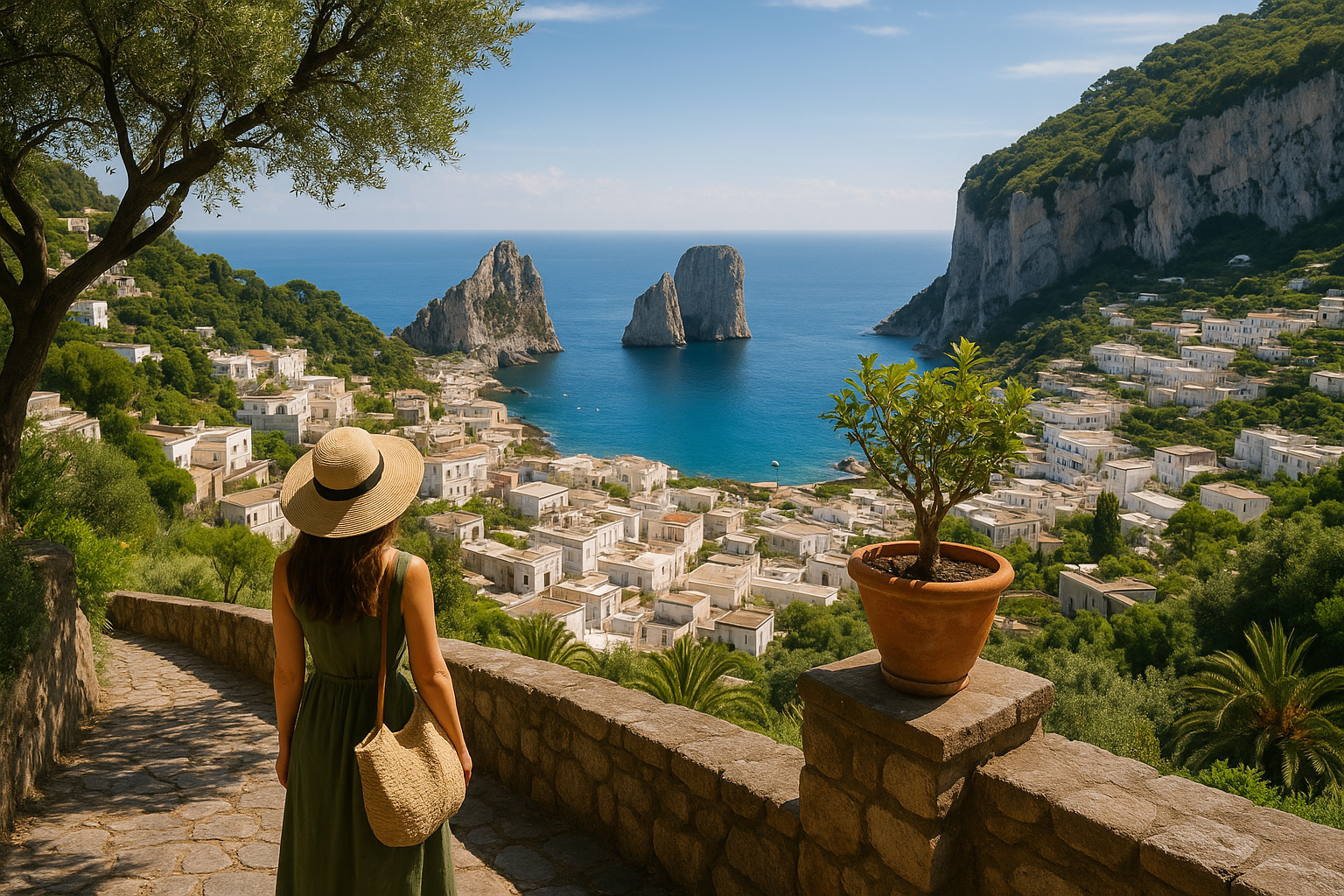
Why Visiting Capri, Italy in 2026 Requires a Smarter Approach
There’s a reason Capri keeps showing up on every Mediterranean dream list. Dramatic cliffs dropping into turquoise water, whitewashed buildings stacked against a vivid blue sky, the kind of light that makes everything look like it belongs in a painting. Visiting Capri, Italy is one of those experiences that genuinely lives up to the hype — but only if you go about it the right way. Because here’s the honest truth: this tiny island, just four square kilometers in size, welcomes millions of visitors every single year. When the summer crowds arrive in full force, that magical atmosphere can evaporate fast.
The good news? With a bit of planning and a willingness to move differently than the average tourist, Capri can still deliver exactly what you’re imagining. This guide is here to help you do exactly that — explore the island on your own terms, find the spots that most day-trippers never reach, and come back with stories that go beyond the postcard version.
Understanding the Island Before You Arrive
Capri is one of the most famous islands in the entire Mediterranean, and it feels the pressure of that fame more intensely than most places because of its sheer size. There’s simply not much room for millions of people to spread out. That reality shapes everything about how you should plan your visit.
The island has two main towns: Capri Town and Anacapri. Most visitors flood into Capri Town, drawn by its glamorous piazzetta, designer boutiques, and central location. Anacapri, sitting higher up on the island, has a completely different energy. It’s quieter, more grounded, and far less crowded — the kind of place where you can actually sit with a coffee and watch the morning unfold without feeling like you’re in the middle of a theme park queue.
Then there are the two ports. Marina Grande is the main arrival point, buzzing with ferry traffic and vendors competing for your attention the moment you step off the boat. Marina Piccola, on the southern side of the island, operates at a much calmer rhythm — smaller, more intimate, and genuinely lovely if you want to swim or simply breathe.
Knowing these contrasts before you arrive means you can make deliberate choices rather than just following the crowd wherever it goes.
The Best Time to Visit Capri (and Why It Matters More Than You Think)
Timing is everything on an island this small. The shoulder seasons — April through May and September through October — are consistently the smartest windows for visiting Capri, Italy. The weather is warm, the sea is swimmable from late spring onward, and the streets are navigable without feeling like you’re stuck in a slow-moving human traffic jam.
In July and August, the island hits peak capacity. Day-trippers arrive by the boatload from Naples, Sorrento, and Positano, and the experience of walking through Capri Town can shift from enchanting to exhausting in a matter of minutes. If summer is your only option, all is not lost — but your tactics need to be sharper.
Regardless of when you go, the time of day matters enormously. Arriving early — on the first or second ferry of the morning — puts you on the island before the bulk of day-trippers show up. The light is softer, the streets are quieter, and the major sights feel genuinely accessible. By midday, the crowds are at their thickest. That’s the moment to retreat somewhere cool, eat a long lunch, and let the masses cycle through. By late afternoon, as the day-trippers head back to the mainland, the island exhales again.
In 2026, Capri is also implementing new measures to address overtourism, which may affect how visitors move around certain areas. Euronews has covered these developments in detail, and it’s worth checking current regulations before you go — not as a deterrent, but because being informed means you won’t be caught off guard.
How to Get There: Ferries, Hydrofoils, and Arrival Strategy
Capri is accessible by ferry from several points on the mainland, with the most common departure points being Naples, Sorrento, and Positano. Hydrofoils are faster and more expensive; standard ferries take longer but are often more comfortable if you’re carrying luggage or prone to seasickness on choppy water.
Your arrival strategy is part of the experience. If you’re coming from Naples, the journey gives you time to watch the coastline shift and build anticipation. From Sorrento, the crossing is shorter and the views of the Amalfi Coast make it feel like the adventure has already started.
One practical note: book your ferry tickets in advance during peak season. They sell out, and missing your intended crossing can throw off an entire day. Return tickets are equally important — the last ferry back fills up fast, and being stranded on Capri overnight without a planned place to stay is a very different experience from choosing to stay.
Getting Around the Island Like You Actually Live There
Once you’re on Capri, the main ways to get around are the funicular, local buses, and taxis. Private cars are essentially off the table for tourists — the island restricts vehicle access, which is actually one of the things that helps preserve its character.
The funicular connects Marina Grande to Capri Town and is the most scenic way to make that climb. It’s also the most popular, so expect queues during busy periods. The local bus network links Capri Town to Anacapri and to various points around the island, including Marina Piccola. Buses are affordable, run regularly, and are genuinely the way most locals and savvy travelers move around.
Taxis exist but come at a premium — Capri’s taxis are famously expensive, partly because of the limited vehicle access and partly because, well, it’s Capri. Use them strategically rather than as your default mode of transport.
Walking is underrated here. Some of the island’s best moments happen on paths between destinations — a sudden view that opens up around a bend, a lemon tree hanging over a garden wall, a quiet chapel that isn’t on any map. Build in time to wander without a fixed destination.
The Experiences Worth Prioritizing
The Blue Grotto
No guide to Capri would be honest without addressing the Blue Grotto — the sea cave where the water glows an electric, otherworldly blue. It’s genuinely spectacular. It’s also one of the most crowded spots on the island, with rowboats queuing up and the experience feeling rushed during peak hours. Go early, accept that it will be busy, and let the light do what it does. Even with the crowds, the moment you float inside and the water shifts color around you, it’s hard not to feel something.
The Gardens of Augustus and Via Krupp
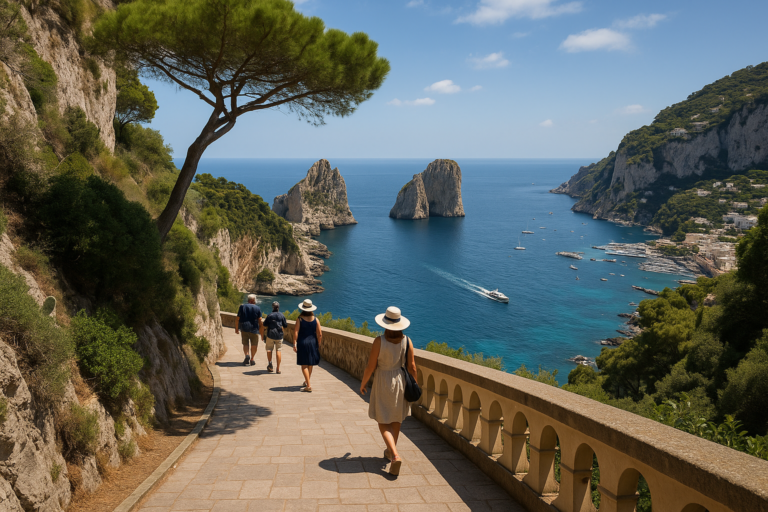
The Gardens of Augustus sit above the sea with views that seem almost too good to be real. From here, you can look down at the famous Via Krupp — a winding, zigzagging path carved into the cliff face that connects the gardens to Marina Piccola below. When it’s open (it does close periodically for maintenance and safety checks), walking Via Krupp is one of the most memorable things you can do on the island. The path is narrow, the drop is dramatic, and the views at every turn are extraordinary.
The Faraglioni Rocks
These three massive rock stacks rising from the sea are Capri’s most iconic image. You’ve seen them in photographs. Seeing them in person, especially from the water on a boat tour, is a different experience entirely. Boat tours leave from Marina Grande and range from short circuits to longer trips around the entire island. If your budget allows, this is one of the better ways to spend a few hours — the coastline reveals itself differently from the water, and the Faraglioni from sea level are genuinely impressive.
Monte Solaro and the Chairlift
Monte Solaro is the highest point on the island, and the chairlift that takes you up from Anacapri is a quiet, single-seat ride through terraced gardens and pine trees. At the top, the entire island spreads out below you alongside views stretching to the Amalfi Coast and, on clear days, even further. It’s peaceful in a way that few spots on Capri manage to be. Go in the morning before the heat builds and the queues lengthen.
Anacapri: The Capri Most Visitors Miss
Spend at least a half-day in Anacapri. Wander the quieter streets, eat at a restaurant where the menu isn’t translated into six languages, and take your time. The village has a different pace — less performative, more lived-in. The Church of San Michele, with its extraordinary hand-painted majolica tile floor depicting the Garden of Eden, is worth stepping inside. It’s one of those unexpected details that stays with you.
Marina Piccola
If you want to swim, Marina Piccola is the place. It’s calmer than the main port, the water is clear, and the atmosphere is relaxed. Rent a sun lounger at one of the small beach clubs or find your own spot on the rocks. This is Capri at its most unhurried.
Walking the Island’s Paths
Capri has a network of walking paths that most visitors never explore because they’re focused on the main attractions. These trails take you through the island’s interior — past villas with overgrown gardens, through patches of wild rosemary and myrtle, along cliff edges with views that stop you in your tracks. Pick up a trail map or download one before you arrive. The walk from Capri Town toward the Arco Naturale, a dramatic natural stone arch on the eastern side of the island, is particularly rewarding and far less trafficked than the main sights.
Eating and Drinking: Where to Find the Real Capri
Capri Town’s central piazza is beautiful, but the restaurants immediately surrounding it are priced for tourists and often prioritize turnover over quality. Walk a few streets back from the main drag and the options improve considerably — smaller places, shorter menus, and food that tastes like someone actually cooked it rather than reheated it.
In Anacapri, the ratio of good-to-tourist-trap restaurants shifts further in your favor. Look for places with handwritten daily specials and tables that are mostly occupied by locals. Capri’s food scene leans heavily on fresh seafood, lemon-based dishes (the island’s lemons are extraordinary), and simple pasta. The local specialty, insalata caprese — tomato, mozzarella, fresh basil — tastes different here than it does anywhere else. Don’t overthink it.
Limoncello, the lemon liqueur that’s become a souvenir cliché across southern Italy, is actually excellent when it’s made properly on Capri. Buy a bottle from a small producer rather than a tourist shop if you can find one.
Should You Stay Overnight? (Yes, You Should)
The single best crowd-avoidance tactic available to you is staying on the island rather than visiting as a day-tripper. Spending two or three nights on Capri changes everything. You get the island in the early morning before the ferries arrive, and you get it in the evening after they leave — two entirely different versions of the same place, both quieter, both more atmospheric, both closer to what makes Capri genuinely special.
Accommodation ranges from budget guesthouses to high-end hotels, with options in both Capri Town and Anacapri. Staying in Anacapri puts you in the quieter part of the island from the start, which is worth considering if your priority is escaping the crowds. Travel + Leisure’s Capri travel guide offers solid orientation on what to expect from the island’s different areas, and it’s a useful reference alongside this one.
Book accommodation well in advance for summer visits. The island’s size means availability is genuinely limited, and last-minute options are expensive and scarce.
A Few Practical Things Worth Knowing
- Cash is still useful on Capri, particularly at smaller establishments, market stalls, and boat tour operators. Don’t rely entirely on card payments.
- Comfortable shoes matter more than you’d think. The island involves a lot of steps, slopes, and uneven stone paths — sandals are fine for the beach but not ideal for a full day of exploring.
- Sunscreen, a hat, and water are non-negotiable in summer. The sun is intense, shade is limited on many paths, and the island’s shops charge accordingly for basics.
- Check the Blue Grotto’s opening status before making it a priority — it closes in rough sea conditions and can be unexpectedly shut on any given day.
- The new overtourism regulations being introduced in 2026 may include restrictions on certain areas or times. Check official local sources or your accommodation for the latest before you arrive.
The Mindset That Makes Capri Worth It
Capri rewards travelers who come with patience and curiosity rather than a checklist. Yes, see the Blue Grotto. Yes, walk Via Krupp. Yes, take the chairlift to Monte Solaro. But leave room for the unplanned moments — the path you take because it looks interesting, the conversation with someone at the next table, the hour you spend just watching the light change over the sea. That’s where the real experience lives.
The island is small, but it’s layered. The more slowly you move through it, the more it gives back. Visiting Capri, Italy with that mindset — unhurried, genuinely curious, willing to go slightly off the main path — is the difference between coming home with a collection of photographs and coming home with a story you’ll actually want to tell. Plan smart, arrive early, stay longer than you think you need to, and let the island do the rest.
This article was produced with AI assistance and reviewed editorially.


Vietnam Uncovered: Beyond the Chaos, Into the Real Story

Beyond the Guidebook: What Hanoi Actually Feels Like


