
Mexico
Mexico’s Caribbean Corridor: Getting Around Cancun, Tulum & Isla Mujeres in 2026
Navigate Mexico’s Caribbean Corridor with practical transport options between Cancun, Tulum, and Isla Mujeres. Ferries, buses, shuttles, and day-trip routes explained.



Mexico’s Caribbean Corridor: Your Real Guide to Getting Around
Picture this: turquoise water on one side, jungle on the other, and three completely different vibes all within a few hours of each other. That’s the magic of Mexico’s Caribbean Corridor. Whether you’re figuring out Cancun, Tulum, and Isla Mujeres transportation for the first time or trying to squeeze every last experience out of a week-long trip, this stretch of the Yucatán Peninsula rewards anyone willing to move around. The good news? Getting between these three destinations is genuinely manageable — even on a tight budget and without a rental car. You just need to know your options before you go.
Understanding the Triangle: Cancun, Tulum, and Isla Mujeres
Before you start planning routes, it helps to understand what each place actually offers — and why so many travelers end up visiting all three.
Cancun is your most likely entry point. It has an international airport connecting to flights across North America, Europe, and beyond. The city splits into two worlds: the Hotel Zone, a strip of resorts and beach clubs that’s great for a few days of sun, and downtown Cancun, where you’ll find local markets, street food, and a much more authentic slice of Mexican life. Most travelers use Cancun as a base or a launching pad.
Tulum sits roughly 130 kilometers south of Cancun along the coast. It’s become one of the most talked-about destinations in Mexico — and for good reason. Ancient Mayan ruins perched above the Caribbean, cenotes you can actually swim in, and a town that somehow balances eco-conscious living with a lively social scene. It’s a different energy from Cancun, slower and more intentional, but no less vibrant.
Isla Mujeres is a small island just a short ferry ride from Cancun’s coast. It’s the kind of place where golf carts outnumber cars, the streets are painted in bright colors, and the pace of life feels genuinely unhurried. Snorkeling, fresh seafood, and watching the sun dip below the horizon from the western shore — that’s Isla Mujeres in a nutshell.
Together, these three destinations form a triangle that covers beach life, culture, history, and island escape. The challenge — and the fun — is figuring out how to move between them efficiently.
Getting from Cancun to Tulum: Your Transport Options
The Cancun-to-Tulum route is one of the most traveled corridors in all of Mexico, which means you have several solid options. None of them are complicated. All of them are doable.
ADO Bus: The Budget-Friendly Classic
The ADO bus is the go-to choice for budget travelers, and it’s genuinely comfortable. These are not the rickety buses of travel horror stories — ADO coaches are air-conditioned, reliable, and run on a fairly regular schedule throughout the day. You can book tickets at the bus terminal in Cancun’s Hotel Zone or downtown, and the journey takes roughly two hours depending on stops. Prices are very affordable by international standards, making this the most economical way to cover the distance. If you’re traveling solo or on a tight budget, this is probably your best move.
Shared Shuttles: Social and Convenient
Shared shuttle services offer a middle ground between the bus and a private transfer. Companies like Happy Shuttle Cancun operate routes connecting Cancun to Tulum, Playa del Carmen, Puerto Morelos, and other destinations along the Riviera Maya. You share the van with a small group of other travelers, which keeps costs reasonable while offering more flexibility than a fixed bus schedule. It’s also a natural way to meet people heading in the same direction — which, if you’re traveling solo, is never a bad thing.
Private Transfers: Worth It for Groups
If you’re traveling with a group of three or more, a private transfer can actually make financial sense once you split the cost. You get door-to-door service, no stops, and the freedom to travel on your own schedule. This is particularly useful if you’re arriving at Cancun Airport with luggage and heading straight to Tulum without wanting to navigate public transport after a long flight.
Rental Car: Freedom with Responsibility
Renting a car gives you the most flexibility, especially if you want to stop at cenotes, ruins, or small coastal towns along the way. Highway 307 runs the full length of the coast and is generally well-maintained. That said, driving in Mexico requires attention — road conditions vary, speed traps exist, and navigating unfamiliar roads in a new country adds a layer of stress that not everyone wants. If you’re comfortable driving abroad and plan to explore beyond the main towns, a rental car can unlock a lot. If you’re just hopping between the three main destinations, it’s probably more hassle than it’s worth.
Getting from Cancun to Isla Mujeres: The Ferry Experience
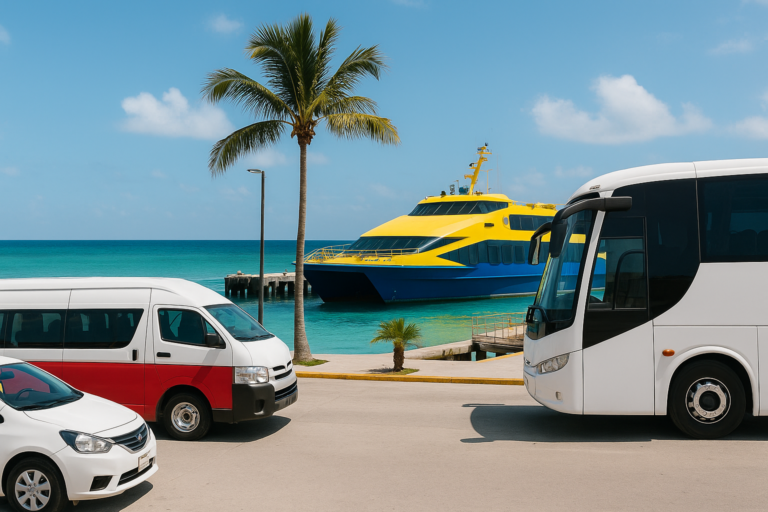
Reaching Isla Mujeres is one of the most enjoyable parts of the trip. You take a ferry, and the crossing itself — with open water stretching in every direction and the island slowly coming into view — sets the tone perfectly.
Where to Catch the Ferry
There are a few ferry departure points around Cancun, and which one you use depends on where you’re staying. The main terminals are located in the Hotel Zone and near Puerto Juárez, which is north of downtown Cancun. Puerto Juárez tends to be the most popular for independent travelers since it’s accessible by bus from downtown and offers frequent departures throughout the day.
Ferries run regularly from early morning until late evening, so you’re rarely stuck waiting long. The crossing takes somewhere between fifteen and thirty minutes depending on the terminal and sea conditions. It’s a short ride, but it feels like arriving somewhere genuinely different — which is exactly what Isla Mujeres is.
What to Expect on the Island
Once you step off the ferry, Isla Mujeres reveals itself quickly. The island is small enough to explore in a day, but charming enough to justify staying longer. Golf cart rentals are the most popular way to get around — you can cover the whole island in an hour or two, stopping at beaches, viewpoints, and the southern tip where the Caribbean meets the Gulf of Mexico. Bicycles are another option if you prefer a slower pace. Taxis exist but aren’t always necessary given the island’s compact size.
For a deeper dive into planning your time on the island, the Blessed to Travel guide to Isla Mujeres on YouTube covers itineraries ranging from three to seven days, including cost breakdowns and transportation logistics — genuinely useful if you’re trying to figure out how long to stay.
Regional Logistics: Moving Smart Between All Three
The real art of the Caribbean Corridor is sequencing your trip well. Most travelers fly into Cancun, which makes it the natural starting point. From there, you have two main decisions: do you head south to Tulum first, or island-hop to Isla Mujeres?
A Suggested Flow
One approach that works well is spending your first day or two in Cancun to shake off jet lag and get your bearings. Then head to Isla Mujeres for a day trip or an overnight stay — the proximity makes it easy, and the island’s relaxed energy is a great way to ease into the trip. After that, make your way south to Tulum for the final leg, where you can explore ruins, swim in cenotes, and spend your last nights in a destination that tends to linger in your memory.
This flow works because it keeps your luggage movements logical. You’re not doubling back unnecessarily, and each destination naturally leads to the next.
Luggage Strategy
One practical tip: if you’re doing a day trip to Isla Mujeres from Cancun, leave your main bag at your hotel or in a luggage storage facility rather than hauling it onto the ferry. The island is compact, and dragging a large backpack through its narrow streets is more effort than it’s worth. Travel light for the day and save yourself the hassle.
Timing Your Moves
Morning departures tend to work best for most routes in this region. Buses and shuttles are less crowded earlier in the day, ferries are cooler before the midday heat sets in, and arriving at your destination with the afternoon ahead of you gives you time to settle in and explore. If you’re catching a ferry to Isla Mujeres, aim to be on the island by mid-morning so you have a full day before the last ferry back.
Day Trips Worth Planning
One of the best things about this region is how much you can access from each hub. Cancun, Tulum, and Isla Mujeres all work as bases for day trips that can seriously elevate your overall experience.
From Cancun
Cancun’s position makes it a launchpad for a wide range of experiences. Isla Mujeres is the obvious day trip, but you can also reach Playa del Carmen to the south — a lively beach town with a famous pedestrian street, great food, and easy access to the ferry to Cozumel. Chichen Itza, one of the most impressive ancient sites in the Americas, is roughly a two-hour drive inland and absolutely worth a full day if you have any interest in history or archaeology. Many organized tours depart from Cancun’s Hotel Zone daily.
From Tulum
Tulum’s surroundings are extraordinary. The cenotes near town — natural sinkholes filled with crystal-clear freshwater — are among the most memorable swimming experiences you’ll find anywhere in the world. Gran Cenote is one of the most visited, but there are dozens of others within a short distance, each with its own character. Cobá, another ancient Mayan site where you can still climb the main pyramid (unlike at Chichen Itza), is about an hour away. The Sian Ka’an Biosphere Reserve, a UNESCO-listed natural area, is also accessible from Tulum and offers boat tours through mangroves and lagoons.
From Isla Mujeres
The island itself is the destination, but the surrounding waters offer snorkeling and diving that’s genuinely world-class. The MUSA underwater museum — a collection of submerged sculptures that have become artificial reefs — is one of the most unusual diving experiences in Mexico. Whale shark tours operate seasonally from Isla Mujeres, and swimming alongside the largest fish in the ocean is the kind of experience that stays with you for years.
Practical Things to Know Before You Go
A few logistical points that will save you stress on the ground.
- Entry requirements: Citizens of the UK, EU, USA, Canada, and Australia can enter Mexico visa-free for up to 180 days. Make sure your passport is valid for the duration of your stay. Always check the latest requirements before you travel, as policies can change.
- Safety awareness: The Yucatán Peninsula is generally considered one of the safer regions in Mexico, but it’s always worth staying informed. The U.S. State Department Mexico Travel Advisory is updated regularly and provides region-specific guidance. Canadian travelers can check the Government of Canada’s advice, which currently recommends a high degree of caution with regional advisories.
- Cash vs. card: Carry some Mexican pesos, especially for buses, ferries, street food, and smaller vendors. Cards are widely accepted in hotels and larger restaurants, but cash remains essential for everyday transactions.
- Spanish basics: You’ll manage fine with English in tourist areas, but even a handful of Spanish phrases — greetings, numbers, basic directions — will open doors and earn genuine smiles from locals.
- Book accommodation early: Cancun, Tulum, and Isla Mujeres are popular year-round. During peak season (December through April) and summer holidays, accommodation fills up fast. Plan ahead, especially for Isla Mujeres where options are more limited than on the mainland.
Making the Most of Cancun, Tulum, and Isla Mujeres Transportation
Navigating the Cancun, Tulum, and Isla Mujeres transportation network isn’t complicated once you understand the rhythm of the region. Buses and shuttles handle the main land routes efficiently. Ferries make island access simple and actually enjoyable. Private transfers and rental cars add flexibility when you want it. The key is matching your transport choices to your travel style — budget, comfort, spontaneity, or a mix of all three.
What makes this corridor special isn’t just the destinations themselves, but the journey between them. The coast road south from Cancun passes mangroves and glimpses of turquoise water. The ferry crossing to Isla Mujeres has that particular kind of anticipation that only comes from traveling by sea. Even a two-hour bus ride through the Yucatán gives you time to watch the landscape shift and let the trip settle in.
Travel this part of Mexico with a loose plan and an open mind. Let the bus take you somewhere unexpected. Stay an extra night on the island because the sunset was too good to leave. Swap Tulum itinerary tips with someone you meet on the ferry. The logistics are the easy part — the experiences are what you’ll still be talking about long after you’ve come home.
This article was produced with AI assistance and reviewed editorially.


Vietnam Uncovered: Beyond the Chaos, Into the Real Story

Beyond the Guidebook: What Hanoi Actually Feels Like


