
Asia
Sri Lanka on a Shoestring: Budget Itinerary Avoiding Tourist Traps
Discover how to explore Sri Lanka affordably with this practical 10-day itinerary. Learn insider tips for temples, beaches, and mountains while keeping costs under $45 da

Why Sri Lanka Should Be on Every Young Traveler’s Radar Right Now
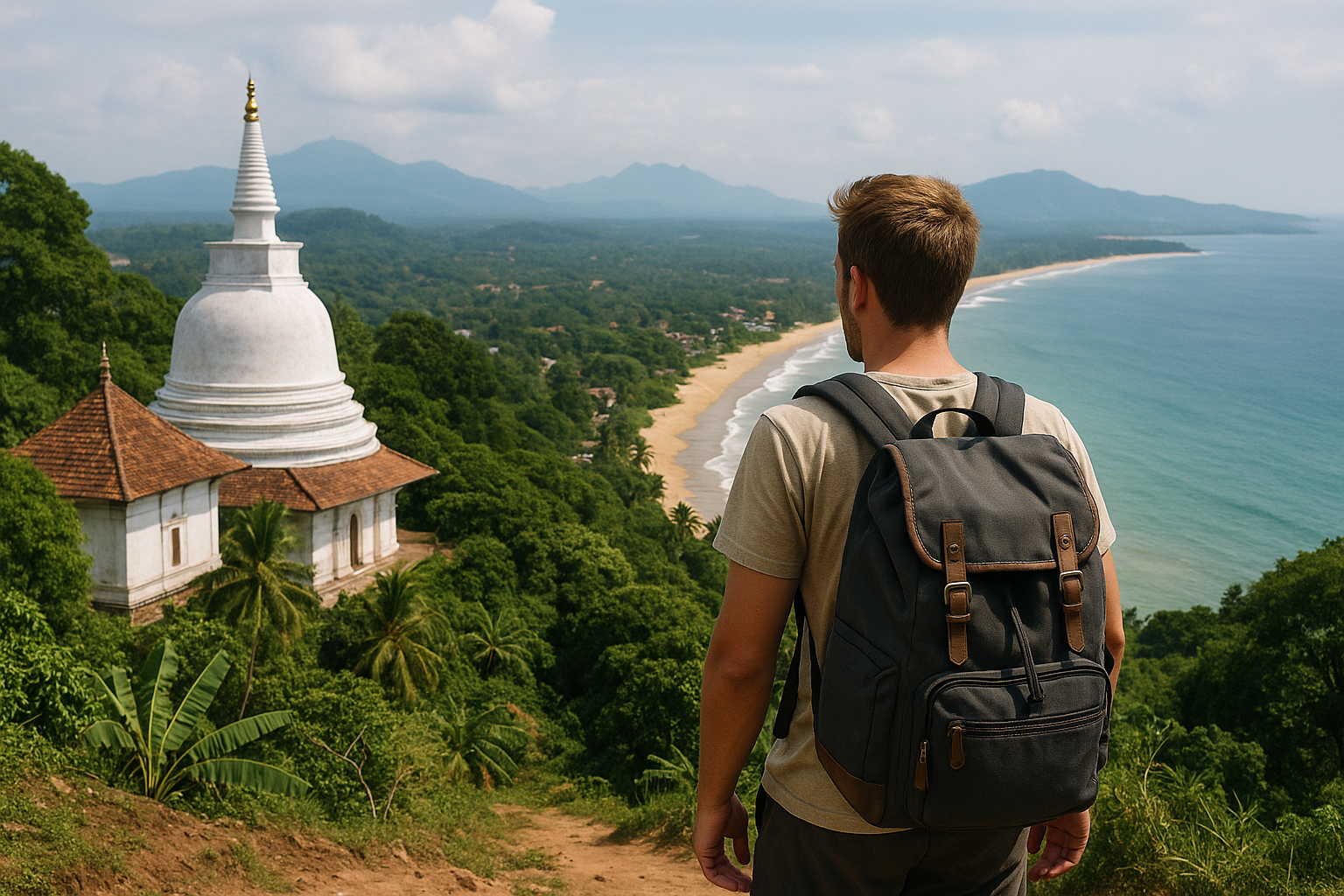
If you’re looking for a destination that packs in ancient temples, misty mountains, wild national parks, and golden beaches — all without draining your bank account — then budget travel in Sri Lanka might be the best decision you make this year. This small island sits in the Indian Ocean just below the tip of India, and it punches way above its weight. You can wake up to the sound of monks chanting, spend the afternoon on a slow train winding through tea plantations, and fall asleep to the sound of the ocean. All in the same day. All for less than you’d spend on a weekend city break in Europe.
Sri Lanka has long been considered one of the sweet spots for South Asia travel — the kind of place where your money stretches, the food is extraordinary, and every corner of the island feels genuinely different from the last. According to Visit Sri Lanka’s 2026 budget guide, solo travelers can get by on as little as $22 per day, with hostel dorms starting around $7 and local meals costing under $2. That’s not roughing it — that’s traveling smart.
This guide is your practical, no-fluff companion for a 10-day journey through Sri Lanka’s highlights. We’ll show you how to move through the country efficiently, where to eat like a local, and how to sidestep the overpriced tourist bubbles that can quietly swallow your budget.
Before You Go: Visas, Transport, and Setting Expectations
Getting Your Visa Sorted
Most nationalities need an Electronic Travel Authorization (ETA) to enter Sri Lanka, and you can apply online before you fly. The process is straightforward, and the cost is reasonable. Sort it out before you land — don’t leave it to chance at the airport. Check the official Sri Lanka immigration website for the most current fees and requirements, as these can change.
Getting Around Without Breaking the Bank
Transport is where budget travel in Sri Lanka really shines. The country has an extensive rail network that’s both affordable and genuinely scenic. The train ride from Kandy to Ella through the Hill Country is one of those journeys that travel writers keep describing as unmissable — and for once, the hype is warranted. Mist rolls over emerald tea fields, waterfalls appear around every bend, and the whole thing costs a fraction of what a tuk-tuk or private driver would charge for the same route.
For shorter distances, tuk-tuks are everywhere. Always agree on a price before you get in, or use a metered one if available. Intercity buses are the cheapest option of all — they’re crowded, sometimes chaotic, and absolutely part of the experience. If you want more flexibility, some travelers rent a scooter for certain stretches, though road conditions vary and you should only do this if you’re comfortable and experienced.
What to Actually Budget
A realistic daily budget for a traveler staying in guesthouses or hostels, eating local food, and using public transport sits somewhere between $25 and $45 per day. Splurge days — a safari, a nicer guesthouse, a cooking class — will push that higher. But the baseline is genuinely low, and that’s what makes Sri Lanka so accessible.
Days 1–2: Colombo — Don’t Just Pass Through
Most travelers land in Colombo and immediately plan their escape to somewhere more “interesting.” That’s a mistake. Colombo is a layered, energetic city with neighborhoods worth exploring on foot. Spend a morning in Pettah, the city’s chaotic and colorful market district, where you can pick up cheap snacks, spices, and a real sense of how the city actually functions.
Galle Face Green is a wide oceanfront promenade where locals gather in the evenings to eat street food, fly kites, and watch the sun go down over the Indian Ocean. Grab a kottu roti from a street stall — it’s a Sri Lankan staple made from chopped flatbread, vegetables, and your choice of protein, cooked on a hot griddle with a satisfying metallic clatter. It costs almost nothing and tastes like everything.
For accommodation, the Colombo hostel scene has grown significantly. You’ll find clean, social dorms in the $7–$12 range, often with rooftop common areas and helpful staff who know the city well. Stay in the Colombo 3 or Colombo 7 areas for easy access to food, transport, and the waterfront.
Days 3–4: Sigiriya and the Cultural Triangle
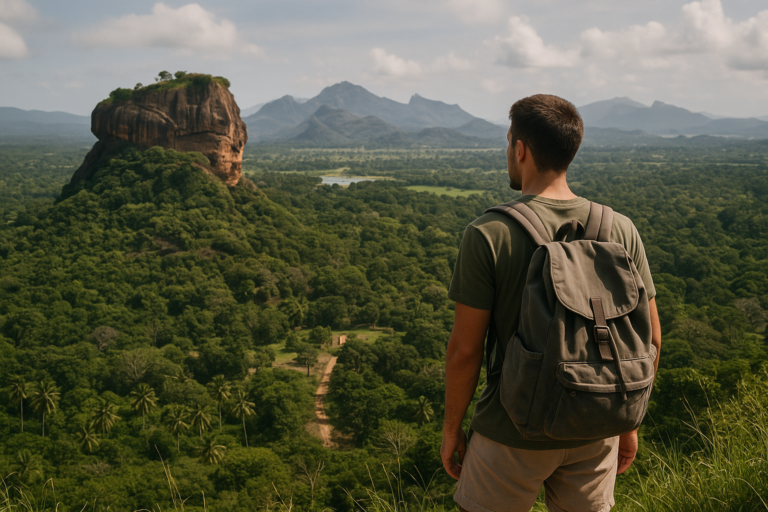
From Colombo, head north into the Cultural Triangle — a region dense with ancient ruins, cave temples, and one of the most dramatic sights in all of South Asia. Sigiriya, a fifth-century rock fortress rising nearly 200 meters above the surrounding jungle, is the centerpiece. Climbing it takes about an hour and involves some vertiginous staircases, but the view from the top is the kind that makes you go quiet for a moment.
The entrance fee for Sigiriya is the most significant single cost you’ll encounter in this region, and it’s worth it. To keep other costs down, base yourself in the nearby town of Dambulla rather than at the more tourist-facing hotels right by the rock. Guesthouses here are cheaper, the food is more local, and it’s only a short tuk-tuk ride away.
Dambulla itself has a remarkable cave temple complex — a series of caves filled with hundreds of Buddha statues and ancient paintings. It’s cheaper than Sigiriya and far less crowded, especially if you visit early in the morning before the tour buses arrive. That’s a recurring theme in Sri Lanka: arrive early, and the experience changes completely.
Days 5–6: Kandy and the Hill Country Gateway
Kandy sits at the edge of the Hill Country and feels like a different world from the coastal lowlands. It’s cooler, greener, and centered around a sacred lake with the famous Temple of the Tooth Relic at its edge. This temple, which houses what is believed to be a tooth of the Buddha, is one of the most important religious sites in Sri Lanka and draws both pilgrims and visitors from around the world.
Attend the evening puja — the daily ritual ceremony — if you can. The drumming, the crowds, the incense, and the atmosphere are genuinely moving. Dress modestly, remove your shoes, and simply observe. These are the kinds of moments that stay with you long after the photos fade.
Kandy is also a great place to eat well and cheaply. The market area around the bus station has rice and curry stalls serving enormous meals for pocket change. Eat where the locals eat — look for busy places with quick turnover and you’ll rarely be disappointed.
Days 7–8: The Train to Ella and Life in the Hills
This is the stretch of the journey that most travelers remember most vividly. The train from Kandy to Ella (often via Nanuoya or Haputale) passes through the heart of Sri Lanka’s tea country, and it’s as beautiful as everyone says. Book a seat in advance if you can — or simply stand by an open door and let the scenery do the rest.
As GetYourGuide’s budget guide to Sri Lanka highlights, the Hill Country train journey is one of the country’s signature experiences, and it costs very little compared to the memories it delivers. Tea plantations stretch across every hillside, workers move through the rows of bushes, and the air gets noticeably cooler as you climb.
Ella itself is a small town that has become a firm favorite on the backpacker circuit — which means it’s busier than it used to be, but it’s still charming. Hike up Little Adam’s Peak in the early morning before the crowds arrive. Walk across the Nine Arch Bridge, a colonial-era railway viaduct surrounded by jungle, and time it so a train passes over while you’re watching from below. It’s one of those scenes that feels almost too cinematic to be real.
Guesthouses in Ella are plentiful and range from basic rooms to slightly more comfortable spots with mountain views. Shop around — the difference in price between a room with a view and one without can be surprisingly small if you ask.
Day 9: Yala or the South Coast — Choose Your Adventure
From Ella, you have two strong options for your penultimate day, and your choice depends on what you’re chasing.
Option A: Yala National Park
Yala is one of the best places in the world to spot leopards in the wild. It also has elephants, crocodiles, peacocks, and a coastline that forms part of the park boundary. Safari jeeps go out at dawn and dusk, and while the entrance fees and jeep hire do add up, splitting the cost with other travelers in your guesthouse makes it much more manageable. Ask around the night before — group bookings are common and straightforward to arrange.
Option B: Head Straight to the South Coast
If wildlife isn’t calling you, head directly to the south coast and give yourself more time on the beach. Mirissa, Unawatuna, and Tangalle each have a distinct personality. Mirissa is lively and social, popular with young travelers. Tangalle is quieter, more spread out, and has some genuinely beautiful stretches of sand that feel far less crowded. Unawatuna sits near the historic walled city of Galle, which is worth at least a few hours of wandering.
Day 10: The South Coast — Slow Down and Soak It In
Your final day in Sri Lanka should feel unhurried. This is not the day for ticking off sights. Find a stretch of beach, order a fresh coconut, and let the last 10 days settle. The south coast sunsets are long and warm, and the seafood at the small restaurants along the shore is some of the best you’ll eat anywhere.
If you’re flying out of Colombo, the south coast is well connected by bus and train. Give yourself enough travel time — Sri Lankan roads can be slower than maps suggest, especially during busy periods. An early start on departure day is always worth it.
Practical Tips for Keeping Costs Down
- Eat local, always. Rice and curry, kottu roti, hoppers, and string hoppers are all cheap, filling, and genuinely delicious. Tourist menus in beach towns cost two to three times more for food that’s often less interesting.
- Book trains in advance for popular routes. The Kandy–Ella route fills up, especially in peak season. Second-class reserved seats are cheap and perfectly comfortable.
- Travel at off-peak times. The west and south coasts are busiest from December to March. The east coast has its own season, roughly May to September. Visiting in shoulder season saves money and reduces crowds significantly.
- Stay in guesthouses over hotels. Family-run guesthouses often include breakfast, give genuinely useful local advice, and cost a fraction of what branded hotels charge.
- Negotiate tuk-tuk fares before you get in. It’s not rude — it’s expected. Have a rough idea of what a fair price is before you start talking.
- Carry cash. While card payments are becoming more common in cities and tourist areas, many guesthouses, local restaurants, and transport options are still cash only.
- Buy a local SIM card at the airport. Data is cheap and having maps and translation tools on your phone makes everything easier.
- Visit temples and sacred sites respectfully. Many are free or very low cost to enter. Dress modestly, remove shoes when asked, and move quietly. You’ll be welcomed more warmly for it.
What Makes Sri Lanka Different from the Rest
There are plenty of destinations in Southeast and South Asia that offer good value for money. What makes budget travel in Sri Lanka feel different is the sheer density of experiences packed into a small geographic area. In 10 days, you move through urban energy, ancient history, misty highlands, wildlife, and tropical coastline — and none of it feels rushed if you plan it sensibly.
The people are another part of the equation that’s hard to quantify but impossible to ignore. Conversations happen easily. Invitations to share a meal or join a local festival aren’t unusual. The country has a warmth that you feel from the first day, and it tends to stay with you.
Sri Lanka rewards curiosity. The traveler who wanders down an unmarked path, accepts the invitation to try something unfamiliar, or simply sits with a cup of Ceylon tea and watches the world pass by — that’s the traveler who gets the most out of this island. And the beautiful thing is, none of that costs very much at all.
Your Sri Lanka Adventure Starts Here
Ten days is enough to fall genuinely in love with Sri Lanka. It’s enough to understand why travelers keep coming back, why it consistently ranks among the most rewarding destinations in the region, and why the conversation about budget travel in Sri Lanka always comes back to the same conclusion: you get far more than you pay for. Plan thoughtfully, stay curious, eat boldly, and let the island surprise you. The stories you’ll come home with are worth every rupee of the journey.
This article was produced with AI assistance and reviewed editorially.


Vietnam Uncovered: Beyond the Chaos, Into the Real Story

Beyond the Guidebook: What Hanoi Actually Feels Like


