
Asia
Southeast Asia Border Crossings 2026: Visas, Transport & Budget Breakdown
Navigate Southeast Asia border crossings with practical guides to visa requirements, transport options, and real costs for Thailand, Laos, Cambodia, and Vietnam in 2026.

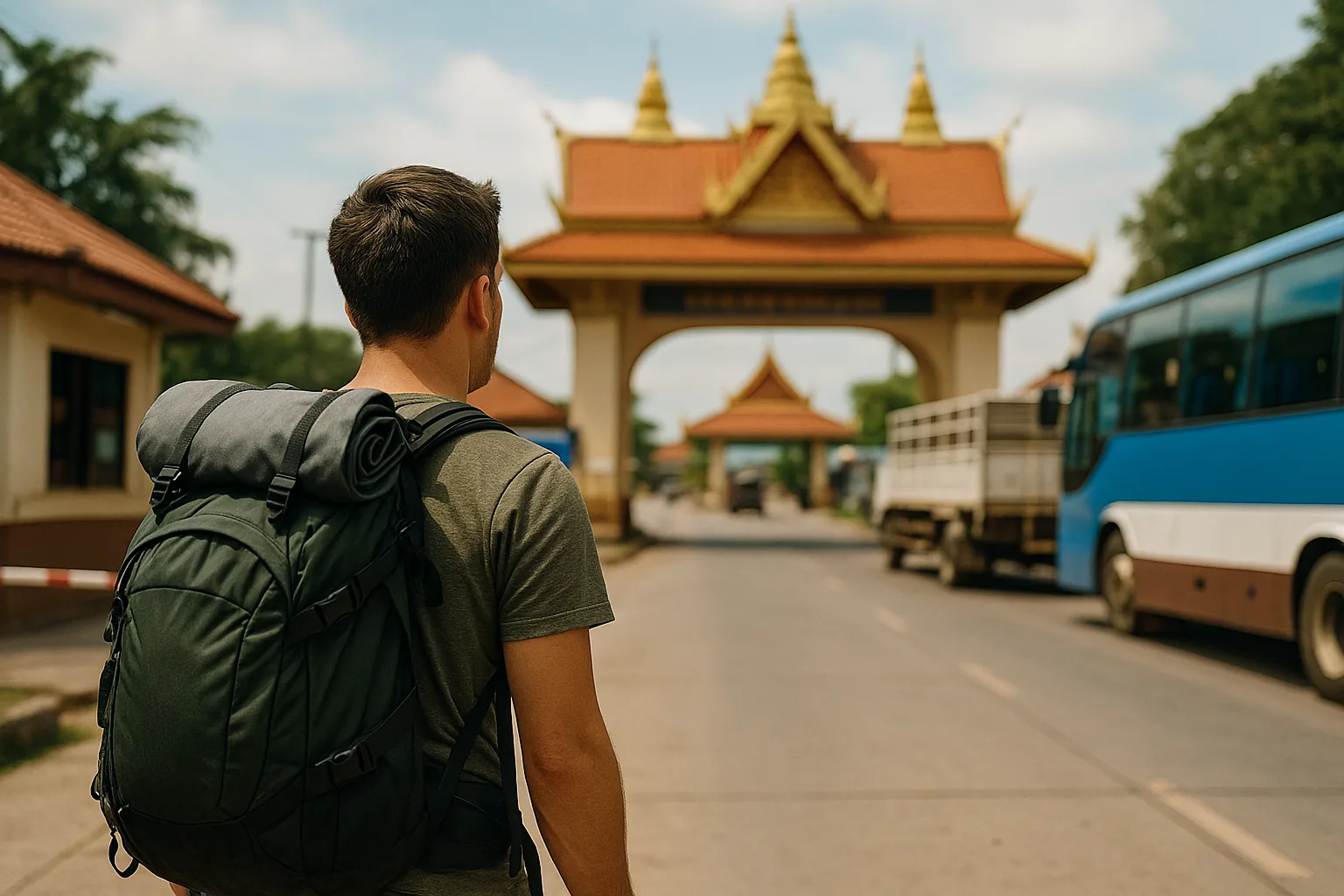
Planning a multi-country trip through Southeast Asia is one of the most exhilarating things you can do in your twenties — but if you’ve never navigated southeast asia border crossings before, the whole process can feel a little intimidating. Which visa do you need? How long does it take? Will there be a random “processing fee” that nobody warned you about? The good news is that millions of backpackers move between these countries every single year, and with the right preparation, crossing a land border can be one of the most memorable parts of your journey — not just a logistical hurdle to get through.
Why Land Border Crossings Are Worth the Effort
Flying between countries is convenient, sure. But there’s something about rolling up to a land border in a rickety minibus, passport in hand, that makes travel feel genuinely real. You watch the scenery shift. You notice how the food changes at the first roadside stall on the other side. You meet fellow travelers in the queue who are heading somewhere completely different — and sometimes end up tagging along with them for the next week.
Land crossings also tend to be significantly cheaper than flights, especially on the classic backpacker circuits connecting Thailand, Laos, Cambodia, Vietnam, and Malaysia. A bus from Chiang Mai to Luang Prabang, a shared van from Siem Reap to Ho Chi Minh City, a train from Kuala Lumpur to Bangkok — these routes have been well-trodden for decades, and the infrastructure around them has grown to match the demand.
That said, cheap doesn’t mean effortless. Border crossings come with their own rhythm, their own paperwork, and their own set of potential headaches. Knowing what to expect before you arrive makes all the difference.
The Most-Traveled Southeast Asia Border Crossings in 2026
The region’s most popular overland routes follow a rough loop that most backpackers adapt to their own timeline. Here’s what you need to know about the key corridors:
Thailand to Laos
The Friendship Bridge crossings — particularly the one connecting Nong Khai in Thailand with Vientiane in Laos — are among the smoothest land borders in the region. A shuttle bus crosses the bridge itself, and the whole process, including immigration on both sides, typically takes a couple of hours if you arrive with your paperwork sorted. Most nationalities can get a visa on arrival for Laos, though fees and requirements vary by passport. Always check the latest entry conditions before you travel, since policies do shift.
Further north, the crossing near Chiang Rai into Laos via the Golden Triangle area is popular for travelers heading toward Luang Prabang. It’s more scenic but also more logistically involved — expect longer journey times and fewer direct transport options.
Laos to Vietnam
This is where things get more adventurous. The mountain passes connecting Laos and Vietnam are dramatic and beautiful, but the buses are long and the roads are winding. Crossings like Nam Phao–Cau Treo and Dansavanh–Lao Bao are well-used by backpackers, but be prepared for overnight journeys that can stretch to 12 hours or more. Vietnam requires a visa for many nationalities — the e-visa system has made this much more manageable, and applying online before you travel is strongly recommended rather than relying on border-issued options.
Cambodia to Vietnam
The Moc Bai–Bavet crossing between Ho Chi Minh City and Phnom Penh is one of the busiest and most straightforward in the region. Buses run frequently, the crossing itself is relatively fast, and the whole journey door-to-door is typically around six to eight hours. Cambodia offers a visa on arrival or an e-visa, and the e-visa route is worth doing in advance to save time at the border. Watch out for unofficial “fees” requested by border officials — more on that shortly.
👉 Read also: Budget Backpacking Southeast Asia: Sri Lanka, Laos & Beyond
Thailand to Malaysia
The southern Thailand crossings into Malaysia — particularly at Padang Besar and Hat Yai–Bukit Kayu Hitam — are among the most efficient in Southeast Asia. Both countries have relatively streamlined immigration processes, and the train connection between Bangkok and Kuala Lumpur, while long, is a genuinely enjoyable way to travel. Most Western passport holders get visa-free entry to both countries for standard tourist stays.
Thailand to Cambodia
The Poipet–Aranyaprathet crossing is notorious among backpackers — not because it’s dangerous, but because it’s chaotic and well-known for unofficial touts trying to charge you for services you don’t need. Go in knowing this, keep your documents close, ignore anyone who isn’t wearing an official uniform, and you’ll be fine. The crossing itself is functional and heavily used.
Visa Reality Check: What You Actually Need in 2026
Visa requirements across Southeast Asia have continued to evolve, and 2026 has brought notable policy changes affecting entry requirements for various passport holders. The general landscape looks like this:
- Thailand has been expanding its visa-free access for many nationalities, with tourist stays often permitted for 30 to 60 days depending on your passport.
- Vietnam’s e-visa system is now well-established and covers most nationalities — apply online at least a week before you plan to cross, and keep a printed copy of your approval letter.
- Cambodia offers both a visa on arrival and an e-visa. The e-visa costs a small fee and saves you queuing at the border — worth it every time.
- Laos issues visas on arrival at most major crossings for a fee payable in US dollars or Thai baht. Bring crisp, undamaged bills — crumpled notes are sometimes refused.
- Malaysia and Singapore are visa-free for most passport holders for standard tourist visits.
- Indonesia has been operating a visa-free scheme for many nationalities, though entry through land borders in Borneo has different rules than flying into Bali — always double-check.
The single most important piece of advice: check the official embassy or government website for your specific passport at least two weeks before each crossing. Requirements change, and travel blogs — including this one — can only give you a general picture. The Broke Backpacker’s Southeast Asia border crossings guide is one of the most regularly updated community resources for this kind of detail.
Transport Options: Buses, Trains, and Everything In Between
Getting between countries overland means choosing between a few main options, each with its own trade-offs.
Tourist Buses and Minivans
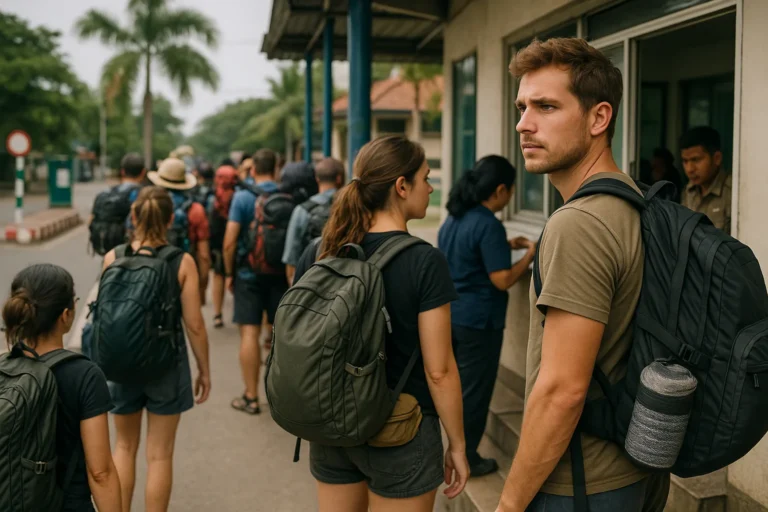
These are the backbone of the backpacker circuit. Companies run direct services between major tourist hubs across borders — think Siem Reap to Bangkok, or Vientiane to Hanoi. They’re convenient because they handle the border logistics for you, stopping at the right checkpoints and waiting while passengers clear immigration. The downside? You’re in a bubble. You’ll mostly meet other tourists, and the comfort level varies wildly by operator.
Prices fluctuate depending on the route and season, but these services are consistently among the most affordable ways to cross borders. Booking a day or two in advance through a hostel or a reputable local agency usually gets you a fair price — be wary of deals that seem significantly cheaper than everything else on offer.
Local Buses
If you want the authentic experience — and you’re not in a rush — taking local buses to the border, crossing on foot, and picking up another local bus on the other side is entirely doable on most routes. It takes more time and requires more navigation, but it’s often cheaper and far more interesting. You’ll share the journey with locals, stop at places that aren’t on any tourist map, and arrive feeling like you’ve actually traveled somewhere rather than been transported.
Trains
Train travel in Southeast Asia is underrated. The Bangkok to Kuala Lumpur overnight train is a classic for good reason — you go to sleep in one country and wake up in another. Vietnam’s Reunification Express running the length of the country isn’t technically a border crossing, but it connects all the major stops and gives you a ground-level view of the landscape that no flight can match. Train infrastructure is less developed in Laos and Cambodia, though this is slowly changing.
Flights
Budget airlines like AirAsia, VietJet, and Scoot have made flying between cities genuinely affordable — sometimes cheaper than the bus when you factor in time. If you’re short on time or covering a long distance (say, Bangkok to Bali), a flight makes sense. But don’t default to flying out of habit. Overland travel between neighboring countries is often just as cheap, and the experience is incomparably richer.
👉 Read also: Backpacking Southeast Asia on a Shoestring: Sri Lanka, Laos & Thailand Itineraries for 2026
Budget Breakdown: What Southeast Asia Border Crossings Actually Cost
Let’s talk money, because this is where a lot of first-timers get caught off guard. The cost of crossing a border isn’t just the visa fee — it’s the transport to get there, the transport on the other side, any official fees, and the unofficial ones that sometimes appear.
For context, a two-week Southeast Asia trip costs roughly $700–$1,200 per person at the budget backpacker level (land costs only, not including your international flights). Mid-range travelers typically spend $1,800–$3,500 for the same period. These figures cover accommodation, food, local transport, and activities — border crossing costs are folded into this.
Day-to-day, the cheapest countries in the region are Vietnam and Indonesia, where you can travel comfortably on around $25–$40 per day. At the other end of the spectrum, Singapore will cost you $80–$120 per day even on a careful budget — it’s worth visiting, but plan accordingly and maybe keep it to a two or three day stop.
When it comes to border-specific costs, here’s what to factor in:
- Visa fees: These range from free (visa-exempt countries) to around $25–$50 for on-arrival or e-visa options. Always have US dollars in small, clean bills — it’s the de facto currency at most land borders.
- Transport to and from the border: Budget for both sides. A taxi or tuk-tuk from the nearest town to the crossing, plus onward transport on the other side, can add up if you haven’t planned ahead.
- Unofficial fees: This is the big one. At some crossings, officials may request small payments for “overtime fees,” “stamp fees,” or other invented charges. These aren’t always avoidable, but knowing they exist means you won’t be caught completely off guard. Keep a small amount of local currency or dollars separate from your main wallet for exactly this purpose.
- Overstay fines: If you lose track of your visa duration, overstay fines can be significant. Keep a note of your entry date and permitted stay on your phone.
Timing and Logistics: Building a Multi-Country Route
The classic Southeast Asia loop — Bangkok, Chiang Mai, Laos, Vietnam, Cambodia, back to Bangkok — takes most backpackers between three weeks and three months, depending on how deeply they want to explore each place. Here’s how to approach the logistics without losing your mind.
Don’t rush the border days. Crossing a land border almost always takes longer than you expect. Even a “simple” crossing can eat up half a day when you factor in transport to the border, queuing, immigration processing, and onward transport. Build in buffer time and don’t book anything time-sensitive on the other side for the same afternoon.
Think about your visa expiry dates as you plan your route. If you enter Thailand with a 30-day visa, and you spend three weeks in Laos and Vietnam before coming back through Bangkok, you’ll need to account for that. Many travelers do a border run — crossing out and back in — to reset their permitted stay, but rules around this have tightened in some countries, so research your specific situation.
The dry season (roughly November to April across most of mainland Southeast Asia) is peak travel time, which means border crossings can be busier, particularly around major holidays. If you’re crossing during Songkran (Thai New Year in April) or the Lunar New Year period, expect significant crowds and plan accordingly. The shoulder seasons can actually be a great time to travel — fewer people at the borders, lower prices, and a more relaxed pace.
Finally, consider the direction of your route. Moving from Thailand south into Malaysia and then east to Indonesia is a very different trip from heading north into Laos and then east into Vietnam. Both are brilliant — but they suit different travel styles and timelines. Think about what you want to experience most, and build your route around that rather than trying to tick everything off at once.
Southeast Asia rewards the traveler who slows down, stays curious, and treats the journey between places as part of the adventure rather than an inconvenience. The border crossings, the overnight buses, the chaotic immigration halls — they’re all part of the story. Go prepared, stay flexible, and you’ll come home with experiences that no highlight reel can fully capture.
This article was produced with AI assistance and reviewed editorially.


Quito, Ecuador: From Stopover to 10-Day Adventure in the Andes

Ecuador & South America’s Gateway: Quito as a Base for Adventure


