
Tips & Tricks
Documenting Your Journey: Travel Photography Tips for Every Budget
Learn practical travel photography tips for capturing authentic moments with any camera, from smartphones to professional gear. Master seven actionable techniques.

Why Your Camera Gear Matters Less Than You Think
Some of the most powerful travel photos ever taken were captured on ordinary equipment by people who simply paid attention. If you’ve ever scrolled through stunning travel imagery and assumed you need an expensive kit to compete, it’s time to rethink that. The best travel photography tips aren’t about spending more money — they’re about seeing more clearly, moving more intentionally, and connecting more honestly with the places you visit. Whether you’re shooting on a flagship smartphone or a mirrorless camera you saved up for over two years, the fundamentals are the same. Light, timing, perspective, and story. Everything else is just a tool.
This guide is for every kind of traveler. The backpacker with a phone and a tight budget. The gap-year adventurer who just bought their first camera. The digital nomad who’s been shooting for years but wants to level up. Wherever you are in your journey, there’s something here for you.
Phone vs. Dedicated Camera: Choosing Your Weapon
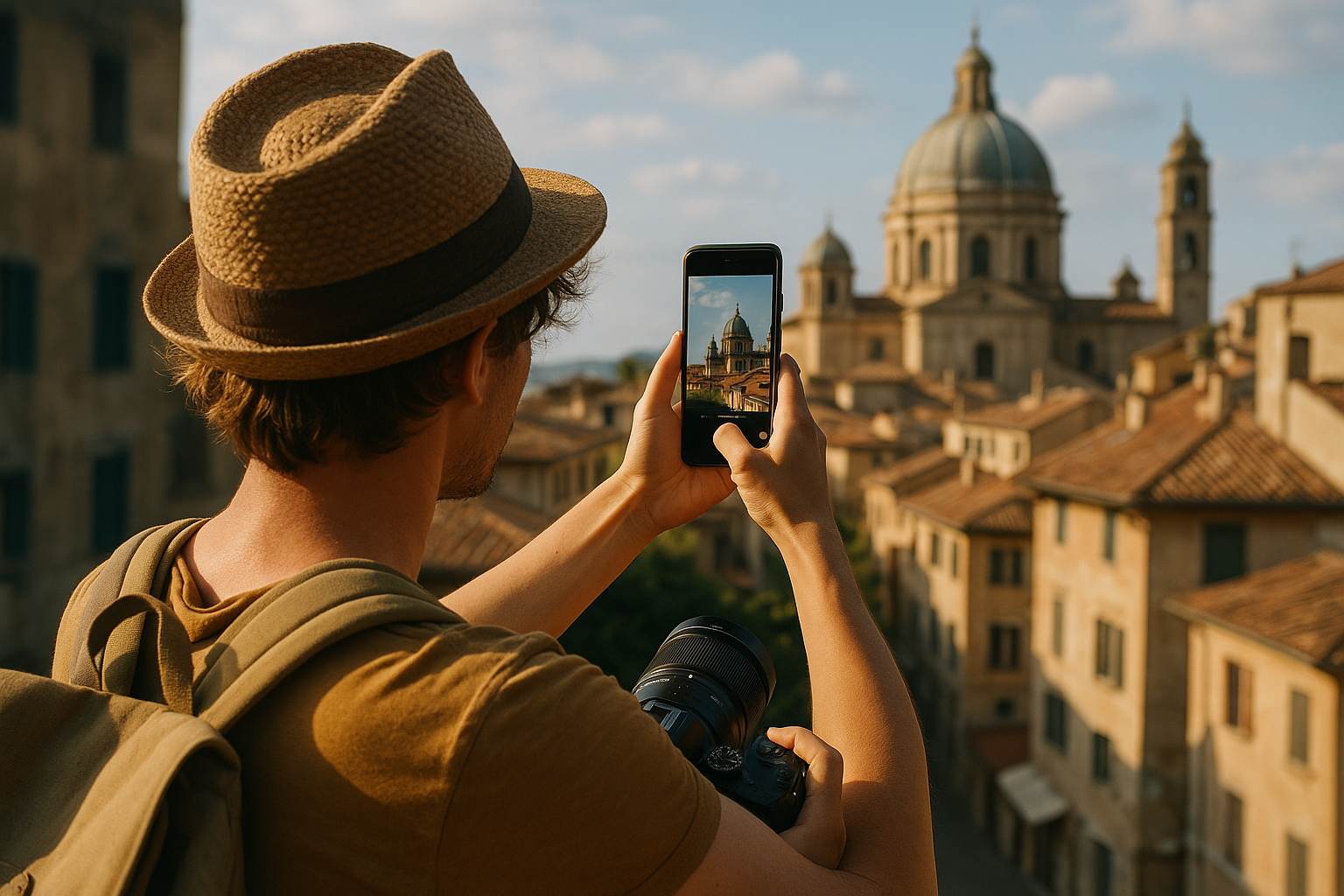
Let’s settle something right away: your phone is a legitimate travel camera. Modern smartphones produce images that would have been unthinkable even a decade ago. The sensors are sharp, the computational photography is impressive, and — most importantly — you always have it with you. The best camera really is the one in your pocket when the moment happens.
That said, dedicated cameras do offer real advantages that matter in specific situations. A mirrorless or DSLR camera gives you greater control over depth of field, performs significantly better in low light, and offers interchangeable lenses that open up creative possibilities your phone simply can’t replicate. If you’re serious about travel photography and willing to carry a bit more weight, the investment pays off visually.
Resources like Finding the Universe’s guide to the best travel cameras break down the options across different budgets and travel styles, which is worth exploring before you commit to any gear purchase. Similarly, if you want a deep dive into what experienced travel photographers actually carry, Journey Era’s breakdown of travel photography gear gives you a real-world perspective on what’s worth packing and what you can leave behind.
The honest advice? Start with what you have. Master it. Then upgrade when you genuinely feel limited by your equipment rather than by your skills.
Seven Techniques That Will Transform Your Travel Photos
1. Chase the Light, Not the Landmark
Golden hour — the hour after sunrise and before sunset — transforms ordinary scenes into something extraordinary. The light is warm, directional, and soft. Shadows become interesting rather than harsh. Colors deepen. Everything looks better. If you visit a famous landmark at midday under flat, blinding sun, you’ll get a technically correct photo that feels lifeless. Visit the same spot at dawn, and you’ll capture something that actually makes people stop scrolling.
Wake up early. It’s one of the simplest and most effective travel photography tips you’ll ever receive. Bonus: you’ll often have iconic locations almost entirely to yourself, which means no crowds to dodge and a much more authentic atmosphere to capture.
2. Get Closer (Then Get Even Closer)
Beginner photographers tend to shoot from too far away. They capture a wide scene thinking it tells the whole story, but wide shots without a strong focal point often feel empty. Move closer to your subject. Fill the frame. Look for the texture of a worn wooden door, the expression on a street vendor’s face, the steam rising from a bowl of soup at a local market. Details tell stories that wide shots can’t.
This doesn’t mean abandoning wide shots entirely — establishing shots are valuable for context. But the photos that tend to resonate most emotionally are the ones that put you right in the middle of a moment, not observing it from a distance.
3. Shoot People, Not Just Places
Landscapes are beautiful. Architecture is fascinating. But people are what make a destination feel alive. A photo of an empty cobblestone street is pleasant. A photo of an elderly woman hanging laundry above that same street, with a cat watching from a windowsill, is a story.
Photographing strangers can feel uncomfortable at first, but it gets easier. Learn a few words in the local language — even just asking permission with a smile goes a long way. Many people are genuinely happy to be photographed when you approach them with warmth and respect. If someone declines, respect that immediately and move on. The goal is connection, not extraction.
4. Embrace Imperfection and Spontaneity
Some of the most memorable travel photos are slightly blurry, poorly lit, or compositionally imperfect — and none of that matters because they captured something real. A laughing group of strangers you ended up sharing a meal with. A sudden rainstorm that sent everyone scrambling. A quiet moment on a train when your travel companion fell asleep against the window.
Don’t let the pursuit of the perfect shot stop you from experiencing the moment. Put the camera down sometimes. Look with your eyes before you look through a lens. When you do shoot, let things be messy. Authenticity beats polish every time.
5. Think in Stories, Not Single Shots
Professional travel photographers don’t think about individual images — they think about sequences. A single photo can be beautiful, but a series of images that takes a viewer through an experience is something far more powerful. Document the whole journey: the arrival, the exploration, the small details, the people, the food, the unexpected moments, and the departure.
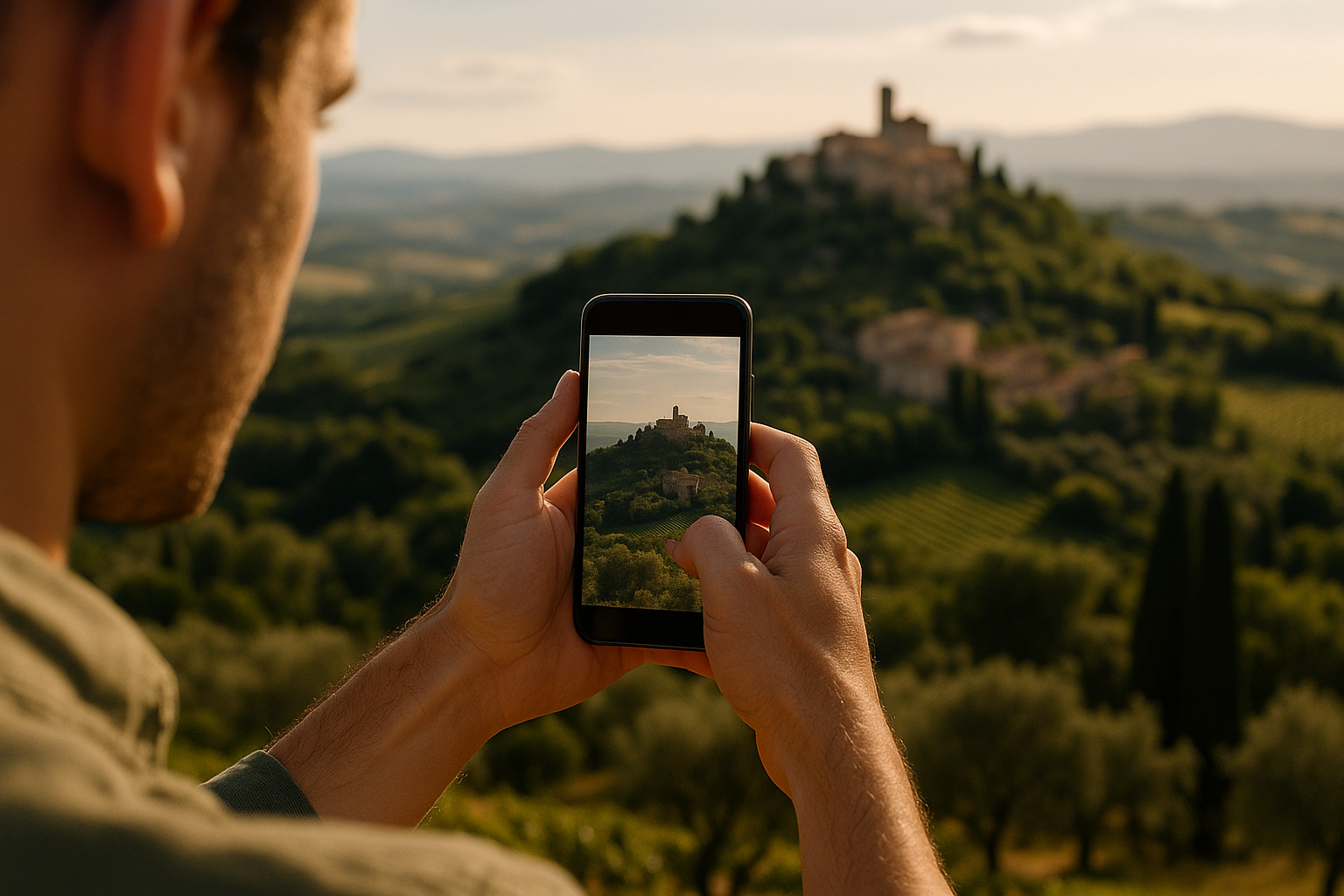
When you approach photography this way, you start noticing things you’d otherwise walk past. The handwritten menu outside a tiny restaurant. The way morning light falls through a gap in the curtains of your hostel room. The queue at a bus station that tells you everything about how people move through a city. These connective-tissue shots are what transform a collection of pretty images into a genuine visual diary.
6. Learn the Basic Rules — Then Break Them Intentionally
The rule of thirds, leading lines, framing, symmetry — these compositional principles exist because they work. They give your eye a path through an image and create a sense of balance and intention. If you’re not familiar with them, spend some time learning the basics. Most cameras and phone cameras have a grid overlay you can enable to help you apply the rule of thirds instinctively.
Once you understand the rules, though, break them deliberately. Centre your subject for a confrontational portrait. Tilt the horizon for a sense of movement. Cut off the top of a building to create tension. Rules are starting points, not ceilings. The photographers whose work stands out are the ones who know exactly when to ignore the conventional approach.
7. Edit with Restraint
Editing is not cheating — it’s part of the process. Every professional photographer edits their work. The goal, however, is to enhance what’s already there rather than fabricate something that wasn’t. Boost the shadows slightly to recover detail. Adjust the white balance so skin tones look natural. Add a touch of contrast to give the image depth. Keep colors grounded in reality.
Over-processed images — skin smoothed to plastic, skies replaced with dramatic artificial clouds, saturation cranked to the maximum — might get attention briefly, but they don’t age well and they don’t feel honest. If someone visits the place you photographed and it looks nothing like your image, you haven’t documented a journey. You’ve created a fiction. Aim for images that feel true to the experience, even if they’re slightly elevated versions of it.
Practical Gear Considerations for Every Budget
You don’t need to spend a lot to shoot well, but a few thoughtful investments make a real difference. Here’s how to think about gear at different budget levels:
- Phone-only setup: Invest in a small, lightweight tripod or gorilla pod for stability in low light. A clip-on wide-angle lens can expand your compositional options. Learn to shoot in your phone’s pro or manual mode for greater control over exposure. Free editing apps give you everything you need to polish your shots.
- Entry-level camera: A mirrorless camera with a kit lens covers most travel situations well. Add a 50mm prime lens when your budget allows — it’s affordable, sharp, and excellent in low light. A quality camera strap and a padded insert for your daypack protect your investment without requiring a dedicated camera bag.
- Intermediate setup: A versatile zoom lens reduces the need to swap lenses in dusty or unpredictable environments. Extra batteries are essential — you don’t want to miss a moment because you’re charging. A compact travel tripod opens up long-exposure and night photography options.
- Advanced: Weather-sealed bodies, fast prime lenses, and a reliable backup camera become priorities when photography is central to your travel purpose. Portability still matters — the camera you leave in the hostel because it’s too heavy isn’t doing anyone any good.
Whatever your setup, keep it simple enough that you’re not spending your trip managing equipment. The goal is to move freely and stay present.
Documenting Authentic Moments Over Posed Shots
There’s a real difference between a photo that documents an experience and a photo that performs one. You’ve seen both. The posed shot in front of every landmark, the artificially candid “looking into the distance” portrait, the perfectly arranged flat-lay of travel items — these images have their place, but they rarely tell you anything real about what it felt like to be somewhere.
Authentic travel photography happens when you slow down, stay curious, and resist the urge to stage everything. It happens when you spend an hour in a market not because you’re looking for a shot but because you’re genuinely interested in what’s happening there — and the camera comes out when something moves you. It happens when you photograph the ordinary alongside the extraordinary: the bus ticket, the half-eaten meal, the map with your handwritten notes in the margin.
The most compelling travel images are the ones where something real was at stake — where you were actually present in a moment rather than orchestrating it. That’s a harder thing to achieve than good composition or correct exposure, but it’s what separates memorable photography from forgettable content.
Building Your Eye Over Time
Photography is a skill, and like any skill, it improves with deliberate practice. Study photographers whose work you admire — not to copy their style, but to understand why their images work. Look at what they choose to include and exclude. Notice how they use light and shadow. Pay attention to the relationship between foreground and background.
Review your own photos critically after each trip. Which ones do you keep coming back to? What do they have in common? Which ones felt exciting in the moment but look flat on screen? Understanding the gap between what you saw and what the camera captured is how you close that gap over time.
Resources like Eric Kim’s photography tips for beginners offer a solid foundation for developing your eye and building good habits early. The more intentional you are about learning, the faster your photography evolves.
Your Journey Deserves to Be Remembered Well
Travel photography isn’t about proving you were somewhere. It’s about preserving how a place made you feel — the light on a particular afternoon, the energy of a street you wandered down without a plan, the face of someone whose name you never learned but whose expression you’ll never forget. These are the images worth making. The best travel photography tips in the world won’t help you if you’re not genuinely curious about the world in front of your lens. But if you are — if you’re willing to get up early, move closer, stay longer, and pay attention — your camera, whatever it is, will be more than enough to document something worth keeping.
This article was produced with AI assistance and reviewed editorially.


City Guides for Young Travelers: Buenos Aires, Quito, and Trujillo (Culture, Food & Adventure)

Where to Stay in Southern Africa: Botswana, Namibia & Madagascar for First-Time Visitors


