
Asia
Southeast Asia on a Shoestring: Sri Lanka, Laos, and Chiang Mai Itineraries
Explore Southeast Asia affordably with detailed itineraries covering Laos, Sri Lanka, and Chiang Mai. Learn budget travel tips and cost-saving strategies for backpackers.

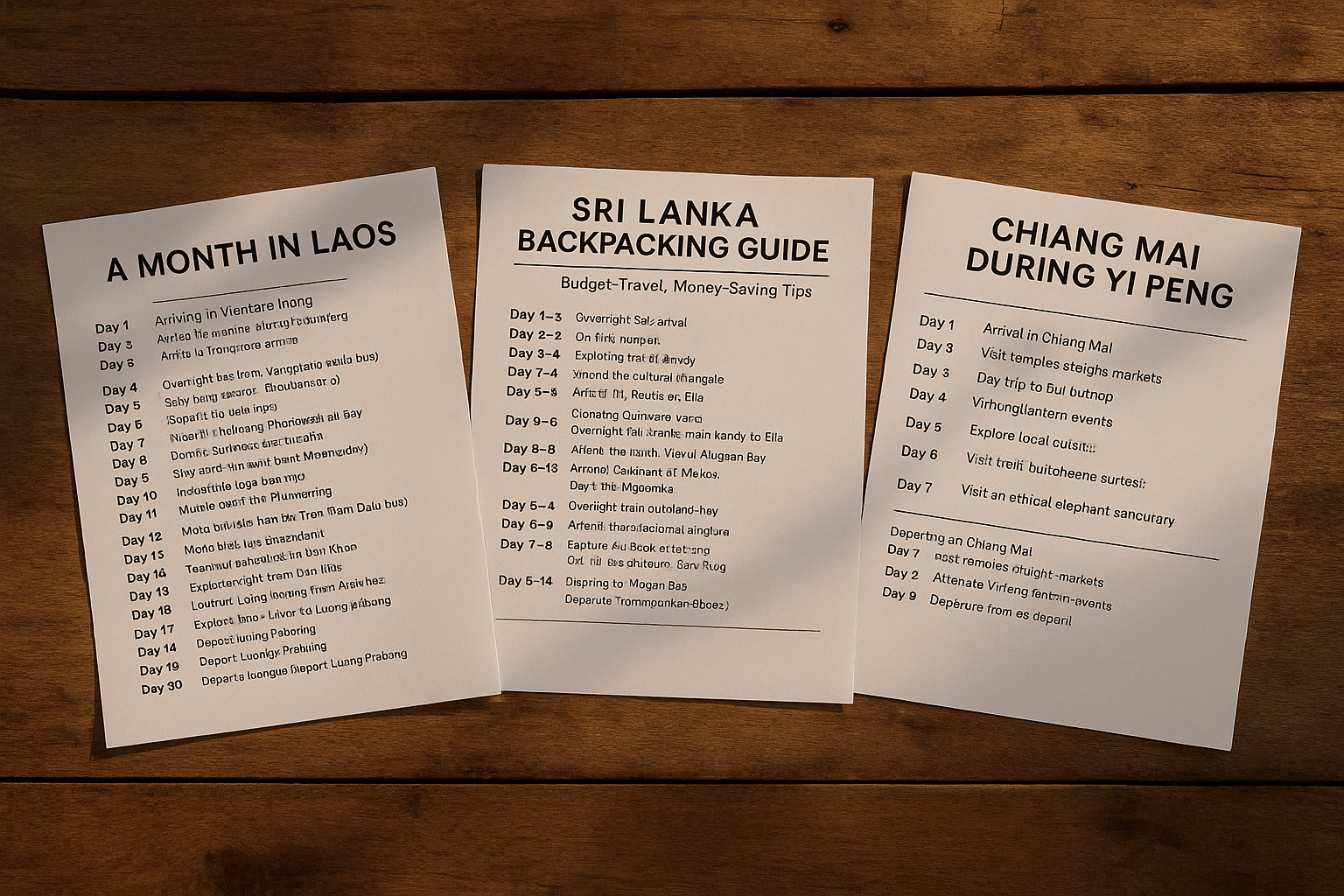
Your Southeast Asia Budget Travel Itinerary: Three Routes Worth Every Penny
If you’ve been dreaming about long bus rides through misty mountains, waking up to temple bells, and eating the best meal of your life for a couple of dollars, then a southeast asia budget travel itinerary might be exactly what you need to start planning. Southeast Asia is genuinely one of the world’s best regions for independent travel — it’s adventurous, culturally rich, and remarkably affordable. Whether you’re drawn to ancient temples in Laos, the layered landscapes of Sri Lanka, or the creative energy of Chiang Mai, this part of the world rewards curious travelers who’d rather spend their money on experiences than on hotel lobbies. This guide breaks down three distinct routes, each designed to help you travel smart without sacrificing depth.
Why Southeast Asia Is the Ultimate Playground for Budget Travelers
Let’s set the scene. Southeast Asia spans an enormous arc of countries — Thailand, Laos, Vietnam, Cambodia, the Philippines, Malaysia, Singapore, and beyond — each with its own flavors, rhythms, and landscapes. You can move between temples, jungles, tropical islands, mountains, and rainforests within a single trip. That variety is rare anywhere else on the planet.
The budget potential here is real. Documented backpacking trips through the region have shown that traveling across multiple countries over several months can average out to roughly twenty dollars a day per person — covering accommodation, food, transport, and activities. That’s not roughing it in silence; that’s eating well, sleeping comfortably in guesthouses, and actually doing things.
The key to making it work is a combination of flexibility, local knowledge, and a willingness to travel the way locals do. Overnight buses and trains save you both money and accommodation costs. Street food is almost always better than restaurant food — and cheaper. Booking accommodation the day before (rather than weeks in advance) gives you room to negotiate and change plans. These principles apply whether you’re in Vientiane or Colombo.
For deeper planning inspiration, Indie Traveller’s Southeast Asia itineraries offer a solid starting point for mapping out your route across the region.
Route One: Exploring Laos Over a Month
Laos is often the country that travelers rush through on their way somewhere else. That’s a mistake. Give it a month, and it becomes one of the most memorable parts of any southeast asia budget travel itinerary. It’s quieter than its neighbors, less commercialized, and full of landscapes that feel genuinely untouched.
Luang Prabang: Start Slow
Begin in Luang Prabang. This UNESCO-listed town sits at the confluence of two rivers, surrounded by forested hills. Wake up early enough and you’ll witness the daily alms-giving ceremony, where monks in saffron robes walk silently through the streets at dawn. It’s one of those moments that stays with you long after you’ve left.
Spend at least four or five days here. Visit the waterfalls just outside town, rent a bicycle to explore the surrounding villages, and eat at the night market where local women sell homemade dishes for next to nothing. Budget guesthouses are plentiful and comfortable. Luang Prabang is proof that slow travel is almost always better travel.
The Plain of Jars: Something You Won’t Forget
From Luang Prabang, make your way northeast to the Xieng Khouang Plateau and the Plain of Jars. This ancient archaeological landscape is scattered with thousands of large stone jars — some over two meters tall — whose origins and purpose remain genuinely mysterious. The area carries a complex history, and visiting it with that awareness makes the experience more meaningful, not less.
The town of Phonsavan nearby is small and low-key. Accommodation is affordable, the food is simple and good, and the pace of life is slow. It’s not a place most travelers linger, but if you do, you’ll find warmth and quiet that’s increasingly hard to find in more popular destinations.
Vientiane and the South
Head south to Vientiane, the capital. Unlike most Southeast Asian capitals, Vientiane doesn’t overwhelm you. It’s compact, walkable, and has a faded French-colonial charm that makes wandering its streets genuinely pleasant. Visit Pha That Luang, the golden stupa that has become a national symbol, and spend an evening by the Mekong watching the sun set over the river.
Continue south to Si Phan Don — the Four Thousand Islands — where the Mekong widens dramatically before crossing into Cambodia. Rent a hammock on Don Det, cycle to the Khone Phapheng waterfalls (among the largest by volume in Asia), and watch river dolphins if you’re lucky and patient. This is where your Laos month ends, not with a rush, but with a long exhale.
Route Two: Backpacking Sri Lanka on a Budget
A note before we begin: while Sri Lanka sits in South Asia rather than Southeast Asia proper, it’s increasingly part of the same backpacking circuit and shares many of the same budget travel principles. If your southeast asia budget travel itinerary has some flexibility, adding Sri Lanka as either a starting or ending point makes enormous geographical and experiential sense.
Getting Around Without Breaking the Budget
Sri Lanka has an excellent train network that’s both affordable and scenic. The hill country route — particularly the journey from Kandy up through the tea plantations to Ella — is one of the most celebrated train rides in the world. Book second-class seats rather than reserved carriages and you’ll pay a fraction of the price while still enjoying the same views through open windows as the mist rolls over green hills.
Tuk-tuks are everywhere and useful for shorter distances. Always agree on a price before you get in. For longer routes, intercity buses are reliable and cheap. Renting a scooter is an option in some areas if you’re comfortable riding, and it opens up coastal roads and inland routes that public transport doesn’t easily reach.
Where to Go and What It Costs
A rough two-to-three week Sri Lanka route might look like this: arrive in Colombo, head north to the Cultural Triangle (Sigiriya, Polonnaruwa, Anuradhapura), loop through the hill country via Kandy and Ella, then drop down to the south coast beaches before looping back. Each region has its own character — ancient ruins, colonial architecture, working tea estates, surf breaks, and wildlife sanctuaries.
Budget accommodation ranges from simple guesthouses to family-run homestays, many of which include breakfast and give you genuine insight into local life. Eating at local rice-and-curry spots (the kind with no English menu and plastic chairs) keeps daily food costs very low. Sri Lanka’s street food scene is underrated — hoppers, kottu roti, and fresh coconut water are highlights.
Practical Budget Tips for Sri Lanka
- Book train tickets a few days in advance for the popular hill country routes — they sell out.
- Entrance fees to cultural sites can add up; prioritize the two or three that matter most to you rather than trying to see everything.
- Guesthouses often include breakfast; factor this into your cost comparisons.
- Avoid tourist restaurants near major sites — walk five minutes away and prices drop significantly.
- Carry small denominations of local currency for tuk-tuks, street food, and markets.
- Travel during shoulder season (May to July or September to October) for lower prices and fewer crowds.
Route Three: Chiang Mai and the North of Thailand
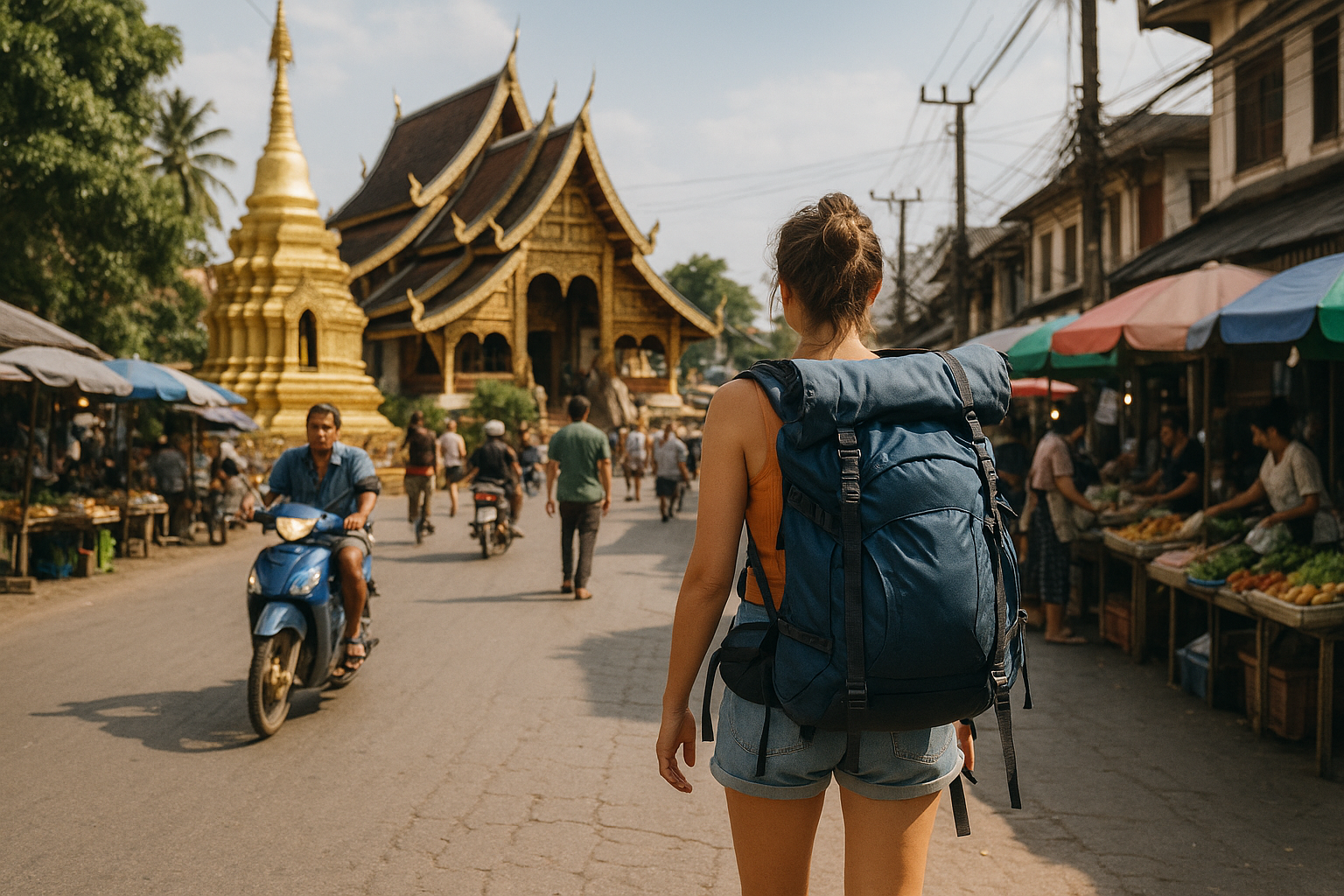
Chiang Mai is one of those cities that people plan to spend three days in and end up staying for three weeks. It earns that reputation. The old city, ringed by a moat and ancient walls, is packed with temples — over three hundred of them — and the surrounding mountains offer trekking, waterfalls, and hilltribe villages that feel genuinely far from the tourist trail.
Understanding the Burning Season
If you’re planning to visit Chiang Mai between roughly March and May, you need to know about the burning season. During these months, agricultural burning across northern Thailand and neighboring countries creates a haze that can significantly reduce air quality. Some years are worse than others, and the smoke can affect both visibility and health, particularly for people with respiratory conditions.
This doesn’t mean you should avoid Chiang Mai during this period — but it does mean you should go in informed and prepared. Here are practical ways to protect yourself and still enjoy the city:
- Check air quality daily. Use a reliable air quality index app before planning outdoor activities. On high-pollution days, adjust your plans accordingly.
- Carry a quality mask. A well-fitting N95 or equivalent mask makes a real difference on bad air days, especially if you’re cycling or spending time outdoors.
- Time outdoor activities carefully. Early mornings and evenings tend to have slightly better air quality than midday. Plan hikes and outdoor excursions with this in mind.
- Stay in accommodation with air filtration. Many guesthouses and hostels in Chiang Mai now have air purifiers; it’s worth asking when you book.
- Spend more time indoors on peak days. Use heavy smoke days as an opportunity to explore cooking classes, Thai massage courses, or the city’s excellent café culture.
- Head to higher elevations carefully. While it might seem like the mountains would be cleaner, smoke can accumulate in valleys and on hillsides too. Check conditions before heading out on treks.
- Know when to consider rescheduling. If you have flexibility, late November through February offers clear skies, cooler temperatures, and ideal conditions for exploring the north.
Making the Most of Chiang Mai on a Budget
Even during burning season, Chiang Mai has a lot to offer indoors and in sheltered spaces. The Sunday Walking Street and Saturday Night Market are among the best markets in Thailand — local crafts, street food, live music, and a genuinely vibrant atmosphere that feels community-driven rather than purely tourist-facing.
Food is exceptional and affordable. A bowl of khao soi — the northern Thai curry noodle dish that’s become something of a local icon — costs almost nothing at the right spot. Moat-side restaurants and rooftop cafés give you a view of the old city walls without charging tourist prices.
For trekking into the surrounding hills, look for smaller, locally run operators rather than the big agencies. You’ll typically get a more authentic experience, your money goes more directly into local communities, and the groups are smaller. A two or three-day trek through the mountains, staying in village guesthouses overnight, is one of the most rewarding ways to spend time in the north.
Budget Travel Philosophy: Spend Less, Experience More
The best southeast asia budget travel itinerary isn’t just a list of places and costs — it’s a mindset. Traveling on a budget in this region doesn’t mean cutting corners on experience. It often means the opposite. When you’re not locked into expensive tours and resort schedules, you have the freedom to stay longer somewhere unexpected, follow a local’s recommendation, or simply sit by a river and watch the day unfold.
Some principles that experienced travelers in this region consistently return to:
- Move slower. Spending more time in fewer places costs less and gives you more. You spend less on transport, you find better deals on accommodation, and you actually get to know a place.
- Eat where locals eat. This is both the cheapest and the most delicious strategy available to you.
- Use overnight transport strategically. An overnight bus or train saves you a night’s accommodation and moves you between destinations simultaneously.
- Travel in the shoulder season. Prices drop, crowds thin out, and the experience often improves.
- Learn a few words of the local language. It costs nothing, and the goodwill it generates is worth more than any guidebook tip.
For a broader look at how to structure your time and money across the region, Intro Travel’s backpacking guide to Southeast Asia covers the practical logistics in useful detail.
Putting It All Together
Whether you choose one of these routes or combine elements of all three, what you’re really doing is building a journey that reflects what travel is actually about — not ticking boxes, but collecting the kind of moments that shift your perspective. The slow mornings in Luang Prabang. The train winding through Sri Lanka’s tea-covered hills. The smell of street food in a Chiang Mai alley as the city wakes up. These are the things you’ll be talking about long after you’ve unpacked your bag and gone back to ordinary life. Southeast Asia has a way of staying with you. Go find out why.
This article was produced with AI assistance and reviewed editorially.


City Guides for Young Travelers: Buenos Aires, Quito, and Trujillo (Culture, Food & Adventure)

Where to Stay in Southern Africa: Botswana, Namibia & Madagascar for First-Time Visitors


