
Mexico
Guanajuato: Mexico’s Most Underrated City (And Why You Should Go Now)
Discover why Guanajuato, Mexico is an underrated destination with stunning colonial architecture, underground tunnels, and authentic local culture that rivals more famous

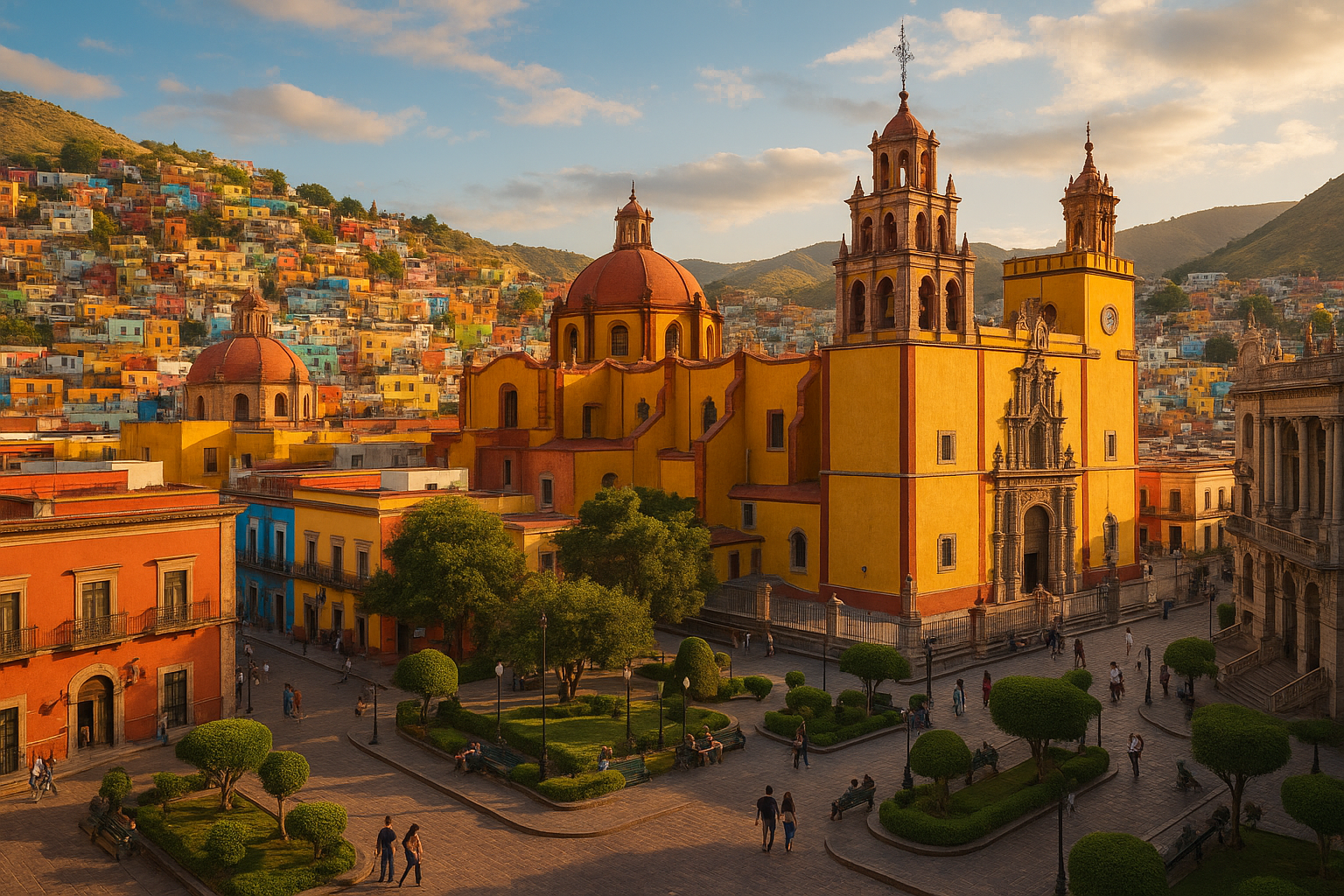
Why Guanajuato, Mexico Deserves a Spot on Your Travel List
There are cities in Mexico that everyone talks about — the beach towns, the mega-capitals, the Instagram-famous colonial squares. And then there’s Guanajuato, Mexico’s highland gem that somehow manages to be visually stunning, historically rich, and genuinely alive with local culture, all while flying under the radar of most international travelers. If you’re putting together a Mexico itinerary and you haven’t looked into Guanajuato yet, this is your sign to start. It’s the kind of place that stops you mid-step because you can’t believe somewhere this beautiful actually exists.
A City Built on Silver — and Stories
To understand Guanajuato, you have to go back to its roots. The Spanish founded the city in the mid-1500s with one goal in mind: silver. The region turned out to be extraordinarily rich in it, and by the 18th century, Guanajuato had become the world’s leading silver-extraction centre — the biggest silver producer in the entire Spanish empire. That kind of wealth leaves marks. You can see it in the grand churches, the ornate facades, and the winding streets that seem almost too dramatic to be accidental.
But here’s where the story gets genuinely fascinating. The city was built over the Guanajuato River, which flooded constantly and made life difficult for the miners and residents. Their solution? They built tunnels underneath the city to divert the water. Eventually, a dam was constructed, and those old mining tunnels were repurposed into something extraordinary — they became roads. Today, a network of underground tunnels runs beneath the city, carrying traffic in a way that feels more like a scene from a film than a real urban planning decision. You can drive or walk through them, and it never stops feeling surreal.
In 1988, Guanajuato was designated a UNESCO World Heritage Site, recognising both its architectural significance and its role in Mexican independence history. The city sits in the Bajío region of central Mexico’s highlands, which gives it a cooler, more temperate climate than the coastal destinations most travelers default to. That alone makes it a refreshing change of pace.
Walking Through a Living Painting
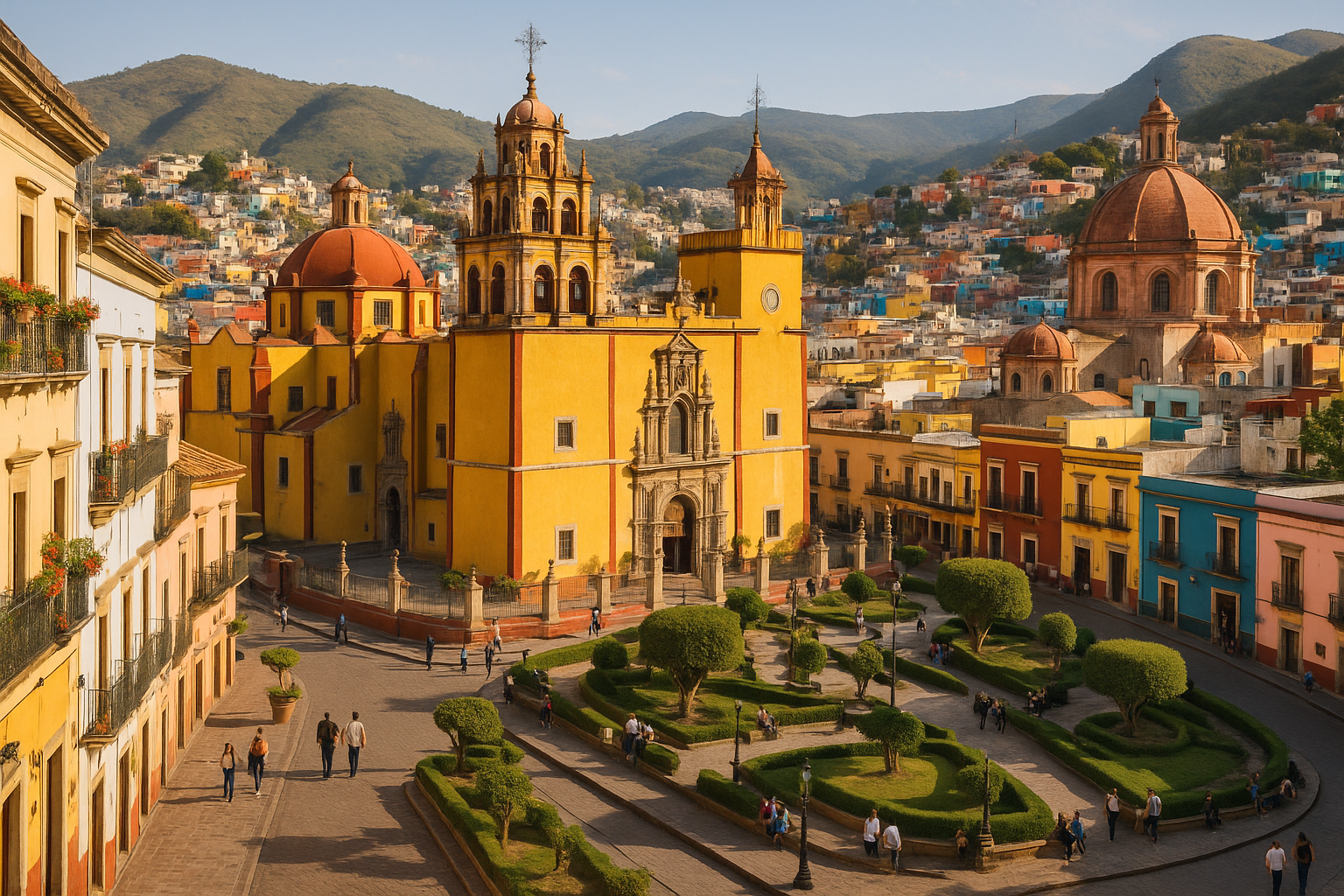
If you’re the kind of traveler who photographs everything — and honestly, who isn’t these days — Guanajuato will keep your camera busy from the moment you arrive. The city is a cascade of color. Pastel and terracotta houses climb steep hillsides, their facades draped in bougainvillea and framed by wrought-iron balconies. Every alley seems to open onto something unexpected: a tiny plaza, a staircase leading nowhere obvious, a church that appears out of nowhere in a blaze of yellow stone.
The architecture here isn’t preserved behind glass. It’s lived in. Locals hang laundry from those wrought-iron balconies. Children play in the cosy squares. Street vendors set up between colonial buildings that have stood for centuries. That combination of history and everyday life is what makes wandering Guanajuato feel so different from visiting a museum or a theme park version of a colonial city. It’s authentic in the truest sense — not curated for tourists, just genuinely itself.
The Plazas: Where the City Breathes
Guanajuato’s plazas are the social heart of the city, and spending time in them is one of the best things you can do. The main Jardín de la Unión is a triangular garden surrounded by cafés, restaurants, and the ornate Teatro Juárez. In the evenings, musicians often perform here, and the whole square fills with a relaxed energy that makes you want to stay far longer than planned.
But don’t stop at the most obvious squares. Part of the joy of exploring Guanajuato is discovering the smaller plazas tucked into the hillsides — quieter spots where you can sit with a coffee and watch the city go about its day. These are the kinds of moments that don’t make it onto a highlights reel but end up being the ones you remember most clearly.
The Callejón del Beso and the City’s Romantic Side
One of Guanajuato’s most famous spots is the Callejón del Beso — the Alley of the Kiss. It’s an extraordinarily narrow alleyway where the balconies of two opposing houses nearly touch. According to local legend, couples who kiss on the third step of the alley will enjoy seven years of happiness together. Whether you believe in the legend or not, the alley itself is a perfect example of what makes Guanajuato so visually captivating: even its smallest corners have personality.
Local Culture That Actually Pulls You In
Guanajuato is a university city, which gives it an energy you might not expect from a colonial highland town. The presence of students keeps the cultural scene lively — there are theatres, galleries, live music, and a genuine sense that ideas are being exchanged here. The city is particularly popular with Mexican travelers, who come to experience its history and culture, as well as with visitors from Japan, who have developed a strong appreciation for its architecture and atmosphere. That mix of influences makes the city feel dynamic and cosmopolitan without losing its local identity.
The street performers known as estudiantinas — groups of musicians in traditional costumes — are a Guanajuato institution. They lead callejoneadas, which are essentially musical walking tours through the city’s alleyways. You join the group, follow the music through the narrow streets, and end up somewhere completely different from where you started. It’s spontaneous, communal, and genuinely fun — the kind of experience that reminds you why travel is worth it.
Eating Your Way Through Guanajuato
Food in Guanajuato is honest and regional. The markets are the best place to start — they’re busy, fragrant, and full of vendors serving dishes that have been part of the local diet for generations. The Mercado Hidalgo is a landmark in itself, housed in a beautiful iron and glass structure. Inside, you’ll find everything from fresh produce to street food stalls where you can eat well for very little money.
Look for regional soups, tamales, and the kind of slow-cooked meat dishes that take hours to prepare and minutes to disappear from your plate. Eating here isn’t a performance for tourists — it’s just how people eat. Pull up a stool at a market counter, point at what looks good, and let the experience unfold. That’s the approach that leads to the best meals.
How Guanajuato Compares to Other Mexican Cities
If you’ve already visited Mexico City, Oaxaca, or the Yucatán Peninsula, you might wonder where Guanajuato fits into the picture. The honest answer is that it offers something genuinely different. It’s more intimate than Mexico City, with a scale that makes it easy to explore on foot. It shares some of the colonial charm of cities like San Miguel de Allende — which is nearby and also worth visiting — but tends to feel less polished and more authentically everyday.
Guanajuato rewards slow travel. It’s not a city you rush through on a day trip, though many people do and still leave impressed. If you give it two or three days, you’ll start to understand its rhythms — when the plazas fill up, when the tunnels get busy, when the light hits the hillside houses in a way that makes everything glow. That’s when the city really opens up.
For travelers who are used to coastal Mexico — Cancún, Tulum, Puerto Vallarta — Guanajuato will feel like a completely different country. It’s landlocked and elevated, cooler and quieter, with a history that runs deep and a culture that doesn’t revolve around beach tourism. That contrast is exactly what makes it worth the detour.
Practical Things Worth Knowing Before You Go
- Getting there: Guanajuato has its own international airport, Del Bajío, which connects to several Mexican cities and some international destinations. It’s also reachable by bus from Mexico City and other major hubs.
- Getting around: The city centre is best explored on foot. The underground tunnels carry vehicle traffic, but the historic streets above are made for walking. Wear comfortable shoes — the hillside streets are steep and cobblestoned.
- Best time to visit: The dry season, roughly from October through April, offers the most reliable weather. The city’s famous Festival Internacional Cervantino takes place in October each year, drawing performers and audiences from around the world — it’s worth planning around if you can.
- Budget: Guanajuato is generally more affordable than many popular Mexican tourist destinations. Accommodation ranges from budget hostels to boutique guesthouses, and food at markets and local restaurants is very reasonably priced.
- Language: Spanish is the primary language. English is spoken in some tourist-facing businesses, but learning a few phrases will go a long way and locals genuinely appreciate the effort.
- Safety: Like any destination, it’s worth staying informed and using common sense. The historic centre is generally considered safe and well-traveled, but check current travel advisories before your trip.
Hidden Corners Worth Discovering
Beyond the main attractions, Guanajuato has a way of rewarding curious travelers who wander without a fixed plan. Climb up to the Monumento al Pípila — a statue on the hillside above the city — and you’ll get a panoramic view that makes the whole layout of Guanajuato suddenly make sense. The coloured houses stacked on the hillsides, the church towers rising above the rooftops, the tunnels hidden below — it all comes together from up there.
The Museo de las Momias is one of the city’s more unusual attractions. It houses naturally mummified remains discovered in the city’s cemeteries, a result of the local soil conditions. It sounds macabre, and it is a little, but it’s also genuinely fascinating and draws visitors who are curious about the intersection of history, science, and local culture. It’s not for everyone, but it’s undeniably memorable.
For a quieter experience, explore the residential neighbourhoods above the tourist centre. The streets get steeper, the houses get smaller, and the views get better. You’ll pass locals going about their daily lives — kids heading to school, older residents sitting in doorways, cats sleeping in patches of sunlight. This is where you find the version of Guanajuato that doesn’t appear in promotional material, and it’s often the most rewarding part of the visit.
Why You Should Go
Guanajuato, Mexico is the kind of place that changes how you think about travel in this country. It’s not a beach. It’s not a party destination. It’s a city with centuries of history written into its walls, a culture that’s alive and evolving, and a visual character that’s unlike anywhere else. It’s popular with Mexican travelers for good reason — they know something that many international visitors haven’t figured out yet.
You can read more about planning your visit through resources like Indie Traveller’s Guanajuato guide, which covers the city in practical detail. But honestly, the best preparation is simply showing up with time to spare and a willingness to get a little lost. Guanajuato will take care of the rest. It’s one of those places you’ll still be thinking about long after you’ve gone home — not because of one big moment, but because of the accumulation of small ones: the light at dusk, the sound of music in an alleyway, the taste of something you can’t quite name but want again immediately. That’s what a great travel destination feels like. And Guanajuato delivers it, quietly and without fanfare, every single day.
This article was produced with AI assistance and reviewed editorially.


Adventure Beyond the Beach: Things to Do in Jeju, South Korea & Tayrona Park, Colombia

Where to Stay in 2026: Budget Accommodation Guides for Vancouver, Wellington, Bruges & Andorra


