
Brazil
Brasile vs Norvegia
Brasile vs Norvegia

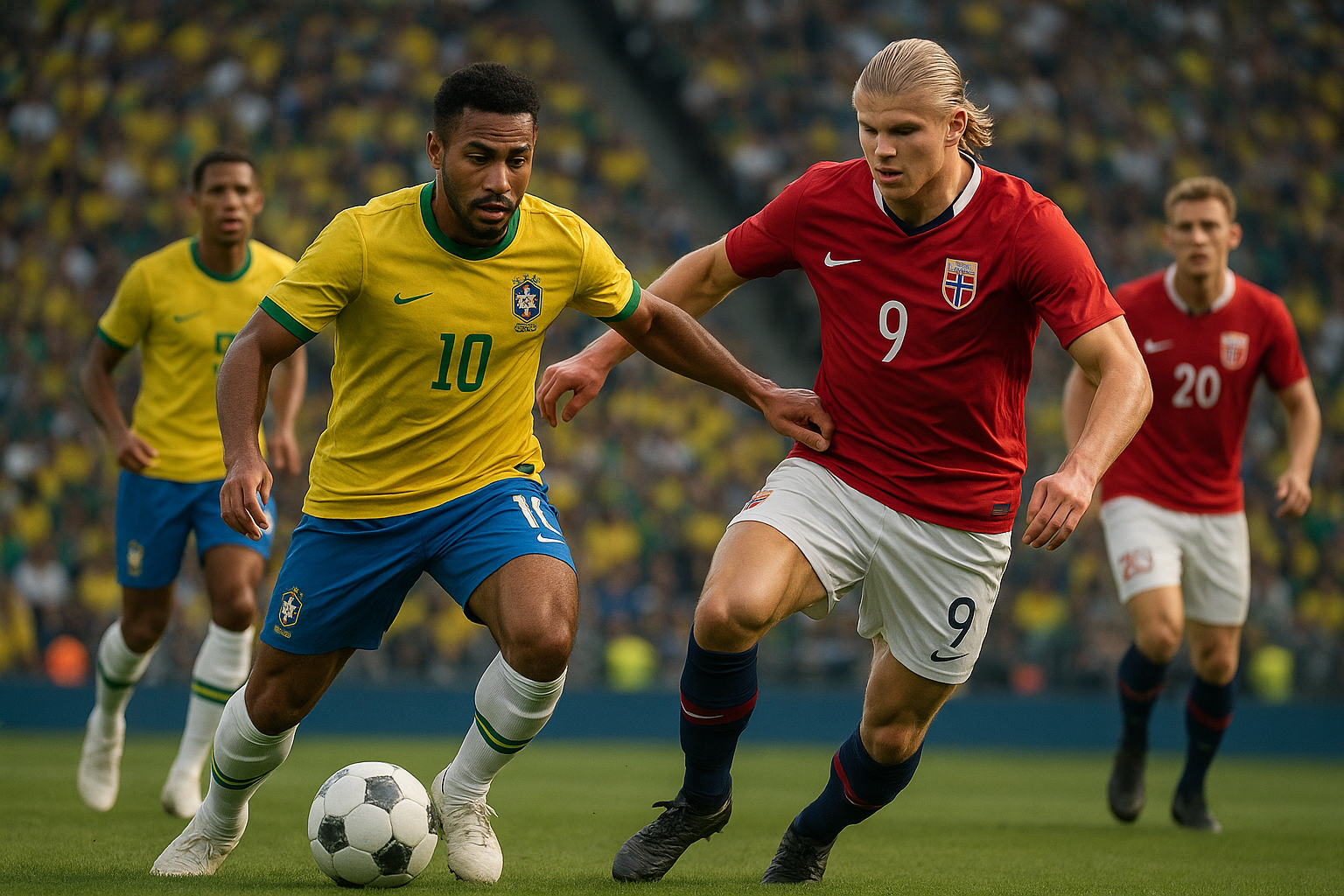
Brazil vs Norway: Two Worlds, One Unforgettable Match
When you think about football rivalries, Brazil vs Norway might not be the first matchup that comes to mind. But after the 2026 FIFA World Cup Round of 16, that’s changed. Norway pulled off one of the most stunning results in recent tournament history, defeating Brazil 2–1 at MetLife Stadium on July 3, 2026 — sending the five-time world champions home earlier than they’ve left since 1990. If you’re a young traveler who loves football, culture, and the kind of stories that make you want to pack a bag immediately, this one’s for you.
The Match That Shocked the World
Brazil walking into a World Cup Round of 16 as heavy favorites is nothing new. With 22 World Cup appearances, 76 wins across 114 games, and five championship titles — in 1958, 1962, 1970, 1994, and 2002 — the Seleção carry the weight of football royalty wherever they go. Norway, by contrast, arrived at this tournament with just three World Cup appearances to their name, eight total games played, and a historical best finish of 12th place back in 1938.
On paper, it looked straightforward. On the pitch, it was anything but.
Norway defeated Brazil 2–1, and the result sent shockwaves through the football world. For Brazil, it marked their earliest World Cup exit in nearly three decades. For Norway, it was the kind of result that rewrites a nation’s football story entirely. Regardless of which side you were rooting for, you have to admit: moments like these are exactly why we love sport.
If you were lucky enough to be at MetLife Stadium that evening, you witnessed history. And if you weren’t — well, that’s a good reason to start planning your next football trip.
Brazil and Norway: More Different Than You Think
Beyond the football pitch, Brazil and Norway represent two of the most fascinating — and contrasting — countries on the planet. As a young traveler, comparing these two destinations isn’t just interesting. It’s genuinely useful if you’re deciding where to go next.
Brazil is heat, color, and rhythm. It’s the Amazon rainforest stretching endlessly in every direction, the golden beaches of the Northeast, the electric energy of Rio de Janeiro’s neighborhoods, and the urban pulse of São Paulo. It’s a country that pulls you in with its warmth — both the climate and the people. Football here isn’t just a sport. It’s a cultural language everyone speaks.
Norway is something else entirely. Think dramatic fjords carved by ancient glaciers, snow-covered mountains that seem to touch the clouds, and long summer days where the sun barely sets. It’s quieter, more introspective, and strikingly beautiful in a way that feels almost unreal. The pace of life is different, the landscapes are different, and the experiences you collect there are unlike anywhere else in the world.
Both countries offer something genuinely unforgettable. They just speak completely different travel languages.
Why Young Travelers Should Care About This Rivalry
Here’s the thing about the Brazil vs Norway story — it’s not just a football result. It’s a reminder that the underdog always has a chance, that geography and history don’t determine destiny, and that the most memorable moments in travel (and in sport) often come from the places and teams you least expect.
That’s a pretty solid philosophy for exploring the world, too.
When you travel to Brazil, you’re stepping into a country that carries the confidence of champions. The football culture there is immersive in a way that’s hard to describe until you’ve experienced it. Watching a local match in a packed stadium, hearing the drums, feeling the energy — it’s one of those experiences that stays with you. You can explore more about Brazil’s football culture and its broader travel offerings through resources like World Data’s Brazil-Norway country comparison, which gives you a fascinating side-by-side look at both nations.
Norway, meanwhile, is a country that punches above its weight in almost every category — including, apparently, football. Traveling there means hiking trails that reward you with views you’ll struggle to photograph well enough, kayaking through fjords that make you feel genuinely small, and experiencing a culture that values simplicity, nature, and community in ways that feel deeply refreshing.
Exploring Brazil: What to Expect on the Ground
If the 2026 World Cup has you thinking about visiting Brazil, here’s what you should know before you go.

- The Northeast is underrated. Cities like Fortaleza, Natal, and Recife offer stunning coastline, incredible food, and a slower pace than Rio or São Paulo. They’re also more budget-friendly, which matters when you’re traveling young.
- The Amazon is worth the effort. Getting there takes time, but floating through the world’s largest rainforest and waking up to sounds you’ve never heard before is genuinely transformative. Base yourself in Manaus and explore from there.
- Rio is everything and more. Yes, it lives up to the hype — but go beyond the famous beaches. Explore the neighborhoods of Santa Teresa and Lapa, eat at local botequins, and watch the city from a viewpoint that isn’t on every tourist map.
- Football is everywhere. You don’t need a World Cup to experience Brazilian football culture. A local match, a conversation with a fan, a jersey spotted on the street — it’s woven into daily life in a way that’s genuinely moving.
- Learn a few words of Portuguese. Brazilians genuinely appreciate the effort, and it opens doors that English alone won’t.
Exploring Norway: What to Expect on the Ground
Norway is one of those destinations that looks incredible in photos but somehow exceeds expectations in person. Here’s how to make the most of it.
- The fjords are the main event. The Geirangerfjord and Nærøyfjord are both recognized as among the world’s most scenic natural landscapes, and for good reason. Take a ferry, rent a kayak, or hike the surrounding trails — any approach delivers.
- Bergen is your gateway city. It’s colorful, walkable, and full of character. The Bryggen wharf is historic and photogenic, but the real charm is in the side streets and local cafés.
- Timing matters. Visit in summer for the midnight sun and hiking season. Visit in winter for the Northern Lights, snow-covered landscapes, and a completely different kind of magic.
- Budget smartly. Norway is expensive — there’s no getting around it. Cook some of your own meals, use public transport, and stay in hostels or cabin-style accommodations to keep costs manageable without missing out.
- Embrace the outdoors. Norwegian culture is built around being outside. Even if you’re not a hardcore hiker, a walk through a national park or along a coastal path will give you a sense of why Norwegians are so connected to their landscape.
Head-to-Head: Which Destination Is Right for You?
Choosing between Brazil and Norway as a travel destination depends entirely on what kind of experience you’re chasing. They’re not competing — they’re just completely different adventures.
Go to Brazil if you want warmth, spontaneity, cultural immersion, and the kind of energy that makes you feel fully alive. It’s a country that demands your presence. You can’t drift through Brazil — it pulls you in, feeds you, makes you dance, and sends you home with stories you’ll be telling for years.
Go to Norway if you want space, silence, natural beauty, and the kind of perspective shift that comes from standing in front of something ancient and vast. It’s a country that rewards patience and curiosity. You’ll leave feeling quieter in the best possible way — like you’ve seen something that puts the rest of the world in context.
And if you can manage both? Do it. The contrast alone will change the way you see travel.
What the Brazil vs Norway Result Means for Football Culture
Beyond the travel angle, the Brazil vs Norway World Cup result deserves a moment of genuine appreciation. Norway’s football program has been building steadily, and a victory over the most decorated team in World Cup history on the global stage is the kind of result that inspires a generation of young players back home.
For Brazil, the early exit is painful — especially given their record of 76 wins and five titles. But football history is full of these moments, and they’re part of what makes the sport worth following. The Seleção will rebuild, return, and compete again. That’s the nature of the game.
For young travelers who follow football, moments like these are also an invitation to explore. Go to a Norwegian match. Visit a Brazilian football museum. Watch a local game in a city you’ve never been to before. Football is one of the world’s great cultural connectors, and it’s at its best when it surprises you.
Planning Your Trip: Practical Starting Points
Whether Brazil or Norway is calling your name, here are a few practical things to keep in mind as you start planning.
- Visas: Check your country’s specific requirements for both destinations well in advance. Requirements vary significantly depending on your passport.
- Best time to visit Brazil: The dry season (roughly May to September) is generally ideal for most regions, though the Amazon and Northeast have their own seasonal rhythms.
- Best time to visit Norway: June to August for hiking and the midnight sun; November to February for the Northern Lights and winter landscapes.
- Getting around: Brazil is vast — domestic flights save time between major destinations. Norway has excellent rail and ferry connections that are part of the experience in themselves.
- Safety: Research specific areas before you go in both countries. Like any destination, awareness and preparation go a long way.
Two Countries, Endless Stories
The Brazil vs Norway story — whether you’re talking about the 2026 World Cup result that stunned the football world or the broader comparison between two extraordinary countries — is ultimately a story about contrast, surprise, and the joy of the unexpected. Norway walked onto the world stage and proved that history doesn’t have to repeat itself. Brazil, despite the early exit, remains one of the most compelling travel destinations on the planet. Both countries have something rare: the ability to make you feel like you’ve discovered something new, even if millions of people have been there before you. That’s the mark of a truly great destination. And that’s exactly the kind of place worth adding to your journey.
This article was produced with AI assistance and reviewed editorially.


Brasile vs Norvegia

UK Adventures: From London Walks to Cornwall Coastal Gems (2026)


