
Asia
Beyond the Beach: Hidden Gems in Thailand’s Krabi Region
Discover Krabi hidden gems beyond the postcard beaches. Explore mangrove forests, 100+ islands, and authentic experiences less crowded than Phuket.

Beyond the Beach: Discovering the Krabi Hidden Gems Worth the Journey
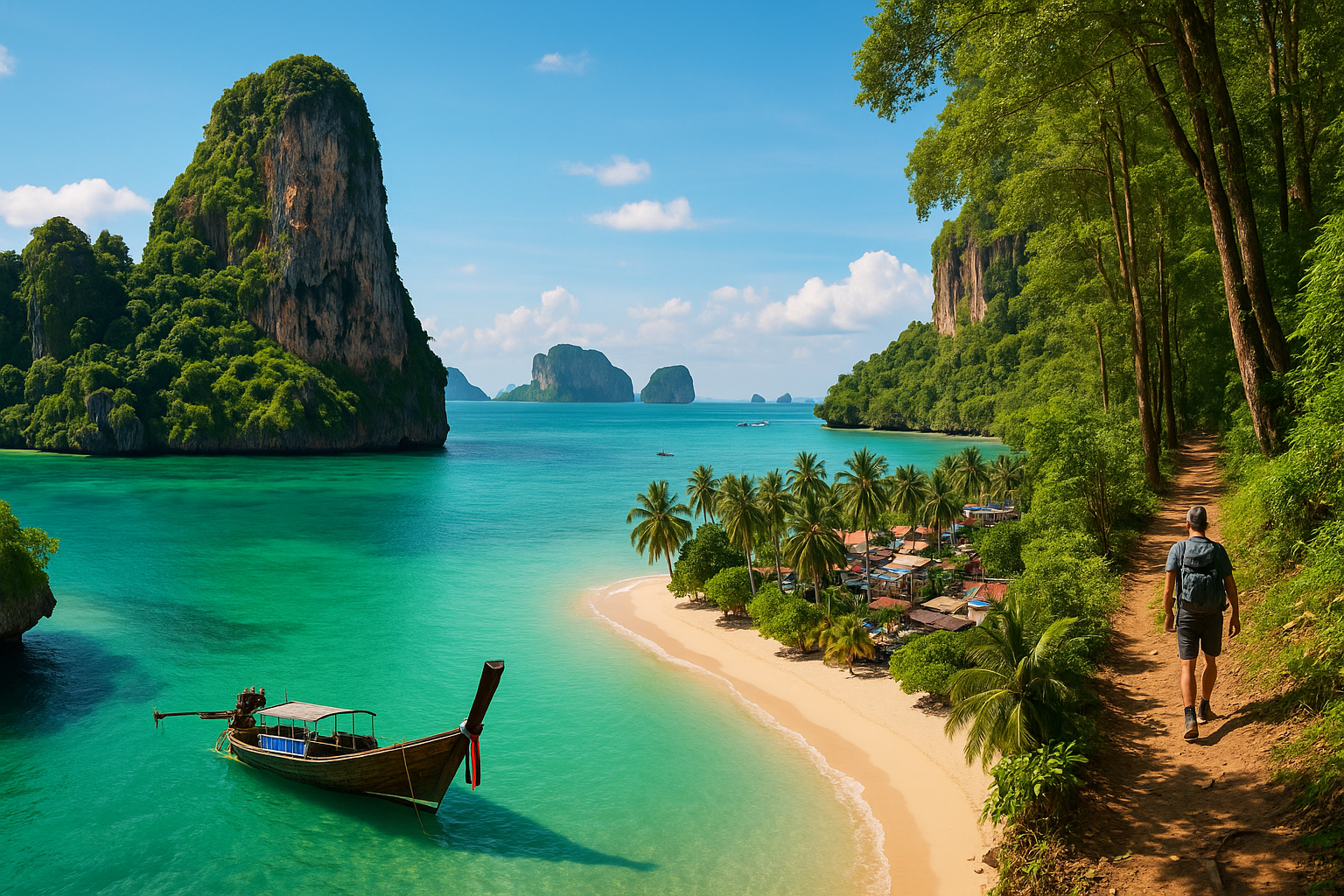
Most people hear “Krabi” and immediately picture a postcard — turquoise water, a longtail boat, maybe a cocktail at sunset. And sure, that version of Krabi absolutely exists. But if that’s all you see, you’re missing the point. The real Krabi hidden gems are tucked behind the limestone cliffs, scattered across more than 100 offshore islands, and woven into the daily life of a region that still manages to feel less crowded and more authentic than its famous neighbor, Phuket. This is the Krabi that rewards the curious traveler — the one who wanders a little further, stays a little longer, and asks the right questions.
Located on southern Thailand’s west coast, Krabi is the kind of place that gives you options. You can spend a week here and barely scratch the surface. Dense mangrove forests, white sand beaches, dramatic offshore islands, and towering limestone cliffs — it’s all here, and it’s all waiting. The trick is knowing where to look.
Why Krabi Stands Apart from the Crowd
Thailand’s southern coast has no shortage of destinations competing for your attention. So why choose Krabi? The honest answer is that Krabi offers something increasingly rare in Southeast Asian travel: space. Real, breathable, unhurried space.
Compared to Phuket — which draws massive international crowds year-round — Krabi is noticeably less crowded. That doesn’t mean it’s undiscovered. It means the experience still feels like it belongs to you. You can find a stretch of beach without fighting for a sun lounger. You can kayak through mangrove tunnels without a convoy of tourist boats behind you. You can sit at a local food stall and actually have a conversation with the person cooking your meal.
That’s the energy Krabi runs on. It’s a place that hasn’t fully traded its identity for tourism revenue, and that makes all the difference.
The Landscape: Limestone, Mangroves, and Open Water
Before diving into specific spots, it’s worth understanding what makes Krabi’s landscape so distinctive — because the geography here shapes every experience you’ll have.
The limestone cliffs are the most immediately striking feature. They rise vertically from both land and sea, creating formations that look almost architectural. Walk along the coast at low tide, and you’ll find yourself weaving between enormous karst towers that cast long shadows across the sand. It’s the kind of scenery that makes you stop mid-sentence because you’ve run out of words for it.
Then there are the mangrove forests. Dense, tangled, and alive with sound, Krabi’s mangroves are a world apart from the beach experience. Paddling through them by kayak — especially in the early morning, when the light filters through the canopy in long golden strips — is one of those experiences that doesn’t translate well into photos but stays with you for years. The mangroves aren’t just beautiful; they’re ecologically vital, and exploring them responsibly is part of what makes the experience meaningful.
And beyond the shore, more than 100 offshore islands are waiting. Some are easily accessible day trips. Others require a bit more planning. All of them offer something worth discovering — whether that’s a sheltered cove, a coral reef, or simply the feeling of being somewhere very few people have been that week.
Krabi Hidden Gems: Spots That Deserve More Attention
The well-known areas of Krabi — Ao Nang and Railay — are popular for good reason. Ao Nang serves as a practical and well-connected base, with easy access to boat transfers, restaurants, and accommodation across every budget. Railay, accessible only by boat due to its surrounding cliffs, offers a more enclosed and visually striking environment that feels genuinely cut off from the rest of the world.
But the real magic often happens just beyond these anchor points. Here’s where to start looking.
The Offshore Islands Beyond the Obvious Ones
Everyone’s heard of the Phi Phi Islands. And yes, they’re worth seeing. But with more than 100 islands in Krabi’s waters, leaning on the most famous ones means missing a lot. Smaller, less-visited islands in the region offer quieter beaches, cleaner water, and the kind of solitude that’s genuinely hard to find in this part of the world.
The key is to go with a local operator who knows which spots are worth the extra travel time, and to be flexible with your schedule. Some of the best island experiences in Krabi aren’t on any fixed itinerary — they happen when you tell your boat captain you want to see something different and actually mean it.
If you’re looking for structured options, platforms like GetYourGuide’s Krabi hidden gems experiences offer curated tours that go beyond the standard routes, connecting you with guides who know the region well.
Mangrove Kayaking: The Quietest Adventure in Krabi
If you do one thing in Krabi that isn’t beach-related, make it a mangrove kayaking trip. The mangrove forests along Krabi’s coastline are dense, atmospheric, and surprisingly easy to explore independently or with a guide.
Paddle slowly. Let your eyes adjust to the shade. Watch for movement in the roots — crabs, mudskippers, birds you won’t see anywhere else. The mangroves have their own rhythm, and the longer you spend in them, the more you notice. It’s meditative in a way that hiking or snorkeling isn’t, and it’s one of those experiences that tends to become a highlight of people’s trips even when they weren’t expecting it to be.
Early morning is the best time to go. The air is cooler, the light is beautiful, and you’ll likely have stretches of the waterway entirely to yourself.
Limestone Cliff Exploration on Foot
Krabi’s limestone formations aren’t just for rock climbers, though the region has developed a strong reputation for climbing. Simply walking among the cliffs — especially at low tide when the shoreline expands dramatically — is an experience in itself.
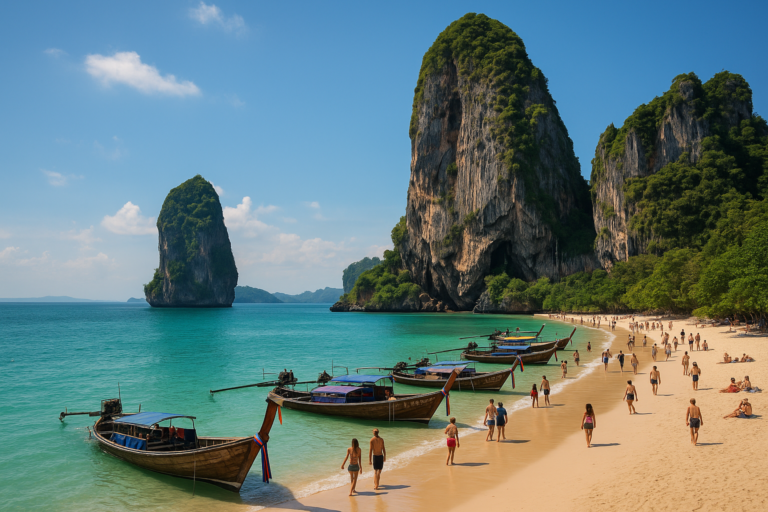
Some of the most rewarding walks in the region involve following the coast between beaches at low tide, scrambling over rocks, and discovering small caves, tide pools, and hidden coves that are completely inaccessible at high water. It requires a bit of timing and a willingness to get your feet wet, but the payoff is the feeling of finding something that most visitors walk right past.
Check tide times before you go, wear shoes with grip, and carry water. These aren’t technically challenging excursions, but they reward preparation.
Choosing Your Base: Ao Nang vs. Railay
Where you stay in Krabi shapes the entire texture of your trip, so it’s worth thinking about this carefully rather than just booking whatever comes up first.
Ao Nang
Ao Nang is the most connected base in Krabi. It has a wide range of accommodation options, reliable transport links, and easy access to boat services that can take you to Railay, the islands, and beyond. It’s the practical choice — especially if you’re planning to move around a lot or if you’re arriving without a fixed itinerary.
The beach at Ao Nang itself is pleasant without being the most spectacular in the region, but that’s almost beside the point. Ao Nang is a launching pad. Use it as one, and it works brilliantly.
Railay
Railay is a different proposition entirely. Surrounded by limestone cliffs on three sides and accessible only by boat, it exists in a kind of geographic isolation that gives it a distinct atmosphere. There are no roads in or out. The pace of life slows down noticeably. And the beaches — particularly Phra Nang Beach at the southern tip — are among the most visually striking in the entire region.
Staying in Railay means accepting that you’re a short boat ride away from everything else, which is either a feature or a limitation depending on your travel style. For those who want to stay in one place and explore deeply, it’s a genuinely special base. For those who want flexibility and easy movement, Ao Nang makes more sense.
For a broader overview of what both areas offer, Travel Lush’s guide to unique things to do in Krabi covers the practical details well and is worth reading before you finalize your plans.
Practical Tips for Exploring Krabi Authentically
Krabi rewards travelers who approach it with a bit of patience and flexibility. Here are some things worth knowing before you go.
- Get on the water early. Whether you’re island-hopping, kayaking, or taking a longtail boat to Railay, mornings are calmer, cooler, and less crowded. The best light for photography is also in the first few hours after sunrise.
- Learn the tides. Krabi’s coastline changes dramatically with the tide. Beaches that are packed with rock formations and tide pools at low water can look entirely different — and be far less interesting — at high tide. Download a tide app before you arrive and plan accordingly.
- Talk to locals. This sounds obvious, but it makes a real difference in Krabi. Guesthouse owners, boat operators, and food stall vendors often know spots that aren’t on any tourist map. Ask where they’d take a friend visiting for the first time. You’ll get better answers than any algorithm can give you.
- Don’t rush the islands. With more than 100 islands to choose from, the temptation is to try to see as many as possible. Resist it. Spending more time at fewer places — arriving before the day-trip boats, staying until the light changes — is almost always more rewarding than ticking off a list.
- Respect the mangroves. Krabi’s mangrove forests are ecologically sensitive. Stick to established kayak routes, don’t disturb wildlife, and choose operators who take environmental responsibility seriously. The mangroves are part of what makes Krabi special; treating them well is part of the deal.
- Go beyond Ao Nang and Railay. Both are worth your time, but they’re also the most visited areas in the region. Even a short boat ride or a walk in a different direction can take you somewhere that feels genuinely off the tourist trail.
When to Visit Krabi
Krabi’s location on southern Thailand’s west coast means its seasons are shaped by the monsoon patterns of the Andaman Sea. The dry season, roughly from November through April, brings calmer seas, clearer skies, and ideal conditions for island-hopping and water activities. This is also the busiest period, so if you’re traveling during these months, book accommodation in advance.
The shoulder months — May and October — can offer a good balance between manageable crowds and decent weather. Some days will be grey or rainy, but the rates are lower, the beaches are quieter, and the landscape takes on a lush, saturated quality that the dry season doesn’t quite match.
The peak monsoon months bring heavier rainfall and rougher seas, which limits access to some islands and makes boat travel less predictable. It’s not impossible to visit during this period, but you need to be flexible and realistic about what you’ll be able to do.
What Makes Krabi Worth the Journey
Travel has a way of flattening places into their most famous features. Krabi could easily become just “the place with the cliffs and the longtail boats.” And if that’s all you’re looking for, you’ll find it without any effort at all.
But the Krabi hidden gems — the mangrove tunnels at dawn, the quiet islands that don’t appear on group tour itineraries, the coastline that transforms completely with the tide — those take a little more intention. They require you to slow down, look further, and be willing to trade the familiar for the unexpected.
That’s exactly the kind of travel worth doing. Krabi’s limestone cliffs, dense mangrove forests, white sand beaches, and more than 100 offshore islands aren’t just scenic backdrops. They’re an invitation to explore a region that still has room for discovery — and for the kind of memories that don’t fit neatly into a highlight reel.
Go. Wander. Stay curious. Krabi will meet you more than halfway.
This article was produced with AI assistance and reviewed editorially.


Planning Your First Solo Trip: A Step-by-Step Blueprint for Unforgettable Travel

Teaching English Abroad in 2026: Top Countries, Visa Requirements & Real Salaries


