
Italy
Capri Without the Crowds: 9 Things to Do on Italy’s Most Iconic Island
Discover things to do in Capri beyond the crowds. Explore hidden trails, dramatic cliffs, and local neighborhoods on Italy’s iconic island.

Capri Without the Crowds: Things to Do on Italy’s Most Iconic Island
There’s a reason Capri has been drawing visitors for centuries. Dramatic limestone cliffs rising out of impossibly blue water. Narrow lanes winding past bougainvillea-draped walls. The kind of light that makes everything look like a painting. But here’s the honest truth: the things to do in Capri that you’ll actually remember are rarely found in the middle of a tourist crowd. The island is one of the most visited destinations in all of Italy, and during peak season, it shows. The trick isn’t to avoid Capri — it’s to know how to move through it. With the right approach, you can experience the magic of this legendary island on your own terms.
Understanding the Island Before You Arrive
Capri is actually divided into two distinct municipalities: Capri town itself and Anacapri, the quieter settlement higher up on the island. Most visitors flood into Capri town, wander the famous Piazzetta, and leave without ever venturing further. That’s your advantage. The moment you step off the main tourist circuit, the island transforms. Cobblestone paths open up into silence. Views appear without a crowd of people blocking them. The island breathes.
Anacapri in particular tends to attract far fewer day-trippers, which makes it a genuinely different experience. The streets are slower, the atmosphere is more local, and you’ll find yourself wondering why everyone else isn’t up here. Understanding this divide is the first step to exploring Capri smarter.
Explore the Blue Grotto — But Time It Right
The Grotta Azzurra, or Blue Grotto, is one of the most famous natural attractions in the Mediterranean. You’ve probably seen the photos: a sea cave glowing with an otherworldly electric blue light, caused by sunlight filtering through an underwater opening. In person, it’s genuinely stunning. But it’s also one of the most visited spots on the island, which means the experience can feel rushed and crowded if you show up at the wrong time.
The key is to go early — as early in the morning as possible, before the day-tripper boats arrive from Naples and the Amalfi Coast. The cave can also close due to rough seas or high tides, so it’s worth checking conditions before you plan your day around it. When it works, though, floating through that glowing blue light in a small rowboat is the kind of moment you’ll struggle to describe to people who haven’t been there.
Hike to Villa Jovis for Views and Solitude
Villa Jovis is one of Capri’s most historically significant sites, and it rewards the visitors willing to make the walk. Perched on the eastern tip of the island, it’s a genuine hike — not brutal, but enough to deter the casual day-tripper in sandals. That’s exactly why it’s worth doing.
The path up takes you through quieter residential parts of the island, past gardens and glimpses of local life that most visitors never see. When you arrive, you’re rewarded with sweeping panoramic views across the water toward the Sorrentine Peninsula. The ruins themselves are extensive, and the sense of history here is palpable. It’s one of those places where you can actually sit down, take it all in, and feel like you have the island to yourself — even in high summer.
Discover Arco Naturale and the Eastern Trails
The Arco Naturale is a spectacular natural rock arch on the eastern side of the island, and it’s one of Capri’s most impressive geological features. The trail leading to it winds through lush Mediterranean vegetation, and the arch itself frames a view of the open sea that’s genuinely hard to forget.
What makes this area special is that it connects to a network of walking paths that most visitors skip entirely. From the arch, you can continue on foot through quieter terrain, descending toward small coves and coastal lookouts. The eastern side of the island generally sees far less foot traffic than the western approaches and the main town, which makes it ideal for anyone who wants to explore at their own pace. Wear proper shoes, bring water, and give yourself more time than you think you’ll need — there’s a lot to discover out here.
Watch the Sunset from Punta Carena
On the southwestern tip of the island, the Punta Carena lighthouse stands at one of Capri’s most dramatic coastal points. This is where locals and in-the-know visitors come to watch the sun go down, and for good reason. The views here are wide and unobstructed, with the rocky coastline dropping away into deep blue water and the horizon stretching out endlessly toward the sea.
There’s also a small beach area near the lighthouse that’s popular with locals for swimming. The water here is clear and relatively calm, and the setting is far less chaotic than the more accessible beaches near Capri town. Combine an afternoon swim with sunset views and you’ve got one of the best evenings the island can offer — without paying for a sun lounger at an overpriced beach club.
See the Faraglioni at Golden Hour
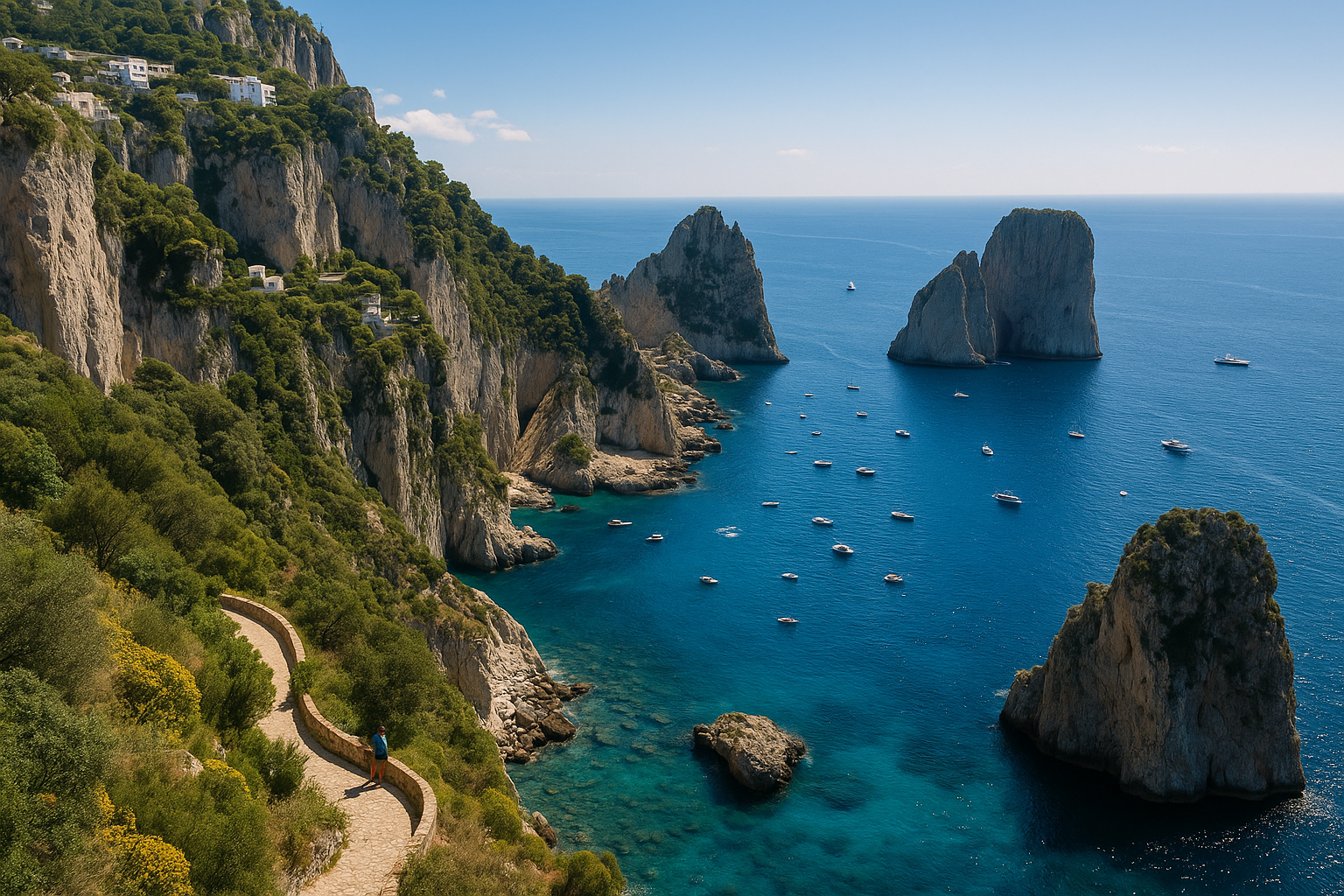
The Faraglioni — three towering rock stacks rising out of the sea off Capri’s southern coast — are probably the island’s most recognizable image. They appear on postcards, in films, and on every travel blog you’ve ever scrolled past. But seeing them in person, especially at golden hour when the light turns everything amber and rose, is a completely different experience.
The best views are from the walking path along the southern coast, or from a boat if you can arrange one. Some visitors rent small boats or join group boat tours that circle the island, passing through the arch of the middle Faraglione — which is wide enough for small vessels to pass through. It’s one of those genuinely joyful travel moments, the kind that makes you laugh out loud because you can’t quite believe you’re actually here.
Wander Anacapri on Foot
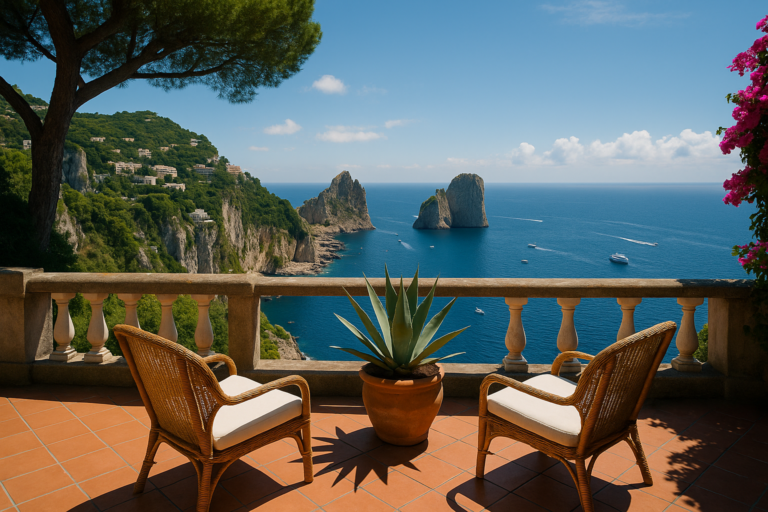
As mentioned earlier, Anacapri is the quieter of the island’s two municipalities, and it deserves far more time than most visitors give it. The main square is relaxed and genuinely local in atmosphere. The streets around it are full of small shops, family-run restaurants, and the kind of slow-paced life that feels increasingly rare on heavily touristed islands.
From Anacapri, you can also take the chairlift up to Monte Solaro, the island’s highest point. The ride itself is a slow, open-air ascent through terraced gardens and vineyards, and the views from the top are among the best on the island — stretching out across the Gulf of Naples, toward Vesuvius and the distant coastline. It’s peaceful up here in a way that the lower town rarely is, and it’s worth lingering as long as you can.
Swim in Hidden Coves Away from the Main Beaches
Capri’s most famous beaches can get genuinely packed in summer, but the island’s coastline is full of smaller, harder-to-reach spots that offer a completely different experience. Some are accessible only by boat; others require a bit of a scramble down rocky paths. Neither of those things should put you off.
The water around Capri is extraordinarily clear — the kind of clear where you can watch fish moving below you from the surface. Finding a quiet cove, dropping into that water, and floating with the cliffs rising around you is one of the simplest and most satisfying things you can do on the island. Ask locally about access points, or hire a small kayak and explore the coastline at your own pace. You’ll find spots that won’t appear on any map.
Eat Where the Locals Eat
This applies everywhere, but it’s especially true on Capri. The tourist-facing restaurants near the main squares are fine, but they’re not where the real food is. Walk a few streets further, look for handwritten menus, and choose places where the clientele is mostly Italian. You’ll eat better, spend less, and have a far more authentic experience.
Capri has its own culinary identity worth exploring. The island is known for dishes built around fresh seafood, local lemons, and simple Mediterranean ingredients. The famous Caprese salad — tomato, mozzarella, basil — originated here, and when it’s made with genuinely good local produce, it’s a completely different thing from the versions you’ve had elsewhere. Take your time over meals. Order a limoncello at the end. Let the afternoon stretch out.
Practical Tips for Visiting Capri Without the Chaos
- Arrive early or stay overnight. Day-trippers arrive mid-morning and leave by late afternoon. If you’re on the island before 9am or after 5pm, you’ll experience a completely different place.
- Visit in shoulder season. Late spring (May to early June) and early autumn (September to October) offer warm weather, open attractions, and significantly fewer crowds than July and August.
- Avoid the Piazzetta at peak hours. It’s worth seeing, but visit early morning or evening when it’s actually pleasant to sit in.
- Use your feet. Capri has a network of walking paths that most visitors ignore in favor of taxis and buses. Walking is how you find the good stuff.
- Book the Blue Grotto visit in advance. It can sell out during peak season, and showing up without a plan often means a long wait or a missed opportunity.
- Stay in Anacapri if you can. Accommodation there tends to be quieter and more affordable, and you’ll be closer to some of the island’s best walking routes.
How to Get to Capri
Capri is accessible by ferry and hydrofoil from Naples, Sorrento, and several points along the Amalfi Coast. The crossing from Sorrento is the shortest and most convenient for many travelers. Hydrofoils are faster but more expensive; regular ferries are slower but often more scenic and better for anyone prone to seasickness in choppy conditions.
Once on the island, the main forms of transport are taxis (which are actually open-air convertibles — a surprisingly fun way to get around), local buses, and your own two feet. There are no private cars permitted for tourists, which keeps the island surprisingly peaceful once you get away from the ferry port. For more detailed transport information, capri.com offers a comprehensive guide to getting around and planning your visit.
Why Capri Is Still Worth It
It would be easy to write Capri off as too touristy, too expensive, too crowded. And if you visit on a peak summer day without any preparation, you might leave feeling exactly that way. But that would be a shame, because the island genuinely has something rare — a combination of natural drama, cultural history, and sheer beauty that’s hard to find anywhere else in the Mediterranean.
The crowds exist because the place is extraordinary. The goal isn’t to avoid that reality — it’s to navigate around it. And the good news is that Capri rewards effort. The more willing you are to walk further, wake up earlier, and step off the obvious path, the more the island reveals itself. For a deeper look at why Capri continues to captivate travelers from around the world, Through Eternity’s guide to Capri’s enduring appeal is worth reading before you go.
The things to do in Capri that stay with you longest are rarely the ones you planned. They’re the unexpected swim in a cove you found by accident, the meal that stretched into the evening, the moment you looked up from a trail and realized you were standing somewhere genuinely extraordinary. That’s the Capri worth chasing — and it’s still very much there, waiting for anyone curious enough to look for it.
This article was produced with AI assistance and reviewed editorially.


Vietnam Uncovered: Beyond the Chaos, Into the Real Story

Beyond the Guidebook: What Hanoi Actually Feels Like


