
Greece
Milos, Greece: The Island That’s Been a Local Favorite for Centuries (And Why Tourists Are Just Now Discovering It)
Discover Milos, Greece’s volcanic island gem in the Cyclades. This travel guide covers 14 things to do, hidden caves, authentic villages, and how to visit without the cro

Why Milos Deserves a Spot on Your Greek Islands List
If you’ve been scrolling through travel content lately, you’ve probably noticed a certain volcanic island creeping into more and more feeds. This Milos, Greece travel guide exists because the island genuinely earns the attention — not because it’s the loudest destination in the Aegean, but because it’s quietly one of the most rewarding. Tucked into the southwestern Cyclades, Milos is the kind of place that makes you feel like you found something real. The beaches are wilder, the villages are smaller, and the whole island moves at a pace that actually lets you breathe.
Santorini and Mykonos are iconic for good reason. But if you’ve already done those, or if you’re deliberately avoiding the crowds that come with them, Milos is where you want to go next. It offers the same dazzling Cycladic light, the same crystal-clear Aegean water, and the same whitewashed charm — without the sensation of sharing your sunset with several thousand strangers.
Here’s everything you need to know to explore it well.
The Island’s Character: Volcanic, Vivid, and Surprisingly Varied
Milos sits in the southwestern part of the Cyclades, and its volcanic origins are written all over its landscape. You can see it in the dramatic rock formations that rise from the sea, in the strange lunar textures of its most famous beaches, and in the way the coastline shifts constantly from sheltered coves to open cliffs. This isn’t a flat, sandy island — it’s a place with genuine geological personality.
That volcanic history has shaped not just the scenery but the culture too. The island has been inhabited for thousands of years, and traces of ancient life are visible in ways that feel less like museum exhibits and more like a living backdrop. Walk through the right village at the right time of day and you’ll stumble across ruins, old churches, and fishing harbors that look like they’ve barely changed across generations.
What makes Milos stand out in the current travel landscape is its relative authenticity. Compared to the more heavily visited Greek islands, Milos has managed to retain a sense of itself. Locals still fish, still run family-owned tavernas, still live on the island year-round. That balance — between welcoming visitors and staying genuinely Greek — is something you feel the moment you arrive.
The Beaches: More Than Just Pretty Water
Milos has an extraordinary number of beaches for an island its size. And they’re not all the same. That variety is part of what makes exploring the coastline here so satisfying — you can spend a whole week and still feel like you haven’t seen everything.
Sarakiniko
This is the one you’ve probably already seen in photos, and it genuinely looks like that in person. Sarakiniko is a stretch of white volcanic rock that curves around a sheltered bay, creating a landscape that feels more like the surface of the moon than a Greek beach. The rock has been smoothed and sculpted by wind and sea over millennia, and the contrast between the white stone and the deep blue water is something your camera will struggle to capture properly. Go early in the morning if you want it to yourself — later in the day it gets busier, and for good reason.
Kleftiko
Kleftiko is only accessible by boat, which is part of what makes it special. It’s a cluster of sea caves, rock arches, and hidden coves with water so clear you can see the bottom from above. The name has pirate-era associations — legend has it that pirates once used these caves as a hideout — and the atmosphere still carries a hint of that drama. Book a boat trip from the main harbor and you’ll spend a few hours swimming through arches and floating in turquoise pools that feel entirely removed from the rest of the world.
Firopotamos
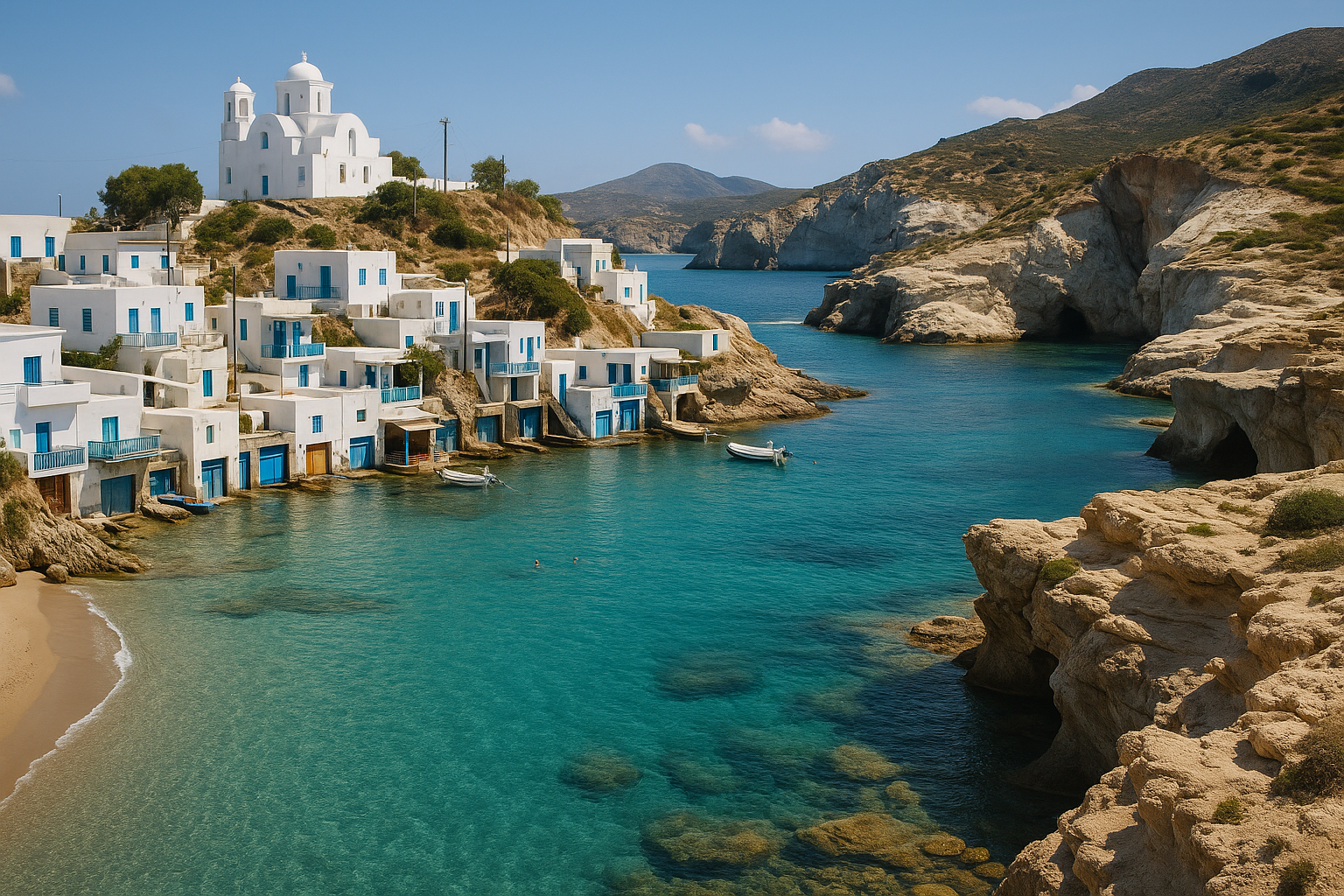
Firopotamos is a different kind of beautiful. It’s a small, sheltered bay with colorful fishing boat garages — called syrmata — built directly into the rock face along the waterline. The boats are stored at sea level, and the whole scene has a painterly quality that makes it one of the most photographed spots on the island. It’s quieter than Sarakiniko and feels more like a lived-in place than a tourist attraction. Swim here in the late afternoon when the light turns golden and the fishermen start coming back.
Other Beaches Worth Your Time
- Tsigrado: A small, secluded beach accessed via a rope ladder down a cliff face. The effort is part of the appeal.
- Paleochori: A long beach with geothermal activity beneath the sand — you can actually feel the warmth if you dig down a little.
- Provatas: Calm, shallow, and ideal if you want somewhere relaxed without a dramatic hike to reach it.
- Agia Kyriaki: A quieter spot on the southern coast, popular with locals and less likely to appear on every travel list.
Villages That Actually Feel Like Villages
The beaches get most of the attention, but the villages of Milos are just as worth your time. They move slowly, they’re genuinely inhabited, and they give you a sense of what Greek island life looks like when it hasn’t been reshaped entirely around tourism.
Plaka
Plaka is the capital, perched on a hill above the island’s main bay. Walk up through the narrow whitewashed streets in the evening and you’ll reach the kastro — the old Venetian fortification at the top — just in time for sunset. The view from up here takes in the whole bay, the harbor lights starting to flicker on, and the sky doing something extraordinary with color. There are small restaurants and bars along the way up, and the whole neighborhood has an unhurried, genuinely local feel.
Mandrakia
Mandrakia is a tiny village on the northern coast that most visitors drive past without stopping. That’s their loss. It’s a cluster of traditional syrmata — those same colorful boat garages you’ll see at Firopotamos — arranged around a small harbor. There’s almost nothing here in terms of tourist infrastructure, which is exactly the point. Sit on the rocks, watch the water, and appreciate how quiet the world can be.
Pollonia
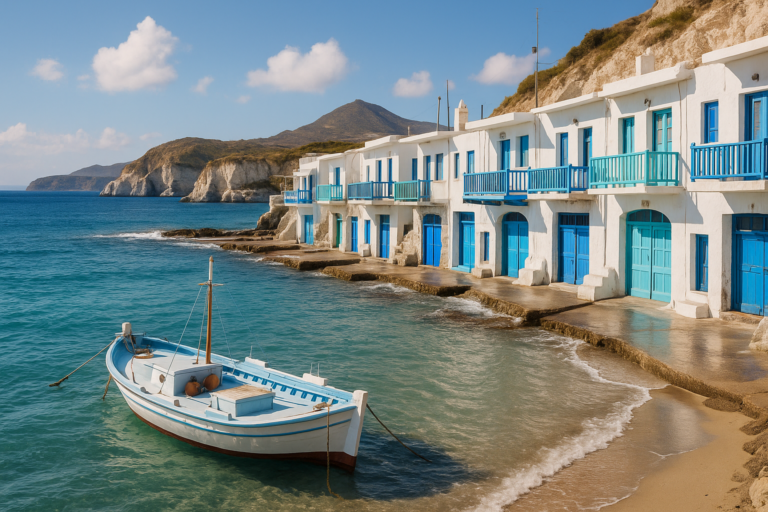
Pollonia sits on the northeastern tip of the island and has a slightly more relaxed, café-culture feel compared to Plaka. It’s where you catch the ferry to the nearby island of Kimolos if you want a day trip, and it has a handful of good seafood restaurants right on the waterfront. The vibe is easy and unhurried — a good place to spend a lazy afternoon.
Tripiti and the Catacombs
Just below Plaka, the village of Tripiti sits near one of the island’s most significant historical sites: the early Christian catacombs. These underground burial chambers are among the most important of their kind in Greece, carved into the volcanic rock and stretching through a network of tunnels. They’re open to visitors and offer a genuinely striking glimpse into the island’s deep history. Nearby, a replica marks the spot where the Venus de Milo — the famous ancient statue now in the Louvre — was discovered in the early nineteenth century.
Things to Do Beyond the Beach
Milos rewards the curious traveler. If you’re willing to move around and explore, the island offers far more than a week’s worth of things to discover.
- Take a boat tour: The best way to see the coastline, reach Kleftiko, and access caves and coves that are impossible to reach by road. Half-day and full-day tours depart regularly from Adamas harbor.
- Visit the Archaeological Museum in Plaka: Small but genuinely interesting, with finds from across the island’s long history.
- Hike the island’s trails: Milos has marked walking routes that take you through volcanic landscapes, past ancient ruins, and along clifftops with dramatic sea views.
- Explore the mining history: Milos has been mined for minerals — including obsidian, sulfur, and bentonite — for thousands of years. The colorful mineral-streaked cliffs along the coast are a direct result of this geology.
- Watch the sunset from the kastro in Plaka: One of the best sunset viewpoints in the Cyclades, full stop.
- Eat at a harbor taverna in Adamas: The island’s main port town has a strip of seafood restaurants where you can eat grilled fish with your feet practically in the water.
- Day trip to Kimolos: The small island just off Milos’s northeastern tip is even quieter and less visited. A short ferry ride gets you there, and it’s worth a few hours of wandering.
When to Visit Milos
Like most Greek islands, Milos has a clear peak season and a quieter shoulder period. Understanding the rhythm of the island helps you plan a trip that matches what you’re actually looking for.
The summer months — roughly late June through August — bring the warmest weather and the most visitors. The beaches are busiest, accommodation books up quickly, and prices reflect the demand. If you’re coming in peak summer, book everything well in advance and plan to visit popular spots like Sarakiniko early in the morning or later in the afternoon to avoid the worst of the crowds.
The shoulder seasons — May through early June, and September into October — are genuinely excellent times to visit. The weather is still warm enough for swimming, the crowds are noticeably thinner, and the island feels more like itself. Accommodation is easier to find and often better value. September in particular has a wonderful quality: the summer heat has softened slightly, the water is still warm from months of sun, and the island starts to breathe again.
Outside of the main season, many businesses close and ferry connections become less frequent. If you’re visiting in spring or late autumn, check ahead to make sure what you want to see and do will actually be open.
Getting There and Getting Around
Milos has its own airport with seasonal flights connecting it to Athens and a few other Greek cities. The more common route is the ferry from Piraeus, Athens’s main port — the crossing takes a few hours depending on the type of vessel, and the approach to the island’s harbor is a genuinely lovely way to arrive.
Once you’re on the island, having your own transport makes a real difference. Renting a car or a scooter gives you the freedom to reach beaches and villages that aren’t served by the limited bus network. The roads are generally manageable, and the island is small enough that you can cross it in under an hour. If you prefer not to drive, the bus connects the main towns, and taxis are available from Adamas.
For more detailed logistics and ferry timetables, Discover Greece’s official Milos page is a reliable starting point. For a broader overview of what to expect on the ground, Our Travel Passport’s Milos guide covers practical details well.
Where to Stay and Eat
Milos has accommodation across a range of styles and budgets, from small family-run guesthouses to boutique hotels with sea views. Adamas is the most practical base if you want easy access to the ferry port and a central location. Plaka offers a more atmospheric stay, with the added bonus of being within walking distance of the kastro and the views. Pollonia suits those who want a quieter, more village-like experience.
For budget travelers, smaller guesthouses and studios — many of them family-owned — offer good value and a more personal experience than larger hotels. Booking directly with smaller properties, rather than through large platforms, often gets you a better rate and a warmer welcome.
The food on Milos is worth taking seriously. The island has its own culinary traditions, including a local soft cheese called tyrokafteri and fresh seafood that comes straight off the boats. Eat at the harbor-front tavernas in Adamas and Pollonia for the most reliable seafood. Wander into Plaka for more varied options in a more atmospheric setting. Avoid anywhere with a menu translated into five languages and a host standing outside trying to wave you in — the best places on Milos don’t need to work that hard.
Traveling Milos Responsibly
Part of what makes Milos special right now is that it hasn’t been overwhelmed. That’s something worth actively protecting. A few habits make a real difference: stay on marked paths around fragile geological formations like Sarakiniko, take your rubbish with you from beaches, support local and family-run businesses over large chains, and try to visit popular spots at off-peak times of day.
The island’s volcanic landscape is genuinely fragile in places. The white rock formations at Sarakiniko, for example, erode over time — climbing on unstable sections or straying from established areas causes damage that accumulates with every visitor. Being a thoughtful traveler here isn’t just good ethics; it’s what keeps the place worth visiting.
Your Complete Milos, Greece Travel Guide in One Sentence
If you want a Greek island that gives you dramatic landscapes, authentic villages, extraordinary beaches, and a genuine sense of discovery without the overwhelming tourist infrastructure of the more famous islands, Milos is the answer. It’s a place that rewards curiosity — the more you explore, the more it gives back. Whether you’re spending a long weekend or a full week, you’ll leave with the distinct feeling that you found something worth returning to. And you’ll probably start telling people about it before you’ve even unpacked your bag.
This article was produced with AI assistance and reviewed editorially.


Vietnam Uncovered: Beyond the Chaos, Into the Real Story

Beyond the Guidebook: What Hanoi Actually Feels Like


